Waalwis Bai
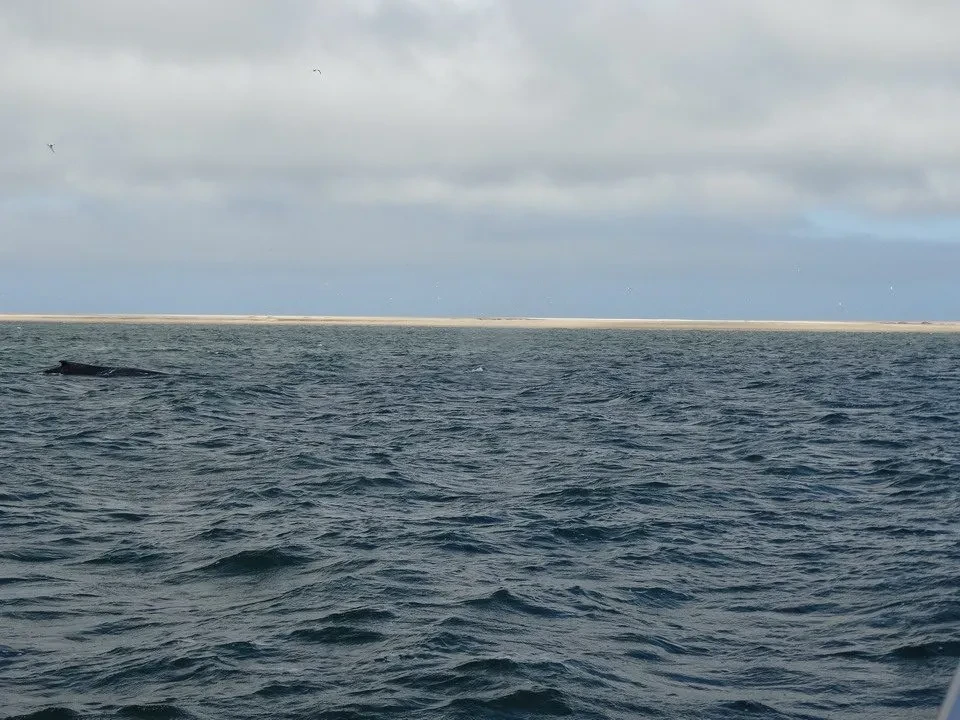
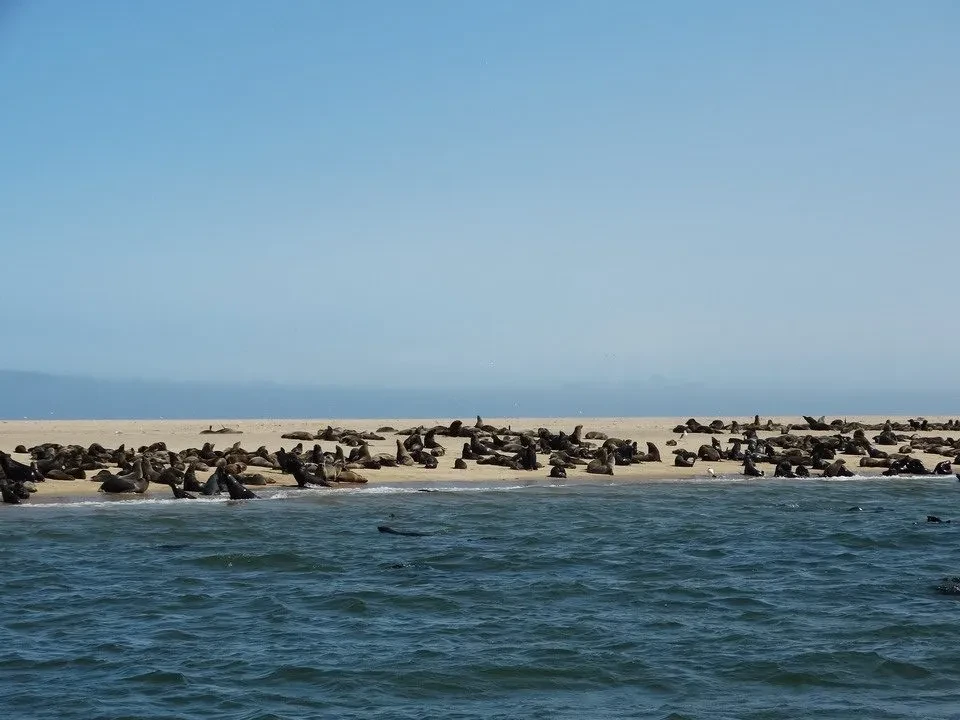
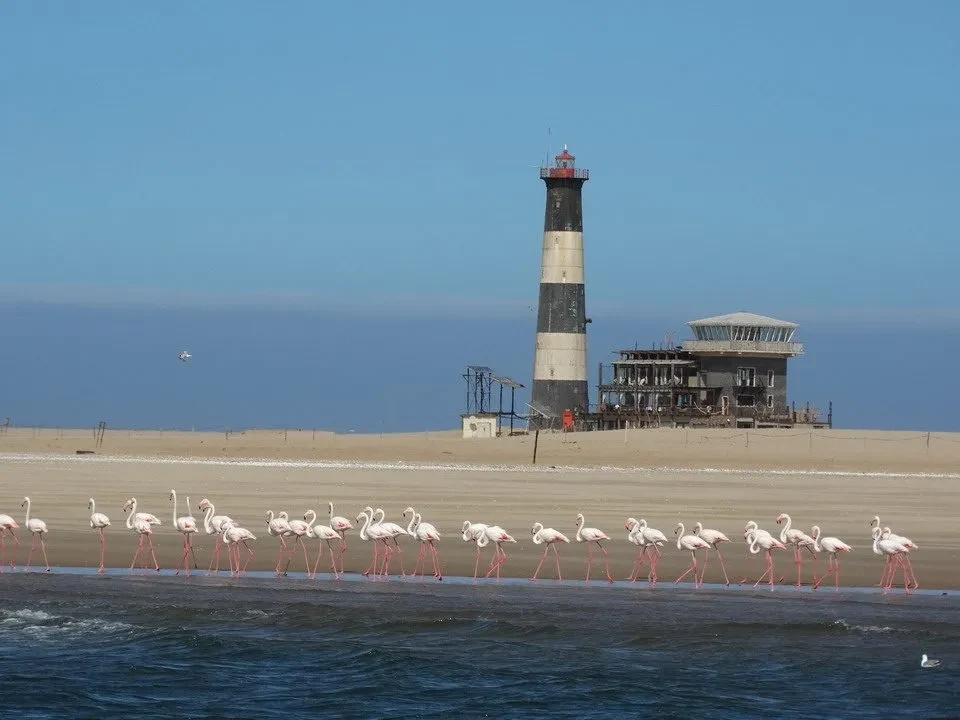
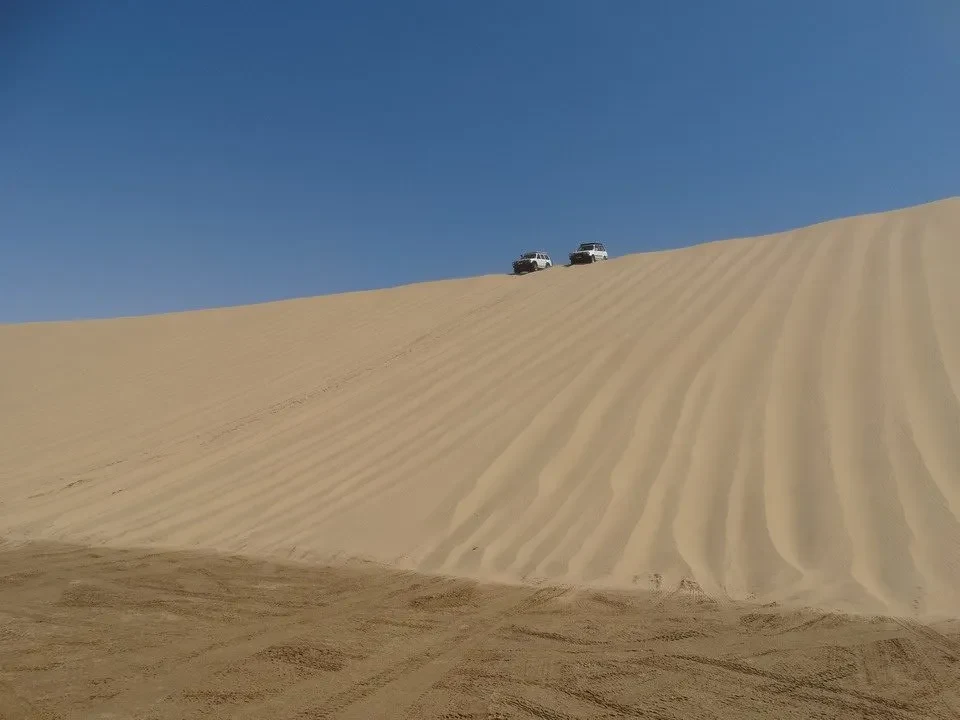
Today the day is less demanding, and after two intense days, that's definitely not a problem. We wake up early and first go to see the salt flats of Walvis, where 90% of all the salt consumed in southern Africa is produced. It’s interesting to see… pools where the seawater is left to settle and the mountains of elegant room ready to be loaded onto trucks. At 8:30 am, we embark on a short cruise to Pelican Point. a lighthouse Located along a sandy peninsula facing the coast of Walvis. A bit of a spectacle at departure, with a pelican and a seal who boarded for a paid performance with fresh fish. As we set sail, we saw a large colony of dolphins swim following our route and we are lucky enough to also encounter a whale. Near the lighthouse, on the beach, a group of flamingos are slowly walking while a large colony of... albatrosses peaceful relaxation and fishing on the beach. These creatures practically have no natural enemies like sharks or hyenas, so they can reproduce more than necessary, causing imbalances in the fish population since a seal eats about one-eighth of its weight each day; furthermore, the females are very prolific, nursing and teaching their offspring for several days before becoming pregnant again immediately. This creates strong debates between environmentalists and those who would like to select these animals. There are two types of flamingos: the pink ones, which are smaller, and the white ones with taller legs. The difference in color is due to the fact that the first ones mainly feed on algae and small shrimp just below the water's surface, while the second ones fish deeper down. Off the port there is a platform for the extraction of crude oil and the ships come and go or wait to enter the port itself. Some are anchored and tied together, they are undergoing renovation and awaiting sale if not demolition, as they are clearly in a state of advanced corrosion. And it is these ships that will protect us from the wind during a brunch where we enjoy eating with oysters and sparkling wine. In the afternoon, we have a different experience and go to Sandwich Harbour, crossing through the sand dunes that stretch out directly into the ocean. It is impossible to reach it on your own, and this makes perfect sense. Our driver ensures that we have… deflate the tires in order to provide better grip, then it requires a certain level of skill not to get stuck. Traveling on this soft surface offers no impact and you barely hear the sound of tires on the ground. The spectacle lies in climbing and descending dunes. the steepness of at first, it gives you a shiver.
In the afternoon, we met up with a couple of other groups for a snack. sheltered from the wind. There are several plants in the area, meloni nara: it's amazing how they can grow and produce in such a harsh environment, but their presence is clearly proof of how life clings to what nature offers for its proliferation. In this case, the little comes in the form of sea breeze. But even in the desert, in the Kuiseb area, the nara are a source of sustenance for local populations. In a depression between high dunes there's a deep hole dug by a coyote at the bottom of which you can see water: digging deeper, the water increases and represents another proof that under the desert lies this life-giving substance, skillfully captured by humans and animals. It's impressive to note that it is fresh water, therefore not from the sea, which is only about a hundred meters away, but channeled through some unknown underground channels to reach here. The locals know which plants are specialized in finding water, so depending on the vegetation present on the surface, they can say where the source is, considering however that some shrubs like the nara can have roots reaching over 10 meters deep. The sand sometimes has slight undulations on which a black deposit forms, it's the magnetic effect of graphite that separates and settles on the crest. We meet oryx, springbok hyenas And also some seals, plus possibly one solitary seal that had strayed from its course due to the waves or some other unknown reason, posing a significant risk of ending up as food for passing carnivores. The driver is friendly and open to conversation, so he tells us that he has lived in Walvis Bay for 5 years and explains how life works in this unusual town. Meanwhile, we discover that there are approximately 100,000 people living here, and it immediately raises the question of whether there is enough water for everyone. We are told that there is a water pipeline that draws from the Kuiseb springs inland (there is often plenty of water available under the desert), which serves the southern part of the city, while the northern part has a water recycling plant, but there are no desalination plants. It is the second industrial city after Windhoek and therefore a destination for those seeking work, although they also stay even when they don't find it, contributing to some social disruption in this case. Living in Windhoek means not having the sea and its activities, however, the climate is much more stable throughout the year, while here there are frequent cold snaps during winter due to the Benguela Antarctic current, which also brings fog and deters rain, which instead is discharged offshore into the Atlantic. Further north, along the Skeleton Coast, in addition to seeing the desert meet the sea as it does here, you can observe lions and elephants that come right up to the coast, in a completely unusual setting. It's interesting to note how everyone complains about the strong wind; to us, it seems very well ventilated, but it would seem perfectly natural in a location right on the Atlantic. And with this, we understand the reason for the frequent fogs that envelop the area, which are now completely absent. While we travel the 40 km to Swakopmund, the road is traversed by sand swept by the wind, a real storm, with cars coming from the opposite direction that seem to be arriving from hell. It looks like snow falling horizontally. Once we arrive in town, we stock up at the supermarket, look for the guesthouse we booked, and immediately find its address, but because they have made renovations, we can't identify the building right away due to the lack of signs. We need to ask a taxi driver for help to find it: actually, he did nothing since people had already appeared nearby, and we get the answer we were waiting for. This takes us a little longer, but we finally arrive at the Jetty’s 1905 restaurant at the time we had set. We are in one of the city's symbols, and we don't intend to miss it, not just because of its social atmosphere, but also for the deliciousness of its dishes; we will be even more convinced after tasting the venison and tuna steaks. Truly delightful flavors that melt in your mouth, at this restaurant located at the end of the
wooden platform, beneath which agitated waves crash against the sand and slightly ripple the structure.