

Caprivi and Botswana
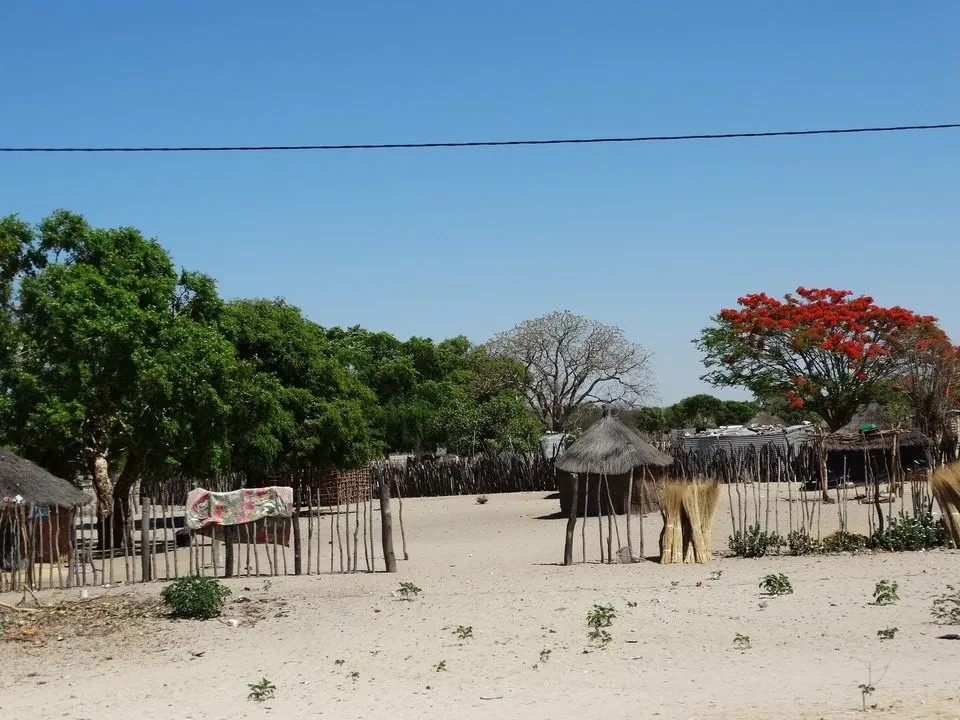
At 7:30 am, we were already on our way for a long day of travel to the northeast of Namibia, which would take us to Botswana. We passed through Grootfontein again, which was bustling with all sorts of activities, and continued along the beautiful 250 km asphalt road that leads to Rundu – you could even drive it without steering! Unlike what we expected, this stretch is absolutely not monotonous; from the B8 road, we have the opportunity to observe the industrious life of the local population that flows along its sides. Two unpaved roads run alongside the main one, connecting them. small villages arranged and consisting of orderly huts with circular or square shapes; animals (sheep, goats, and cattle) graze on the sparse grass, people move around pulling carts. women carrying goods on my head, to finish with the omnipresent children playing and keeping me constantly entertained.
nia.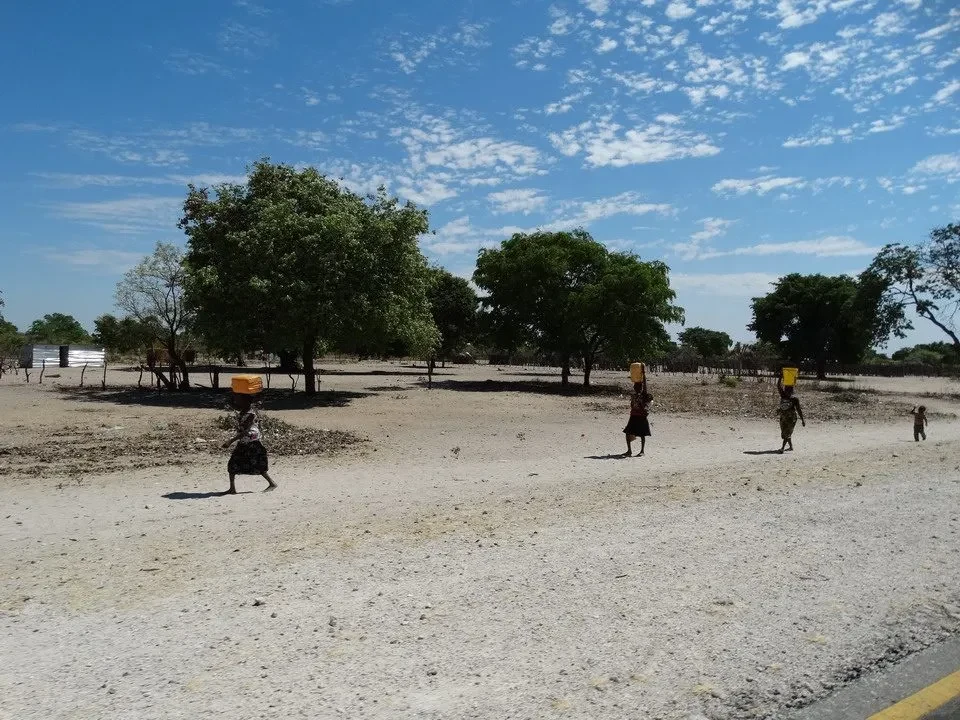
The children are a real joy to observe: while playing, but also when arriving or returning from school in their colorful uniforms, they always have an unwearying smile on their cute faces. There are no pushing and shoving, and you never hear them arguing harshly. They walk in pairs along the sides of the road or spend their time playing and having fun. Visiting a country also means seeing its everyday life, capturing its essence, and imagining what is not seen. It's natural to make comparisons with our own lives to conclude that the inhabitants live in conditions of poverty: but upon closer examination, it becomes clear that they do not live in dire straits; there is plenty of livestock, which is well-fed, and generally nothing seems to be missing for them to live a dignified life. In our opinion, they could/should have more than the subsistence economy they currently have. Certainly, getting sick here is not the same as it is at home, and this is evident in the very low average age. They lack services that we consider essential, while they probably don't even notice their absence. There would be many things to say, and likely everyone would end up with a fundamental point: certainly, the vision that we see today clearly teaches us that not everything has to be seen through the eyes of the observer. Another lesson comes from the fact that those who live in rural areas have less chance of getting rich, but they also run far fewer risks of falling into poverty and consequently falling prey to criminal activities, alcohol or drugs. It's interesting to notice how recently built or renovated huts can be recognized by their lighter straw roofs; in some courtyards, the harvested, tied, and stacked crops are waiting for new houses to cover them. The same applies to the shelters under which animals find shelter from the sun. In their absence, they huddle together under the meager shade (the sun is almost perpendicular at midday) offered by the small trees, almost crowding together. In other areas, you can see large trees, especially baobabs, with a vaguely umbrella-like shape, and whose ventilated shelter is truly refreshing. We pass through the Red Line checkpoint, which is essentially an imaginary health border designed to prevent the spread of infectious diseases among domestic animals; we are stopped and only asked where we are going and where we are coming from, without any inspection being carried out.
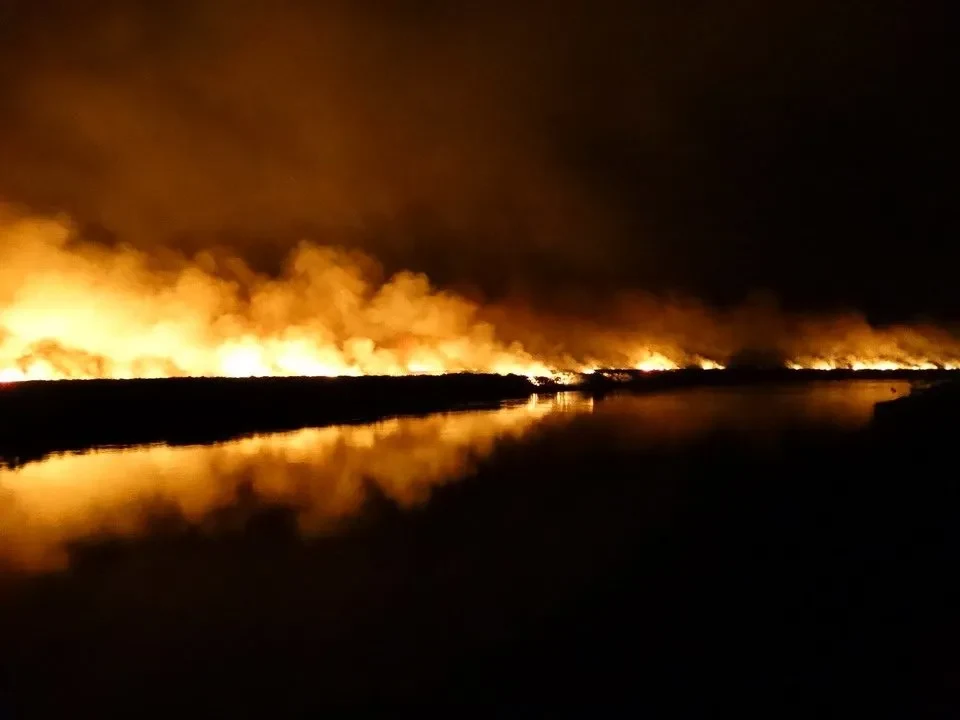
We arrive in Rundu, a city of services and trade located on the border with Angola, where we notice that some residents have vaguely Western features and olive-toned skin, reminiscent of Portuguese characteristics. We first visit the market to get an overview of society: many wearing clothes in bright colors adapt to the situation at hand accompanied staff a sewing machine, a seller of multi-purpose televisions with cathode tubes, and as always, the most interesting part is the canteen department, from which emerge decidedly alluring scents. A first glance at the river that will accompany us Over the next few days: The Okavango, which marks the border with Angola in this area, just a few hundred meters from us. It flows slowly through a depression in the terrain, seemingly aware that after its thousand-kilometer journey, it will eventually die out in a large internal delta, bringing life and nourishment to an indefinite number of animals and plants. It won't see the end of its waters mixing with the Indian Ocean as the arid Kalahari hills will prevent it from stopping before, creating this way a spectacular environment that we can fully enjoy in two days. But now we have to deal with African bureaucracy as we want to change our remaining Namibian dollars into Botswana Pula. The first bank doesn't exchange currency, while the second one does but they don't have Pula and USD or Euros can only be withdrawn from their safe at the end of the day. A helpful employee from the latter directs us on the right path by informing us that they have some Pula, the rest can be exchanged for Euros. We do so and after an hour we leave the town with a sufficient amount of currency for our stay in Botswana, supplementing what is missing with payments via credit card. While leaving the town to return to B8, the GPS guides us on a shortcut through a sandy road. To avoid a vehicle coming from the opposite direction, we risk getting stuck, but by using a 4x4, we manage to get out of it. Divundu is simply a crossroads between the dirt road leading to Botswana and the one that crosses the Okavango towards the east, into the Caprivi Strip. We fill up our tank while spending what's left of our Namibian dollars and prepare to cross the Mohembo border. There are no problems, except for filling out the usual forms, even more informal in the country of entry than in the country of exit; the Namibian officials are more serious and formal, with greater sympathy and friendliness towards foreign travelers. Luckily we are few, the only white people present in this rural border area, where huts represent a common residential identity on both sides. We also present the vehicle data and pay the necessary taxes for the transfer of the vehicle. Seeing that we are Italians, they show us an Itinera poster (a company from our country specializing in large construction projects), which is building a futuristic bridge in this area. In general, the common denominator of the people we meet on this journey is their kindness and courtesy, after saying hello, they always ask how you are doing, which opens up the dialogue. The willingness to chat is enormous, although it can be lengthy and inefficient in carrying out their tasks, they never fail to pay attention to others. Bureaucracy and the habit of filling out forms is also a common characteristic: in banks, employees carefully cut out paper for double copies of documents, and wherever we find ourselves facing something to fill out, it's a good exercise to remember our passport number and vehicle registration. Botswana is nevertheless a relatively rich country in Africa, and its currency is among the strongest in southern Africa. The paved roads are however less well maintained, but there are large vegetable fields (cabbage, etc.) irrigated with modern means. From an aesthetic point of view, Botswana presents itself best in the north, where the Okavango flows into what would otherwise be a desert, which makes it flourish with its waters, transforming the arid land into a lush green plain. It is not a forest, but only meadows, swamps and river branches that extend in all directions. A hand stretches out its thousand fingers towards the Kalahari hills, with the seasons changing, giving life to a sparkling grass carpet under the tropical sun, unlike anywhere else at this latitude. Trees are scattered throughout the landscape, providing shelter for animals. Around the delta, simple human activities take place in the huts made of straw. Villages are mainly located on the west side of the delta, especially along what is still a river here, so much so that it is called the Panhandle, i.e. the handle of a pan. We continue for about 10 km to Shakawe, where we go to the local market to make our first purchases, fearing that health authorities might confiscate meat and milk due to the risk of spreading harmful diseases for animals, such as foot-and-mouth disease. It is also interesting to observe the daily life: the beggars outside, the well-stocked fruit and bakery stalls offering bread and pastries continuously, encouraging us to buy everything. The only butcher shop is limited to beef and lamb, with a clear sign indicating that it is halal slaughtered meat. We don't know the reason for using this system of slaughtering, since we are not in an Islamic area. Similarly, we notice the absence of pork, which is present elsewhere. There is also no beer or alcohol in general, we don't know if it's due to religious reasons or rather to prevent drunkenness among people. We exit and our eyes are drawn south by high columns of smoke rising into the sky against the impending sunset. A few kilometers after Shakawe, we find the fork for our camp and notice that the road goes directly in the direction of the smoke. It's a ghostly image: as we cover the 5 km of sandy dirt road, the grey-red color becomes increasingly dominant, almost obscuring the forest. Upon reaching the building that serves as reception, we come into contact with reality. We are exactly on the edge of the Okavango, but on the other side, a fire is burning. Shakawe and Drotsky's Cabins Large-scale fire It is rapidly eroding the eastern slope, with only a narrow strip of water preventing us from being affected.
Final thoughts
It's not just a crackling sound; it's an deafening roar. High flames are consuming meter by meter, the vegetation of reeds and we are heading directly towards us, with the river as our only protection. We stand in awe at this sight, but also intimidated by what it might evolve into. Afterwards, the flames are pushed in the opposite direction by the wind, but if it changes, the situation for us would also change. Since this is not a popular tourist area, many campsites are empty, further emphasizing our isolation. Meanwhile, burnt charcoal begins to fall, fortunately extinguished. Crocodiles float just below the surface of the water, seemingly unconcerned about what is happening. To the west, another fiery spectacle, this time friendly, tells us that the day is coming to an end: a sunset Un unforgettable experience unfolds by the river, appearing almost doubled, adding emotion to emotion. Returning to reality, we ask ourselves if it makes sense to stay here; the assurances of the campsite managers are not enough to provide peace of mind for the upcoming night. After all, leaving the campsite to sleep elsewhere would expose us to other risks, given the presence of animals, and it is now 7 pm. We move to a nearby spot closer to the exit, park our vehicle already heading towards departure, and prepare everything for an emergency escape during the night. Meanwhile, darkness has fallen and the fire appears even more prominent just a few dozen meters from us. We prepare dinner and set up tents above the Toyota Hilux, always keeping an eye on what is happening beyond the Okavango. We try to combat our anxiety with pasta and choose between South African wines (we have Cabernet Sauvignon and Shiraz). But it's not over yet: while we are chatting around the table, we hear noises coming from the tree in front of us. Given the presence of monkeys in the area, we think they are moving as they climb, but the noise becomes increasingly insistent. I approach the tree with a flashlight to see what is happening: in the darkness, there are no movements visible, which suggests that it is not the animals causing the noise. It gets louder and soon we discover the reason: a large trunk, starting at a height of two meters from the base, representing almost half of the entire tree, is about to fall. We quickly move away, even though it's clear that it will crash loudly onto the bushes on the other side. We don't want to think about what would have happened if it had fallen on our side while we were sleeping in the tents. With a flashlight, we quickly check the integrity of the forest surrounding the campsite; everything seems to be in order. Probably the dry air resulting from the fire has contributed to the detachment of the tree's dry part.
Talking to a South African who has been camping here for a couple of days, we learn that the fire broke out around midday today and the cause is believed to be local fishermen, who intended to create quick access routes to the river. It seems to happen every few years; it would be prohibited, but the perpetrators probably won't even be investigated. The motivation initially seemed unbelievable to us, but we were later confirmed; certainly, the concept of the environment and its protection in this area must take a back seat to other primary needs. It is difficult to draw conclusions, and even more difficult to judge: they set fires to facilitate their work and create that minimum level of economic activity that allows for subsistence, while elsewhere on the planet, it is done for much more nefarious reasons of speculation and enrichment. After dinner, we walk the 5 minutes to the reception desk to get the latest updates. There is only one person working there, sitting with a tired face and a cup of coffee on the table. He tells us to stay calm, but if he's there spending the night, it's certainly not for pleasure. On the table there is also a smartphone that will be used to send an SMS to order evacuation if necessary. Meanwhile, the fire continues to spread throughout the night and reflects its light in the river: the spectacle, in its severity, is still breathtaking, with columns of smoke illuminated by the roaring flames below following the linear course of the water, it looks like a torchlight procession. Further on there is a bend, and at that point the view disappears, but right behind the curve we can see other flames in the distance, at an angle just over 90 degrees, making us feel almost surrounded. The Okawango River meanwhile flows slowly and darkly under the platform where we are, when suddenly, in the darkness, two bright yellow dots rise up the current: they are the eyes of a crocodile, whose only visible shape is in the water. It feels like living a horror movie, but it's just one of the many facets of an African adventure. We are calm, confident that we have done everything possible, all that remains is to go to sleep and hope for the best. Around 2 pm, we still see everything burning, but the wind has not changed, fortunately.


