Morning in Etosha
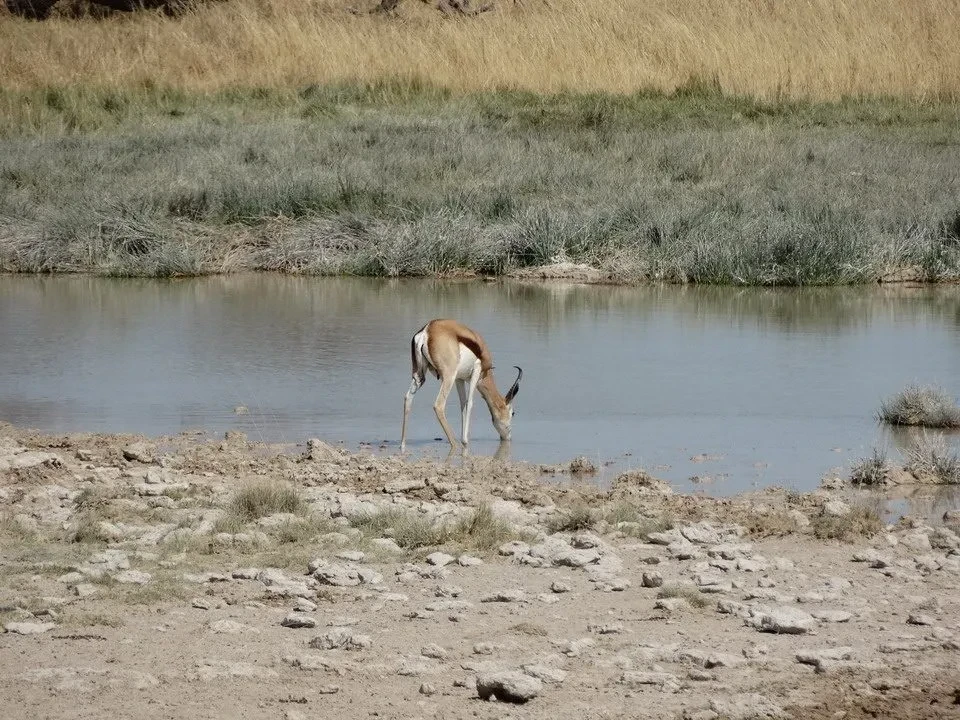
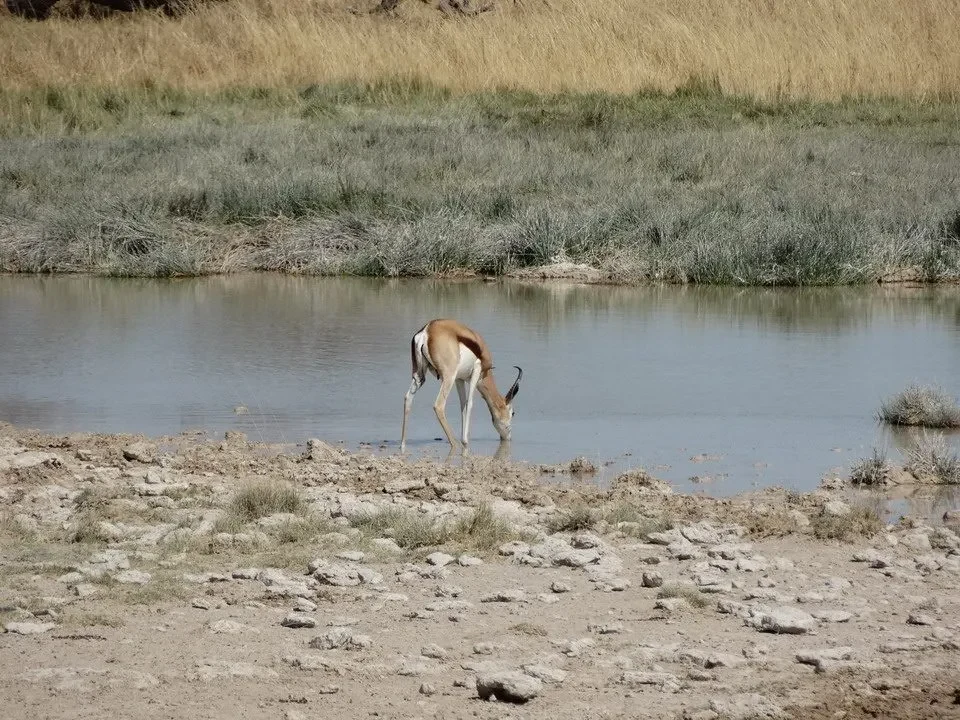
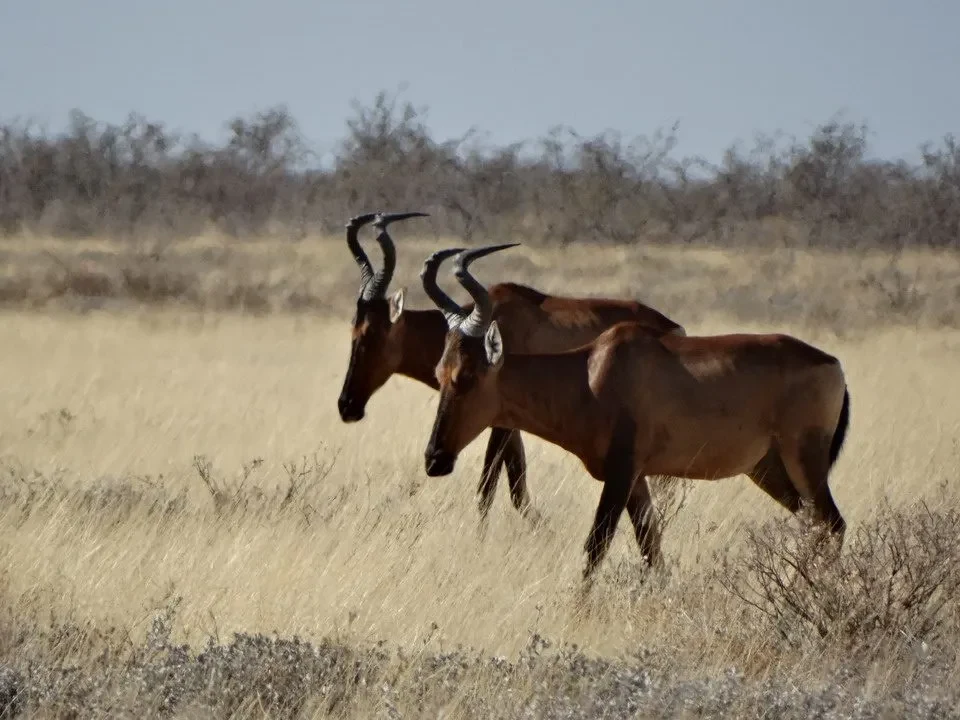
Quick breakfast, and just as quickly tidying up the tent, we were third in line to enter Etosha when the sun had already begun its ascent towards the sky. Two tired police officers arrived to lower the flag, which officially opened the gates. We started from the Okaukejo pools, then moved on to the Halali area and finally to Namutoni, from where we would exit via the Von Lindeqvist Gate; it will be a long but exciting day, always in the car with our eyes open to spot our prey. The safari routes wind in all directions along clear, dusty roads, well-marked, which allow not only good animal sightings but also a complete view of the park's environment. Etosha Pan they offered us fantastic illusions under a cobalt sky. Everywhere you see kangaroos, and then there are many zebras, gnu, elephants, many giraffes in groups of two or three specimens, disappeared groups of eland, kudu, impala (including those with black faces), tsessebe (a wild cow with horns like bottle caps) morning, caracal, ostriches, dik dik and a beautiful specimen of rhinoceros.
Stop at On Guma Camp
What is most impressive, however, are the movements of these animals, the hierarchies and balances that have always existed. A good example of this is the scene we admire in the afternoon: some elephants They are cooling their feet in a puddle, while the zebras arriving want to drink but the elephants don't move. These start to graze to invite the guests to leave. Some of them get annoyed and start moving, while the more stubborn ones refuse. Shortly after, the kangaroos also appear, who must wait for their turn. When the last elephant has finally left the water, the zebras can go to drink, followed by the kangaroos. In the meantime, three giraffes have also appeared, who timidly allow the others to pass. Although they are larger than everyone else, it is not easy to drink, so they prefer to wait for the other guests to finish, approaching while always keeping an eye on their surroundings, spreading their front legs and starting to drink water. Apparently, they can't stay in this position for more than a minute because too much blood would flow to the brain with resulting damage: furthermore, if attacked by felines, they would have difficulty returning to their original position to escape running. Another amazing scene is seen at another zebra pool, where it seems like an exodus, when they slowly approach a lagoon guided by the leader. He waits, looking around to see if he can trust them, takes a few steps forward, descends towards the pool with some other individuals, and when everything seems safe, the rest of the herd calmly drinks water. Everything happens in surreal silence, only a few birds chirp, the animals know that they can be attacked at this vulnerable point, and their tension is clearly palpable. Observing these scenes is worth more than watching a movie: the instincts of hunting and defense overlap in an alternating pattern that defines the daily life of the savanna. The same they see impalas When we went out to drink in groups, but even a gust of wind could create some noise and send us away by a few meters, only to return and flee at the next sound. This scene demonstrates the anxiety of these herbivores when faced with the potential threat of any feline. We can instead encounter gnu in herds of reasonable size, solitary individuals that roam the savanna or are grouped together with zebras or other animals. As the sun sets and is about to reach the horizon, we see a cluster of cars parked, clearly indicating that something interesting was happening in the area. Or rather, it had been, as after a few minutes we all return to our starting point without any success. While we were about to leave the park, we witnessed a traffic jam caused by elephants blocking the road. They slowly moved forward, and the last one, understandably, turned angrily towards a driver who got too close, stamping his foot forcefully on the ground and nervously waving his trunk. We also left the park a couple of minutes before closing time to head to the tranquil Onguma Camp, just a few hundred meters from the entrance. The altitude in this region is around 1100 meters, while the maximum outdoor temperatures reach 34/35°C, dropping to 11/12°C in the early morning.