Morning in Otjikoto
Woke up at 6:30 to drive a section of unpaved roads (the D3028 and the D3025); in fact, for at least two hours, we won't see another soul. The route follows the park but we only see some dik-diks and a few gazelles. The roads are well maintained, so it is possible to travel: you just need to stop occasionally to open and close the gate that separates the properties of the farms. It is a fairly rich area with large herds of cattle grazing in fenced areas, within which there are well-established farms.
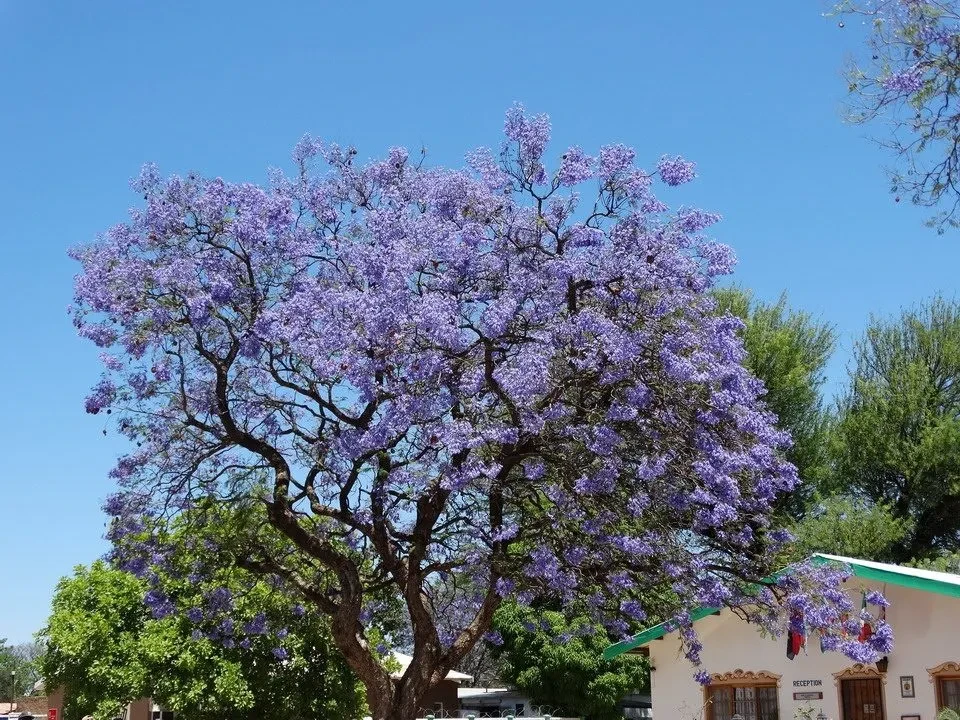
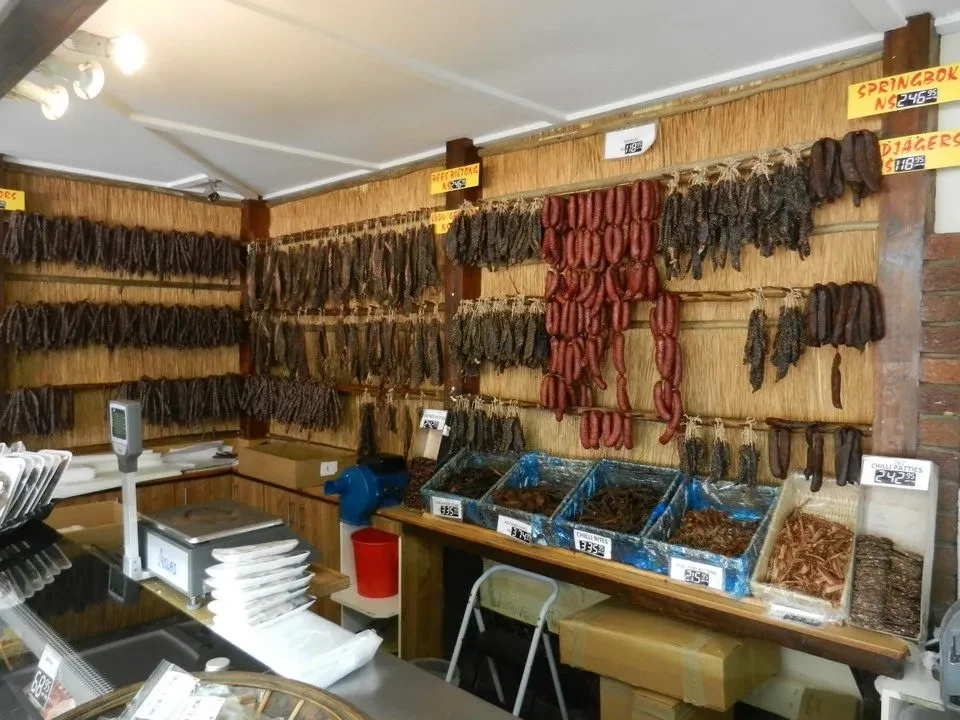
We stop for a walk around the Lake Otjikoto, born after the depression caused by the collapse of the roof of a karst cave. Past floods have filled it and now its funnel-shaped section is no longer visible. The banks descend vertically into the water, so bathing is prohibited. According to recent history, German troops fleeing in 1915 threw an arsenal of weapons here, which was only partially recovered later. Tsumeb, on the other hand, is a town with beautiful jacaranda blossoms, which focuses on the extractive industry, related mineral processing activities, and associated services. A frontier town atmosphere surrounds it under the midday sun, highlighted by the fact that a township called Soweto is located nearby, where life was very difficult until a few decades ago, when racial segregation was in effect. Now, problems of crime, alcoholism, and drug use have decreased thanks to the construction of private facilities, meeting places, and the introduction of public lighting, but some difficulties remain. For example, the houses in the center of Tsumeb are surrounded by high walls and electrified barbed wire. Let's go shopping and take a look at the Tsumeb Cultural Village... whose original idea is a village consisting of huts from the various Namibian tribes. Unfortunately, it seems to have been left to decay amidst general neglect: perhaps asking for a few more dollars and providing the accompaniment of a guide could be a way to better introduce visitors to the local cultures. We see some interesting huts built with branches covered in clay as walls, but not much else. In thirty minutes on a good paved road, we arrive at Grootfontein, where we look for a butcher to find wild game to cook tonight. The town is mainly a service center for the surrounding agricultural area, with a nice tree-lined avenue leading to it, although the town doesn't inspire much confidence. We are gradually moving away from the orderly German-style Namibia and finding ourselves immersed in a more chaotic but genuine and "African" environment. There are no signs of poverty, but everyone agrees that we should be careful, even the cashier at the market where we will eventually go to buy meat warns us about thieves who lurk outside. Our cameras and bags represent an attractive target for local loafers: we feel watched by young people on the corners of the streets, especially because there are not many foreigners and white men are a rarity. There is not much to see; the town is simply a transit and resting point between Windhoek, Caprivi, and Etosha. Traveling along well-maintained maize fields and other crops, our final stop today is Hoba Meteorite reached with a detour of 25 km from the main road. From the beginning, we knew this wouldn't be an essential visit, but simply finding ourselves in front of the largest meteorite known on Earth, weighing 55 tons and fallen from the sky 80,000 years ago, gives us a sense of curiosity that the detailed information at the entrance helps to clarify. The Camp is a true oasis of tranquility, with hidden campsites within the dense vegetation, under a starry dome that is truly enchanting. Tonight we will have dinner with tender eland steaks (also known as eland antelope), cooked on a perfect grill, followed by an equally delicious… spectacular bonfire. Where possible, we also purchase biltong, dried meat sausages seasoned with delicious spices, perfect to enjoy with a beer while the rest of the meat is still on the fire. In addition to wine, we often also have a beer, Tafel is the one that...
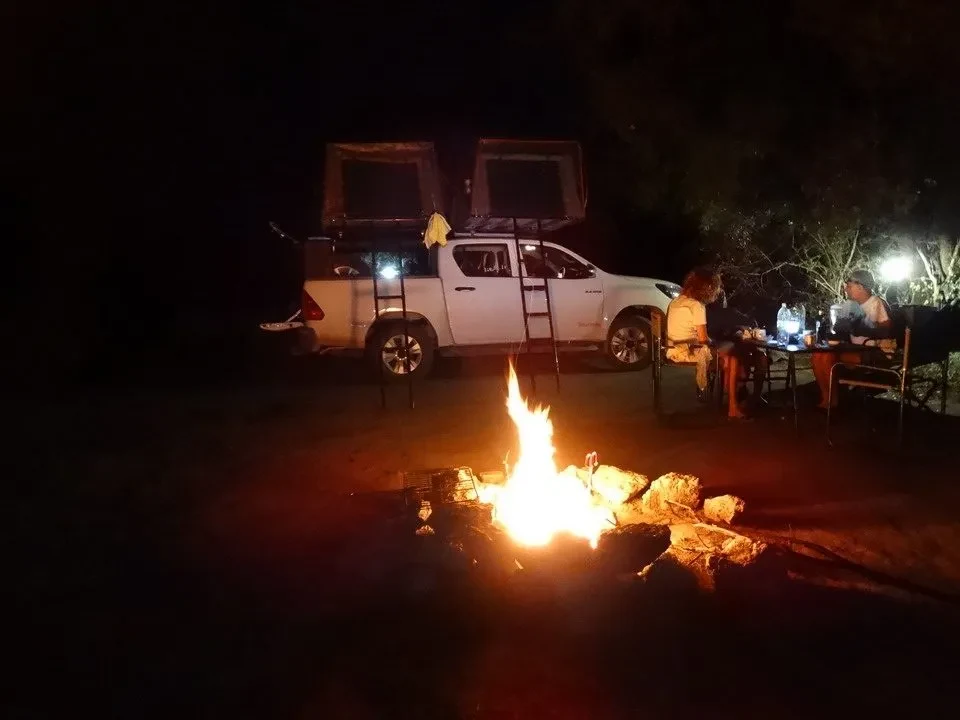
We are at an altitude ranging from 1300 to 1500 meters, with slightly cooler temperatures than the previous days. This is immediately noticeable by the color of the grass and... lush vegetation. After dinner, we enjoy the starry sky with a walk through the woods between the campsites: it feels like we're in a fairytale, and perhaps we really are. The sky without the moon is sparkling, and a sense of majesty and grandeur pervades everything.