Day 5
Varzaneh
Greetings from the splendor of Esfahan. Experience in the Varzaneh Desert.
The urban face of Varzaneh
It's Friday and today is the Muslim holiday, so traffic is light and it feels like any other day in town. After some searching, we find a taxi that takes us to see the bridge. Pol-e Khaju and therefore again in the Armenian quarter of Jolfa, created by Shah Abbas I, who wanted to import the Armenians' skills in craftsmanship into his capital. We arrived in Jolfa, we don't know exactly how freely, in the 16th century, to practice crafts that were lacking in Esfahan at the time. They obtained unimaginable freedom for a Muslim country and integrated into society. Today, you find yourself in a vibrant neighborhood with many shops and restaurants. The courtyard of Vank Cathedral is still decorated for the recent celebrations of 103rd anniversary of the attempted genocide of Armenians carried out by the Turks. The church was started in 1606 and completed around 1665, it has a I found it to be quite austere. From the outside, it reveals a stunning interior filled with paintings and exquisite decorations. It is truly a masterpiece, rich in artworks and icons that make it impossible to know where to look first. The paintings depict various scenes from the Bible and the Gospels, particularly those related to... punishments inflicted on sinners Images that immediately draw the observer in. In a similar style to traditional ones, it contrasts with the more aseptic and imaginative style of Islamic architecture, which does not include illustrated images. The first is more eccentric, while the second is more harmonious. The rich museum is worth a visit; we don't have guides and try to make do with the available texts. We also visit the nearby Armenian Church of Bethlehem... simpler but with less tourist crowding, therefore more enjoyable. Let's retrace this time during the day the path of yesterday evening along the dry riverbed to return to the Pol-e Si-o-Seh and cross it again with a different perspective of light. We meet a couple of girls with whom we exchange the usual friendly pleasantries, discovering that they are Jehovah's Witnesses; quite nice as an interlude between an Armenian church and a mosque. Still on foot, we walk along the avenue leading to the center, stopping briefly at the madrasa and finally at the Majed-e Lotfollah to see its interior, unique, in the vast and splendid panorama of Iranian mosques. While the exterior is impressive with its changing colors depending on the light and solar illumination, The interior is a real work of art., with exquisitely painted majolica tiles, probably the most impressive of all those visited during the trip. One can imagine a peacock's tail shape created by the sunbeams that penetrate from the outside, an intelligent and cunning way to incorporate an "animal figure" into a mosque, something normally prohibited by Islam. The interior of the dome presents drawings similar to beehives that become increasingly smaller and narrow as you move towards the top, giving a sense of greater size. The Verses of the Quran White writing on a blue background decorates the arches, which are themselves bordered by spirals that mark their perimeter, thus complementing the two variations of blue that identify Esfahan. A final farewell walk around Imam Square for some shopping, after enjoying a carrot juice with saffron ice cream, a real treat. And it is precisely in this bustling square, during the festive day, that we experience the most beautiful and exciting moment of the entire trip. We don't exactly see a mosque, a desert or a work of art; when our eyes happen to cross with a young family sitting on the square having a picnic, with two children playing around. We exchange greetings, they gesture for us to approach them, they stand up to greet us as if they are waiting for us, they ask us to sit on the blanket spread out on the lawn and offer us tea. Despite speaking broken English, we manage to understand and communicate the essential things with them. But kindness doesn't need translation. The minutes pass and we have to go, soon we have an appointment with the driver for Varzaneh. But they ask us to stay and invite us to dinner at their home: we explain that tonight we must be in the desert for an overnight stay in a tent; then they ask us at least for ice cream together. With a heavy heart, we refuse this backup invitation as well, not wanting to be late, and almost as an apology, we give them a fridge magnet representing the monuments of our city. They seem delighted by this unexpected gesture, from strangers with whom the appointment was arranged by fate. We say goodbye with mutual pleasure of having met each other and with the equally mutual regret of having to leave, we also say goodbye to the two beautiful and well-mannered children before taking photos as a memory that would have remained in our minds and hearts even without the pictures. But where else could this have happened?

We depart shortly before 2 PM for a one and a half hour drive, leaving that city behind, which with its warm atmosphere and the colors of its monuments will be unmatched throughout the journey, perhaps even in previous trips. Even in the suburbs, every traffic island, roundabout or public space intended as a garden is filled with greenery and flowers. Unable to rely heavily on rainfall, irrigation networks are virtually unlimited everywhere. It's springtime, so the blooms are at their peak, offering Esfahan what other cities provide: a true delight for the eyes and soul. If one were to be cynical, one could think of this as a facade adopted by the regime to give a sense of harmony. But when you look back and discover the gardens created by previous dynasties, it becomes clear that it is indeed a tradition inherent in Persian character.
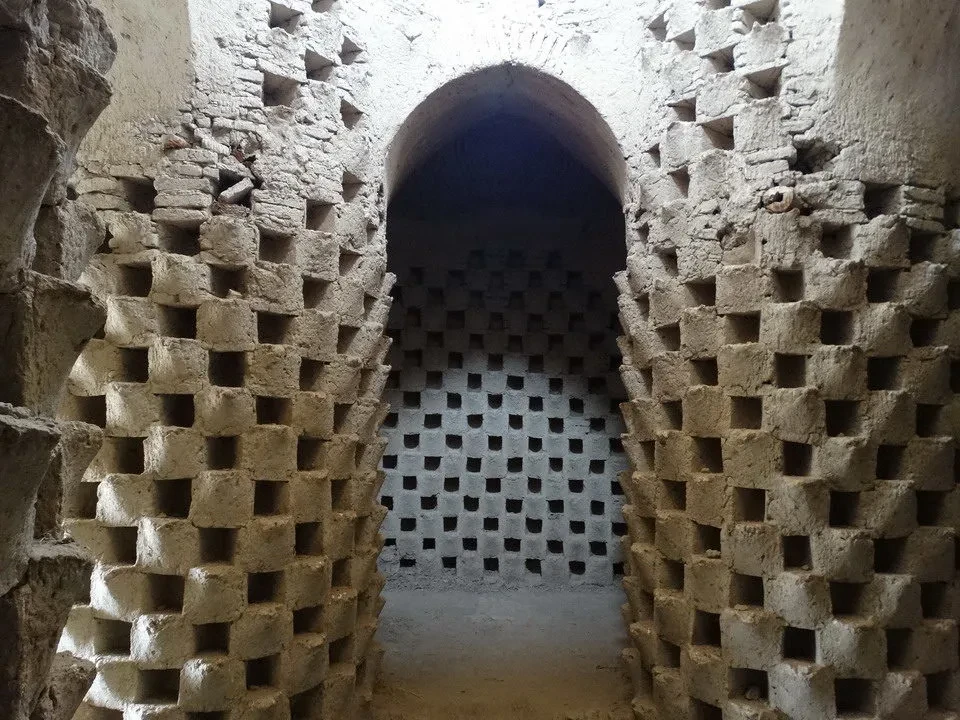
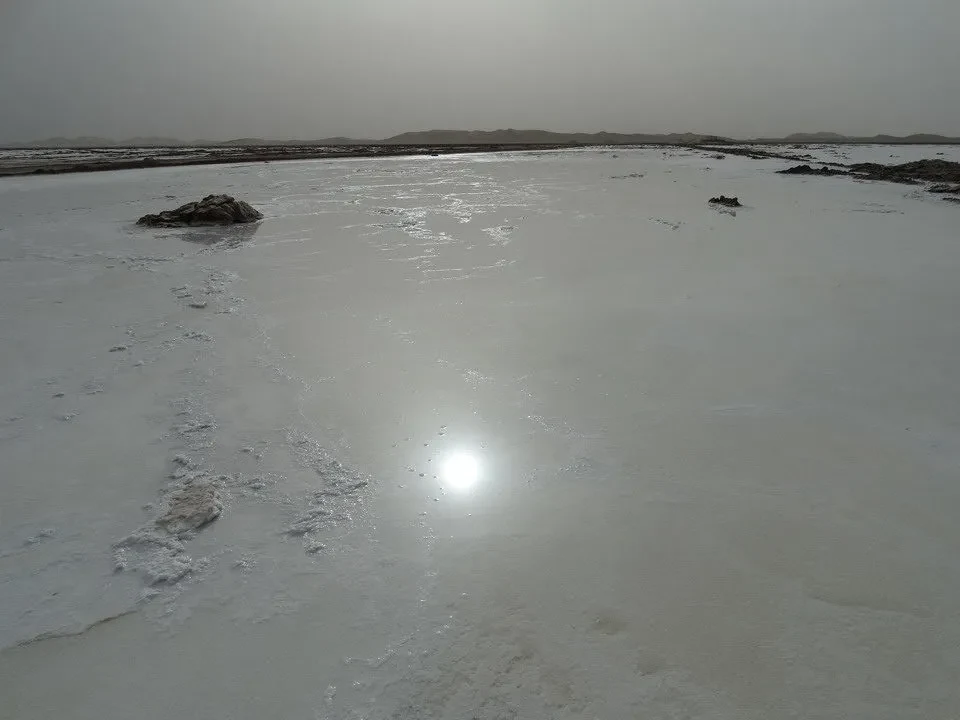
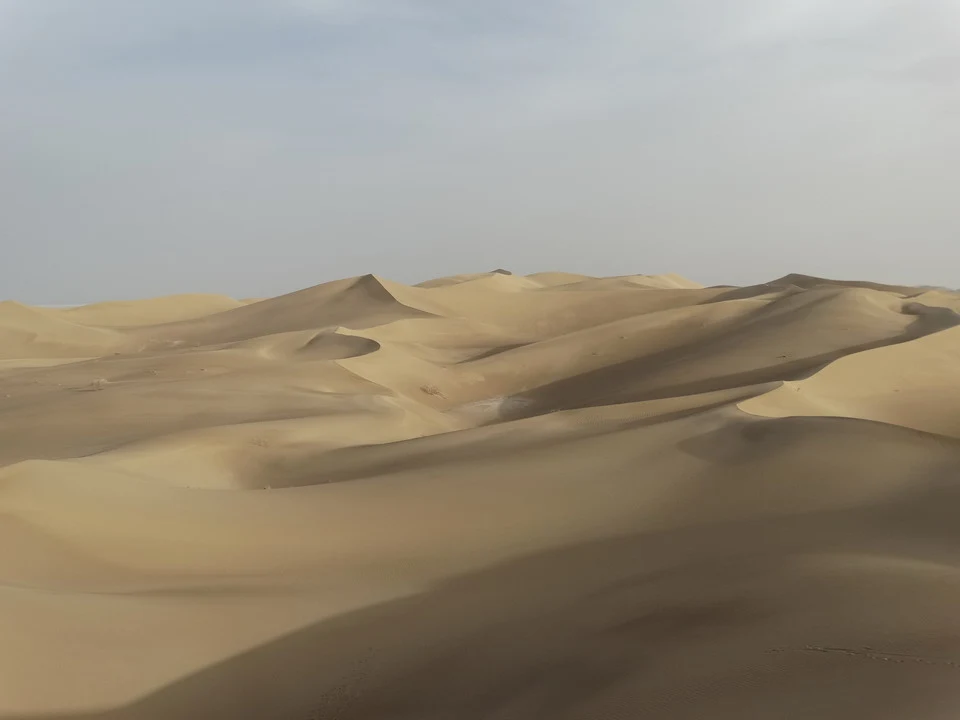
Outside the city, the desert begins, punctuated by occasional small-scale farms. We even see rare rice paddies, a staple of the Iranian diet and present almost alongside every dish but usually imported. Just outside Varzaneh, we encounter rows of tractors parked along the road: we are told that this is due to a strike by local farmers who are protesting against the diversion of water upstream for irrigation in other areas. In recent years, drought has been a constant in this country, and we have seen how Esfahan had to sacrifice its river, which has been dry for several years, by channeling it elsewhere to recover the precious liquid necessary for subsistence and agriculture, as well as gardens. What the farmers of Varzaneh are doing is a struggle between the poor, where authorities had to divert water in an attempt to save the situation elsewhere, apparently at their own expense. We are told that up to thirty years ago this was a prosperous area, where landowners competed for Afghan-origin labor to work in the fields: now it is they themselves who have to emigrate to the city to find alternative employment. As confirmation, we see many unplowed lands undergoing desertification. It's not surprising that these are precisely the first areas to suffer from drought and global warming: located on the edge of the desert where nothing grows, civilization has settled at distances ranging from a few kilometers to several dozen from the Zagros Mountains, whose peaks reach up to 4,000 meters and, despite having scarce snowfall in winter, have always provided sufficient water to the areas below. The water was transferred via qanats (underground channels) or extracted from deep wells and drawn up by livestock using ingenious mechanisms. Now this abundance has largely disappeared; it rains about 10 days a year, and any form of life is unthinkable without external sources. But the large cities are still thirsty and there are fewer and fewer fields asking for water. Fortunately, the last winter was rainy, and a glimmer of hope returns. This will also help us to see... salty lake particularly beautiful thanks to the recent rainfall. We arrive at the guesthouse where our meeting is scheduled, meet the other four guests (including a British woman who has lived in Turkey for many years and demonstrates great knowledge of the area), and Rahoulla, the owner, who recently renovated the guesthouse from a state of complete abandonment and now focuses on tourism in the surrounding desert. She is a capable person, with whom it is a pleasure to interact and from whom we can learn a lot. Not far away, we visit... a castle, although it looks very much like a caravanserai, was used by the local people, with its central feature being the pigeon tower; a real tower built, like many others, before the advent of chemical fertilizers to house pigeon families and collect guano for agricultural use. With an ingenious system, thousands of small compartments were created inside, each designed to accommodate a pair of birds, with slight projections on the lower levels to prevent the guano from falling on the residents below and instead allowing it to settle at the bottom, where it could be collected once or twice a year. Now, they retain a unique charm, and the holes give the structure an almost religious style, resembling a building. We climb to the top of the tower via narrow stairs with high steps (a common practice throughout Iran), from which we have a view of the village and can better appreciate its uniqueness within the desert landscape. We set off towards the salt lake, about 30 km away, to experience the thrill (but mostly the pain under our bare feet) of walking barefoot on the salty crust. In this case, the drought has been beneficial for those who extract salt: in previous decades, the lake (which today measures 250 x 30 km) was covered by a layer of water at least one meter thick, making collection difficult; now there are only a few centimeters of water and it is no longer a problem to reach it. The table salt used in Iran is imported, while the salt from the lake is used for different purposes. When our feet tell us that it's enough and our minds confirm this after about half an hour, we continue towards the sand dune to watch the sunset by walking barefoot up there.
While we wait for 7:30 PM, let's enjoy some sandboarding and snowboarding since Rahoulah also brought a board. Despite some clouds, at the right time... the west is ablaze Offering the magical lights and colors that only the desert can offer. We descend to return near Varzaneh, from here we continue to move in another direction until a new desert area, where there is not much and exactly what we are looking for: in a secluded spot away from everything and sheltered from the wind, our campsite with two tents intended to accommodate groups of four will be set up for an overnight stay. As darkness falls, the fire is lit, and around it, inviting... chicken kebab, eggplant and tomatoes that we won't have any trouble finishing. There haven't been any snakes reported in the area, just a few small scorpions, but only in summer, and that's what we believe. The temperature doesn't drop much, and it's nice to take a walk on the dunes while waiting for the time when tiredness brings us inside our sleeping arrangement. The moon is almost full and serves as a light source, with regret for those who went into the desert to see the stars. In the sheltered valley between the dunes, nothing moves, the silence is total; it's 11 pm, and we think it's best to end the day.