Day 13
Tehran
Tehran: chaotic traffic and smog. Museums, Azadi Tower and the beautiful Dalin Bridge.
Arrival in Tehran
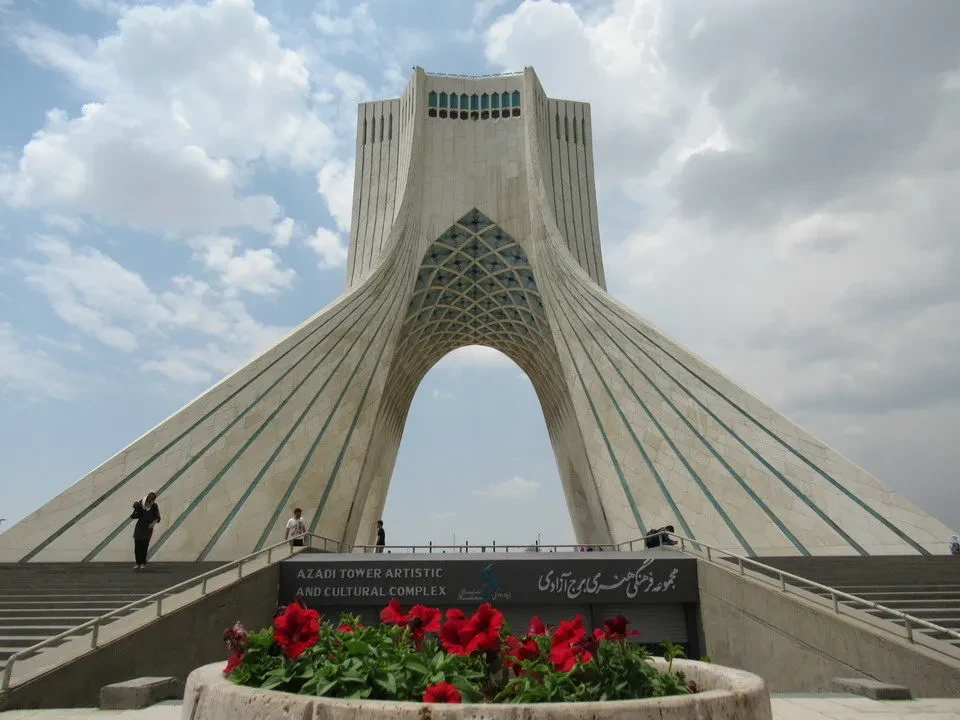
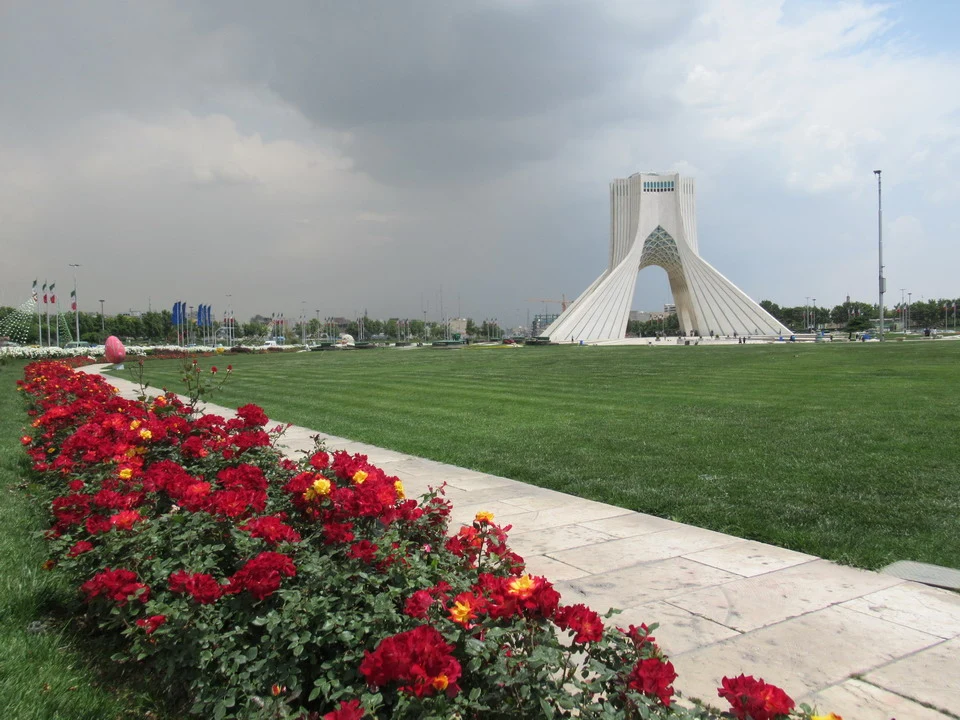
The night passes quietly, although it's definitely not the same as sleeping in one's own bed. After a quick breakfast, we eagerly await the arrival time. The vast outskirts of Tehran pass by, which are far from beautiful like all other suburbs, especially when seen from a train. We arrive at 11:00 am, with an hour delay, but we don't ask many questions. A taxi takes us to the hotel, strategically located near Imam Khomeini Square, from where, immediately after check-in, we… the subway to go to Azadi Tower, located to the west. Literally meaning "Tower of Freedom", it was inaugurated in 1971 to commemorate the 2500th anniversary of the Persian Empire under the name Shahyad Tower, "Tomb of the King," which was later changed to Azadi Tower after the 1979 Revolution.
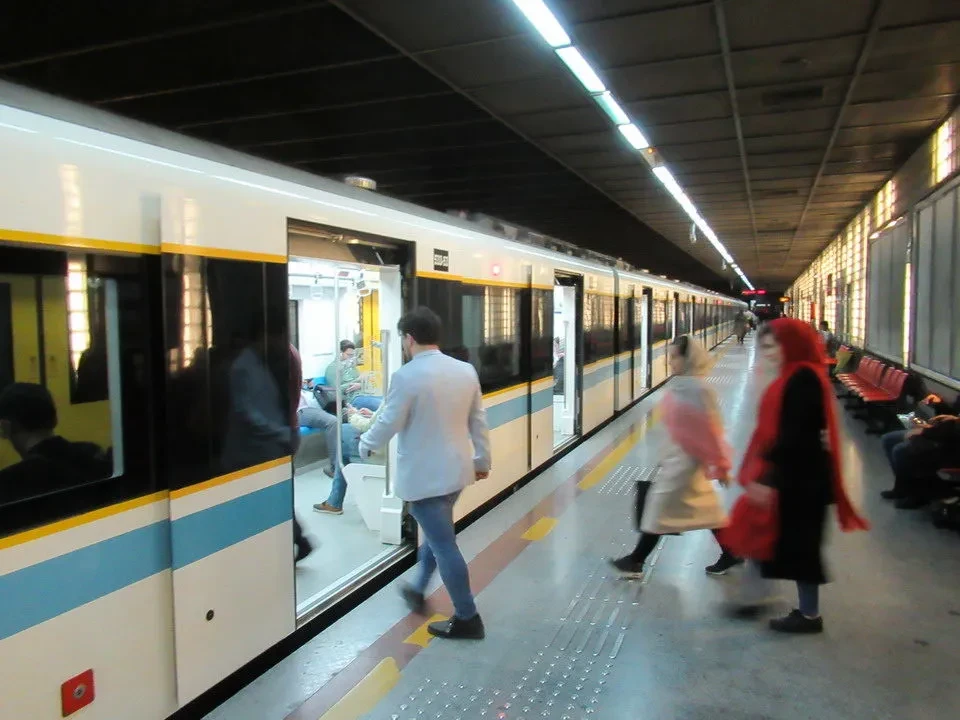
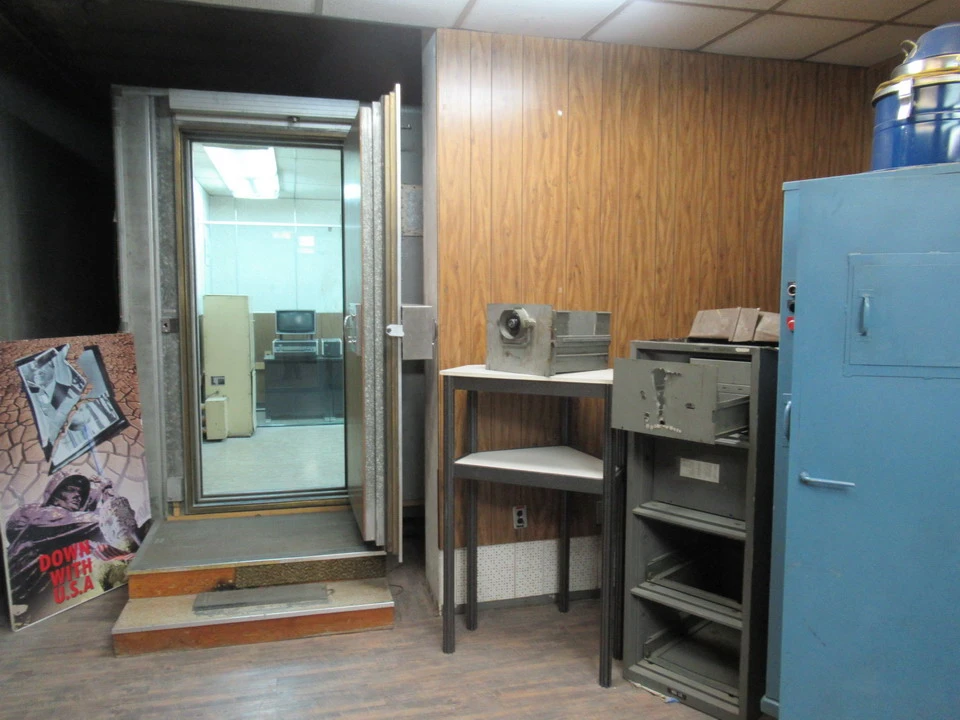
Taking the metro is not difficult; just follow the logic of European systems, and you're done, with the help of descriptions also in English. It's so clean that we play a game of finding discarded cards on the floor; polite people talk quietly, creating only a background hum, behaviors to take as an example. The Tower is obviously located inside a beautiful garden... from a distance it seems even smaller, but when you're there, you can admire its grandeur and the architectural creativity that has made it the symbol of modern Tehran. In fact, the old Tehran only exists in museums, so we decided to dedicate only a small part of our trip to the capital. We return to the city center for an ice cream, waiting for the National Museum of Jewels to open. It boasts an exhibition of some of the most precious and expensive jewels in the world, collected over centuries of royal dynasties. A few drops are falling, we arrive at the museum and there's a queue of European tourists (apparently from somewhere), mostly older people, waiting for their tickets. We said so and go to see it after passing through security checks, metal detectors, scanners, and leaving all our cameras or phones in the storage room. When we finally enter, we find ourselves in a heavily guarded vault. The door is over half a meter thick, and the first impression of this profane place facing such brilliance is that of entering a jewelry store. A jewelry store with priceless value. Crowns made of gold with every variation of precious stones, and especially the two most valuable pieces: the throne and the golden globe with an infinite number of decorations and embedded stones. This collection was mainly gathered from the previous Pahlavi dynasty, a never-ending luxury that contrasts with the living conditions of the population. It's difficult for us, as non-jewelry enthusiasts, to assign any value to what we see before us, and our subsequent visit to the American embassy create a kind of historical connection, in a sort of cause-and-effect relationship if we look at it that way. The Shah had squandered the oil revenues and the people rebelled, overthrowing him and invading the embassy of his protector: the United States of America. Entering what Iranian propaganda calls the "American espionage nest" takes us back to the sad days of 1979, when Iran was simply changing its form of dictatorship. Both externally and internally, everything remained as it had been then. A zealous guide in her early thirties shows us a video explaining what happened. She does so with such perfection and coldness that she causes a wave of frost to run through her explanations, so that the mouths of those listening don't become filled with unwelcome questions. Right here, where diplomacy should have reigned, we find… advanced tools regarding the rules of the time concerning security, control, and destruction of documents or evidence when necessary. It's easy to form an opinion, but it's much more difficult to arrive at a single, definitive understanding of what happened. Just as we leave unanswered the question of who were the good guys and who were the bad guys, it never makes sense in such a context. And this issue is resonating strongly in people's minds right now, almost 40 years after the events in Tehran.
We continue our journey, still harboring our doubts, to visit the simple Armenian Cathedral of Sarkis and to see some interesting murals that are located nearby.
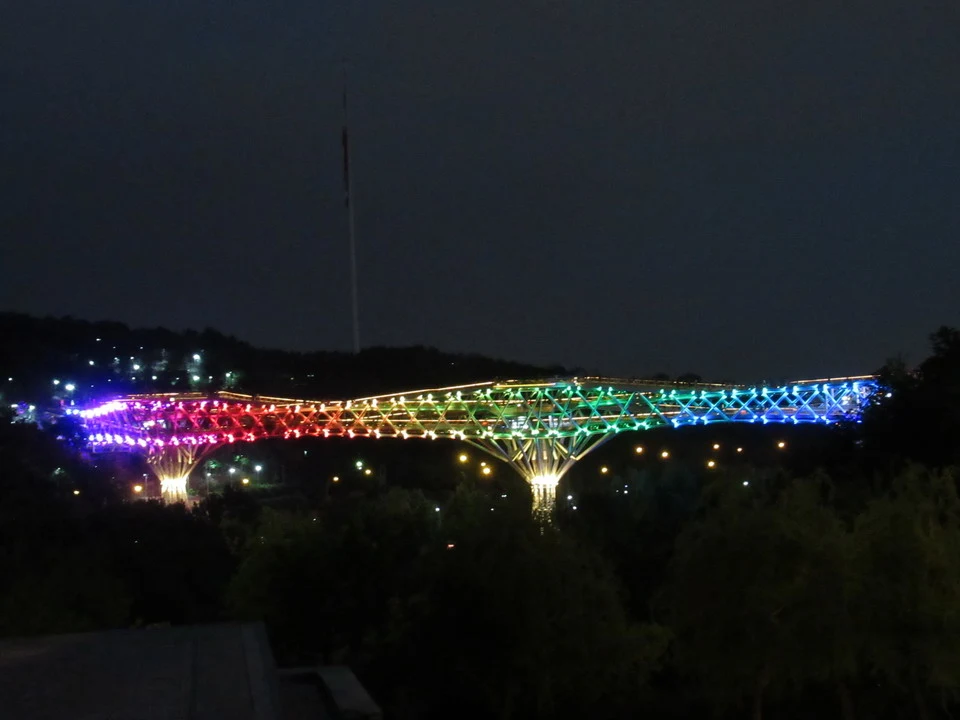
The urban face of Tehran
A taxi takes us to the Dalit bridge, an open-air work of art, but reaching it requires a real challenge due to urban traffic. Plastic and streamlined at the same time, measuring 270 meters long, the bridge was built using innovative methods. It offers a view located within a green space that serves as a boundary between... southern part and that one too north of the city. In particular, this one is interesting, just below the impressive and still snow-covered Elburz Mountains. It would be fantastic to go skiing here in season, with the city opening up right beneath you. We will have dinner at a restaurant chosen nearby so that we can see the bridge and the illuminated city The last view of Tehran is exactly what we hoped for to conclude our trip properly. We just need to head towards the adjacent park, which is not very crowded and safe, and get on the first subway station that will take us to the hotel area.