Day 2
Kashan
Kashan: Nushabad, beautiful Persian gardens and impressive traditional houses.
Morning in Kashan
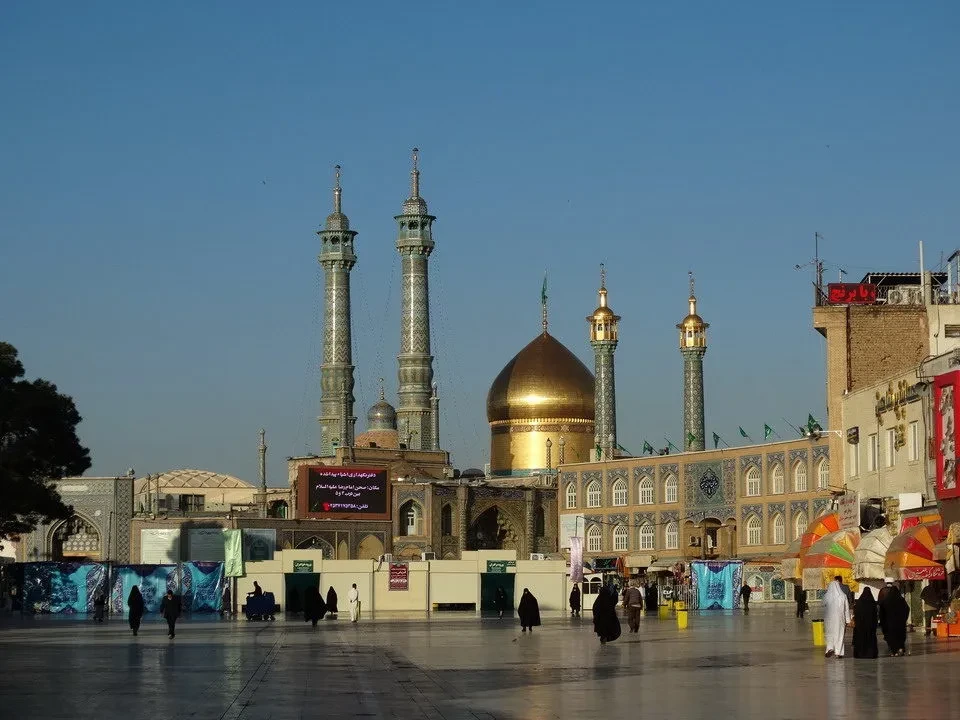
Since breakfast is served starting at 8 am, we decide to take a walk in the city center. The weather has improved and hopefully we can get some decent photos. The traffic at 7 am is already quite busy, so we need to be equally alert when crossing the street. As we cannot enter the Mausoleum due to the lack of accompanying people who start their shift only at 8 am, we settle for enjoying the morning quiet from Astana Square, with a view on the magnificent golden dome just Bathed in the soft morning light.
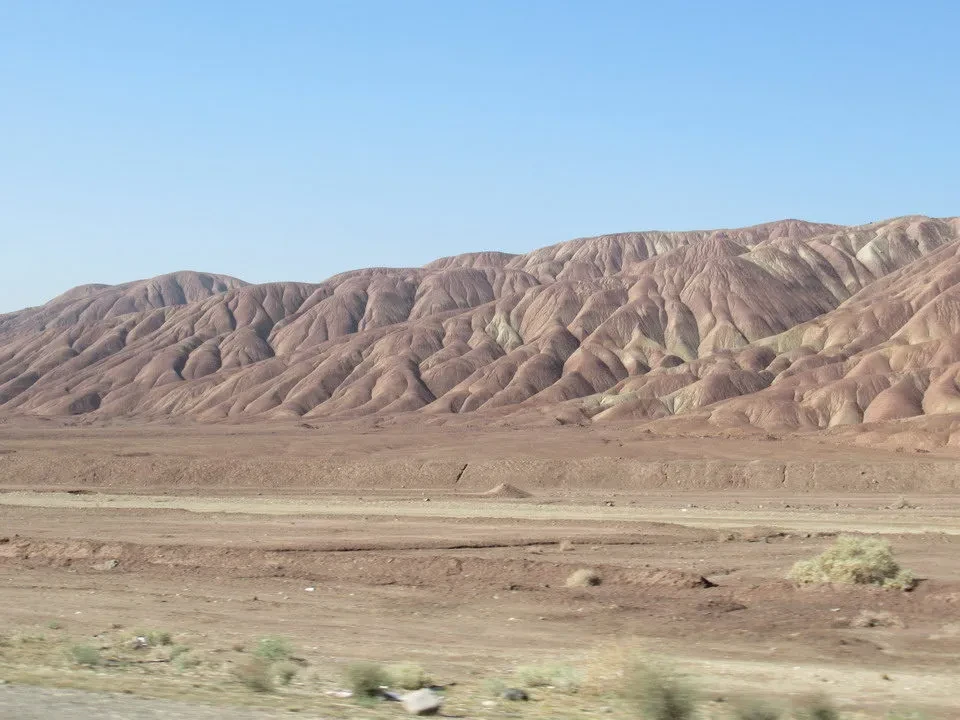
For breakfast, we tried the first (and certainly not last) carrot jam, amazed at how it never seems to appear on our tables. It was also delicious to have scrambled eggs served with tomato and, well, whatever other ingredient. When it's 8:30 am, the driver is ready to pick us up for a journey of about 100 km to Kashan. Along the way, the scenery is... colorful ravines that slope towards the desert, all interspersed with green areas dedicated to agriculture and properly irrigated. Three lanes of highway dotted with frequent observation points from which the police measure speed. It is worth noting the frequent construction vehicles parked like vultures waiting for a rescue call from one of the many abandoned vehicles on the road. The program includes a stop in Nushabad, on the outskirts of Kashan, where there is a sort of parallel underground city. This consists of tunnels on three levels (the first for storing goods, the second about 12 meters underground for living, and the third to be used as an escape route and to store tools). A guide takes us first to see the huge tank To conserve water, so they explain that the tunnels were dug a thousand years ago, they were used in the 13th century during the Mongol invasions and were still used until around 1930 for similar or even just to escape the heat. Then they were forgotten, and in recent years, some elderly people who had heard rumors claimed of an underground city, a mixture of madness and legend. In reality, the tunnels did exist and have been brought to light. A group of volunteers secured 500 meters of the route, and UNESCO promised them that if they could reach double that length, it would be classified as a world heritage site. The corridors are narrow to allow enemies to access only one at a time, and they are full of clever traps for defense. Unfortunately, in recent years there have been floods that have made some sections unusable. Because the winters are harsh, it was often necessary to light a fire for heating rather than cooking; this required creating ventilation shafts to allow air circulation and smoke evacuation. It's interesting how sensitive the system was to provide even a minimum of privacy for the toilet: since there were no doors, anyone going to the bathroom would move a medium-sized stone, which meant that it was occupied. Life in the tunnels was undoubtedly linked to emergency situations, as the conditions are decidedly cramped and darkness is constant, despite the use of lamps containing special fats to prevent them from smoking. Those coming from outside had to make themselves heard and pronounce the password (ouyi) to be recognized by the guard posted below; this gave rise to the name of the underground complex as it is known today. The water arrives via long irrigation system (underground channels that draw the precious liquid from mountain springs and supply the cities located at the edge of the desert), as we will see elsewhere. The qanat system is indeed responsible for the creation of settlements in ancient times, and their survival in a harsh and arid environment. These flowed into enormous cisterns (we can see one right here) or ran along to allow their use as running water for irrigating gardens, flowerbeds, and generally all the green necessary for physical and moral sustenance.
The town itself doesn't have much to offer on the surface; the scorching sun makes the underground tour even more enjoyable. In the meantime, we get to admire the first urban furnishing that adorns all cities: gardens and flowerbeds. There are no roads, roundabouts or public spaces of any significance, even peripheral ones, that aren't adorned with green lawns and trees alternating with the colorful flowers. Perhaps a legacy from the past, certainly present in Persian DNA and linked to the pleasure of making something bloom in desert lands, this public green space is a constant created with artistic style and carefully maintained. Currently, the political system also plays a role, aiming to create a sense of order and cleanliness, both social and moral. This cleanliness is truly noticeable: it's difficult to find litter or stray waste, a result of enviable civic education at our latitudes, regardless of the method used to instill it. Nearby, there is a inn with dried mud walls, the interior is empty and housed the caravan with its tents. It's easy to imagine it bustling with merchants and camels in a continuous flow of goods being transported.
Arrival in Kashan
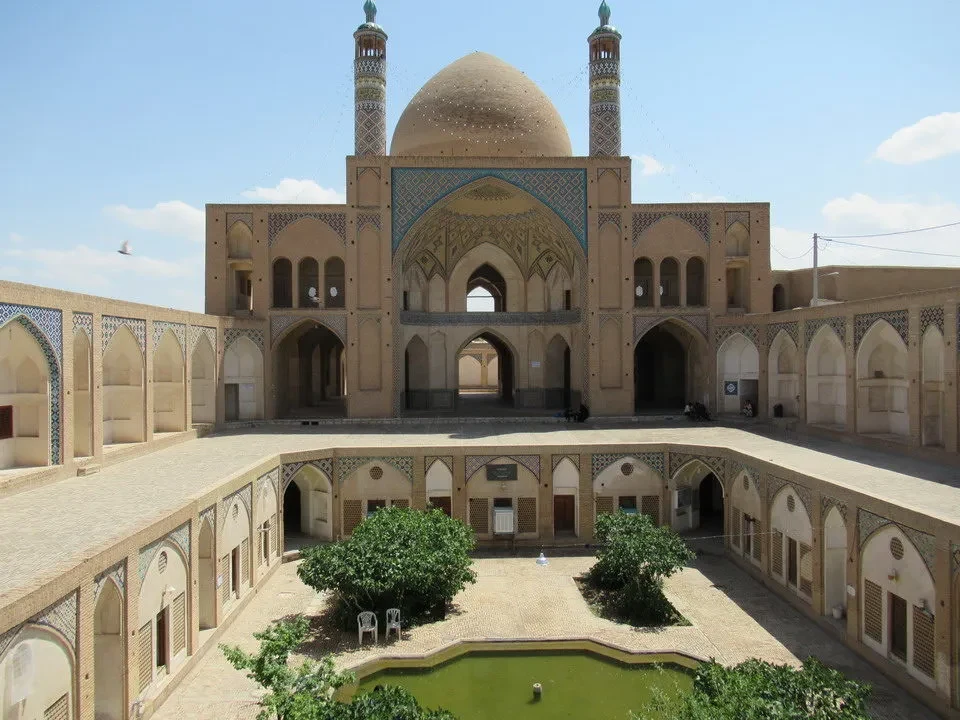
We arrive in Kashan around noon, and then head to the hotel to drop off our luggage. traditional hotel Located in the old city center, a maze of quiet streets where cars can only squeeze through with difficulty, hoping not to encounter anyone coming from the opposite direction. The traditional hotels are former homes of wealthy bourgeois or cleverly renovated and transformed caravanserais. They are usually found in historic centers, offering an atmosphere of yesteryear while providing good services and have a very unusual layout for us, with steep staircases that converge in the central courtyard where there is always a small fountain intended to provide at least a sense of coolness on the hottest days, or that steeply ascend towards the rooms in a complex that ultimately turns out to be harmonious and welcoming, almost becoming familiar. Fig trees and ornamental plants further enhance the homely atmosphere. But it's time to move on, trying to get out of the central streets to find a taxi that will take us to Bagh-e Fin, gardens located 8 km away, built by Shah Abbas and including several buildings, including a hammam where Amir Kabir, the first Iranian Prime Minister from 1848 to 1851, was assassinated. The classic Persian garden It includes the presence of four key elements: a perimeter wall to prevent intrusions from the outside and also protect against sandstorms or at least wind, water channels provided through the ubiquitous qanat system, which symmetrically cut across or surround the garden, trees, flowers, and a small building in which the gentlemen were seeking some coolness on vacation days used to meet delegations. The gardens perfectly respect the symmetries and are normally square or rectangular in shape. This is a refined art, well-maintained at the time of design and well-maintained today. Among the trees there is a good representation of ancient cypresses, shining green under the sun of a classic spring day, warm when directly exposed to sunlight but immediately cool when moving into the shade in ventilated areas. The taxi was driven by an elderly gentleman who told us he was 84 years old and spoke decent English; unfortunately, he tried to take advantage of tourists who needed a ride rather than a guide. Despite having agreed on a price, he tried to inflate the fare for the round trip, but we limited ourselves to paying twice the amount agreed for the one-way journey. While visiting the gardens, we were astonished to see a typical working-class neighborhood with large apartment buildings standing side by side without harmony and with very little green space around. We discovered that it was affordable housing built during the Ahmadinejad government, the previous head of state, who used these systems to urbanize the populations of villages in order to better control them. Not far away is a residential area with villas under construction; however, many construction sites are stalled perhaps due to the country's economic crisis. We also discovered that winter temperatures can drop below -15°C with moderate snowfall blanketing the city, while in summer they can reach 40°C. The next stop is the Aghal Borzog Mosque, not one of the oldest but the main one in the city in terms of architecture and decorations. No longer used as a place of worship and with a large basin for ablutions in front, it features beautiful tiles and a grandeur that we are beginning to appreciate. Here too, in order to promote air circulation, efforts have been made to create arcades and corridors. We continue on to see one of the traditional houses from the Qajar era, specifically the Khan-e Tabatabaei... where the gentlemen lived in previous centuries, and of which Kashan has many examples. They are all different and designed with maximum creativity and attention to climatic needs, but they also share the same characteristics in terms of available space and small basins from which water spouts emerge. It is a complex maze of stairs and rooms that lead one into another, colorful mirrors that further enhance the courtyards. Everything is always decorated with meticulous attention to detail, flowers or ornaments that do not represent human faces, are prohibited by Islamic religion. It is clear that those who lived here must have been wealthy, as evidenced by the size of the cellar and the underground storage for food supplies. There is also a beautiful kitchen and a meeting room for business meetings. The external doors (and still have) two delays They produced different sounds: one was used by women and the other by men, so that when someone knocked from inside, they knew how to respond; if it had been a man knocking, the women would have needed to retreat to other rooms and wear appropriate clothing.
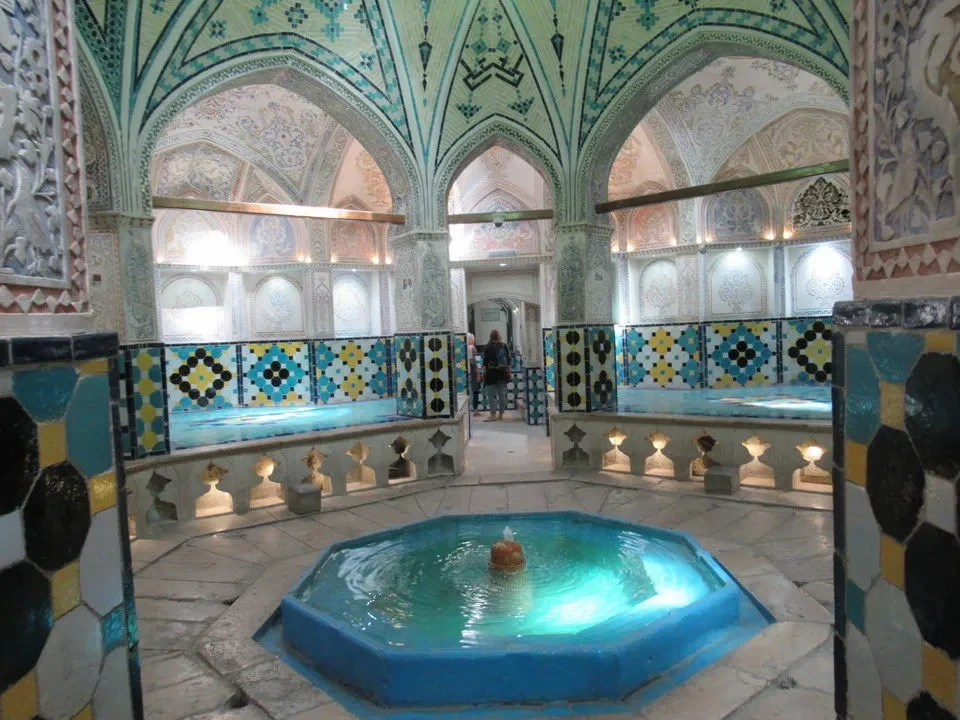
More and more tourists are appearing, despite the austere Qom. It's now time to meet with our guide who will provide us with interesting details about the city's history and especially its customs. We immediately visit the Hammam-e Sultan Mir Ahmad(public bath) where we were told about the purpose for which the rooms were used and the internal life. Although it could comfortably compete with a modern spa of today, without home services, people would come here every 10/15 days to wash. They would spend the entire day there, to stay cool, relax, but also to meet people and discuss both business matters and lighter topics with friends. There were separate areas for dressing and washing, some of which could be used alternately by men and women, who always had access to separate facilities. There were rooms with hot (provided by an underground brazier) and cold water. For the wealthy, there were also exclusive rental rooms available to ensure better privacy. Even though they used separate facilities, it was one of the best places to find a girlfriend. Celebrations or ceremonies also took place in the hammam.
Even today, it is common for a young man to tell his father about his love interest, and the father then agrees with the girl's parents, and together they decide on the marriage. Once the agreement is reached, the young couple can go out together, while still maintaining appropriate behavior. Strictly speaking, this would also not be legal, as they should only be together after the wedding. In reality, depending on the situation and the city, more and more young people date in a Western style. It is clear that this happens more often in large cities; rural villages are easier to control, and the mentality is even more traditional. The situation is, however, changing very rapidly thanks to social media. Regarding marriage, according to religious law, a man can have more than one wife, while under civil law, it is only possible to have one. If the wife agrees to a polygamous arrangement, she signs and at this point, it becomes possible under civil law as well. Both spouses have the same legal rights: divorce is contemplated, and it is quite easy to achieve if both parties agree, and the process takes place within a month; otherwise, the time can be significantly extended. In almost all cases, Iranian men are limited to having only one wife. The fact that many marriages are somehow reconciled between families, or at least agreed upon, leads to a significant increase in divorce rates, reaching 30% in recent years among younger generations, which is unthinkable for older generations. Single people were once viewed with suspicion and distrust, but now they are becoming increasingly important in Iranian society, given the economic difficulties and the lack of attachment to traditions, which in some cases are assimilated into regime demands.
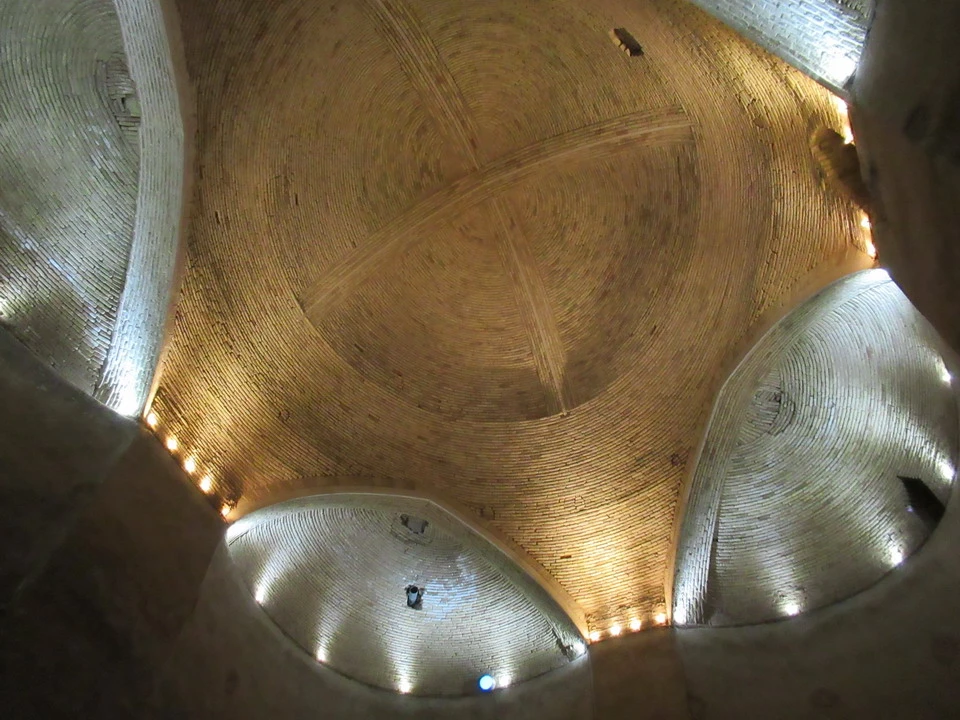
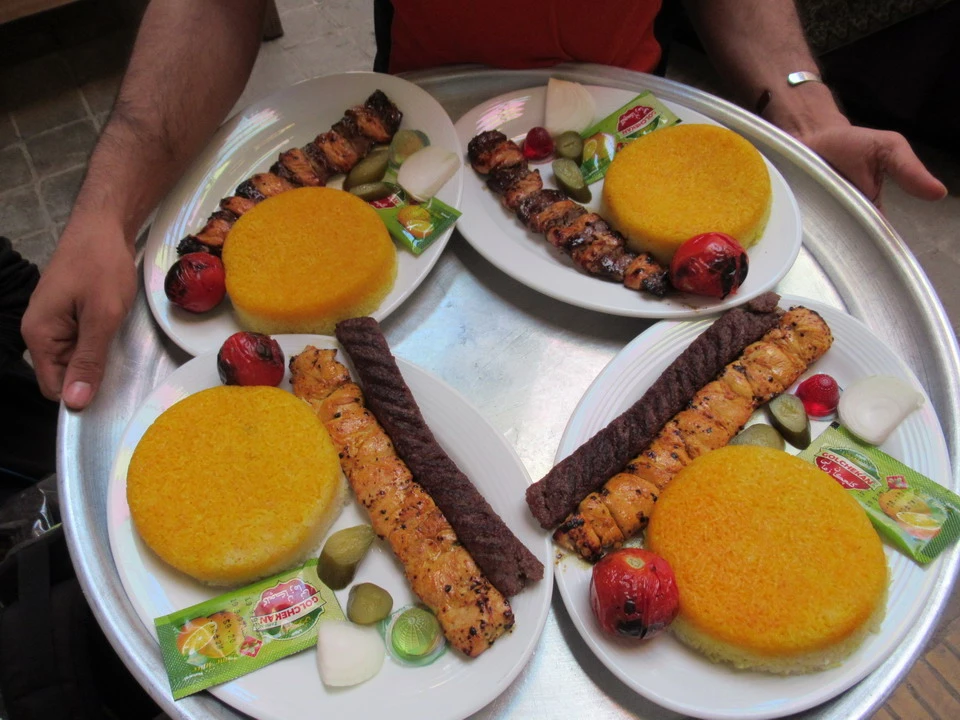
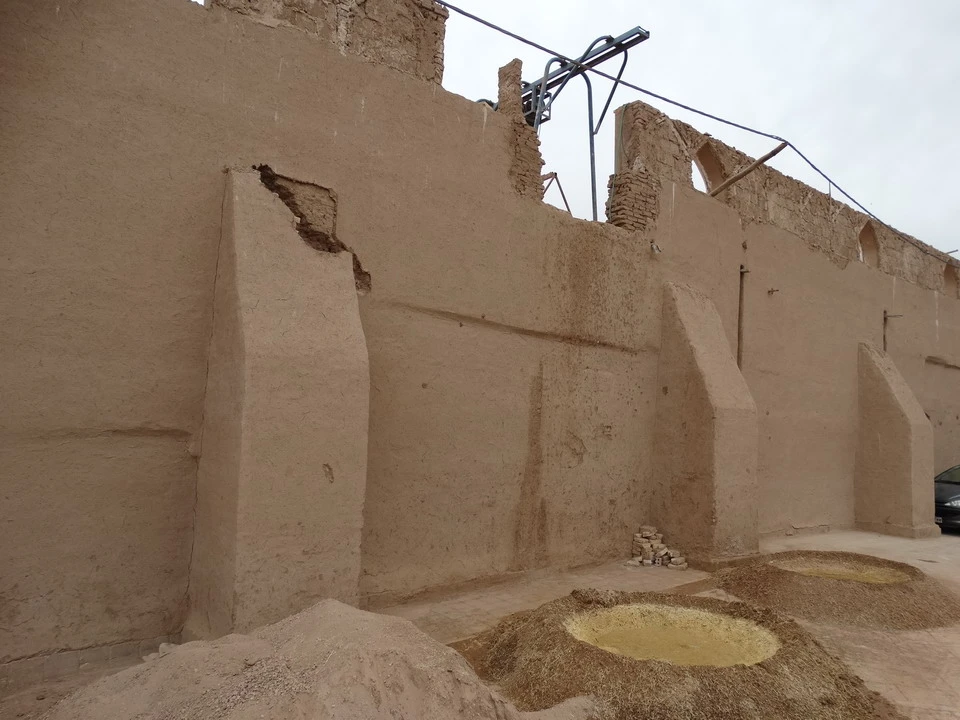
Let's see, not far away, the old walls covered in dried mud that surrounded the city and the ice rink: a huge basin with a dome-shaped roof inside, where the snow was made to slide and freeze so that it could be used during the hot summer months. I would like to say a few words about the building materials used by the Persians in previous centuries, which are still perfectly relevant today. The bricks could be of two types: sun-dried clay or baked. In particular, in the first case, the resistance was much lower, so it was necessary to have a covering that prevented the material from crumbling in case of rain. This would create a mixture of soil straw to form a mud mixture used as a coating similar to lime, perfectly smoothed to cover the walls. Even with the scarce rainfall, the covering needed to be replaced after one or two years. The aesthetic result is significant, and the cities end up having a uniform reddish color. This system is currently in everyday use (we have seen several construction sites where it was applied), and it is practically identical in all cities. We enter the bazaar that is coming back to life after lunch, with shops reopening around 4 pm to continue until around 8 or 9 pm. It is considered one of the most interesting; although renovated in the 19th century, it is a popular place. commercial center for at least 800 years. Along the gallery surrounded by shops We cancel our stay at a inn... which owes its originality to having not been restored and still retains many original features, including the people who frequented it, now no longer travelers but vendors. Caravanserais can be distinguished into two types depending on their location. Comparing them to a modern bus line, we can talk about intermediate stops and termini: those in the desert served as a rest stop for men and camels, as well as a defense against external attackers who sought money and goods, also serving as a trading point, since merchants rarely made the entire journey from east to west along the Silk Road. These buildings represented the terminals of various segments along which goods passed, where they were transferred from one camel to another. The second type of caravanserais was located in cities, where they were used by merchants as a logistical base for selling their products in the bazaar. This was a dense network along the main spice routes, precious goods, carpets and anything else that interested European and Asian bourgeois, located 30 km apart from each other, i.e., the distance that a camel could cover in a day. During the hottest months, the cool hours of morning and evening were used for travel, so the buildings were equipped with lights to be visible from afar, which are rightly called "desert ships". The bazaar continues along a street, which is 4 km long, making it the longest in all of Iran, where there are various categories of merchandise, from vendors selling copper equipment to those selling... carpetsThese are a must-have in the decoration of a house or any Iranian environment. They can be found everywhere, and when they become worn, they are used to cover the bases of the carts that move along the bazaar. As they represent excellence and national pride, importing other carpets is prohibited. They range from simple kilims to more elaborate ones produced by nomads (which are very affordable but rich in plant or animal figures typical of their regions), to a wide variety of classic carpets whose value varies depending on the weaving and size, mostly from western Iran, made of wool of different weights and silk. Some have such a large surface that they can cover a whole room. The classic medium-sized carpets are worth around €300/€350 (much less than what you would pay here), and many indicate the date of production, which can be 20 or 40 years old, guaranteeing that the carpet can be considered stable over time. It's a real treasure to find them in Iran, where they are not included in credit card circuits! Next, we will try carrot juice: while here in our country carrots are almost exclusively considered vegetables, Iran has found a good way to enjoy them by squeezing them to obtain juices, jams and ice cream. A true pleasure, even melons, watermelons and pomegranate There are no issues. A walk around the city center allows us to see beautiful flower gardens, thanks to the spring season with its roses and other colorful varieties. At the end, we get back to the neighborhood of traditional houses to stay at the restaurant recommended, frequented normally by locals. The food is delicious. and we practically spend nothing. Unfortunately, we will continue to confuse ourselves in the following days with the exchange rate. Since the Rial is extremely inflated, Iranians quote everything in tomans (effectively removing one zero from the Rial), although prices are sometimes correctly expressed in the current currency. In the case of prices in tomans, it is therefore necessary to multiply by ten and divide by approximately 60,000, or to divide by 6,000, but at this point you need to add a zero when taking money out of your wallet. In theory, there's nothing difficult about it, but when you're short on cash, multiplications and divisions are less automatic. Perhaps we were more accustomed to the time of the lira.


A leisurely stroll leads us to revisit a small mosque inside which are gathered some worshippers who pray, and after that Bozorg Already visited in the afternoon, beautifully illuminated. Although not one of the most famous in the country, at night it takes on a charming appearance, thanks to the water that collects in the small basin in front. It's time to rest after seeing the distinctive features that characterize Iranian cities. We stop for a while in the hotel courtyard, enjoying excellent black tea mixed with carefully dosed herbs, available for guests to enjoy on the characteristic and comfortable sofas covered with a soft wool carpet. The warm air and subdued lights restore the soul in a relaxed and restorative atmosphere.