

Iran
Iran, a hidden gem: ancient civilizations, breathtaking architecture and a welcoming culture in a country full of surprises.
Map
Iran map - complete itinerary
What are the reasons that push you to seek risks in Iran? But don't you know there is a war? In so many places around the world, why right there? But as we all know, the Devil is never as bad as he is painted, and it is still worth meeting him to get to know him. It is good to know what is good, but it is important to also know what is evil, to explore it, understand it, and, if possible, avoid it. But neither the Devil nor evil have been found in Iran. This does not mean that the trip was unsuccessful! We did meet a country and culture very different from our own. We saw traces of civilizations before ours, a pervasive religion, and a state that uses religion to control everything. From this point of view, we are not far removed from our Middle Ages: it takes little effort to become like Giordano Bruno in today's Iran. We consider ourselves evolved, and we have also found other ways to conceive of evil, creating new evils within our own society. But in Iran (the name comes from the land of the Aryans, which replaced the historical Persian with the arrival of the last dynasty in the 20th century), we mainly met wonderful people, confirming what was said and read before departure. We encountered contradictions and many questions remained unanswered. The Iranians today are the descendants of an evolved world; their intelligence is palpable. It is hard to understand how they could be relegated to a corner of the world. Is it our fault as Westerners, or theirs? Who among the two contenders is trying to dominate that part of the world? The fact that they are Shia in a predominantly Sunni Muslim world, which itself is divided and united only to oppose the followers of Caliph Ali, does not make their coexistence in the Middle East easier. But we know how religions are shaped according to moments and political interests, as the historical will of God is made compatible with more secular interests, finding in the sacred texts the right phrases to argue one's own reasons and interests.
How many common elements converge between the recently visited Iran and other recent travels: a society steeped in religion in Tibet and that of the Shia faith, the mysticism of so many places of worship and domes that make them resemble sisters from Kathmandu, Southern Africa where humans first took their form, and Persia where civilization developed, making our own seem relatively recent. The routes of Marco Polo, traveled in China, find their Western development here, where the Venetian traveler passed through twice, even under difficult circumstances. What unites us and what separates us: nothing marks a line of continuity like history, and nothing marks lines of religious and political division like the present. It's a real shame: the selfless hospitality of the Iranians has preceded us from the very first readings about this country. Why must we be so distant and distrustful, pulling at religions and different cultural visions that could easily be overcome, instead of trading and exchanging goods and services that everyone needs, as was almost a thousand years ago?
When discussing general rights and particularly the status of women, it is difficult to speak neutrally without being criticized by Western or Eastern minds: stating that it is part of their culture risks endorsing a discriminatory treatment and against any form of female emancipation. Conversely, opposing religious rules that impose a subordinate position for women leads to insensitivity towards a thousand-year-old culture deeply rooted in those regions.
Another contrast is evident in the approach to religion. While the Persians proudly distance themselves from Arab culture, which they consider crude, they have fully adopted its religion and its rules, especially regarding prohibitions and women's status.

Seeing the devastation caused by Alexander the Great's troops, which destroyed the splendor of Persepolis, tipsy from military successes and especially wine, it almost feels natural to legitimize the ban on alcohol imposed by subsequent Islamic conquest forces.

PRACTICAL INFORMATION:
• The trip: as always, we had studied the route that seemed most suitable for us, combining cities (mosques and bazaars) with the experience of the desert and the Meymand hermitage. We proposed this to several local agencies to arrange overnight stays and connections between the cities: some offered luxury tours, while others simply didn't respond as they considered the trip too demanding and unfeasible. The only ones who understood us were the friends of TAP Persia, who quoted convenient solutions and a taxi service that would pick us up from one city and transfer us to another. This was exactly what we were looking for to complete the trip independently and without wasting time. Traveling by bus or train would have been more romantic but definitely more expensive in terms of time. Returning from Shiraz, however, was done overnight by train, allowing us to save time and avoid an internal flight, which we weren't very confident about in terms of safety. Given that we knew at least some basic English for travel, this is undoubtedly the solution we consider best for traveling in Iran.
• It's also a solidarity vacation: much of what was spent went directly to small business owners who were actually providing services, without powerful intermediaries.
• Having a local contact is also helpful because credit cards don't work in Iran, so you need to bring all the necessary cash with you. As a result, it can also be more difficult to make bookings from abroad.
• Visa: the agency handles obtaining the e-visa and insurance (costs €30 and has good coverage – recommended) required for visa issuance. Once you arrive at the airport in Tehran, you need to pay the €75 and wait a few minutes while the process is completed. Afterwards, the information is entered into the system, and the police officer in charge can stamp it.
• Exchange: when we were there, there was a significant devaluation taking place. The interest rates charged by the banks are unfavorable. It's useful to change currency through someone you know or ask about changing money on the street. Although it's not legal, in certain situations it can be the best option.
• It is possible to have a local debit card pre-paid. It is accepted everywhere, even in the smallest establishments and works perfectly. To check your balance, simply visit any bank's ATM. This system eliminates the need to constantly calculate and carry large amounts of cash. Fraud is practically non-existent, to the point that shopkeepers often ask customers for their card PIN; here, they would be met with a disgruntled refusal.
• Being outside of banking systems, it is currently impossible to bank transfers Direct flights. Some have an account in Europe and can pay an initial amount from there. However, be careful not to write "Iran" in the payment description: nothing special happens, but you risk experiencing delays in the transfer arriving at your destination or having your bank ask about the true purpose of the transfer.
• SIM card: It's useful to have one, even though our phones can communicate via the Wi-Fi available in the accommodations. A local SIM card with 3 GB of data costs €5.
• The power outlets They are the same as those we use here, but with two extra features.
• Costs: given the high inflation, the costs are significantly lower than our usual standards. A meal at a good restaurant can cost around €7-8.
• Communication: some websites are blocked: La Stampa, FB, Twitter and Youtube. The Ansa website is instead accessible. To communicate, we mainly used Telegram (but it was blocked during our time in Iran) and WhatsApp. We also used WeChat in the past, but it was abandoned as it's a Chinese app and therefore easily monitored. Instagram is very popular. Sending emails with the @libero.it account doesn't work; it's better to use another one like Gmail, Virgilio, etc.
• Uses: in a society that is slowly secularizing, it's increasingly common for men to offer their hand to women, but it's best if non-Western women take the initiative to avoid embarrassing the other person. Regardless of religious aspects, there are certain behaviors or attitudes that they are prevented from doing primarily due to habit. We don't need to change them during our visit. We had read that it's not advisable to raise your thumb as a sign of approval, which is equivalent to giving the "thumbs up." In reality, young people do this regularly, adopting the Western meaning of the gesture.
Itinerary
Travel days
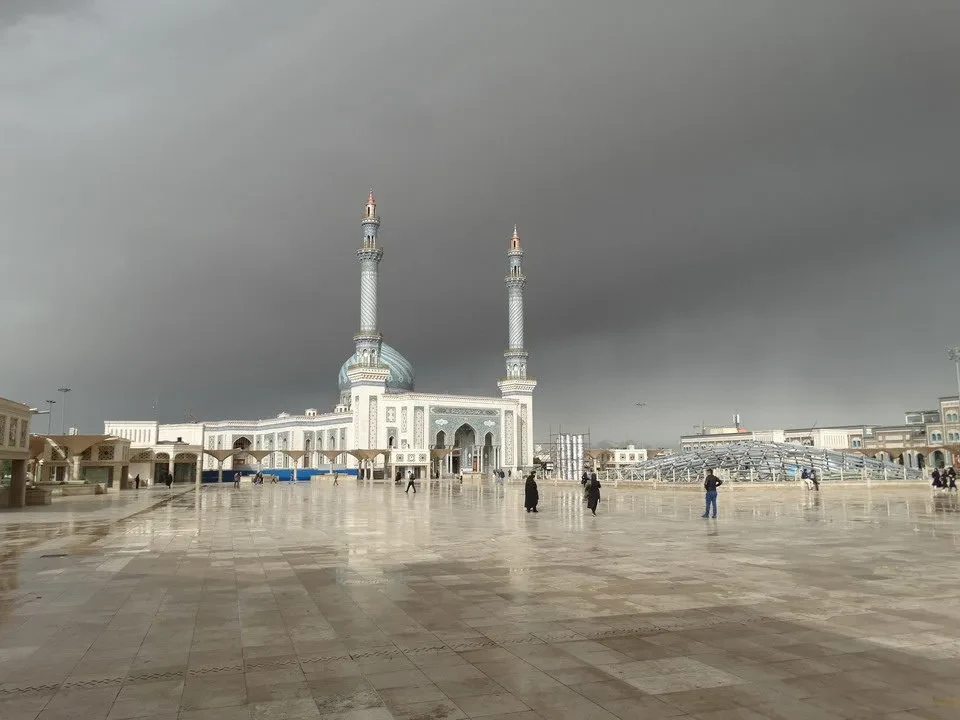
Qom
Qom: The journey begins with the most conservative city.
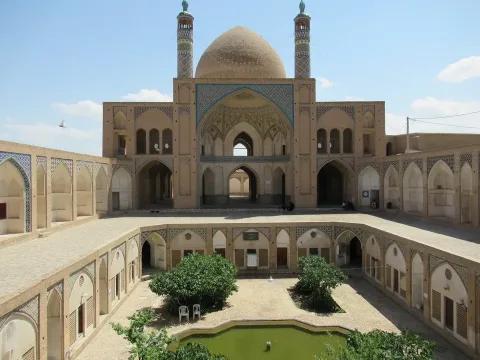
Kashan
Kashan: Nushabad, beautiful Persian gardens and impressive traditional houses.
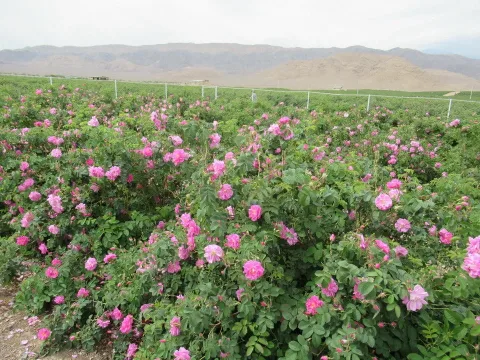
The Iranian province
The rose gardens of Qamsar, the red Abyaneh, Natanz Mosque. And finally, Isfahan!
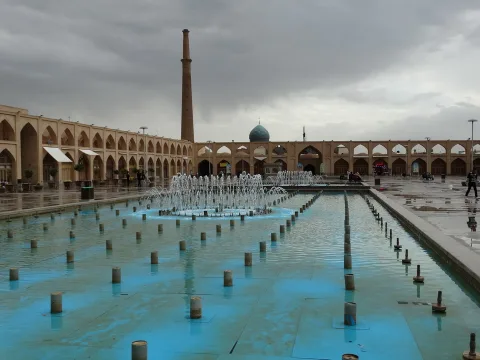
Esfahan
Esfahan: it truly is half of the world. The ancients were absolutely right!
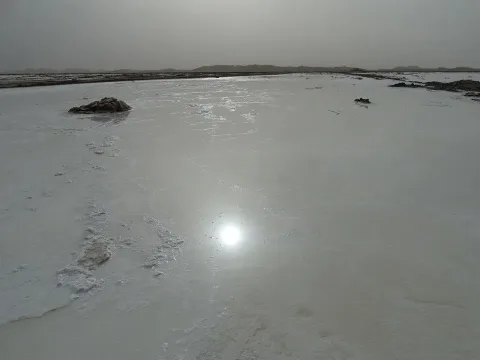
Varzaneh
Greetings from the splendor of Esfahan. Experience in the Varzaneh Desert.
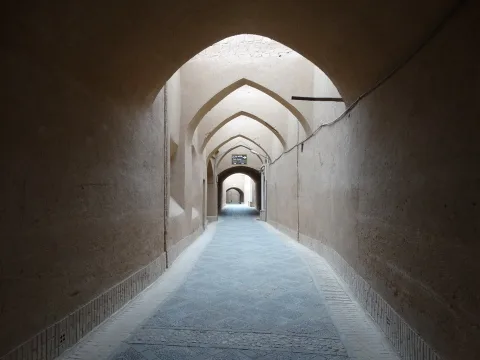
Yazd I
Beautiful mosque at Na'in. Yazd: The charm of a large city hidden in the desert.
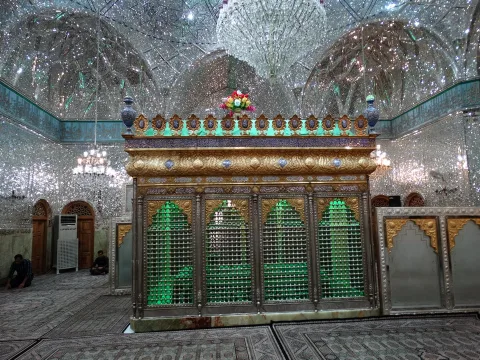
Yazd II
Exploring Yazd. Mosques, bazaar, museums and meeting with Zoroastrian culture.
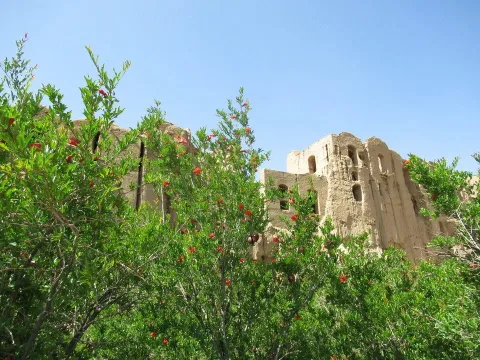
Qaranaq / Chak Chak
Qaranaq, an ancient village. Chak Chak, traces of Zoroastrianism. Meybod, the fortress.
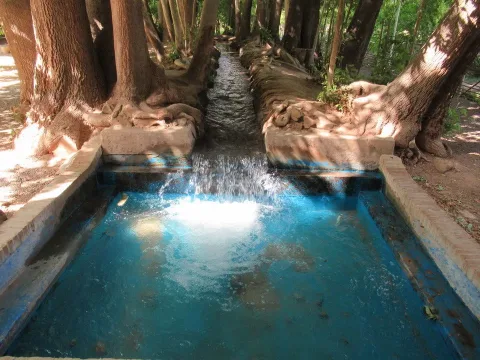
Meymand
Meymand: The troglodyte village. Homes in caves where silence and history blend together.
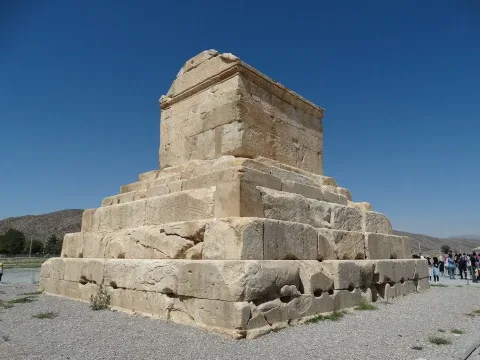
The Imperial Iran
Pasargade, Naqsh-e Rostam, Persepolis: remnants of the Persian Empire.
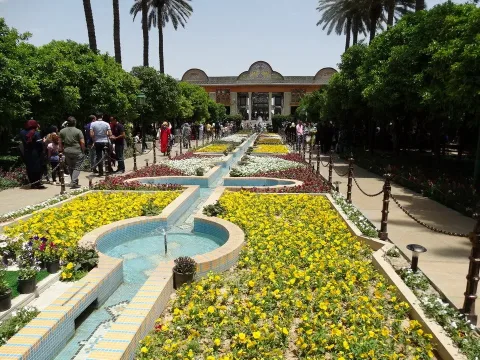
Shiraz
Shiraz: where the desert blooms, a city rich in monuments and gardens emerges.
Maharloo Lake and Qalat
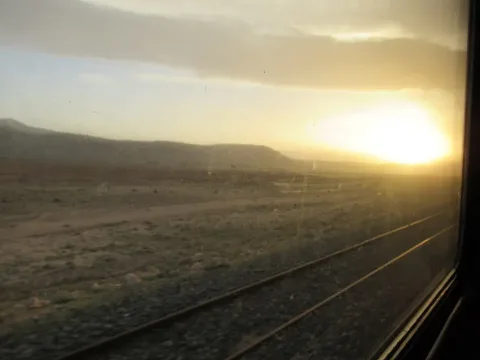
Surroundings of Shiraz: the salt lake and the tourist ghost town of Qalat. Return by train to Tehran.
Tehran
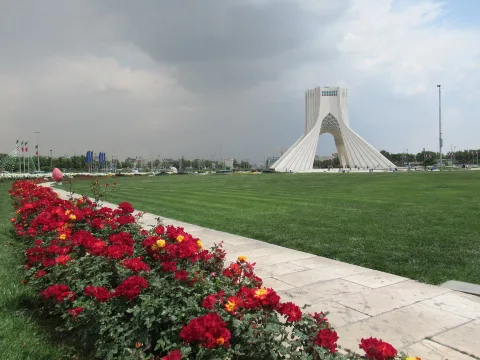
Tehran: chaotic traffic and smog. Museums, Azadi Tower and the beautiful Dalin Bridge.