

Day 6
Yazd I
Beautiful mosque at Na'in. Yazd: The charm of a large city hidden in the desert.
Yazd
The night is not cold, and, thanks to tiredness, passes quickly. Sleeping in a tent with only a couple of rugs between us and the ground is not the most comfortable experience, but it allows us to wake up in the morning in the same unspoiled environment that we left yesterday evening. No comfort can replace the feeling of tranquility that only the desert and isolated places know to instill. It's 6 o'clock, and we immediately climb onto the highest dune to see the sunrise scheduled for 6:17. The star seems truly lazy, and we wait a few minutes, likely justified by the presence of the nearby hills. Here too, it announces itself with a gleam of light which seems to ignite the sand of the ridges in a spreading fire, gradually until the illuminated sphere appears to greet the new day. The sphere, however, is rather shy today, and after a short ascent, it hides behind sparse clouds. This is our time to return and wait for our hosts to dismantle the camp and return to Varzaneh for breakfast, which will prove to be a real and welcome surprise. Along the way, we encounter a fox, while before the alarm clock rang, their chorus heralded the dawn. Unlike other accommodations, here everything is based on familiarity and concrete simplicity. While Patricia (the Anglo-Turkish lady) prepares dishes and food, Rahoullah returns with bread warm (baked without rising) and fresh from the oven. On the table, we find butter from nearby farms to combine with a delicious carrot jam. Scrambled eggs, local cheese similar to feta, tomatoes and cucumbers complete the scene, as usual accompanied by excellent tea. In addition to the feeling of being at home, it is the intrinsic taste of the food that delights the palate, enhanced by the noticeable sense of immersion in this rural world. The winter temperatures are harsh, reaching -10/-15°C while in summer the thermometer rises to 41°C. Currently, they are heated with gas and you can see pipes and meters at the entrance of houses; the cost of supply is very low. In the past, wood or old oil boilers were used. After breakfast, Patricia takes us to see the local mosque which has a beautiful historical arch from the Timurid period (14th century) to witness its antiquity. The rich carpets that adorn the floor were donated by relatives in memory of the deceased, and in some cases, they can reach several layers. The building is located outside the original walls, which confirms the later spread of Islam after the village was established, within which there was probably a Temple of Fire. Zoroastrian: nothing comparable to what I saw just yesterday in Esfahan, but strolling through the streets of this small village lost in the desert, entering an active mosque away from the tourist crowds focused on taking photos, transports me back to the role of travelers, almost as if we were ancient explorers. And indeed, we also explore a couple of rooms in the palace of Khan of Varzaneh, who was deposed and fled after the 1979 revolution. Now abandoned, the Renaissance-era ceilings feature magical decorations worn by time and neglect. Some well-dressed people are wandering around inside the site without even giving foreigners a glance. They talk to each other, and their gestures seem to indicate that they are planning to tear everything down to build a hotel. We arrived in time, before Varzaneh disappeared from the real desert and became an urban desert. After all, if the area doesn't thrive with tourism related to the desert, the remaining activities no longer allow for a decent life. We notice the presence of many women wearing white chadors, and we are given several opinions: it could be due to historical reasons or, more practically, since cotton was once cultivated in this area, it might simply be more convenient to wear clothes made from this fabric.
We continue on our journey, and once we reach the highway heading south, we see heavy traffic on the opposite lane, about a hundred meters away, consisting of trucks coming from the ports of the Persian Gulf (primarily Bandar Abbas), where most goods arriving from abroad and Pakistan arrive. This is a key route for the country; you can see everything from older Mercedes cars from the 1950s that are emitting unburnt fuel through their exhaust pipes, to more recent European or Chinese trucks.


We arrive at Na'in under a hot sun to see the very ancient mosque (dating back over 1000 years), beautifully preserved with stucco decorations. Another important historical site along the ancient trade routes between east and west. We cross through... wonderful carpets of nomadic origin displayed along the city streets, but we must continue; there are another 130 km to cover to reach Yazd. It's almost lunchtime, so let's leave our luggage at the traditional hotel and go out to try the local specialty, the paludeh, in a place that could be compared to one of our bars. It's made with rice flour vermicelli, transformed into a thin noodle by a mixture of honey and pistachios, which is chilled inside a pot. Ice, rose water, and the inevitable water are added, resulting in a delicious snack perfect for breaking the fatigue caused by today's heat. We were able to order, pay, and eat well with the staff, without any awkwardness.
Today, the hotel is a former caravan stop that has been cleverly renovated and equipped with basic amenities necessary for modern times. The huge dining hall It features a long, but shallow pool in the center, and what makes it unique is that all the bedrooms surround it, with windows directly overlooking the tables and potentially the diners. The space will be about ten meters high to allow for good ventilation. Our room is on two floors; to reach the second floor where the double bed and bathroom are located, you need to climb a steep stone spiral staircase, being careful to maintain your balance. In these cases, we can thank the prohibition of alcohol, although carrying luggage up the stairs is both a test of strength and isometric exercise. We're lucky, our apartment also has a balcony with view of the lounge after lunch, where during the three nights we will be staying, we will have the opportunity to plan the next day's activities while enjoying the last cup of tea of the day. We had arrived with the idea that... Iranian tea would have been one of the souvenirs that couldn't be missed in my travel bag, but we were discouraged on several occasions when people told us that the best tea comes from Sri Lanka, while the local variety is a blend mixed with foreign varieties. We went to explore the historic center, a maze where it's impossible not to get lost.
Visit to the Water Mill Museum
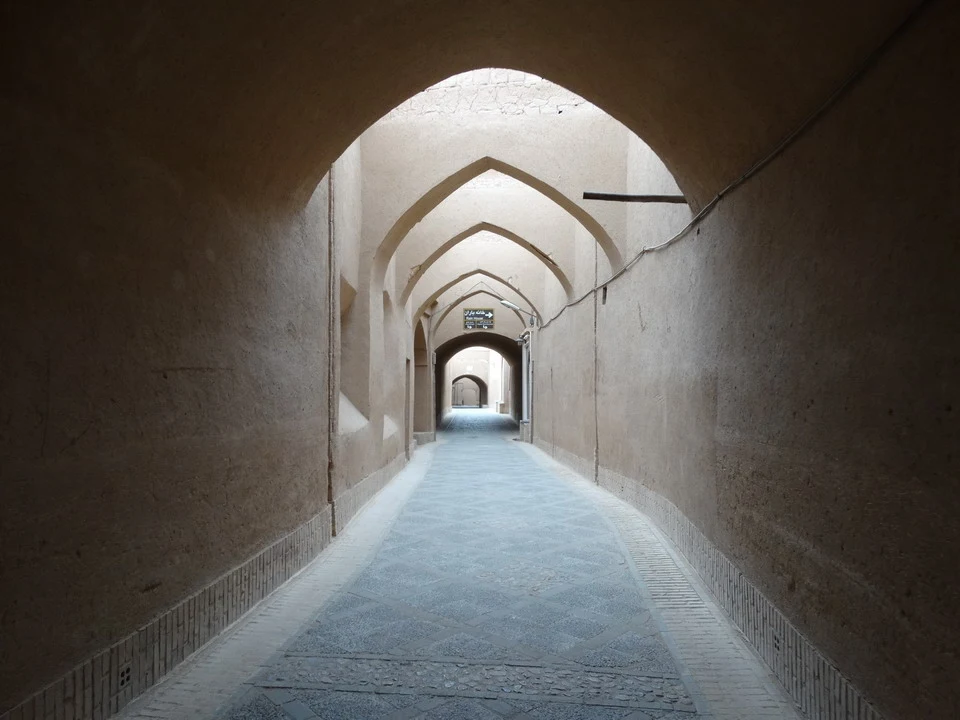
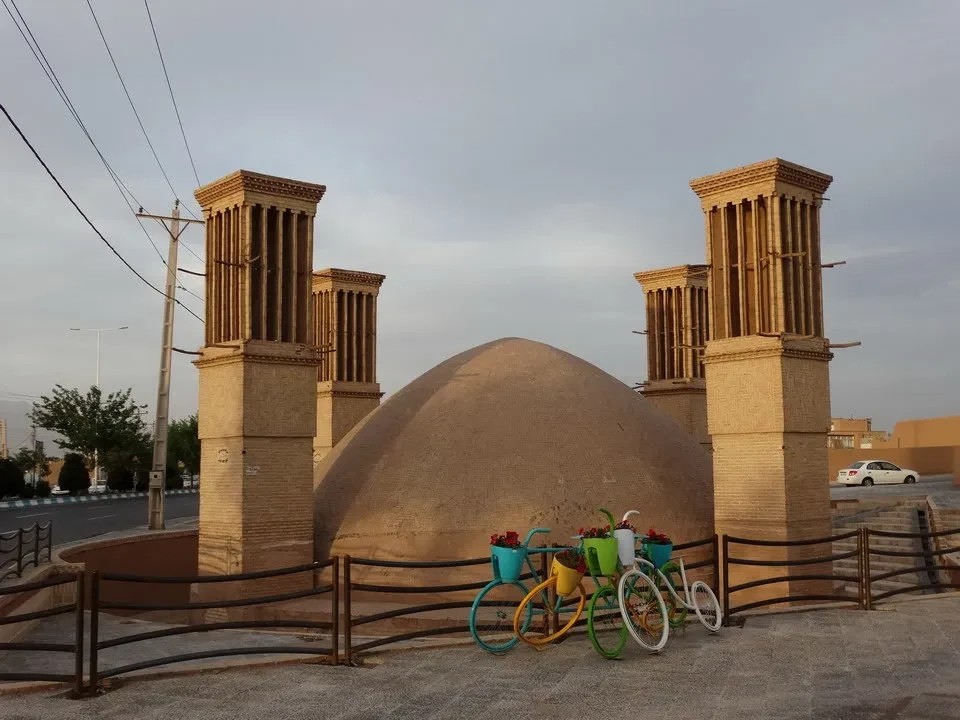
Narrow alleyways The adjacent houses protect each other from the heat, cold, and storms. Except for the domes of the mosques and a few other roofs, there is a continuous sequence of ochre-colored buildings that tend towards red. Here too, the bricks are covered with a mud and straw plaster that is regularly renewed. It feels like being in a village (although the city has over 1 million inhabitants), built by children on the beach: fluted walls, passages between houses, tunnels where other homes rise, in an urban layout that may be deliberately labyrinthine. In this case, it is easy to understand how it could have been designed for defensive purposes. But the very concept of the city is a natural defense: its location in the middle of the desert, when there were no GPS or maps, made it difficult to recognize, as evidenced by the fact that the Mongols apparently did not notice its presence during their conquests and therefore overlooked it; the same color of the desert camouflages it and makes it practically invisible to anyone looking at the horizon from a distance, thus deceiving potential enemies. Tamerlane was able to find his way, but the city has existed for 2500 years. Its location in what appears to be an unsuitable land completes the picture, but the ubiquitous qanats are what bring life to this otherwise sterile area. As always, water makes the difference, and some of these conduits continue to deliver the precious liquid from the mountains, even though a new aqueduct has been built that provides water supplies from Esfahan; while 20% is still extracted from local wells. Inside the narrow streets, you can see a few motorcycles and rare cars, because it would be easy to create traffic jams. We can at least see a couple of mosques from the outside and descend 22 meters into the earth to visit the Water Mill Museum: long staircases lead us deep into a well, and panels explain the systems used to extract water in ancient times. Generally, while walking through the bazaar, you occasionally come across a long arch along the street where a staircase leads to the qanat, an underground irrigation system. A first exploratory tour of the bazaar (the market was wonderful). oven that cooks (I ate bread by sticking it to the walls of the arch) and had dinner with a taxi at a local restaurant that was 8 km from the center, where we enjoyed an excellent. Fesengan lamb and a dish of lamb, onions, eggplant, and tomatoes. A leisurely walk to digest the meal, to see the illuminated highlights at night, from complexAmir Chakhmaq to Majed-e Jameh We immediately notice that the women are dressed more conservatively than in Esfahan; the veils are pulled up to their necks, and only rarely do strands of hair peek out, and the clothes are almost all black: essentially, a huge urban convent. The gazes are also less intrusive and curious, and the features make the ladies appear less striking. The first impression of the city reflects a more conservative context; there are more religious people around, and generally, one doesn't get that sense of cheerful carefree (almost brazen) behavior seen until yesterday; even Iran has its Calvinist corners, but always with the excellent impression of friendly and attentive people, without any ulterior motives. We are quite tired after a hot day with pale but persistent sunlight.


