Day 10
The Imperial Iran
Pasargade, Naqsh-e Rostam, Persepolis: remnants of the Persian Empire.
Morning in Imperial Iran
Yes, because today, after having breakfast in the same way as dinner yesterday evening, we are heading to Shiraz, visiting the imperial cities of the Achaemenids. However, first we say goodbye to our new friends, with regret at leaving them but with pleasure at having experienced a day that these busy cities, which we have seen so far, have made even more enjoyable, wishing them success in their adventure.
The night passed wonderfully, without any noise and illuminated only by a couple of small lamps left on, making us feel like hibernating bears. It was a shame that they didn't last long, given the alarm that went off precisely at 6:30; we emerged from the comfortable "cave" to wash our faces in the nearest bathroom, while the sun was already flooding the eastern side of the valley with warm rays. Breakfast at seven o'clock consisted of eggs, cheese, and a delicious sweet made with sesame, which they call homemade Nutella. At 7:30 we set off for Pasargade. The drivers have a very sporty driving style, but we quickly realize that it's not recklessness, but rather their skill in driving. The road is well-paved and straight, under the sun, which is increasing its heat. Once again, we find ourselves running for a desert land separated by valley floors that widen from time to time and reveal lush green crops (made even more vibrant by spring), to create a strong contrast with the surrounding environment and the barren mountains It consists of fields of cereals, pomegranates, grapes, cumin and pistachios, the national harvest that reaches its peak here. It's not clear where it comes from, perhaps from the nearby mountains, but there must be plenty of water, otherwise such a proliferation of plant life wouldn't be possible. Continuing on, the side road is occasionally dotted with large herds. We encounter a couple of fixed checkpoints, where armed police ask the driver who we are: when we tell them we are Italian tourists, they gesture for us to continue.
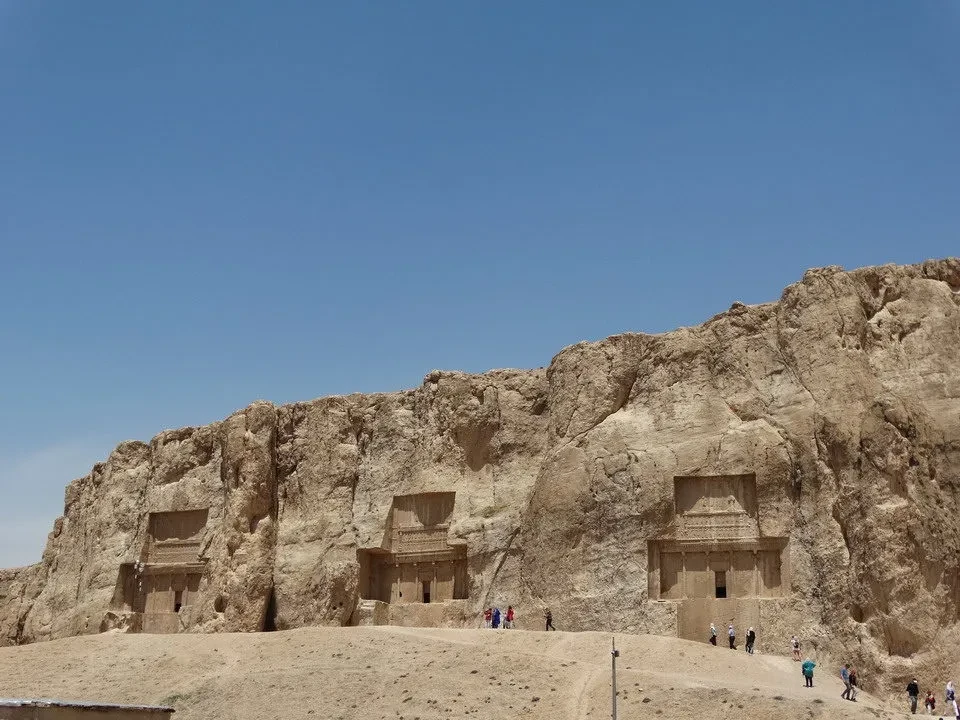
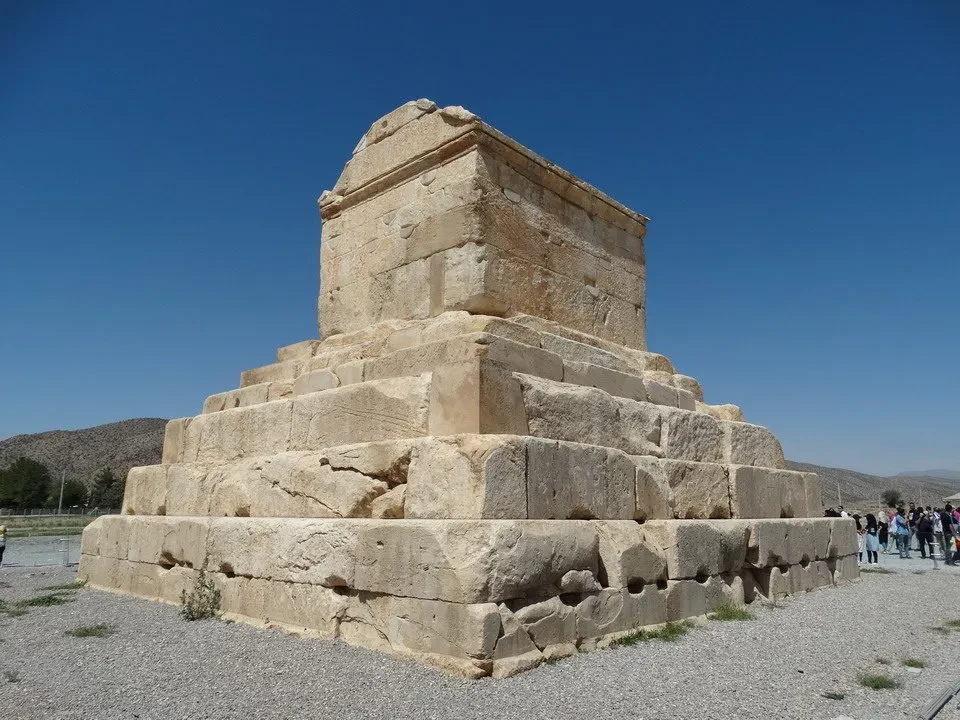
It's now 10:30 when we arrive at Pasargade: in the first capital founded by Cyrus the Great, there is a lot of tourism from Iranians due to the holiday, the anniversary of the birth of the twelfth imam, which brings together groups and families. Here you can admire the Tomb of Cyrus and it is a significant thing in itself, as it dates back over 2500 years. Once you've walked around and navigated through the crowds, all that remains is to take a few photos and return to where you started. The tombs are of a completely different caliber, however. Naqsh-e Rostam, a funerary complex with tombs of other important kings from the Achaemenid dynasty. Both... bas-reliefs that the tombs carved into the rock offer a more rewarding view, supported by the interesting descriptions on site. But the ultimate place where one should definitely spend time admiring is Persepolis, ceremonial city and capital of Darius I, a true gem that still exists today. Imagine how it must have been before Alexander the Great's army destroyed it with fire.
Gate of Nations
To truly appreciate the place, you need to step back from the present and the crowds of local tourists constantly taking photos with the ruins in the background. Unfortunately, the Iranians have adopted a similar attitude of disrespect, typical of the Chinese. You should imagine having a time machine and traveling back 2300 years (when Athens and Rome were dominant in Europe, and Rome was still fighting to conquer the lands of Lazio), an era when Persia dominated much of the known world, from modern-day Libya to India, in what was the largest empire ever. submissive people They were represented on the bas-reliefs to honor the Persian king, as happens today between sovereign states and superpowers. The eyes see what remains, it is up to the mind to reconstruct what is missing and return the splendor of a bygone era to the place. We begin with Gate of Nations before which there should have been ranks of guards on either side to welcome the guests. Crossing that threshold should have felt like entering a dimension of power, whether exercised or experienced depending on who passed through it. The palaces ( Apadana (and the 100 columns), which simply had to be majestic, and even more impressive because they are located right in the desert. And it's not like visiting a royal palace in a European city, now or then. Those who arrived at Persepolis He had weeks of walking behind him, and seeing all this splendor must have seemed almost supernatural. The last Shah tried to give the same impression to the hot heads of state and crowned rulers who had arrived here in 1971, when they attended the celebrations of the 2500th anniversary of the kingdom; but these are events that are not even remotely comparable. Just a short walk above the archaeological site on a hillock that houses the tombs, you can enjoy a complete view, and it is even more amazing to think about what this city and its royal pavilions must have been like in the past. The hot sunshine makes the columns and everything else shine, but it also tires visitors during their walk along the stone base, where the shadow only extends slightly towards the north. But in these cases, one should not feel tired, but rather see, admire, and finally enjoy a refreshing ice cream at the nearby bar. As for greenery, it is surprising to find a path with tall trees leading to the site, surrounded by lawns and flowerbeds, while when you get closer to the ruins, the greenery is lacking, almost as if one does not want to distract attention from the true purpose of the visit.
In its history, Iran has been invaded three times: by Alexander the Great during the Achaemenid period, by the Arabs after the introduction of Islam, and by the Mongols. The conquest by Tamerlane is considered a continuation of these last invasions, as the Uzbek commander arrived following the Mongols. And Uzbekistan at that time was considered Persia.
There are still 60 km of busy highway to reach Shiraz on the holiday. The last important city before returning to the capital, it breathes with joy alongside the usual exhaust fumes from the vehicles. Couples or families have a picnic calmly seated on a blanket in the center of the green roundabouts that decorate the urban crossings, while others quietly enjoy the beautiful day in one of the many public gardens. Many are camping with tents set up everywhere, even in Persepolis, where quite a few can be seen along the road leading to the site. This is also because many people will be taking a break tomorrow in preparation for Friday. The city is as chaotic as others, given the presence of many Iranian tourists, which adds to the million and a half residents living here. Like in Persepolis, in the central streets, many people wear what we would call "festival attire," while women often wear long black dresses that shine.
Stop at Majed-e Vakil
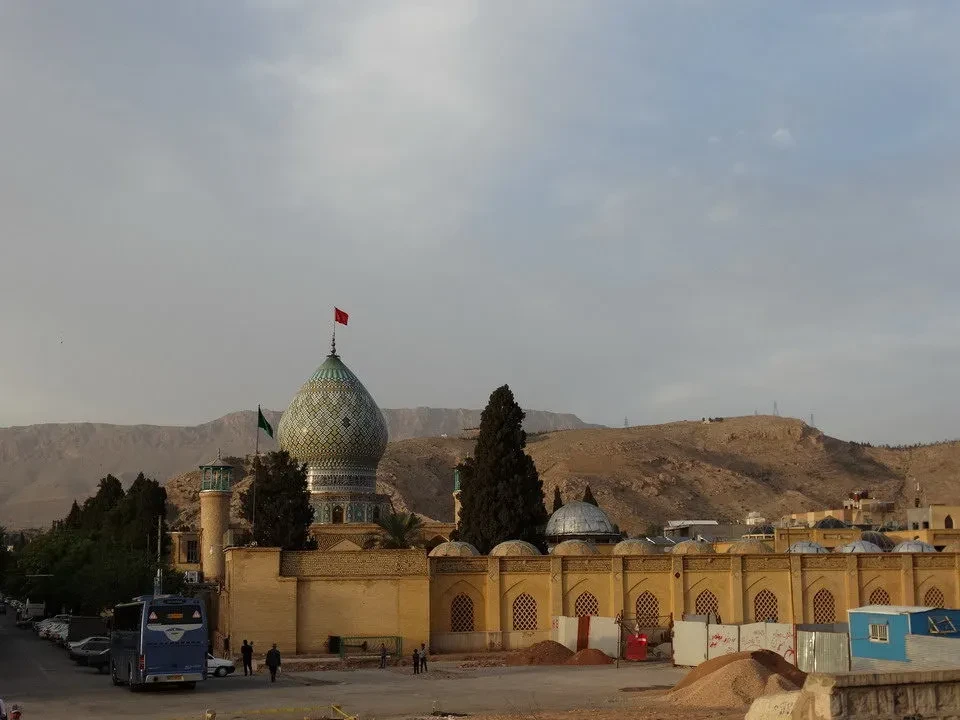
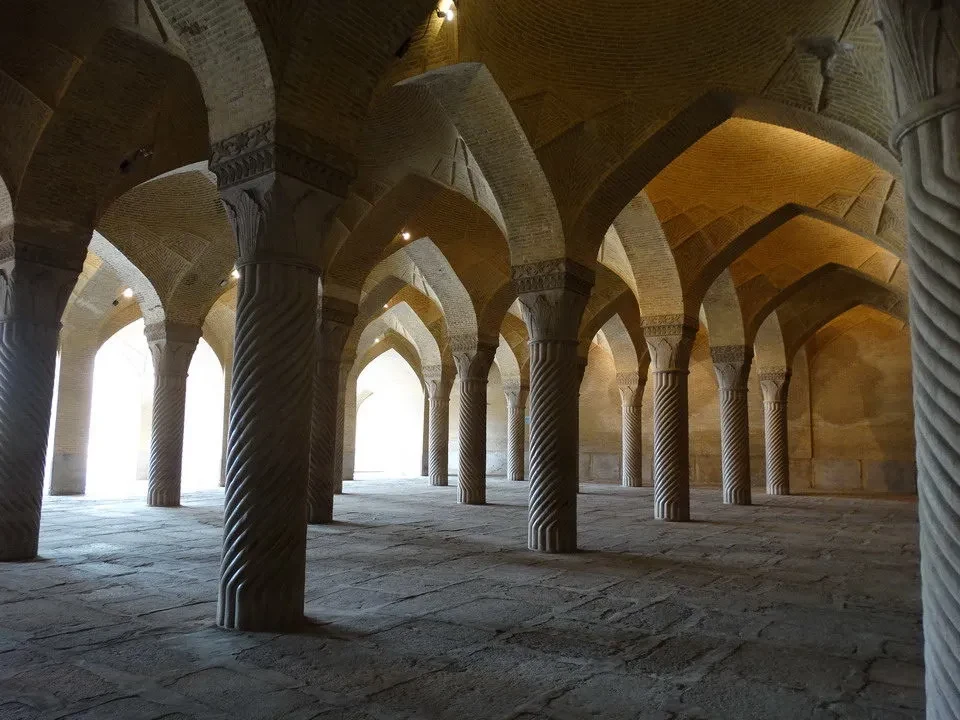
Quickly took possession of the rooms in the traditional hotel We head to the nearby town center to get acquainted with the city. The bazaar is closed, and we take advantage of this to go see the Majed-e Vakil, dating back to the time of Karim Khan. The entire complex covers an area of 11,000 square meters. A beautiful entrance with two impressive courtyard, but I found the following particularly interesting: 48 spiral columns, designed to provide an idea of flexibility throughout the entire structure, and a menbar (platform) with 14 marble steps. We walk north to visit the Imamzadeh-ye Ali Ebn-e Hamze, just after crossing the small bridge that is permanently dry. Here we are warmly welcomed. We are among the few foreign visitors present and immediately attract the attention of the faithful who are here to celebrate the festive occasion. They offer us a glass of orange soda and some dried fruit. We soon discover that giving gifts to strangers is a ritual gesture for those with problems at home, bringing good luck in resolving them. We are then approached by an individual who takes us to the tourist office. inside the mosque We followed the guide and were greeted by a religious man who spoke good English; the women wore the chador that was offered to them at the entrance, and he led us into the heart of the mosque, a true sanctuary of beauty, with mirrors artfully fixed so that the thin layer of glue was sufficient to prevent them from falling but also did not spoil their inclination. It's unimaginable how many pieces there are. The mosque is dedicated to a cousin of Imam Reza, who died in Shiraz, known for his purity (even before his degree of kinship). Purity itself is evoked in the symbolism of the mirrors. Another meaning of the mirror comes from its similarity to friends, who should say things as they are, both positively and negatively, to help improve themselves. It's still commendable that foreigners are not left to wander alone: this ensures that they have a suitable attitude, while also explaining the religious principles and the history of the place to them. It is also valuable to have a dialogue with someone who speaks good English and can provide informed answers. Of course, it is not appropriate to ask embarrassing questions that could stiffen or completely block the conversation. One must know who one is talking to and where one is, respect them, and talk about non-sensitive topics. We were also told that the foundation of religion is respect for others, a positive version. There are points on which we are not in agreement, but today it is important to talk about what unites us. An example is the Shia principle of great consideration towards the five major prophets: Abraham, Moses, Noah, Jesus Christ, and Muhammad, meaning the latter as the main revealer of the foundations of religion. In any case, it would be a waste of time trying to convince each other. We are confirmed that a good Muslim cannot shake hands with a woman, understood as a form of respect towards the woman herself. If he does so, he breaks a religious rule. In reality, in a society that is becoming increasingly secular, regardless of the application of Sharia, many men extend their hand to women. In any case, it would be better for the man to decide on the matter and not for the woman to take the initiative. We left the mosque in a festive atmosphere, with children playing in the courtyard while mothers chatted among themselves and curiously glanced at the passing foreigners. We returned to the center to stay at the restaurant booked in advance, given the special day. A walk to buy some gifts for us: dried grapes (they have a lot of Shiraz and Mashhad varieties), pistachios (there are natural ones, with saffron, cumin, and cinnamon), other dried fruits like white mulberries (black mulberry) and black ones. The traffic, due to the return time, became hellish and crossing the street becomes anything but simple.