Day 9
Meymand
Meymand: The troglodyte village. Homes in caves where silence and history blend together.
Meymand
We leave Yazd to continue south towards Kerman, which represents a border area with the restricted part of Iran, between the safe and the more dangerous zones. Continuing further, large areas are controlled by smugglers and traffickers who take advantage of the chaos in Afghanistan and Pakistan to seize control of trade and facilitate illegal trafficking and drug smuggling. It should be noted that Iran combats drug dealing with the death penalty, but there are also some free zones where it is difficult for authorities to maintain control. We do not plan to go into these areas; we intend to head south towards Kerman and reach a very special site, Meymand.
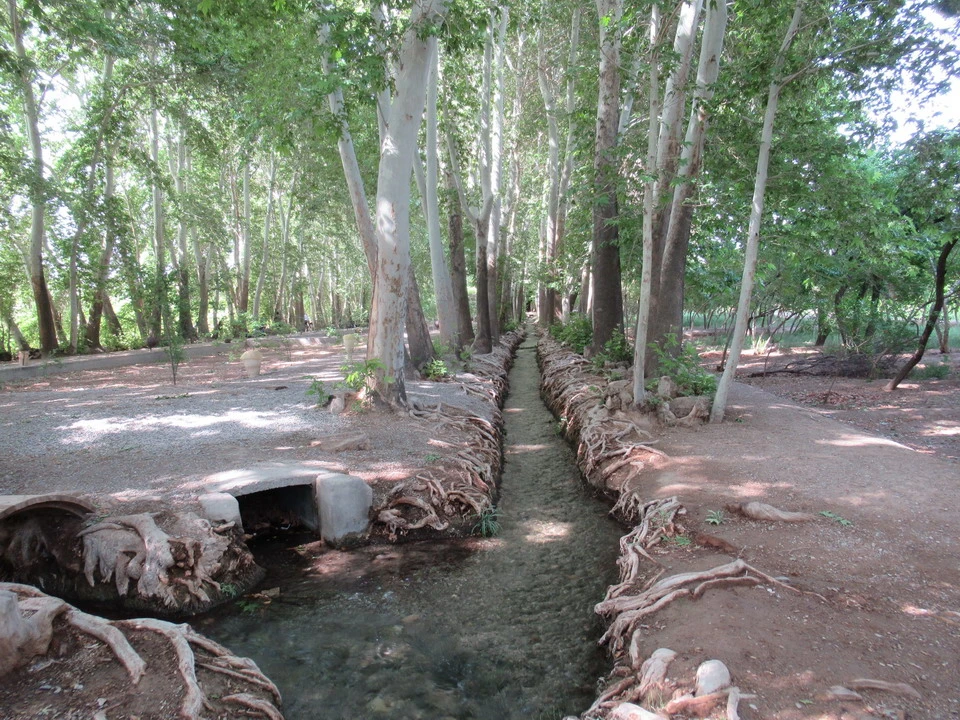
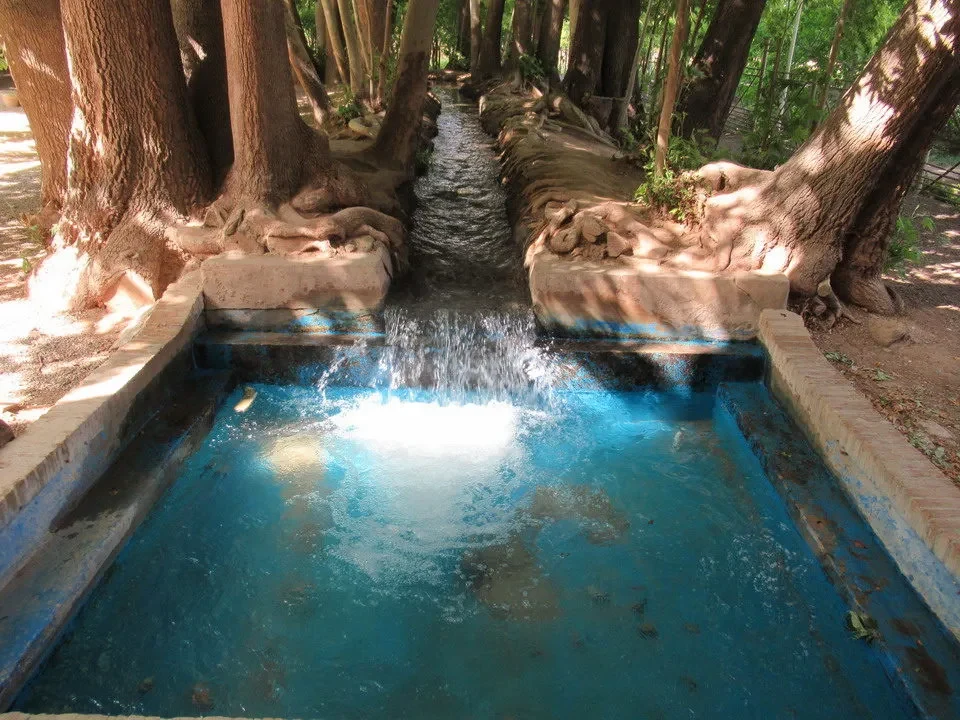
While we were leaving Yazd, we saw a line of people waiting, Afghanis waiting to have their residency permit renewed. Shortly after, we reached a an ancient cypress tree over 2100 years old... and it's still a vibrant green, like a young tree, even though it probably witnessed the armies of the Achaemenid Empire. It has only one small break on one side, caused by a particularly violent storm that occurred about seventy years ago. However, it is not the oldest cypress; there is another one that reaches 4000 years old, and this is something to be proud of for the local population, who recognize this tree as a symbol of longevity and adaptability over time. We also see a large lime tree from which hang the White berries, very sweet and juicy, which are often dried and can be found for sale in the bazaars. The fortress of Sar Yazd is unfortunately not accessible as its roof recently collapsed, and we replace it with a... Pahlavanpour garden. Like the ones already seen, this also creates a peaceful atmosphere; the noise of a group of schoolchildren becomes a pleasant and useful background sound to break the silence. The water channels are secured by the existence of a qanat, built by the inhabitants of Yazd, and for this reason, the owners of the garden had the right to allow water to flow, ensuring refreshment and ornamental purposes, but not to extract the precious liquid. The elegant house is further cooled by the ubiquitous and very useful badgirs. Given the extremes of the seasons, the house has a summer area and one designed for winter use, which are used as meeting places and for rest for the local residents. Here too, it can be noted that presence of trees, some of which are very high, thanks to the qanat system that waters their roots. Then the water exits from the enclosed garden and continues towards Yazd, where it will first pass through the city and then be used for agricultural purposes. As seen in the hot regions of Turpan in Xinjiang, the canals are covered to prevent evaporation. There are many pomegranate trees, a true symbol, with their intense red flowers during this season, as well as vines, figs, and apricots. Zein-o-din is a a luxurious guesthouse and hostel, located 60 km from Yazd (requiring a two-day camel trek), originally a caravanserai. The renovations have been very respectful of the past. climbing onto the roof We can admire the vast desert landscapes before us, which on one side end against the Zagros Mountains. We also visit the beautifully decorated with carpets and cushions where to sit, in some niches and alcoves there are vases to decorate the walls. We observe how Iranian rooms do not need large furniture: it is sufficient to cover the floor with imaginative and rich carpets on which to place cushions, and put down the little necessary furniture, without needing tables or chairs. The same can be seen and appreciated in the setting of mosques, where there are no benches or furnishings. Often a spread of carpets and the light that filters through stained glass windows make the environment full and magical at the same time. The doors are always low while the steps are high and narrow to the point that it is not always possible to place your foot. We stop for tea and continue, even without camels accompanying our journey, towards today's destination of Meymand, a troglodyte village. Along the way, the stretch is desert-like, with splendid mountain figures rising on the right side, literally split by the green vegetation irrigated through wells, since the qanat pipes have not yet reached this point.
We mainly focus on almond cultivation. Just before Meymand, we see other plants scattered around amidst nothingness, they are wild, some of which can even live for several hundred years. We finally reach the cave dwelling accommodation spent the night there, simply wonderful and beautifully furnished with exceptional taste. The two managers have 5 such properties and intend to put another three back into use. The first human settlements date back 2000/3000 years, when it was convenient... digging into the rock soft, in the caves where to take shelter. To help, the upper layer with different morphological shape and more resistant to form the ceiling. An economy of subsistence was practiced, using the water that flows from the stream to irrigate crops and raise sheep and goats. Until the urbanization policies took over, about 10,000 people lived here in 2,400 houses of this type, reduced to a drastic 25 inhabitants in recent years, mostly elderly who did not want to leave their place of birth. Many survive on a minimum pension and thanks to some craft work. Another reason for abandonment is the increasing scarcity of water, which consequently reduces the possibilities of cultivation.
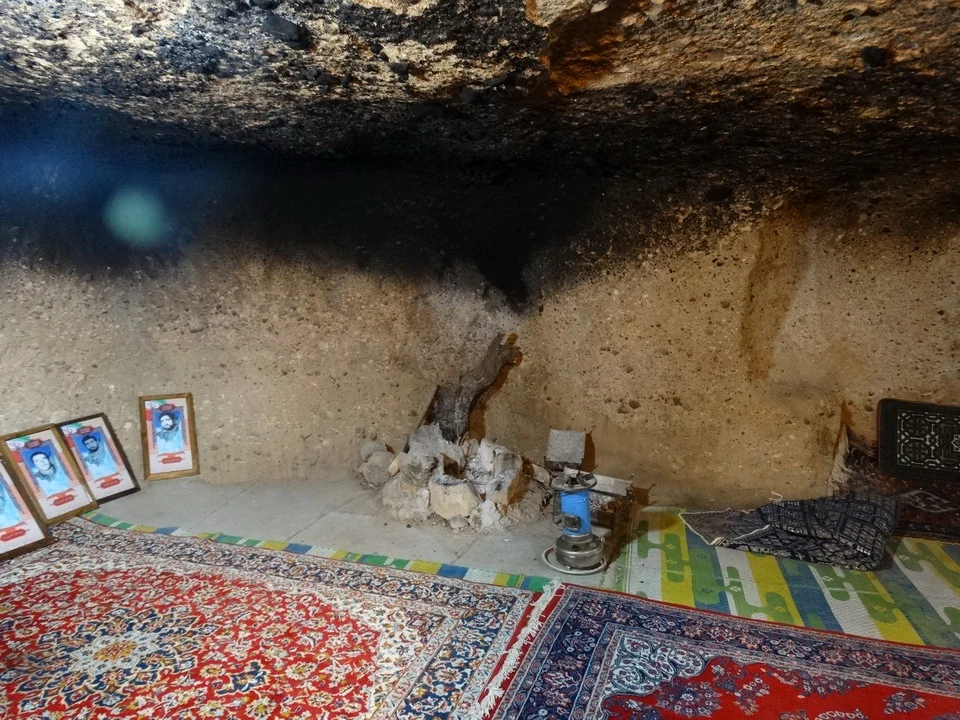
In recent times, the village has been trying to revive itself thanks to some initiatives aimed at enhancing its appeal and offering accommodation to visitors who wish to spend a night in caves, just like their ancestors did. These are relatively luxurious accommodations, as the caves are equipped with lighting designed to highlight the natural walls and ceilings. Also, special attention is paid to... household items It's not left to chance. The welcome is among the best; we have lunch at the home of a local woman with a kitchen that feels like it was made right there, not luxurious but high quality. During the afternoon We are traveling around the country., visiting the local Mosque, the mosque (ceremonial hall), as well as the school and hammam, which are closed. We meet a bus of female students on a day trip from a nearby city, and they pique our interest. They are in their twenties/early twenties, some of them are already married. We exchange a few words with those who speak a little English, taking photos and selfies. The questions are the same ones we have received in recent days: why did we come to Iran despite the rumors circulating around the world about their country, what do we do for work, how do we live, etc. We chat a bit about our respective customs from our countries and say goodbye with the conviction that young people want to laugh and have fun everywhere (as long as they remember being so), regardless of imposed customs or social conditions. A trip through the hills which serve as the roof of the country, opening up valleys that, considering local standards, we should define as green. In reality, they are covered with clumps of grass tending towards green, with rare bushes from which sprout wonderful blooms Looking out, a faint and timid green color is visible, and this should represent the best time of spring. However, the setting remains wonderful, in complete silence and far from the chaotic and polluted Iranian cities. It's a moment when time seems to have gone back thousands of years, and we are also sharing places and the simplicity of life, even with some comforts derived from the present. Before dinner, let's go get tea from the manager of our caves and discover that he is originally from this area; he graduated in geography and geology in Tehran, where he taught. After 11 years, he decided that his experience with the city had reached its limit and returned to base, immediately greeted by a colleague who was not originally from the place, and who therefore had more difficulty adapting to the isolated life, especially in starting up the business from scratch: but in the end, they are happy with the choice they made two years ago, and the guesthouse that has been open for nine months is beginning to bring satisfaction. It's a much harder and more uncertain life, but they have significantly improved their quality of life. Contact with nature is a benefit despite all the hardships. We see that the caves have a black ceiling, and we seem to understand that it is due to smoke residue, even though we don't smell any at all. They confirm that, while maintaining a very constant temperature in the homes regardless of the season (now electric heaters are used), We used a fireplace. using the limited firewood available. The black pigment also acts as a disinfectant and adhesive to protect against falling rock fragments from the ceiling, as might happen with plaster in a typical house. The inhabitants remained seated, so they were not directly exposed to the smoke, which lingered near the ceiling and exited through ventilation systems. They even thought that the smoke had positive effects on their health because it made their eyes water. The nearest city (Shahr-e-Babak) is 35 km away.
The area has been recognized as a UNESCO World Heritage site not only for its original housing types, but also for the uniqueness of the triple transhumance: in winter, the inhabitants lived in caves, and in summer they descended into the plains to allow the herd to graze and lived in tents. The same happened in summer when they went to the highlands where there was still fresh grass. All this without a particular procedure, simply following the rhythms imposed by nature and the cycle of seasons, in a crystallized life circle over centuries, or even millennia. Here are also prehistoric writings dating back approximately 4000 years ago. The local inhabitants are trying to develop a conscious and careful tourism that respects the fragile existing balances, not solely focused on increasing numbers. The risk that the place becomes famous carries with it a series of negative elements that must be avoided. For example, the fact that in recent years groups of tourists who came to the area for picnics have left burning braziers, resulting in three fires.
By 9 PM, we went for dinner at the manager's house, where he had already prepared and placed the food on a tablecloth spread out on the rug. The house/cave has a refrigerator, but there are no shelves or cabinets, so dishes, ingredients, and kitchen essentials are found on the rugs that cover the floor. We cooked using gas, and the simple yet carefully prepared meals were served on the rug. After dinner, we enjoyed a typical Iranian meal while chatting late into the night, learning as much as possible about the past and present of this fascinating location, until tiredness told us it was time to sleep in preparation for a busy day.