Day 14
Return to Nepal
Crossing over the Friendship Bridge and returning to the cheerful Nepal. A mix of religions in Swayambhunath.
Arrival in Kodari
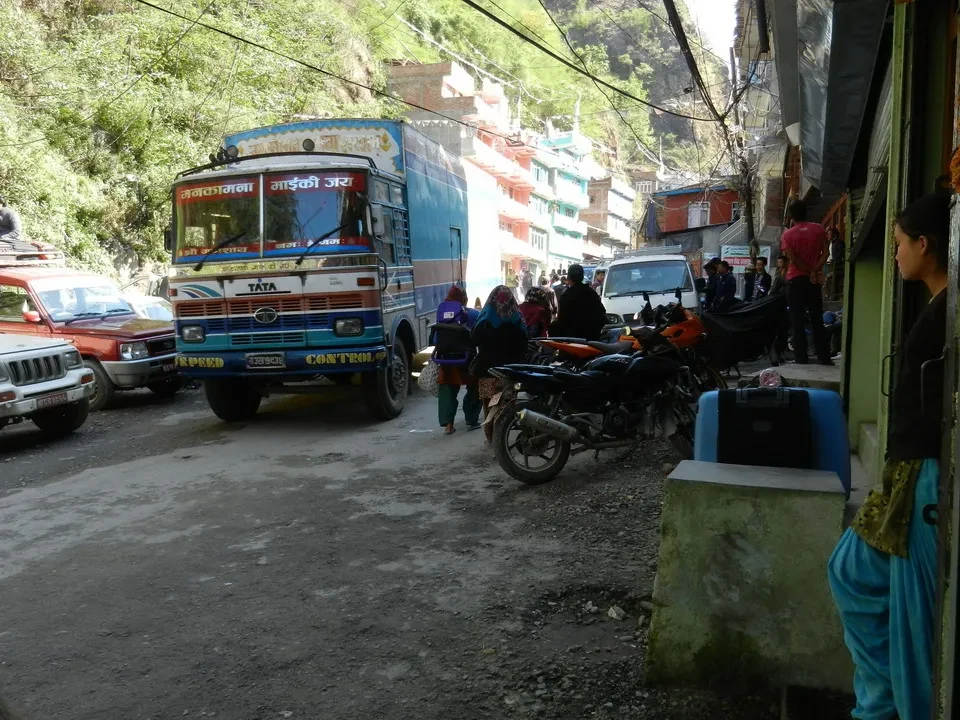
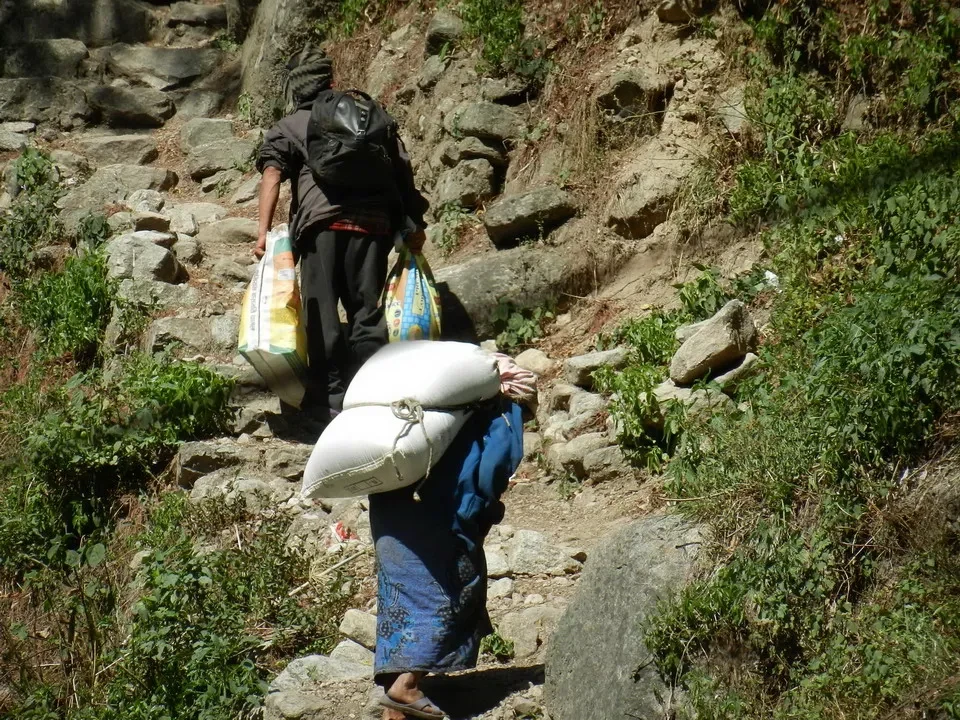
With the mood of someone saying goodbye to a dream that is about to end, we prepare to leave Tibet. We have breakfast at the hotel restaurant, with large spaces and little substance. We go out to meet those who have become our friends in the meantime: the driver and Lapu, our guide. We exchange a few words, but it's the silences that dominate the scene. It’s a shame, because the day is particularly serene, which is unusual in this place where humid southern currents meet colder northern ones. The vegetation speaks volumes about this. But even this cannot make us smile. It's 8:00 and we head towards the border crossing. We leave them what remains of local currency, plus a reasonable tip in dollars. It’s 8:30 and the border opens at 9:00 – we still have time to observe what is happening around us in this place, far from the world, far from time. Traffic and politics that are invisible to us cross the bridge in both directions, creating an atmosphere of mystery. On the other side, on the Nepalese side, a group of people are waiting behind a gate for the crossing to be opened. When it opens, they start running towards the police buffet located in the middle of the bridge to gain priority. We haven't sold any trucks yet; they probably passed through during the night in opposite directions, which was the only way. Kodari Due to its traffic of people, vehicles, and other motorized means, it wouldn't allow passage. After all, Indian (and most Nepali) trucks are not allowed to pass through, at most they can reach Zhang Mu, where everything is then transferred onto Chinese trucks and drivers. On the Chinese side Everything is peaceful; officials arrive at the border post to take over from staff in a modern Chinese-style building, a few travelers look around in wonder, while other local residents wait in the facilities marking the final stretch of Tibet. In reality, there's very little left of Tibet here; we are at the bottom of a remote valley, even for this region, and the architecture and faces have typical Chinese characteristics. Just a few meters away would be freedom for the Tibetans, but they cannot reach it. Those who try are cut down. We have never been in such a place: a Berlin Wall version, here delineated by a stream. On either side, steep slopes covered in vegetation. On one side, a life of noble misery; on the other, that of noble oppression. In between, us, living in a privileged condition, freely moving from place to place. There is no tension, after all, there are normal diplomatic relations between the two countries. Of course, everything is under more control than we can imagine: we know that Chinese guards in civilian clothes patrol Kodari to monitor what happens, something unthinkable anywhere else in the world. Finally, at 10 am (7:45 am, Kathmandu time) the border opens We were among the first to undergo checks: first the permit check, then the inspection of our luggage, and finally the passport check. The whole process takes only a few minutes, but we have nothing to fear, while Lapu is busy translating for the officials. At some point, we are outside and it's time to say goodbye to our guide with whom we spent this week. It’s a touching moment: we return to a world closer to our own, while she will be going to retrieve a German from Lhasa to start a new journey. We said goodbye to the driver shortly before, he needs to return to Lhasa, while she needs to take over some clients and help them complete the customs formalities for entering Tibet. Then, she will find a way to return to the capital. At least that's what we are told, but in this country of mysteries and things said to mislead, it becomes difficult to distinguish between words and facts. However, we are outside China but still on the same side. Here, we are accosted by porters who want to take our luggage away. We politely refuse until we see our names written down on a piece of paper. Once recognized, a porter from our "guide" requests our luggage and we cross the bridge with him. Time seems to pass very slowly, aware of the moment we are living, we walk slowly but we also need to keep an eye on our belongings. We would like to look around, but we have to walk and avoid the Nepalese who are hurrying across. Friendship Bridge which connects and at the same time divides Nepal and Tibet, lies beneath us, and further down, the river rushes powerfully. Bhote Kosi We only have time to think about how many real stories pass by here every day, and we find ourselves crossing the threshold onto the Nepalese side. Everything here is different, and almost everything has the confusing shape of a bazaar. It's a constant flow of vehicles along a road that couldn't even contain them all if it were a military square, only made possible by the proverbial patience of the drivers. We head to the border crossing to register our entry into Nepal, without too many formalities since we have a multiple-entry visa; it's just a matter of applying the usual stamp and seal. Our guide leaves us sitting on a bench set up along the buildings on the left side: his job is finished, now we will be taken over by a new guide and driver. Since they are late arriving, we have plenty of time to observe the flow of daily life in Kodari ( Photo2, Photo3). That's how we see the scene of children going to school, shady characters who move around to carry out their dubious dealings. Indian trucks who were driving and honking to avoid hitting someone, cars searching desperately for parking for a few minutes while waiting to meet the group they had an appointment with. Once again, there are very few Westerners, almost no Chinese, while the rest consists of Nepalese or Indians (it's difficult to recognize them as they have similar features). After about three-quarters of an hour, our group finally arrives: we will later discover that it is never too early when driving on these roads. They arrive from Kathmandu and already have a good experience under their belt. This experience will double on the return journey, this time with us onboard. But we are not used to this traffic, and every overtaking is an endless moment that can however end in an instant, even tragically. The first impression of this part of Nepal is that the government has not invested in road paving, deliberately leaving long stretches of dusty, unpaved road on a major artery that should be one of the most important and busy roads in the entire country, as it connects with China. Perhaps this is the reason, or perhaps it's due to the Frequent landslides during the monsoon season, they experience torrential downpours of mud (perhaps both), but the fact remains that it is a real nightmare for both residents and travelers. It's practically a strip of dust On a single-lane road like this: anyone arriving in Nepal for the first time would not be able to tell if they were driving on the right or left side of the road. It's obvious that trucks and buses must drive slowly, and it's equally clear that cars take advantage of every opportunity to overtake, often without warning.
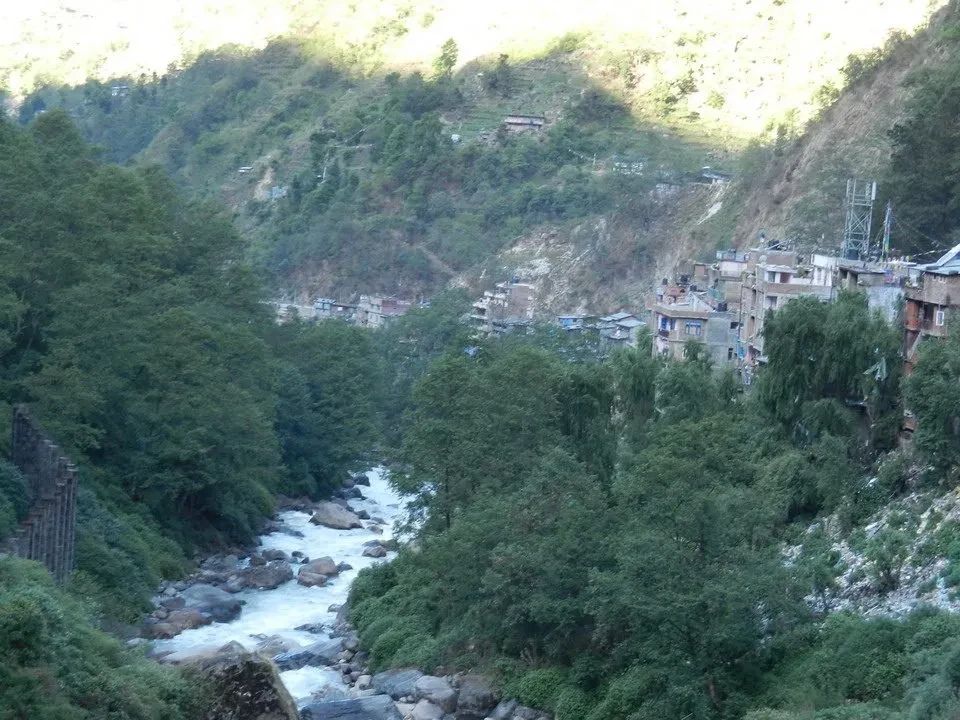
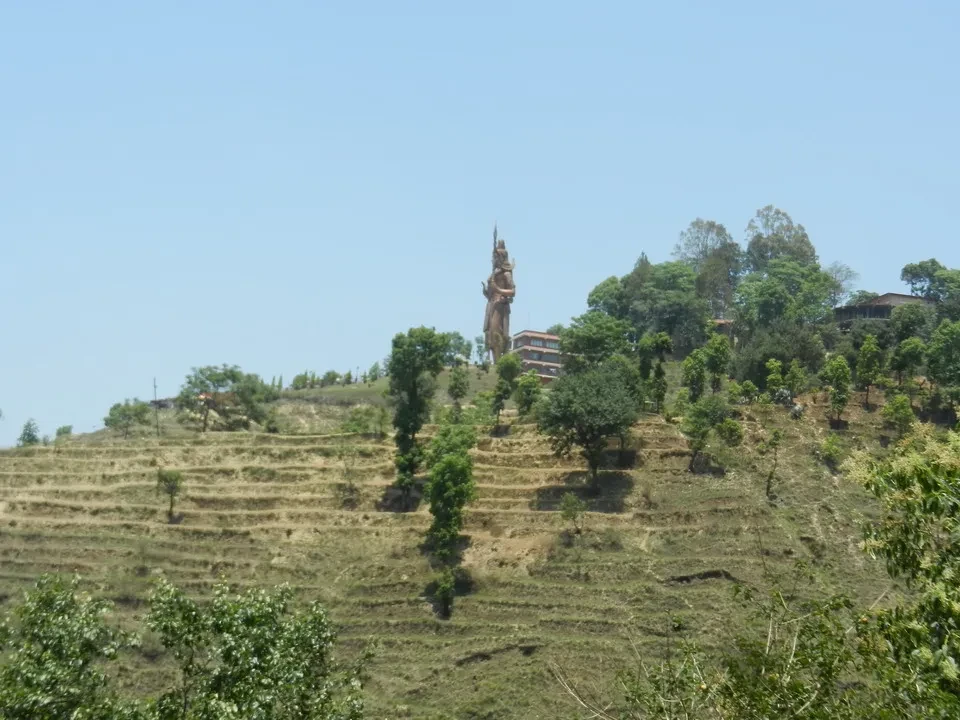
It remains to be understood how the accidents are relatively few and why the drivers don't seem to get stressed quickly. As we descend, the road becomes more passable and you can look around with more hope, but it's not a good idea to get carried away. After about ten kilometers, where the other side of the Tibetan plateau continues, the road bends eastward and we find ourselves in full Nepalese territory, where the river loses its torrent-like character and opens up areas where children play in the water. A stop to see the beehives Hanging from a rocky wall, with another area for drinking and enjoying a beverage at a bar in a wonderful location. along the river which descends from Helambu to reach the bustling capital. The valley of Kathmandu is welcoming and pleasant; the road winds through green landscapes between beautiful, well-maintained houses and organized fields, creating a breathtaking scene framed by the surrounding peaks. Just before entering the city, we see a large Shiva statue with its attached temple. They explain that it is actually there to protect the city. At this point, all that remains is to overcome the constant Traffic congestion in Kathmandu and finally arrived at the hotel around one o'clock. Although we had to wait for the car to pick us up, we still arrived early thanks to the 2.15 hours of time difference adjustment. However, it took us three hours to cover a distance of 100 km.
The urban face of Kodari
Relieved to have survived the experience, we remember that we didn't even have lunch. To compensate, we will eat a couple of energy bars and are now ready to explore another part of Kathmandu. Today it is time for a Stupa of Swayambhunath and also to the satellite town of Patan. The first is a wonderful example of coexistence between religions: although the stupa It is also a symbol of Buddhism, and all around you can find Hindu sculptures since most of the Nepalese population follows this religion today. Located on the western outskirts, it is situated on a hill, accessible by two staircases. From the large square at the top, you can enjoy a wonderful view of the city and we have the opportunity to admire the central stupa, surrounded by temples, statues and a crowd of pilgrims praying. The place doesn't represent an example for Western hygienists, but we are used to this now. We descend along the west staircase where we meet some monkeys and we also treat ourselves to some shopping at a woman who carves pictures into stone. We buy one with the image of hands clasped together and the Namaste greeting (saluting the divine within you) to welcome visitors. They may just be symbols, but they are truly welcoming. We negotiate a price with a taxi driver to take us to Patan, and here we begin our tour of the town. There is no break in continuity with Kathmandu, but two centuries ago they were competing city-states. This competition was even positive, as it spurred on the construction of another Durbar Square similar to that of Kathmandu and countless others temples and characteristic buildings to claim the title of most beautiful city. Fortunately, nothing was damaged and now we can immerse ourselves in this urban atmosphere, which would be a step back in time by a couple of centuries, were it not for the traffic that immediately brings us back to the present. After taking a few photos in the square, we... in the alleys on a guided tour organized by LP to better understand its essence.
By 7 pm, we need to be at the hotel from where, accompanied by Prachanda and R.K. Gurung (both members of the Trekkers' Society), we will go to the farewell dinner. The location couldn't have been better, as the Bhojan Griha also hosts events at dance performances folklore-themed with beautiful local costumes. We enjoy a delicious Dahl Bhat, that's what they tell us, plus some more Nepalese cuisine samples and with the two nice guys we also get a chance to exchange a few opinions and beers.
By 11 pm, we bid them farewell, grateful for their kindness and excellent service. It was impossible to find anything better, even if we were being picky, we couldn't find a single flaw in their organization. Today’s day was also busy, and tonight we have no trouble falling asleep. For the third night in two weeks, we are staying at the Kathmandu Eco Hotel.