Day 13
Crossing the Himalayas
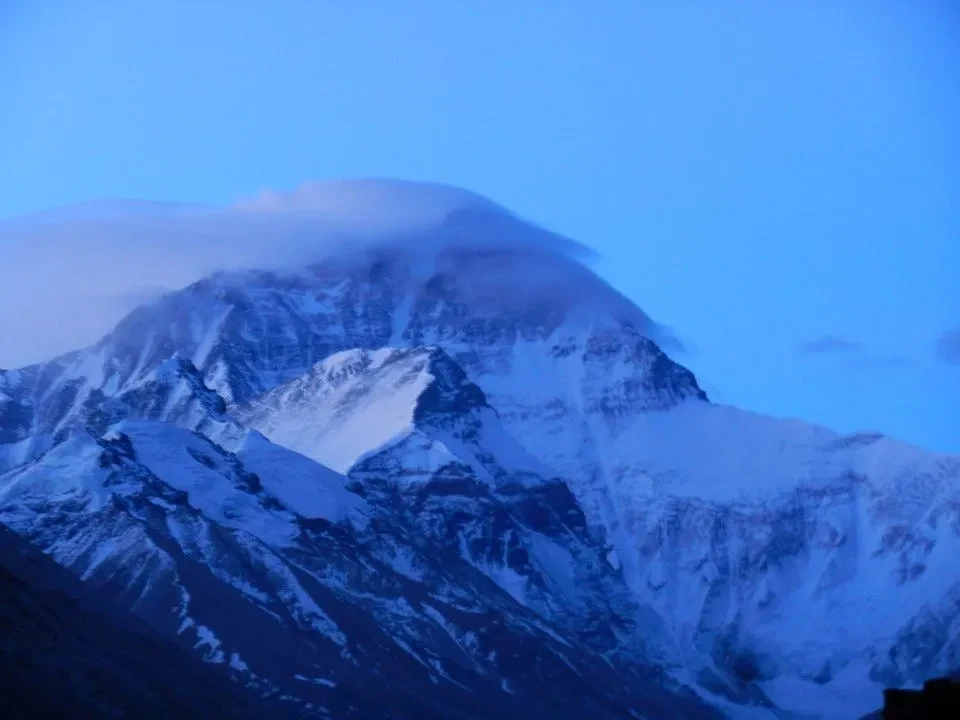
The Everest greets us with a beautiful sunrise. We return to the Friendship Highway until Zhangmu.
Zhangmu
The single time zone valid throughout China means that sunrise doesn't occur before 7 am. It feels like a fresh start, we get out of bed and go outside to see what's happening. With a large thermos of hot water delivered to our room the night before, we splash some on our faces. The experience of sunrise at 7:30, it is similar to sunset: breathtaking. At that moment, we forget the sleepless night and remain once again still before the north wall of Everest, insensitive to the freezing wind that tries to irritate our skin. Imagine those who are climbing and who should be considered lucky to experience such stable weather. The warm breakfast is still a revitalizing boost of energy.
Final thoughts
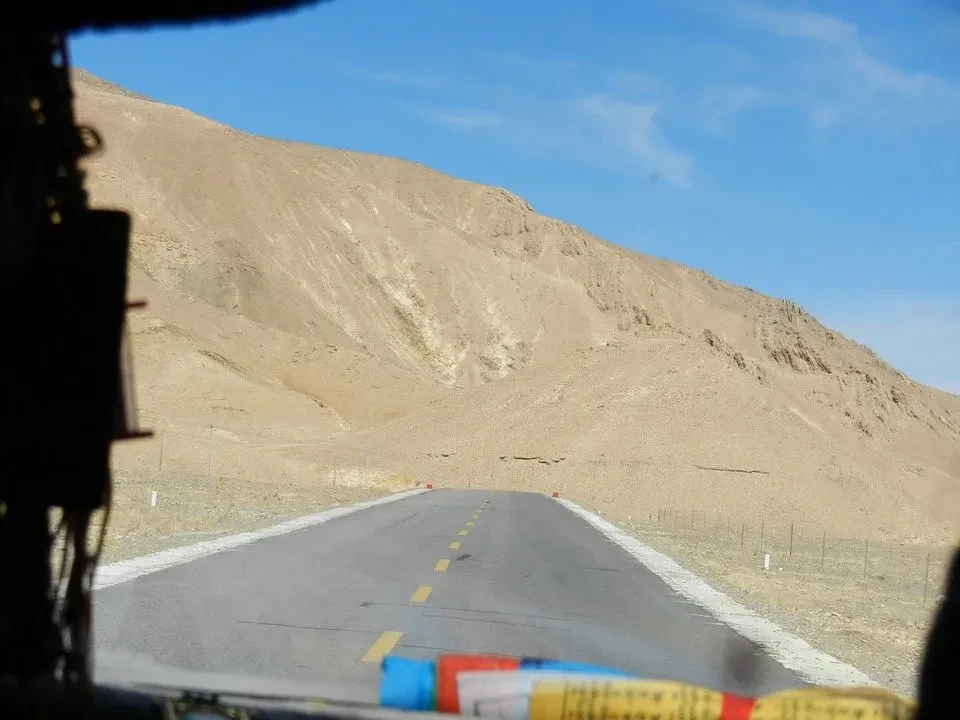
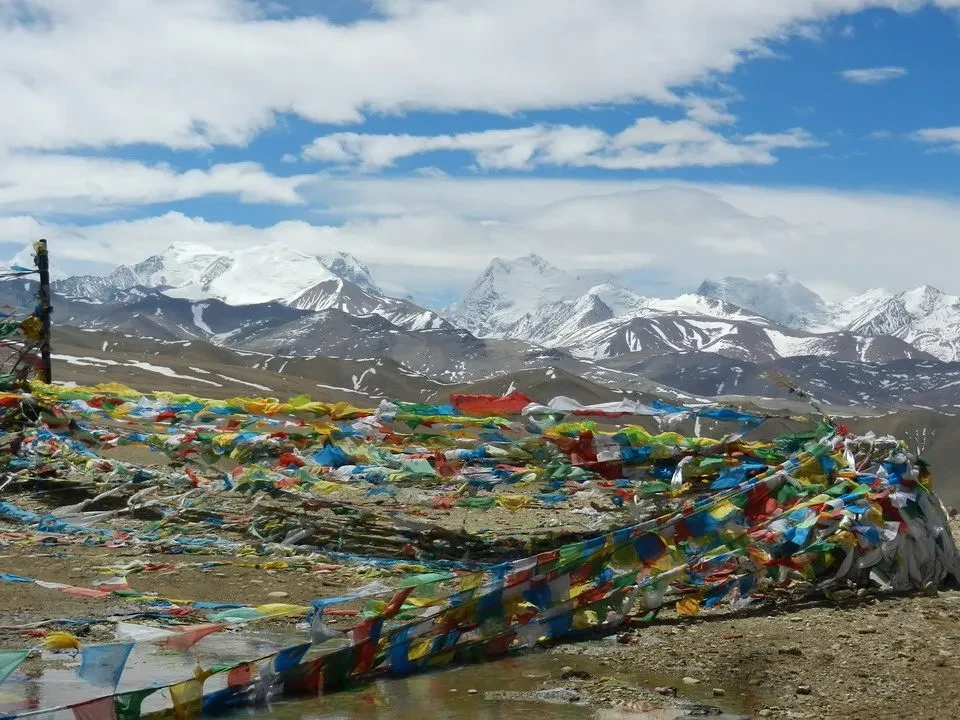
We head north-west. The first section follows the road we took to get here, then instead of turning back towards Shegar, we take a path leading to Tingri. At some points, the route seems more like an opinion than a proper track, but the driver knows what he's doing and we occasionally even encounter small shepherd villages. Life is truly primitive, and the conditions would be prohibitive for us. Apart from the altitude, all of the ponds where water stagnates show the marks of the ice from the previous night. A sun that seems more distant than ever begins to slowly rise towards the sky, bringing with it the daily thaw. Some streams cross the track, forming thick layers of snow and ice. With the off-road vehicle and thanks to the driver's skill, we manage to get through without any problems, but others are unable to. This is how we find ourselves at assist a tractor We stopped with the vehicle and its contents blocking the road, with the wheels having broken through the ice, it can no longer move. We pull it back, attaching a rope to the Land Cruiser, performing this everyday good deed. Without any fear, we cross other icy streams, while the off-road vehicle occasionally slides dangerously on one side, but our trust in the driver is complete and ultimately proves well-founded. The terrain remains very rough. for a few dozen kilometers. We knew that this road was much more rough than the one we drove yesterday, and we have proof of it. It only improves... at the junction leading to the base camp of Cho Oyu, when we are almost there and heading towards the paved road. Now all that remains is to approach the Nepalese border. But to do so, we still need to cross the Shung La pass, located at an altitude of 5200 meters with view of Shisha Pangma. Some clouds only allow you to see their lower parts. At this point the real descent begins... that one which goes from the plateau into a narrow gorge carved by the terrain in a truly bizarre way. In the 1500 km length of the Himalayan mountain range, there are few crossing points and this is perhaps the most significant as it connects Kathmandu with Tibet and Lhasa on a relatively passable road. It's a canyon, a real cut that divides the mountain range into two. The road descends gradually until it creates... a narrow passage carved into the rock along a nearly vertical wall. Even though the weather isn't ideal, the landscape is still captivating. With the Tibetan plateau, we also passed through the barren land, replaced by the typical green vegetation of our mountains. Along the slopes, the winter snowdrifts are still clearly visible, and it’s easy to imagine their power when you see how steep everything is. We stop in Nyalam for lunch. It's a simple, rather run-down town, and the Chinese inn where we stay reflects this. Just before, we are checked again for passports to access the final section of the Friendship Highway. At 3:00 PM, we arrive at our daily destination of Zhangmu, a very special city: it is located along a series of steep slopes, offering a dark and typical urban landscape, with shops of all kinds. In the evening, when we go for a walk, we even see three shop windows with girls inside. This is incredible, considering that prostitution is illegal in China, but Zhangmu must be considered a free zone. After all, it is necessary to offer some entertainment to soldiers and other personnel stationed at the border, which is located in a very peripheral area of China, 5500 km from Shanghai. And Zhangmu is not a place for much entertainment. Let's go with Lapu for dinner, discovering interesting facts about cooking and discussing sensitive topics with her. We find out that she doesn't have a passport, so why would it be useful? Leaving China is almost impossible, requiring a lot of money and documented reasons, while traveling around the rest of the country only requires any form of identification. Although she has studied and therefore has a very good general knowledge, she lacks understanding of the outside world. During our descent from Everest base camp, away from prying ears, we had already discussed this topic, and it was clear that she felt resigned to the cultural destruction taking place. This is the last night we spend in Tibet; while we are in our room and watching the activity from the window, we draw some conclusions: the Chinese invasion of 1950 and the Cultural Revolution have left their mark, but what is destroying Tibet is a different kind of invasion, not military but civil. Hundreds of thousands of Chinese people are being subsidized to leave their homes in poor regions to live here, mixing forcibly with the existing social fabric. Although the two communities follow separate paths and lives, it happens that a city like Lhasa goes from 50,000 to 640,000 inhabitants, changing customs, becoming crowded and chaotic, losing its mysticism. The government is also acting in an even more insidious way, with the temptation of money and prosperity. Instead of leaving the region in a state of semi-poverty, it has decided to invest large sums in its modernization. This can be seen in Lhasa being transformed into a single, enormous construction site, with monasteries restored or rebuilt. All this we have already seen in Amdo at Labrang and Kumbum, as well as throughout Xinjiang. It would seem that the enemy here is plagiarized with opulence, and eventually the young people will fall victim to it. At the same time, work is offered to Chinese masses who are encouraged to move here, from law enforcement to management at all levels. It is difficult to feel antipathy towards those who have been transferred here thousands of kilometers away from their homeland, in a desolate, arid, cold and oxygen-poor land. They are desperate people manipulated by a powerful force, pawns in a much larger game, where the stakes are the underground treasures of Tibet (gas, oil, minerals, etc.), as well as an area that covers almost one third of China in a very delicate geopolitical area, where Indian, Russian and Muslim powers play a significant role in the Central Asian chessboard. Similarly, it is impossible to have anything but disgust towards Chinese tourists, who are disrespectful of local culture, arrogant like everywhere else, obese and provincial like all the rich people. People who have filled their wallets in recent years but lack the noble spirit that distinguishes true gentlemen.
Religion remains the indispensable guide and undoubtedly the glue that holds together Tibetan society, despite the countless obstacles imposed by the government. If they manage to maintain the fundamental principles of their faith, it is likely that these will prove useful again in a context of freedom.
During these days of stay in Tibet, we haven't encountered many tourists. It is likely that the significant bureaucratic obstacles created to limit their entry have had an effect. Furthermore, it is not yet a very popular destination for tour operators who prefer to send groups to Beijing and towards cities where shopping prevails over mysticism.