Day 7
Trek Annapurna VI
From the tranquility of Ghandruk to the chaos of Kathmandu: two faces of Nepal, a friendly country.
Traditions and spirituality
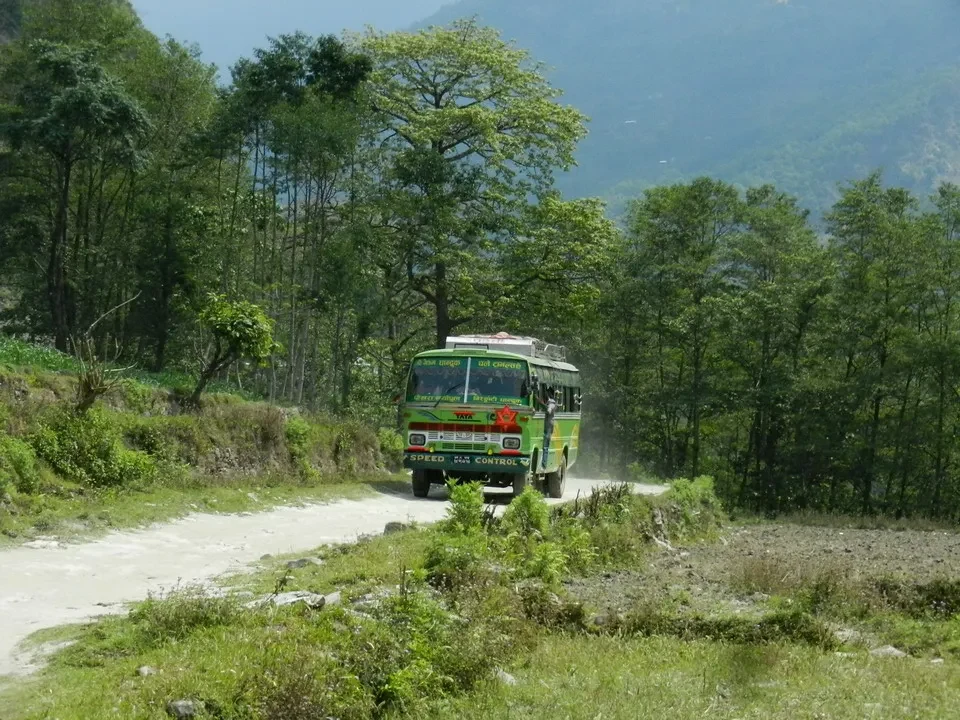
Around 5:30 am, the porters are the first to get up, and as they open their eyes, it's clear that it's already daytime. All that remains is to get out of bed. Shortly after, the music "Om Mani Padme Hum" begins to fill the air, a mantra that sounds like an ode to serenity. Stepping onto the balcony, I can see... the prayer flags flutter in the wind, in far from the high peaks. We wouldn't want to be anywhere else in the world, and we haven't experienced a sweeter awakening. The treatment feels like that of a grand hotel: breakfast in the garden with sunrise over the Annapurna South, Hiun Chuli, and slightly further back, overlooking Machhapucchre. We are no longer facing the exciting views inside the sanctuary, but it's nice to see the morning life of Ghandruk combined with the majesty of the peaks that seem to control them, all in one glance. The time for rest ends at 7:45, when we set off for the final stage, which takes us back to the road leading to Pokhara. The walk seems endless during the 4 hours in the hot and humid weather: the villages we pass through (Syauli Bajar and Birethanti) are instead a last opportunity to watch life go by in a simple but harmonious way, reflecting the industrious and proud nature of the local population. Now, my legs seem to move on their own along the path alongside the Modi Khola river, which is always bubbling, but here it's less turbulent than in the upper part of the valley. We meet... dense bushes from… to enhance a landscape that is already hilly. With surprise we meet a bus and some cars parked on a parking area. A recently built dirt road is bringing "civilization" further and further up into the hills. It's also recognized that these roads cannot be considered convenient for local residents, but rather a basic fulfillment of their essential needs. Life in this area is already very difficult and nature is sufficiently hostile. We finally reach Naya Pul... now a village with all the necessary amenities, located along the paved road. It is a starting/arrival point for hikers and also the base from which goods depart towards the villages higher up. Here we are checked at the respective TIMS and ACAP points, where the final stamps are affixed to our permits in what is essentially a check-out process. After 5 and a half days, we reach the paved road where numerous taxis are waiting for us. We negotiate one for 1500 Rs and cover the 70 km to Pokhara airport. The backpack has become a burden in every sense; our skin is burned by the sun from the last few days, and we find relief when we finally "settle" into the small Indian-made Suzuki Maruti. Only the satisfaction of having completed our Annapurna trek successfully, according to our plans, gives us comfort and makes us feel perfectly prepared for the new adventure that awaits us. The journey along the winding roads that climb up the hills west of Pokhara deserves to be considered an adventure in itself. Crossing through the villages, as well as overcoming trucks and buses, requires a dose of optimism and strong belief in the afterlife, which we experience here as being truly close. The road is a narrow strip of asphalt bordered by wide dirt paths, made of stone and with deep potholes, used to avoid oncoming vehicles. Through repeated successful overtaking maneuvers, we finally reach our destination and take a sigh of relief, now... the flight with Buddha Air it becomes a game for our arteries. But here we will experience something that is probably unique in the rest of the world: in what could be called the completely deserted check-in hall, while we are organizing our backpacks to keep only what is valuable and to pack as compact a bag as possible in the hope of having everything when we arrive, we are contacted by two airport officials. They ask us if we are going to Kathmandu and if we want to take the earlier flight, since there is space available. Surprised, we nod and shortly afterwards we are at departures, with an eye on our backpacks filled with orange-colored packing straps (which were very useful in the first two days) as they are carried towards the aircraft's hold. Family-style checks, little computerization and a lot of verbal communication are the main characteristics of the Pokhara airport. We therefore take off at 13:40 instead of 15:00. When the ATR detaches from the runway, it gives me a sharp pain in my heart; we are leaving one of the most welcoming and evocative places that we have had the opportunity to visit so far. We realize this moment that the seed of nostalgia is starting to grow within us, just as we had learned from the experiences of those who had previously frequented these places.
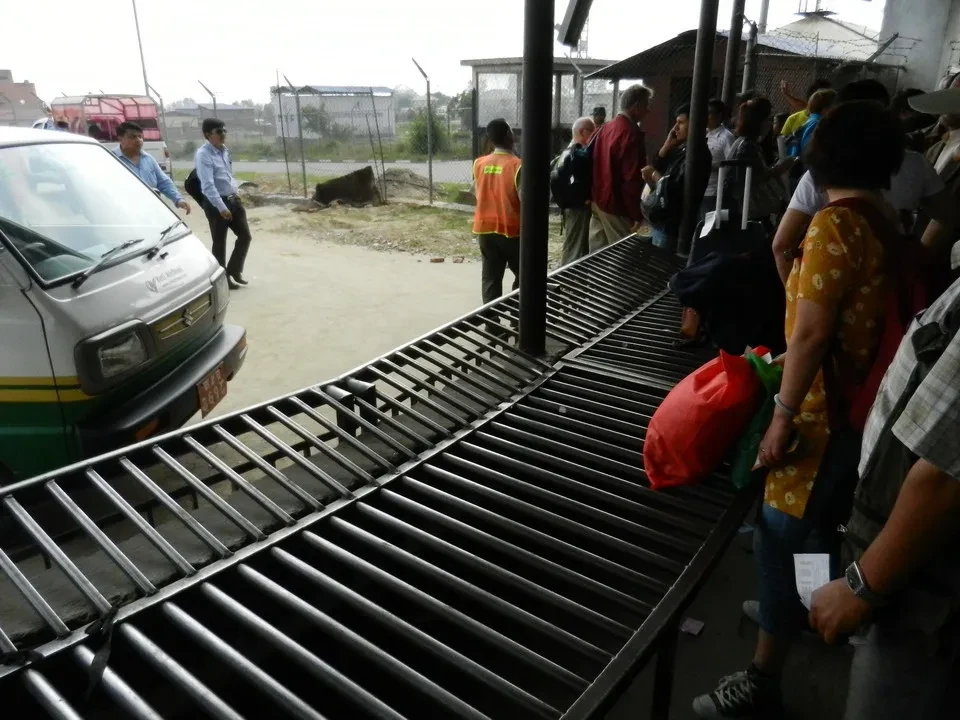
The one and a half hour time difference allows us to get ahead with the visit of the capital, which was partly already planned for today. The luggage arrives pulled by a brand new tractor (perhaps the only thing new at all the stop), and is essentially handed over with names; we head to the hotel to drop them off and after a shower, we're ready to leave. In all this commotion, we forgot lunch, which was originally planned as part of a short trip around Pokhara. We make up for it with two energy bars that we found somewhere in our luggage, and suddenly our strength returns.
Durbar Square
We set off towards Durbar Square, perhaps the only series of landmarks really interesting in Kathmandu.
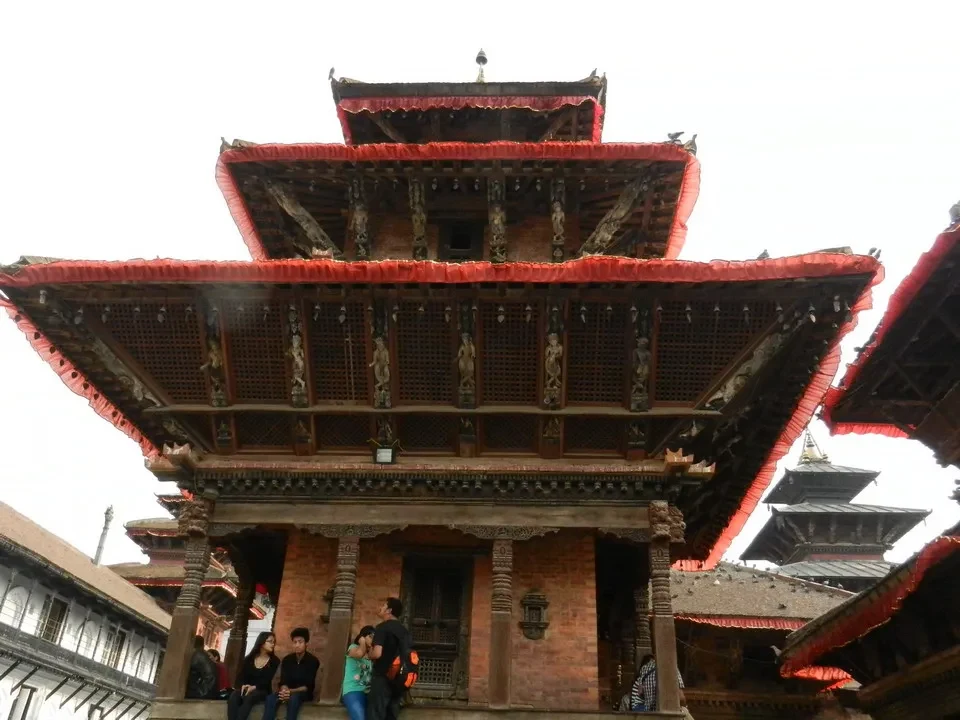
Clearly, the entity responsible for managing it has realized this and is charging 750 Rs for entry to the square: a truly exorbitant amount considering the cost of living in Nepal. With this, we can see that the Maoists have already well understood both the art of business and how to exploit tourists. Despite the dirt... the website is interesting We would need to be passionate about local history in order to truly understand the art and history contained within it. We settle for the history learned from guides and what we read at the time regarding palaces and temples that we encounter: around the center, traffic is a real nightmare, the square shows a very degraded image, far removed from the noble tranquility of the rural areas just left behind. At 7 pm, we have an appointment with Prachanda from the Trekker's Society to receive the necessary documents for our trip to Tibet; but trying to return to Thamel, we are unable to find the right street (or perhaps it would be more appropriate to call it a narrow alley) and we must leave several hundred meters from the chaos of people in order to find a taxi, which, amidst another traffic jam, will take us to the hotel thanks to our suggestions once we get close to the right area. After all, there are no street names or numbering in Thamel. Everything depends on knowledge, and when you don't know, you ask other colleagues who come in both directions, either on foot or by vehicle. The window is permanently lowered, and the low cruising speed allows for the exchange of information. For dinner, we go to the Yak restaurant, on the same street as the hotel. It is already late according to Nepalese hours, and losing ourselves again would further damage our self-confidence in terms of orientation. We order a yak steak sizzler, which we discovered is a cooking system using a cast iron pan that is then used as a serving dish. The taste is exceptional and it is accompanied by Everest beer (5°). This, although pleasant and with a 5% alcohol content, will be less good than Nepal Ice (7°) tasted in Ghandruk. Meanwhile, the shops are closing (usually by 8:30 pm) and restaurants try to speed up customer departures shortly after that time. We get an Ayurvedic massage to relax our muscles after a week of hard work. At 11 pm, which the Nepalese consider late at night, we also go to sleep.
It's pointless to say that there is no comparison with the mountainous setting of Ghandruk, where we stayed just 24 hours ago. The peace and quiet are two completely different and contrasting realities.