Day 6
Annapurna V Trek
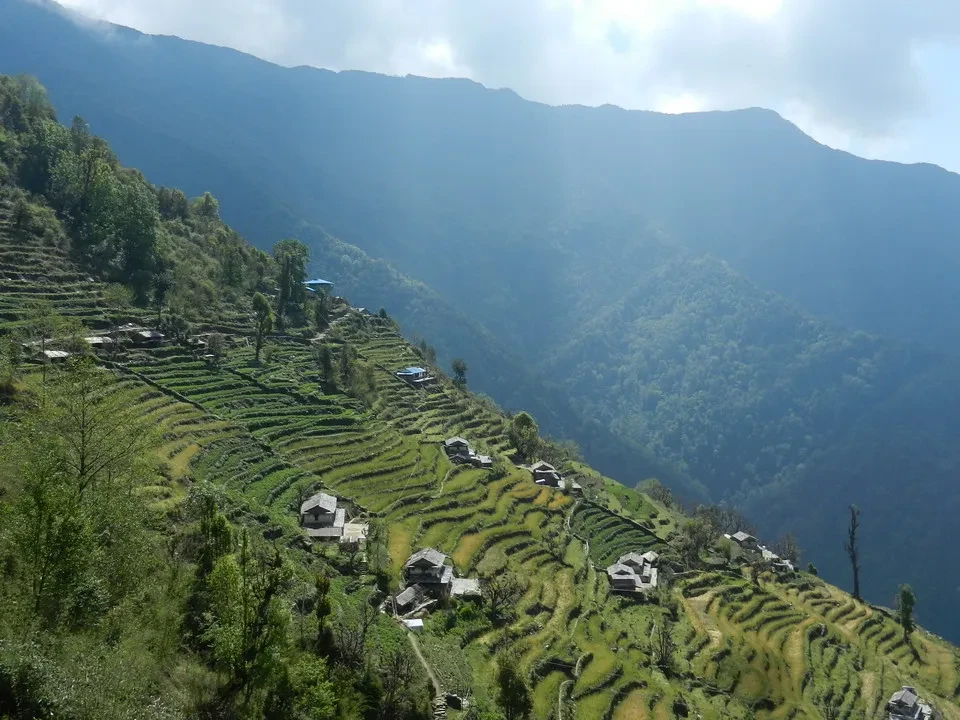
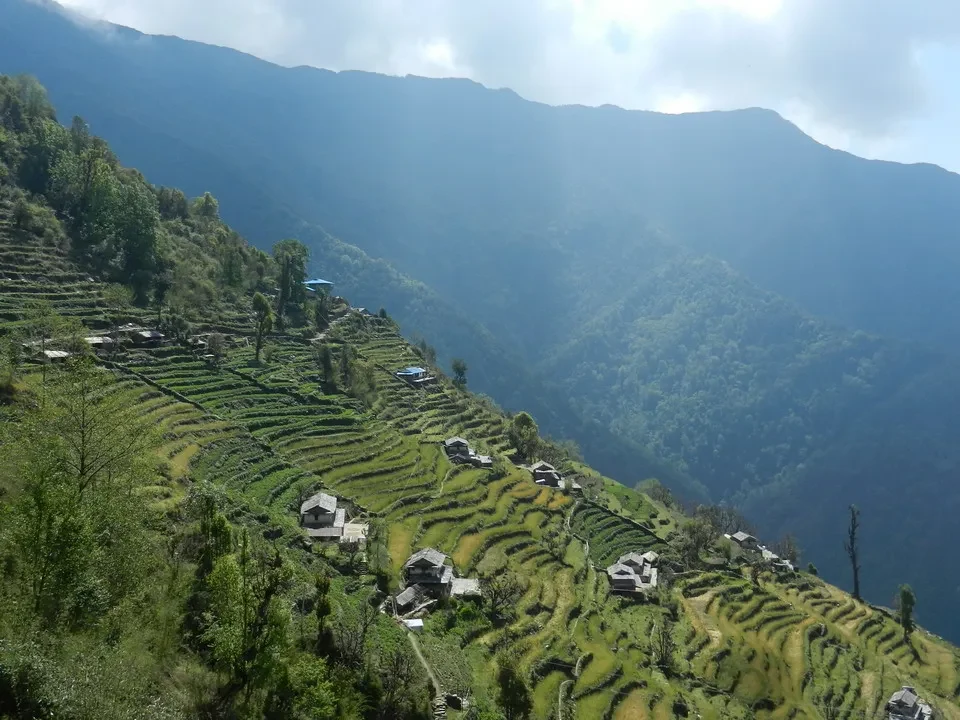
Up to Ghandruk, passing through Chhomrong – amidst beautiful terraced fields and wonderful people.
Annapurna V Trek
It's day 5 of the trek. We have now become accustomed to feeling tired from the moment we wake up: our shoulders and legs continue to ache. The breakfast with omelette and apple roll is particularly appreciated. We set off early (at 7:30) because from now on, when the sun is out, the heat can be a hindrance to walking. After a quarter of an hour, we reach the refreshment stop where we had a light lunch two days ago: it was raining then and our mood was very different; the destination seemed like an impossible dream. Now we have achieved it! We descend across the modern suspension bridge that leads to Chhomrong (which is effectively the capital of this area) with others. 2000 steps that we have to face uphill this time. A rooster greets us. With its song, this place is where people live all year round, and it's interesting to see the crops and the daily life of the Nepalese who live in remote areas and off major roads.
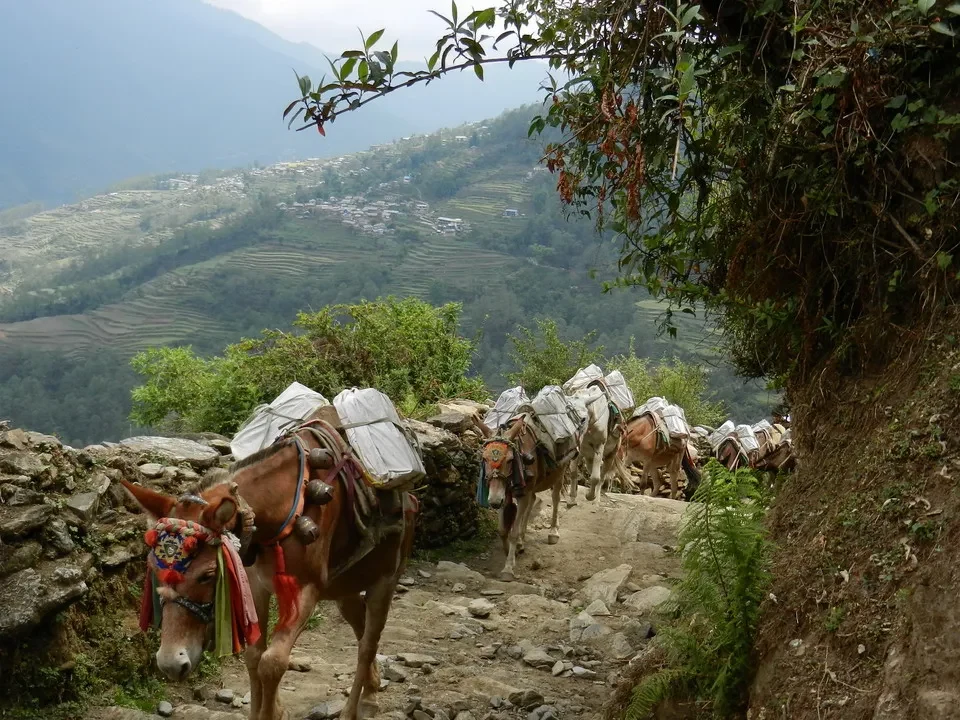
The only option is offered by wheelchair users, which we encounter without stopping. In the distance, the Annapurna South stands majestically alongside the Machapuchhre further east. In between them, there was balconies cultivated with barley, we take the right path onto a new trail (the one on the left leads to Landruk and New Bridge), which with long ascents and descents takes us inside the Kimrong Khola valley. From here, a steep descent leads us to cross the river after the village of Kimrong. Since our bodies couldn't tolerate any mistakes in choosing the route, we ask for information from an elderly woman while she is going to fetch water to wash clothes. Although we don't have a common language, we understand each other perfectly and she also tells us some things that we don't understand, but her expression and smile are enough for us to consider her one of the many friends met on this journey. Once again, we face a steep climb along a challenging path that ascends through the jungle for 430 meters. Along the way, we encounter a group of monkeys jumping from tree to tree using branches and vines offered by them. When we reach Kimrong, the fatigue returns. Now, even before the accumulated tiredness of the day, it is the weight of previous days that makes us more vulnerable. But now we don't pay attention to it: although long, there will only be a downhill stretch ahead. Along the way, we finally encounter a a caravan of donkeys attempts to transport materials, while the porters are assisted by four-legged animals. On several occasions, we have observed how the scarcity of resources has prompted people to be resourceful: for example, the rope is made from bamboo fibers, and the same tree also provides material for building the roofs of the houses. There is a culture of recycling driven more by necessity than environmental protection: everything that can be reused is found again, while only plastic is burned in designated areas outside the villages. Ghandruk It consists of a series of hamlets located just a few hours' drive from a dirt road where vehicles can access them. From there, donkey carts transport goods to the village. types of accommodation They reflect the materials available in the area, which seem particularly suitable for construction: squared stones for the walls and slate for the roofs. The whole gives an impression of geometric order thanks also to the wide paved streets. The only aesthetic incongruity we notice is in the blue-painted metal roofs on some houses, which must have their own reason, but one that is incomprehensible to us. However, it is a richer village that benefits from its central location relative to various trekking routes and serves as a hub for the entire southern Annapurna area. We find hospitality (a term more appropriate than ever) at the Milan Hotel: here we allow ourselves the luxury of a shower and also do some sightseeing by visiting the two local museums and the Buddhist temple (gompa) Each of the two museums is located in a room and represents local culture by displaying everyday objects that help us better understand life in the country. They are quite similar to each other, and visiting both is mainly intended to support their existence. Seeing the daily lives of these populations offers a glimpse into what happened in our valleys a century ago: manual labor, hard work, faith, and, yes, happiness mixed with carefree moments. It's interesting to note that the country gives off a more Buddhist impression than a Hindu one, despite seeing many people with the classic red stamp on their foreheads. During our "urban" tour, a storm returns some of the humidity we had lost over the past few days. The area seems to be already accepting rice cultivation, while in the terraces potatoes are the dominant product. Corn is about 20 cm tall and is hand-weeded by groups of barefoot women, while wheat is about to be harvested. At 6 pm, accompanied by two local beers (Nepal Ice and Everest), we have a snack during the dinner with chicken steak (fried chicken with vegetables and tomatoes) and fried (chicken pieces with fries), followed by an apple pancake, before observing the nighttime view of the surrounding peaks. As it gets dark, the manager even turns on the decorative lights on the second floor of the building. The full moon does the rest, but once again we appreciate the attention that our hosts pay to their guests. We meet two Australian couples who have completed the Annapurna circuit in 2 weeks and are also returning to Naya Pul. We gather some information without failing to express interest in a possible return to the area.