Day 9
Lhasa
Lhasa: capital of the Roof of the World. A city of contrasts, increasingly Chinese but proudly Tibetan.
Lhasa
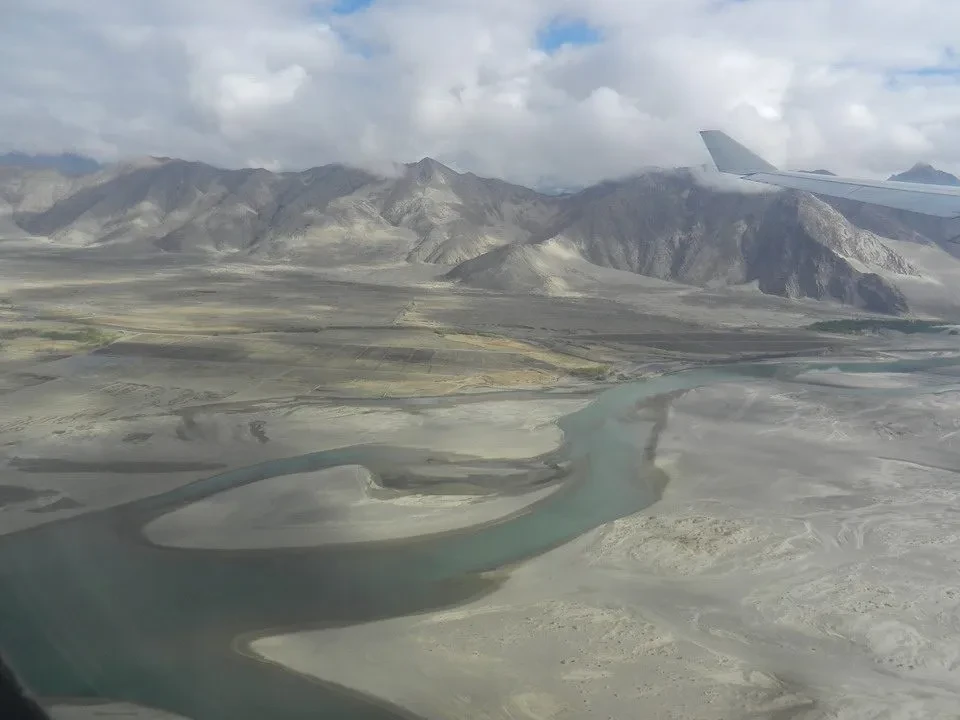
At 4:45 am (which is 2:30 am for us, being used to Nepalese time), we were literally thrown out of bed by the forceful knocks on the door from a Chinese waitress. It feels like I'm in a movie: I was apparently kidnapped for some unknown reason (and there wasn't necessarily a need for one), and now they are taking us to a secret location to make us confess to something we never did, and then keep us in labor camps for several years. It’s just a vivid nightmare that I will later tell my fellow travelers about, with the intention of making fun of what is happening. We spend time with the group of Russians leaving for Kailash, whose leader wears a Mao-style hat. He speaks acceptable English, doesn't seem particularly friendly, but he is charismatic. He has climbed Everest and is comfortable in difficult situations; talking to him means learning many things immediately. His military style gives him a mysterious charm, and those who are with him before respect him, then love him. He prints his words with the confidence of strong and experienced people; it's a shame we can't join their tour. At 5:30 am, we are on a bus with our luggage loaded, ready for the airport destination. Those traveling to Tibet are subject to special checks and are directed to dedicated counters, where an officious official finds something to object to our permit, calling up superiors. They talk amongst themselves without us even being able to guess what the issue is, and after several interminable minutes, they signal for us to move on. The departure time is 7:40 am, but the information is provided with almost scientific precision. Fortunately, what they say eventually happens, and shortly after the scheduled time, we board an Airbus A330 and take off for the second consecutive day towards Lhasa. This time we are two hours east, before it was one and a half hours west. Just before 10 am, we land in new airport of the Tibetan capital, located at an altitude of 3650 meters. The entry formalities are relatively simple, as it is an internal flight; we have no acclimatization problems, we collect our luggage and immediately meet Lapu, our Tibetan guide, who gives us a katahk (a welcome scarf) as a sign of hospitality. This gesture signifies the purity of heart of those offering welcome and the warmth of their greeting. From these initial gestures that could almost be considered ceremonial, we realize that the behavioral style is very similar to that of Nepal: hospitable people with an innate sense of cordiality. Afterwards, we get acquainted with the driver, who is driving a Land Cruiser, and we set off for Lhasa: from here to the center are 45 km, passing through the Yarlong Tangpo River (which in India will take on the name of the most famous Brahmaputra) and crossing a tunnel which connects two flat areas. The mountain above rises as a long, rocky island and is circled by aircraft during landing from the east. The highway It was completed in 2008, and from the very beginning we can see how China is also investing here in infrastructure, as it already does in other areas further north that we visited last year. Alongside the road runs the almost finished railway line that will connect Lhasa to Shigatse, which is a continuation of the now famous Xining-Lhasa "skyline" route. We see fields of barley (which is used to make tsampa, the national dish), soybeans, potatoes and wheat, which are being sown now in order to be harvested around October. Shortly before noon, we finally arrive at the hotel, put down our luggage and immediately set out to explore the city, with a slight delay. We had not come to Lhasa expecting it to retain the mystical charm of its past, and we quickly realize this from how the city is a huge open-air construction site, especially in its center. We agree that the Chinese have taken twenty years to destroy it during the Cultural Revolution, and another twenty years to rebuild it according to their own image and likeness.
Visit to the Barkhor Square
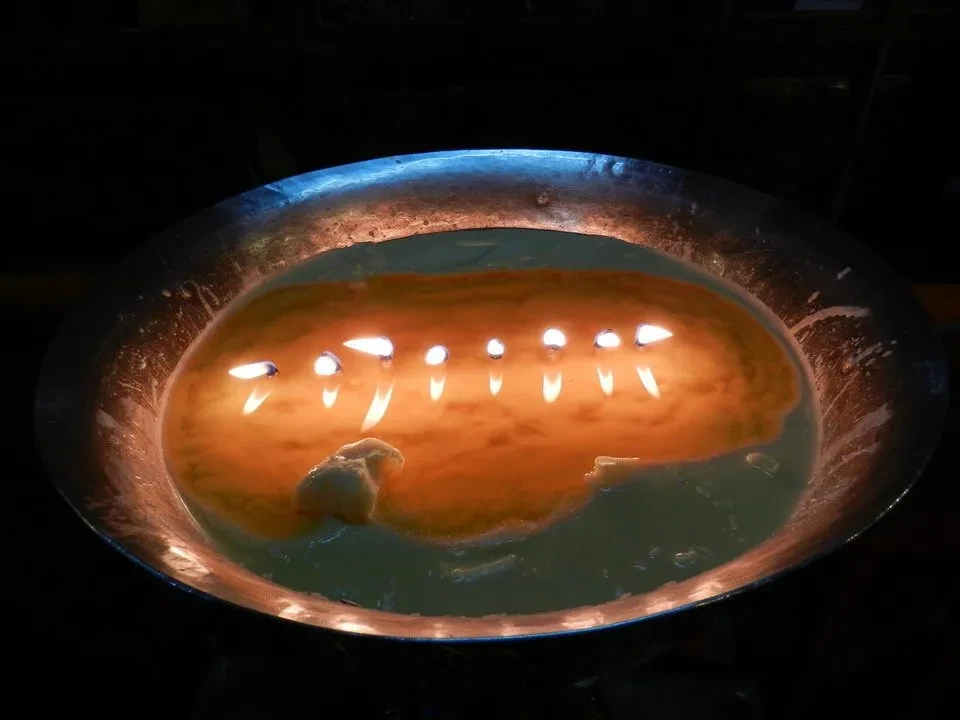
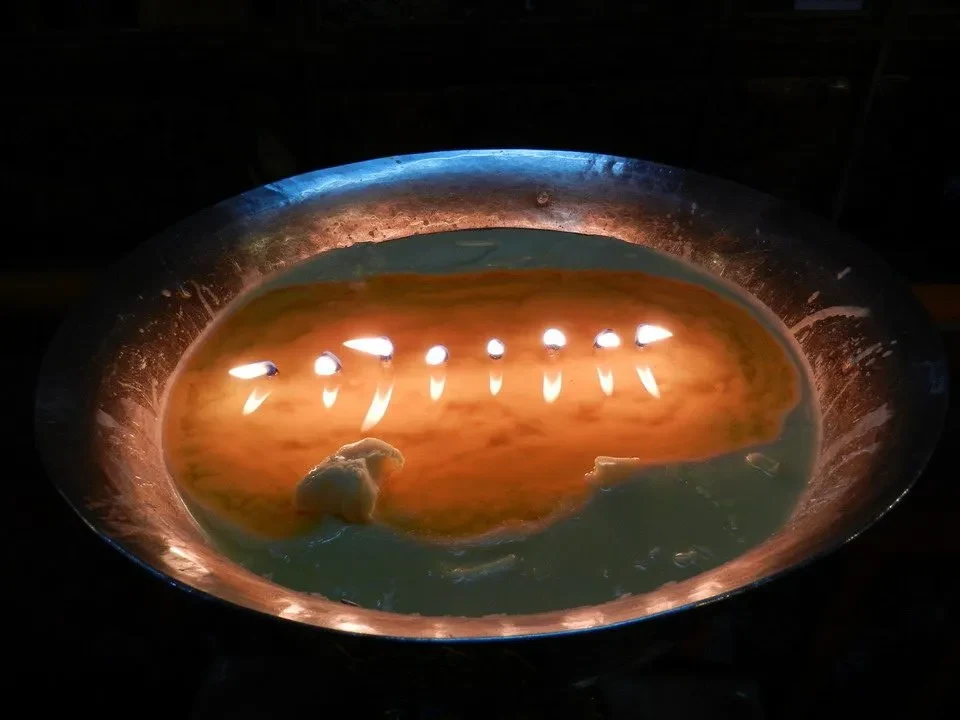
Let's take a look at the Jokhang, located in the historic center of the capital, built in the 7th century, is the most sacred temple in all of Tibet. Inside, there is a golden statue of Buddha Sakyamuni, brought by Chinese princess Wen Chen during her marriage to Tibetan king Songten Gampo. There are many chapels that are only open in the morning, covered with candles or even vases containing flames fueled by yak butter. In between flowerbeds and blooming plants We go up to the temple terrace from which we have a great view of Barkhor Square and, in the distance, we see for the first time the Potala. A bit secluded, but it's him. Let's stop dreaming when our gaze turns south and from the terrace of the adjacent building we see the police gazebo overlooking the area. Everywhere you can find money left by worshippers as offerings to the gods and to accompany their prayers. In the coming days, we will talk to the guide and show our astonishment at this mixture of sacred and profane things, causing him amusement. Buddhists don't feel embarrassed about displaying the offered money prominently beneath the statues of the deities: however, it is surprising to see dozens of banknotes with Mao's image at the feet of Buddha or Avalokiteshvara. Whether it's a form of their greed or simply our own prudishness remains incomprehensible to us.
Visit to the Drepung Monastery
We are going to do lunch at a restaurant opposite the temple, where we ask for something to be served quickly: we will opt for Chinese-style fried noodles and some kind of local Dahl Baht. We move to the western outskirts to visit the Drepung Monastery, which is located in prime location about the city and with a beautiful view of the mountain range to the south, still covered in snow. Like others (including Sera) the complex It is located in an area where the plain rises towards the mountains, almost at their foot. It was the largest monastery in the world, accommodating up to 10,000 monks. Built in 1419 by Jamchen Coejie, it houses the tombs of the second, third, and fourth Dalai Lamas. In the following lines, we intend to recall some of the teachings learned while visiting Tibetan monasteries, without intending this to be a catechism or clarification on this complex religion. Simply, some notions learned that have contributed to creating a less confusing image, useful for understanding its spirit; explanations to assimilate into theological concepts expressed in an understandable way:
Om Mani Padme Hum
– A decorated rock presents the most famous mantra, dedicated to Avalokiteshvara: Om Mani Padme Hum, where Om stands for God, but also as a demigod and human, I feel like an animal and the hungry spirits; finally, Hum goes to hell; all this symbolizes the cycle of life indicated in the next point.
– The guide explains the Buddhist allegories, starting with what is called the life circle It is often depicted in paintings found within temples or monasteries. The figures are: God, demigod, human, plants and animals, hungry spirits, and hell. This relates to the concept of reincarnation, as there are two corridors inside the circle, one ascending (white) and one descending (black), to guide souls towards the three higher categories or lower ones. These higher categories are God, demigod, and human, which is in the lowest category but still considered a positive one. It is clear that the further down you go, the greater the difficulty in returning and regaining positions. At the end, one can achieve enlightenment and therefore exit the cycle of reincarnation. This forms the basis of this religion, which views life as suffering and exiting the cycle of reincarnation as the ultimate goal to strive for. The depiction of the levels of life shows three original sins at the center: the pig, the rooster, and the snake represent three different sins, respectively ignorance, greed, and hatred.
– The difference between Hinayana and Mahayana Buddhism lies in the fact that the former anticipates enlightenment on an individual level, while the latter states that everyone (including animals) can achieve enlightenment. The Tantric school (or Tibetan school) belongs to this second school.
– The monks can freely choose the order to which they belong, depending on their aspirations. Those belonging to the first order, that of the red caps, are more inclined towards Tibetan Buddhism, therefore they devote themselves primarily to study and it will be easier for them to achieve enlightenment. However, it will also be easier not to achieve this goal due to the difficulty of such an ambition.
Traditions and spirituality
– The Buddha Nibbana (reclined position) is that of the present moment when he passed into the afterlife, therefore, at the moment he achieved Nirvana, it should not be confused with the Buddha of the past.
– We then try to distinguish the statues of the Buddhas, but we stop at that of the future Buddha (Maytreya), who is depicted sitting with his feet resting on the ground, symbolizing his imminent arrival to replace the present Buddha.
– It is also striking the mythology of Avalokiteshvara, who had promised to do certain things during his life, without succeeding. He was dismembered into a thousand pieces, and later his teacher, the Buddha, never restored him to unity. However, he remained with a thousand arms.
– "Kumbum" means a thousand images.
– We learn that the so-called yak butter The material used in the monasteries is mainly of vegetable origin because it seems that real yak wool produces smoke (and consequently darkens the ceilings). This information contradicts what we learned last year at the Labrang Monastery. What is definitely true is that... huge amounts of votive candles which is offered to the gods and, furthermore, the supply of yak butter could even become scarce.
– In both monasteries and Tibetan homes, the three dominant colors are black (to symbolize power), white (for compassion), and red (for knowledge/wisdom).
– Tibetan prayer flags They have 5 colors: blue for the sky, white for the clouds, red for fire, green for water and yellow for land. These flags, which are placed near hills, mountain peaks, bridges and rooftops, are meant to bring good luck, even to students who need to pass an exam.
Local wildlife
The vegetation displays the colors of early spring, with only some shrubs (prunus and forsythia) already in bloom, and the tall trees showing their first buds. Wherever you go, the presence of military personnel and police is very noticeable, in a variety of uniforms that are difficult to distinguish. It's true that we are in a militarized city; just think that access to Piazza del Popolo, opposite the Potala Palace, requires passing through metal detectors for both bags and people. The military seem rather careless in conducting checks; instead, there is the feeling that they want to be present and make their presence known as a warning to anyone intending to protest in favor of Tibet. At the same time, Chinese staff are employed in this region to balance the presence of the local ethnic group. Even in Lhasa, the pollution combined with the high altitude immediately makes its presence felt, causing a sore throat.
At our request, we visited the Tibetan Medical Centre, a center dedicated to studying traditional healing methods, based primarily on the use of herbs and with a strong influence from Indian Ayurvedic medicine, with which there have been frequent exchanges over the centuries. A guide, posing as a doctor, with good knowledge and equally valid oratory skills, takes us on a tour of what is essentially a museum of Tibetan medicine. He informs us that the fundamental principle is prevention, even before treatment, and that this can be achieved through certain checks. For example, seeing my right hand with a curvature towards the middle finger, he realizes that I have some stomach problems. Confirming this, I tell him that in our society, the stomach is one of the first organs to suffer from stress and pressure caused by haste. The center is also a kind of pharmaceutical industry with an inevitable shop. To avoid seeming rude, we buy saffron. We are not sure about its therapeutic properties, but it is an excellent remedy for blandness in rice. Buying other medications seems perfectly useless: taking a few pills only to be unable to continue the treatment if they prove beneficial is only worth wasting some money, even though these plants are rare. We leave without fully understanding; if what the doctor "caring" for us claims about Western medicine is true, it could only serve for surgical interventions, which have not been practiced for several centuries, then after a noble died due to an unsuccessful operation.
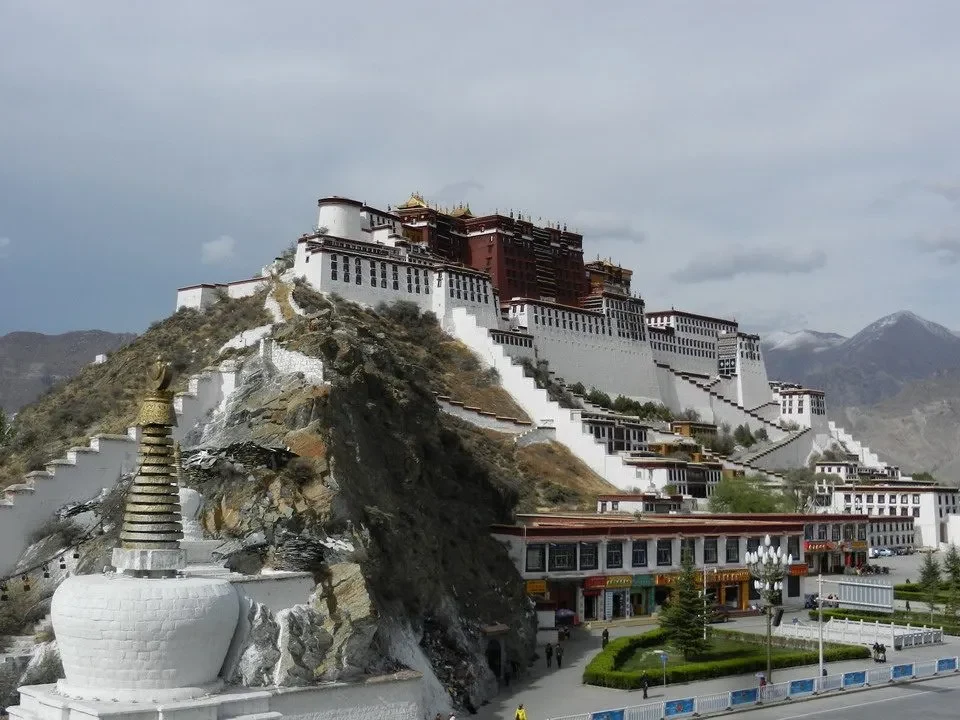
When it's 4 pm, we arrange for someone to bring us. at the foot of the Potala Palace (meaning the home of Avalokiteshvara) and we say goodbye to our guide for today. At this time, the entrance to the Palace is closed to tourists (actually few in the city), and we remain almost alone with the faithful, completing the kora around Potala. Having arrived only this morning instead of yesterday afternoon, and having to give up on a commitment in the program, we opt not to see the interior of Potala, which is now empty of its interesting contents. It was the winter palace of the Dalai Lama and until 1965 it was the seat of religious and political power in Tibet. It was built by Tsongtsen Gampo in the 7th century as a fortress and was subsequently renovated on several occasions to take on its current form in the 17th century. We climb onto a hill overlooking it to take some enchanting photos. We are facing the image that our imagination saw as the remote relic of a past now consigned to history, a symbol of a religion opposed in any way and a memory of the religious power of the Dalai Lamas. A power made of light and shadow, but in the name of a peaceful religion that deserves all respect. The palace has succeeded in overcoming the destruction that has torn through Tibet and sought to annihilate Buddhism during an occupation lasting more than 60 years. And the Chinese flag that is currently flying on its roof at a height that seems to be at the top of a mountain, only appears as the ultimate insult to Tibetan tradition. We are facing a symbol that we have seen too often in conjunction with repression, in this periphery of the world where the current powers that divide the world show little interest. The process of Sinicization continues relentlessly, advancing further towards a point of no return that prevents Tibetans from being masters of their own land.
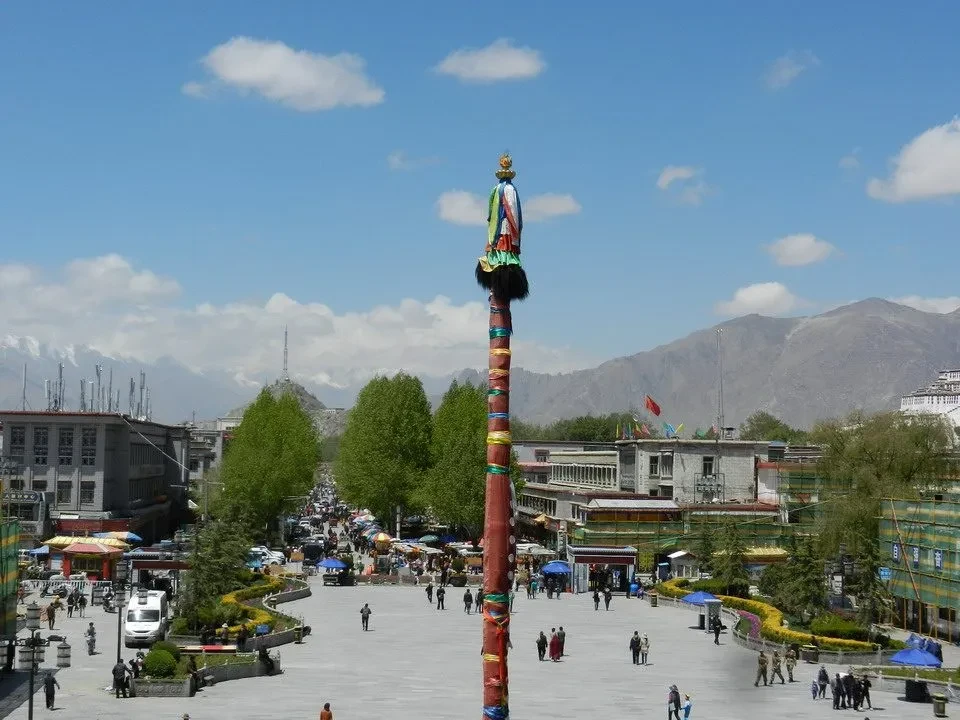
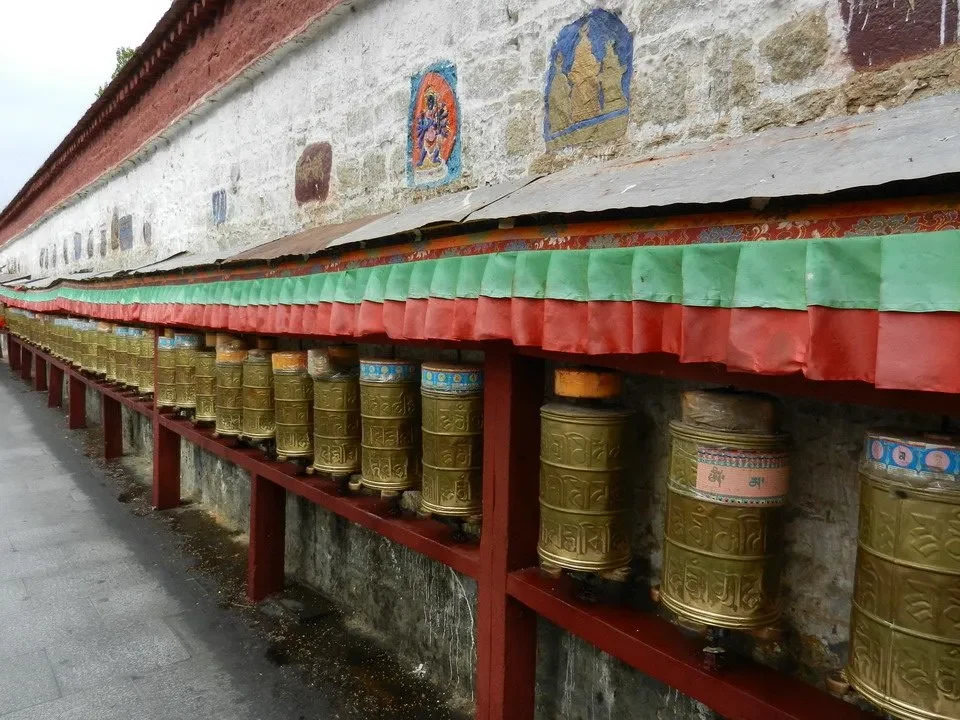
Following all religious rules, we also begin our clockwise Kora pilgrimage, accompanied by the faithful who continue to rotate the prayer wheels They seek protection in the chapels located along the road. Let's go and see the Yak monument, a short distance away, and we take a few more photos from there. Piazza del Popolo, kind of like Tiananmen Square but on a smaller scale. After we finished our tour, it was getting late, so we walked towards the Barkor, passing by the Jokhang temple, and found shelter in the... restaurant The Sun Tribe, recommended by the guidebook. Initially, we struggled to find the entrance, as it's located up a rather old staircase behind a lobby area. Once inside, the atmosphere is that of a high-end restaurant, frequented mainly by locals. We enjoy the fried lamb in a bowl and we dedicate ourselves to a nighttime visit of the city. With a well-chosen choice, we hire a rickshaw and return to the base of the Potala Palace. From the square, modern music with tones that are extremely suitable for the location is heard, not mystical but also not overwhelming. What actually leaves us speechless is The illuminated Potala Palace: only then can we understand its scale and we feel incredibly small standing before the walls of the two buildings stacked on top of each other. The wind makes the curtains sway. Outside, everything seems to have its own dynamics. Without words, we try to capture every detail, but it is the overall view that does justice to this people. What was once the religious and temporal center of Tibet is now just a bare museum, but its exterior continues to maintain the authority of a people and religion that we are not afraid to call noble. A few days later, we will be asking ourselves whether it is a religion that defines and improves a people, or rather the other way around. We are increasingly convinced of the second option: the Tibetan character can only make Tantric Buddhism better. Its simplicity, even the innocence of its followers, makes this religion superior to any political power. The fact that the last Dalai Lama renounced his political position for himself and his successors means keeping pace with the times, realizing that theocracy is not the best way to administer a state. It should also be remembered that keeping up with the times does not mean becoming a colony of Beijing, in the provincial opulence that makes China a huge industrial zone with dazzling neon lights trying to make cities less gray. As we were able to determine last year, there is only one time zone in China, that of Beijing, which is located east of the country. Consequently, the western regions must coexist with an official (train, plane, etc.) and an unofficial time zone that regulates daily life. Lhasa, being longitudinally just over half of China, still has a time zone that makes sense. It becomes clear around 6:30 am, and dusk arrives around 8:30 pm.
By 10:30 PM, we walk back to the hotel. It was a long but unforgettable day: today we saw the Potala Palace! It really exists and is not just in books or movies.