Day 5
Southwards, the first oasis towns
Sand, aridity, small towns, Touggourt and Tamacine, and a beautiful mosque
Biskra market and date culture
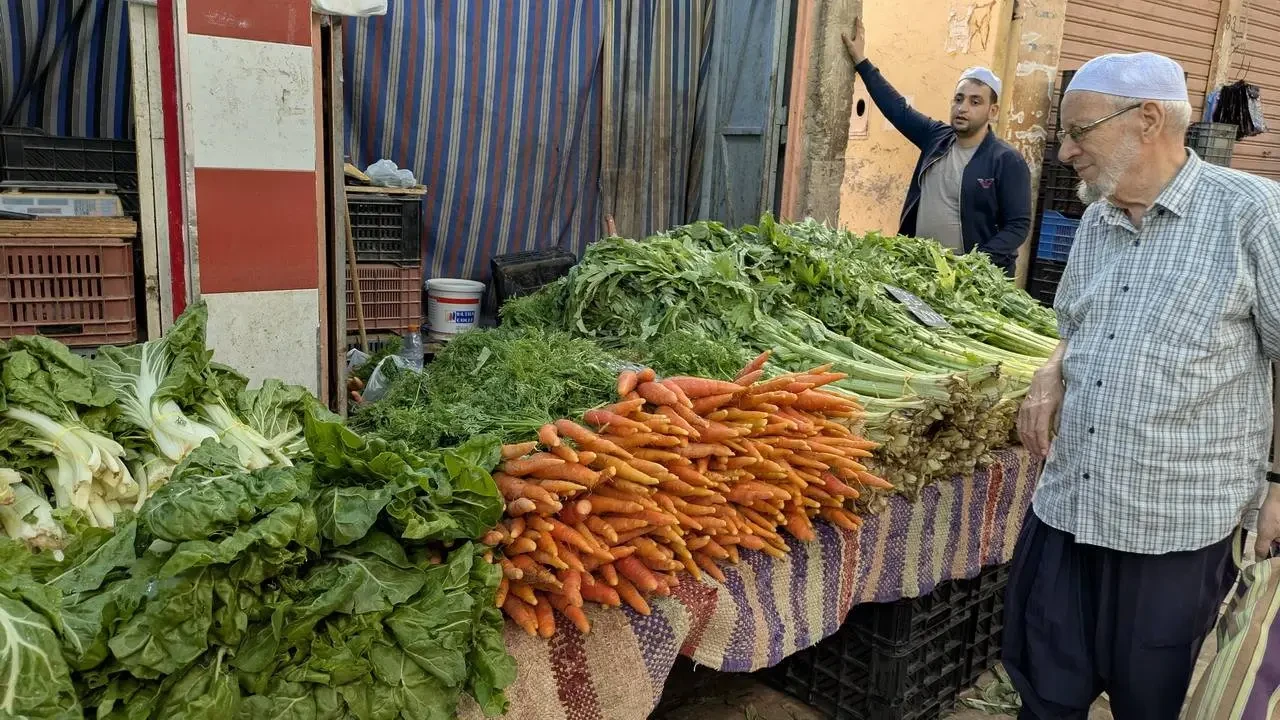
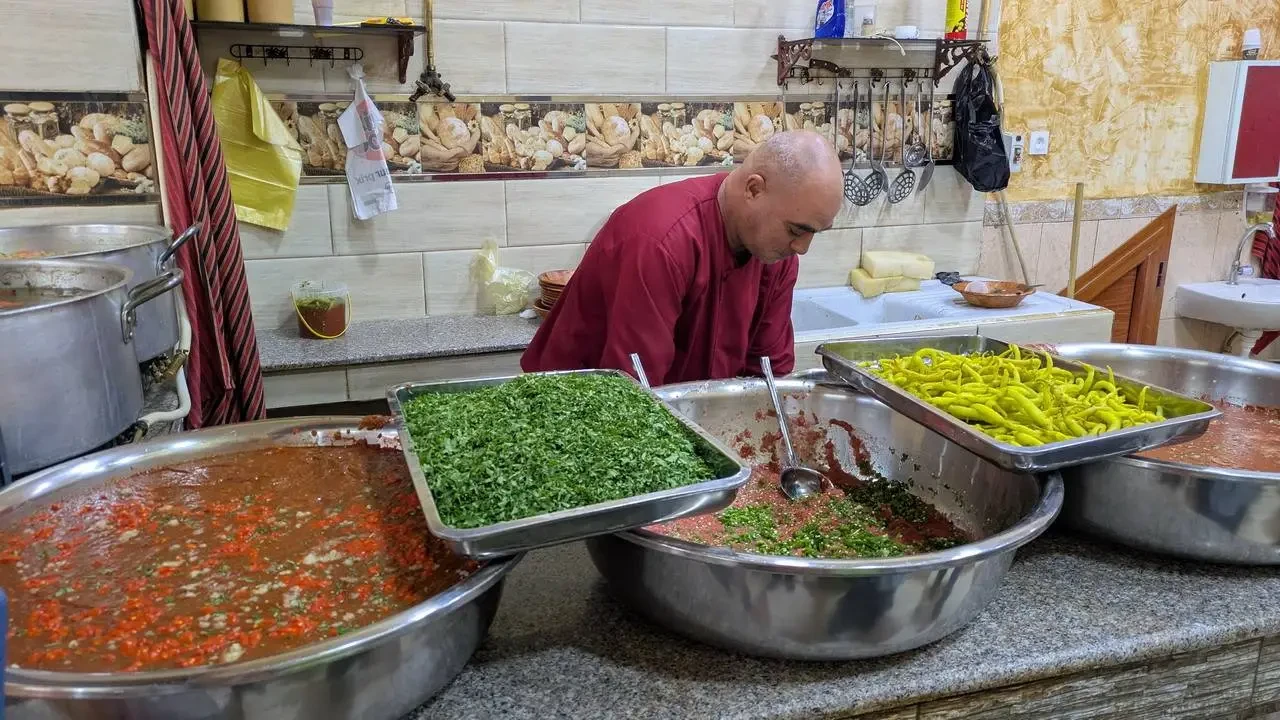
Today is a transitional day, but not without interest. We begin with a morning walk through Biskra market; markets have always been the thermometer of a society and are worth visiting not only for their colours and the variety of goods on display. What we might call a bar shows doubar on the counter in full view, made up of large trays overflowing with an indefinable yet attractive minestrone of tomato, meat, chickpeas and beans, from which the host ladles portions into a plate with the addition of hot spices. It is inviting, but it requires a certain courage because it is served only from 6 to 11 in the morning. Locals think differently: instead of a cappuccino at the start of the day, they fill themselves with this robust restoring dish. In the meantime it is pleasant to observe city life: housewives shopping, the baker unloading baskets of baguettes, a French legacy not rejected in the name of an acceptable compromise. Walking through the narrow central streets we end up in a shop specialising in dates and related products, where we make some purchases to take home as a succulent souvenir. Besides learning interesting facts about dates, we do not miss a few tastings to guide our choice. Different qualities are displayed at rising prices: from small, almost dry ones resembling acorns, costing just under one euro per kilo, to fleshier varieties at just over two euros per kilo. They ripen and are harvested in this period, for a couple of months, but can be kept for a whole year. They say that eating three dates in the morning gives enough energy for almost the entire day, which is why during Ramadan a few dates before dawn are apparently enough to withstand the fast until sunset. They are usually eaten in odd numbers, up to a maximum of seven. The shop windows also display juices, jams and jellies, all strictly date-based. Meanwhile two police officers from the escort wait for us outside, perhaps to protect the other market-goers...


Touggourt and Tamacine
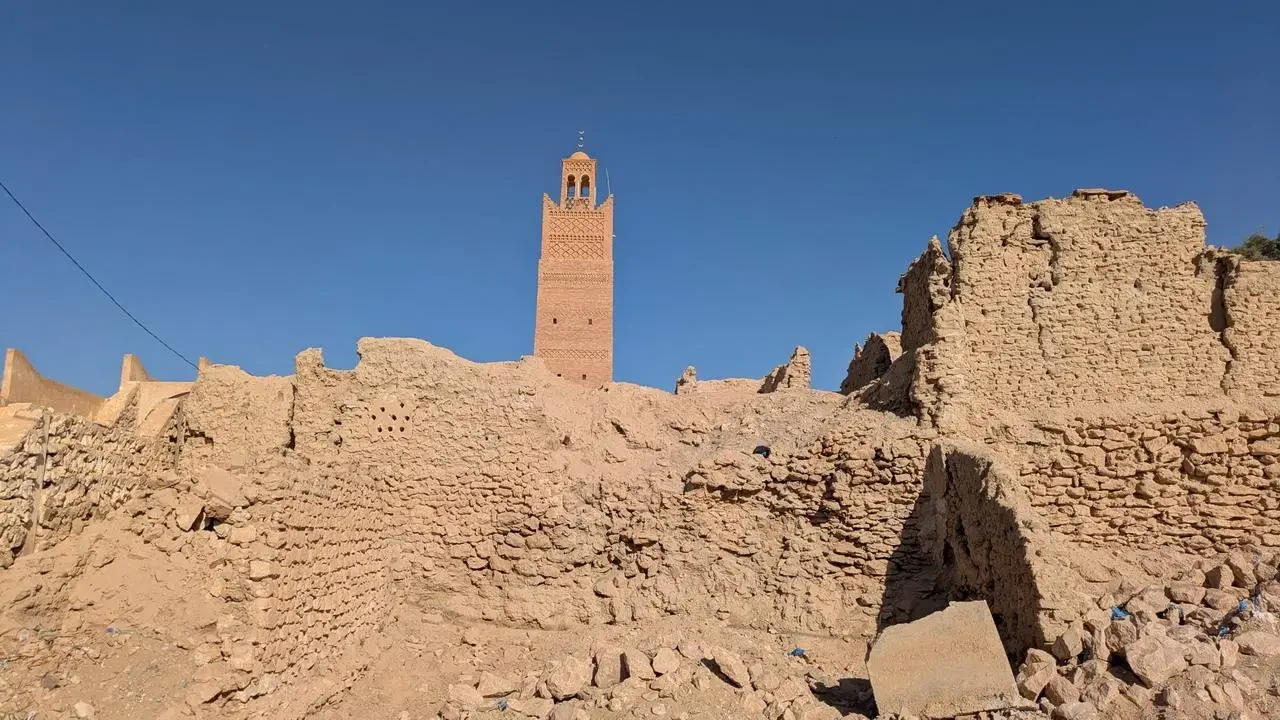
We leave Biskra and set off through an irregular desert and date palmeraies among the finest in all Algeria, to reach the town of Touggourt. It has little to show except the stele erected in the centre of a roundabout in memory of the motor raid that started precisely here to reach Timbuktu in Mali. A pioneering expedition carried out in 1922, sponsored no less than by Andre Citroen, during which intelligence and courage combined with a touch of healthy madness made the first Saharan crossing possible. We settle for a light lunch in the ice-cream shop on the other side of the road, before setting off again towards Tamacine, introduced by a graceful little lake ringed with palms. It is always a pleasant sight after the eye has grown used to seeing only desert colours for hours, mixed with amazement at how a body of water can appear amid such aridity. Water, however, does not bring only beautiful visions. In the desert it rains little, but when precipitation comes it is intense and causes damage. So it was in Tamacine on several occasions from 1964 to 1980, when waves of violent rain struck the village, destroying it and making it uninhabitable. The Berber-style houses could not withstand it and had never been designed to do so: the clay of walls and roofs ran down, causing many houses to collapse. A quick walk through this ghost town, which seems to have been shaken by an earthquake, this time from the sky, shows the disasters caused. Clay allows better thermal insulation, but cement blocks resist the heavy weather that may occasionally occur, which is why new buildings are constructed with the safer system. Today there remains the beautiful minaret and, further away, the mosque dome, once covered with lively green tiles.


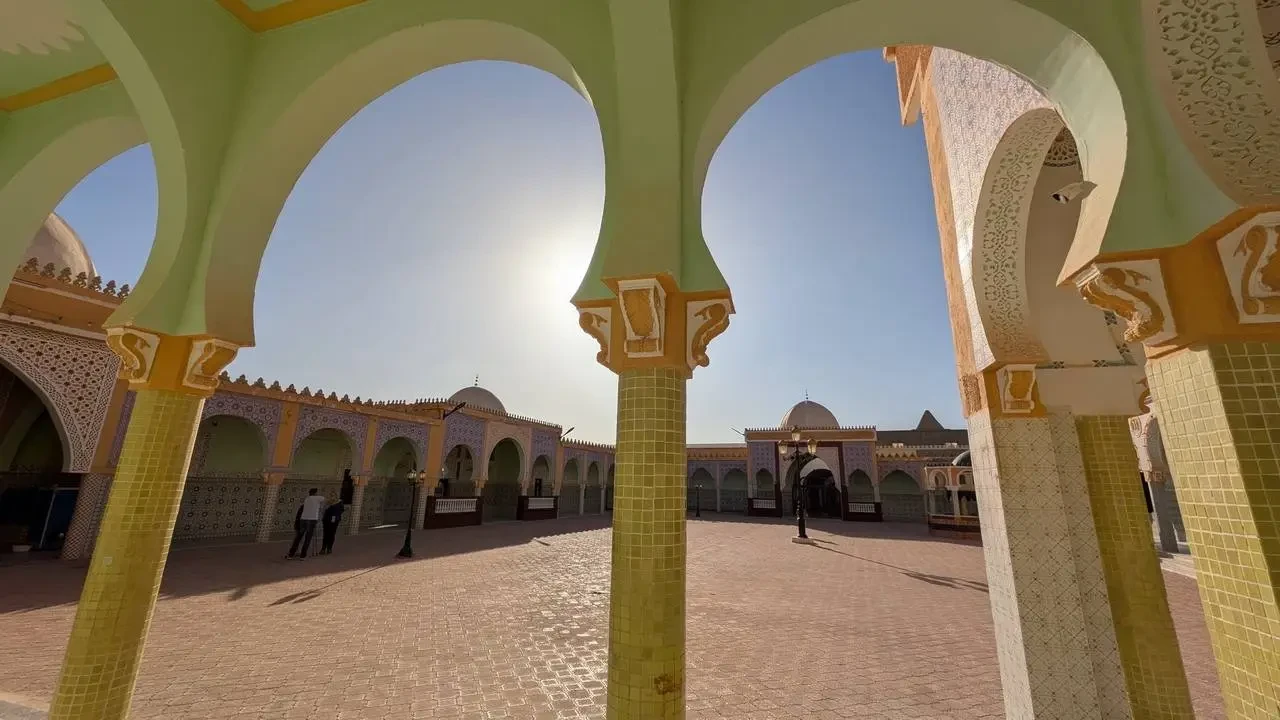
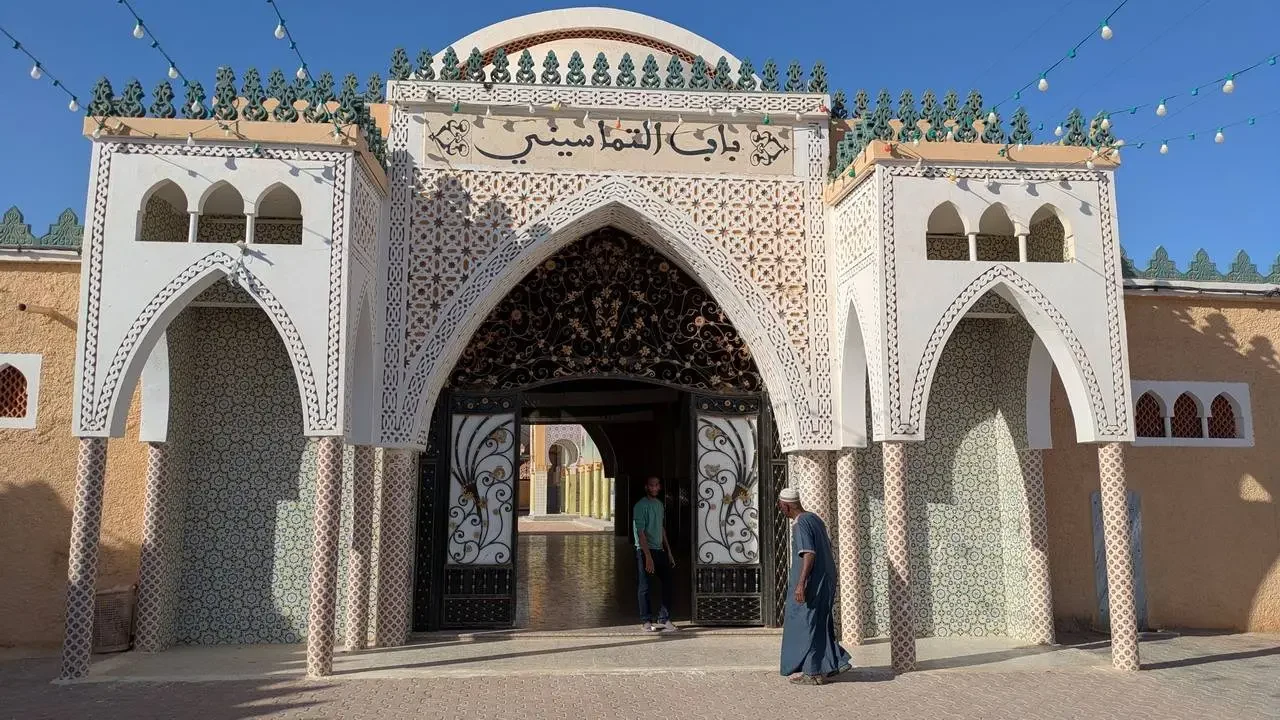
The Zawiya Tidjania is home to an interesting and beautiful mosque, shining in its brightly coloured designs, lit by the sun now nearing the end of its day. Well restored, it does not hide a wealth probably due to being the seat of a powerful zawiya and therefore influential in high circles. It is prayer time and we cannot enter the interior, but the most interesting part is the courtyards with their decorated arches. It is interesting to notice the attention of the policeman who fixes us with penetrating eyes to ensure we do not leave by the rear gate, the secondary one on the residential side of the village, surely not out of fear that we might get lost or risk our safety. We do not even think he wants to prevent espionage: apparently this is a small village lost in the desert and only elderly people are seen moving around. The real reasons for so much surveillance escape us.

The dunes of Sidi Khouiled and arrival in Ouargla
Moving from the beauty of human architecture to that of nature, shortly before sunset we reach the dunes of Sidi Khouiled. It is the first contact with the sand desert, the one we all imagine iconically: the dunes follow one another and their undulating shapes stand out as far as the eye can see. All that remains is to take off our shoes and climb the highest one, only to find bigger ones as soon as we reach the top, then throw ourselves down inventing a barefoot ski. The desert, like the mountains, expresses a sense of detachment from the rest of the world, a system for disconnecting and feeling free. But at the same time it demands attention: nature is always stronger than we are and must be respected even in its least adventurous approach. We return as soon as the fiery ball sinks to illuminate other people further west, leaving us the magic of colours tending towards red, according to the rules of the Earth's revolution and thus marking the passage of time.

In about twenty minutes we reach tonight's destination, Ouargla, a medium-sized city whose hotel is not so different from the previous ones: luxurious lobby and exterior, little that works and poor services in the room. But we must recalibrate ourselves to the country's reality, and if we had wanted to stay in comfortable hotels in an Arab cultural context we would have chosen Dubai, not Algeria. We are here for very different reasons, which for the moment are meeting expectations.
We go to dinner in a restaurant that at first sight seems exceptional, where lamb is cooked in ovens sunk beneath the sand. The meat will be tender and unforgettable in flavour. Here too, however, disorganisation reigns to such a degree that only the absence of Tripadvisor prevents us from condemning the place without appeal. Before going to sleep, around 10 p.m., we become the object, or subject, of a curious little scene: the moment we leave the hotel to stretch our legs nearby, we are immediately chased by a diligent employee, promptly alerted by reception to our reckless decision. He explains that the city is not safe, that it is a crossroads for illicit trafficking, especially drugs, and that the risk of being attacked is high. Without great inconvenience, we retrace our steps and go to sleep. Ouargla by night may hold some unpleasant surprises that we do not intend to experience. We will discover that until recently a lot of hashish circulated here, while now harmful chemical substances are in fashion, making users particularly reckless and dangerous. In fact, some looks we cross are anything but reassuring.