Day 13
Oases and ksour around Timimoun
Nowhere is water a source of life as clearly as in the desert
Porte du Sudan and the foggara system
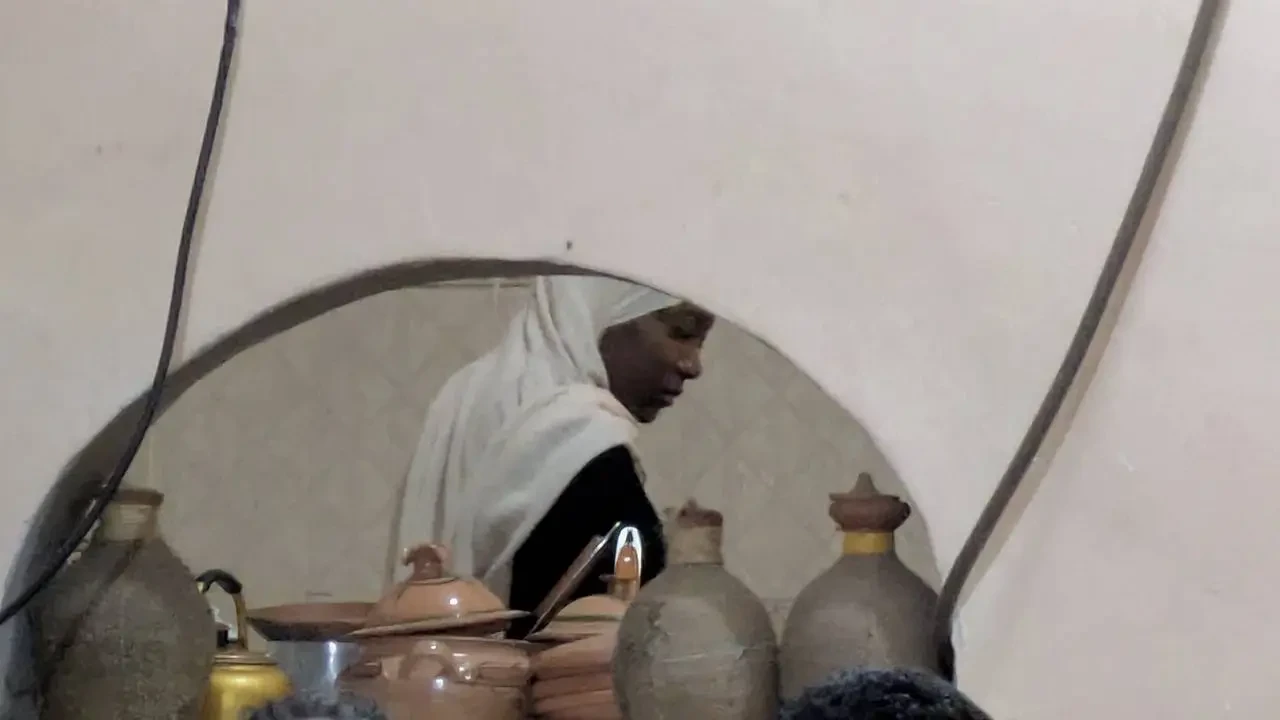
We begin with a brief visit to the Porte du Sudan, famous because it was the city gate for those arriving from the wild desert lands. We visit the Cultural Centre housed in the former Hotel Transatlantique, closed in 1996, where a school has now been founded for young artisans who want to learn how to create decorations inspired by Timimoun's traditional style, the Sudanese one, adapted to local Berber features. Here the young people practise making sculptures from local clay, later applied in urban decoration as wall ornaments. The offices we pass through swarm with employees little interested in their work and looking bored.


As we approach the ksar, we also visit the local foggara, 20 km long from the point where a spring is located. The water is made to descend to the lower part of an escarpment where the village stands, the village being later than the construction of the foggara itself. The position of the settlement is due not so much to the fact that water is found there, but because it gives the channel the right slope and pressure to reach it. At the point where we stop there is a manhole inside which we see water flowing at a depth of ten metres. The well is quite warm; the clay composing it retains the heat inside. We are told that even if enemies had tried to pollute the sources, the running water would soon have become usable again, so the attack would have caused damage but not permanently. Every oasis has its source, which may come from several kilometres away. In the village three channels meet, are divided and then further subdivided according to the needs of neighbourhoods and families. All this takes real needs into account, people and irrigation, so the holes through which the water passes are regularly calibrated and checked by an inspector. This is done using a perforated copper plate as a template to ensure the hole is not dishonestly enlarged.


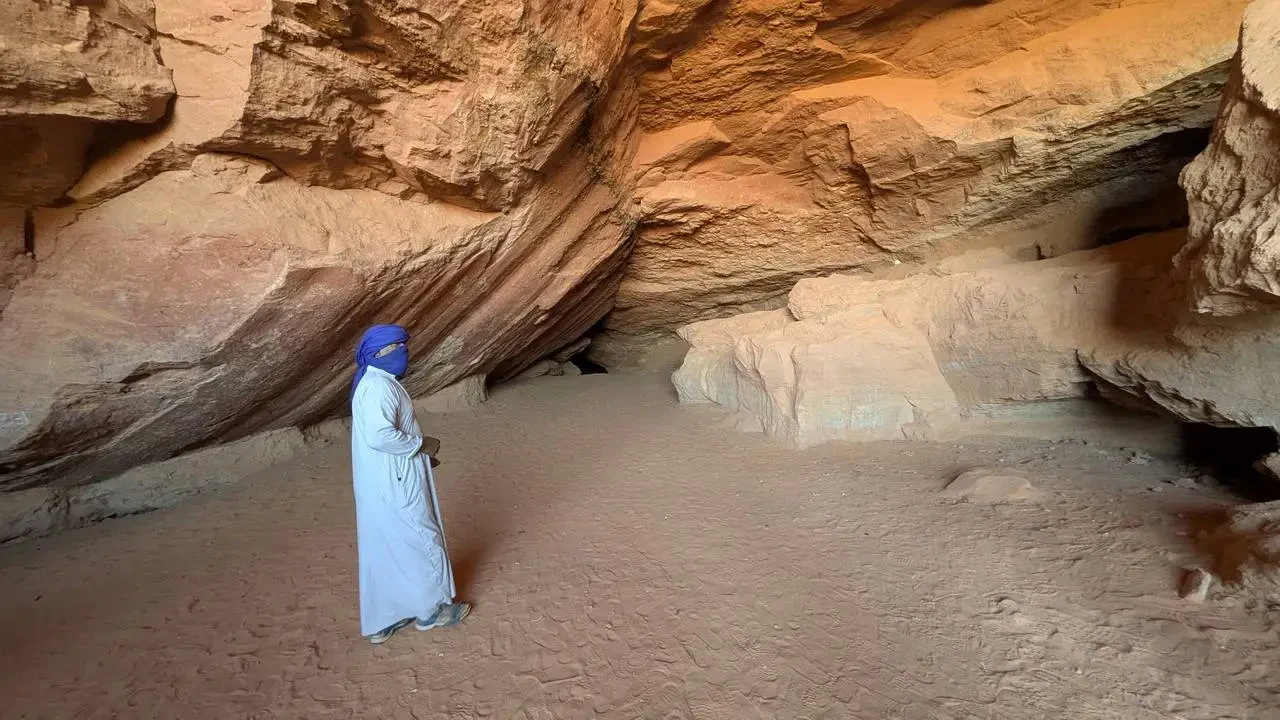
In the area there are some caves once used as dwellings, while today they offer coolness to the local population on hot summer days. Visiting the old part of the village, destroyed by persistent rain in 2004, it is not hard to understand the reasons for the disaster. Along with the mix of bricks and clay used to build the walls, the roofs are made of palm trunks covered with palm leaves and then a layer of clay, which also insulates against heat. When it rains, the clay becomes soaked and the weight breaks the wood, causing the slab to collapse.


Ouled Said and the ksour of Timimoun
The village is called Ouled Said and has about seven thousand inhabitants. The ksar dates back 1,300 years and the part that was not destroyed still holds well, although craftsmen capable of building walls in the same style as the original are scarce. We see a mosque under construction on the same site as the previous one. Beside it is the marabout's tomb, while from above one can see his house, the only one with blue interior walls, also gutted by the fury of the 2004 rain. Every year celebrations and banquets are held here in his honour. Looking at the people living in the Timimoun area, one cannot fail to notice their very large hands, something those concerned serenely and modestly explain as a gift from God for which to be grateful.
In another nearby village we visit the local ksar, called the green one. Also Berber in style, it is called this because the local clay is curiously that colour. It has a rock base and was used essentially for defence; by closing the drawbridge, access to outsiders was prevented. Its construction became necessary to face groups of raiders who occasionally came from Mali or other countries to plunder. The people living in the houses probably took refuge in the ksar only in emergencies or need. The structure, now almost empty inside, had three floors above ground and was entirely surrounded by an air gap.

Off-road driving, Tala and music in the desert
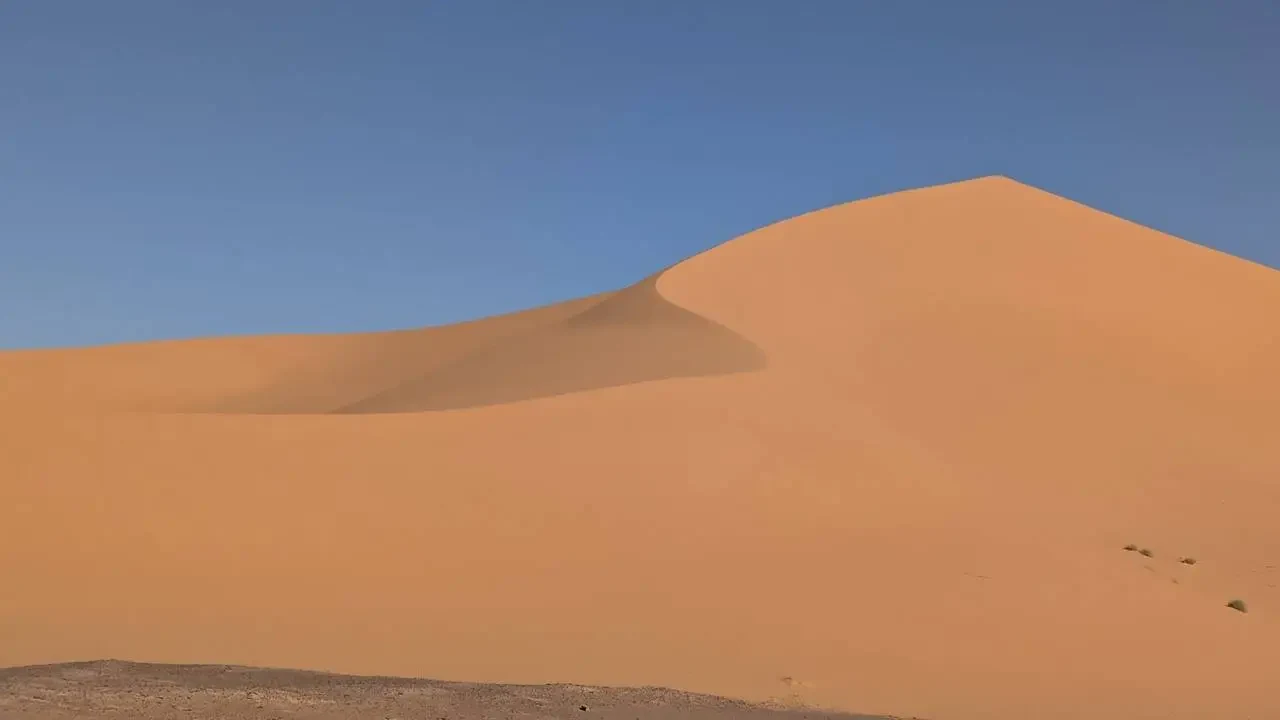
Lunch is in what might be defined as a holiday village. It has a beautiful hall used as a restaurant, where we are the only guests. In the afternoon we take a fine off-road tour by 4x4, getting stuck in the sand a couple of times, even though the tyres have been properly deflated to ensure a larger contact surface. We reach the village of Tala from the desert, though there are roads leading there too; a little adventure does no harm. Here too we visit the ksar, the mosque, and the point from which water distribution branches into the various channels. It is inhabited by a black population; evidently over the centuries African people coming from the south mixed with the more typical features of Maghrebi populations.
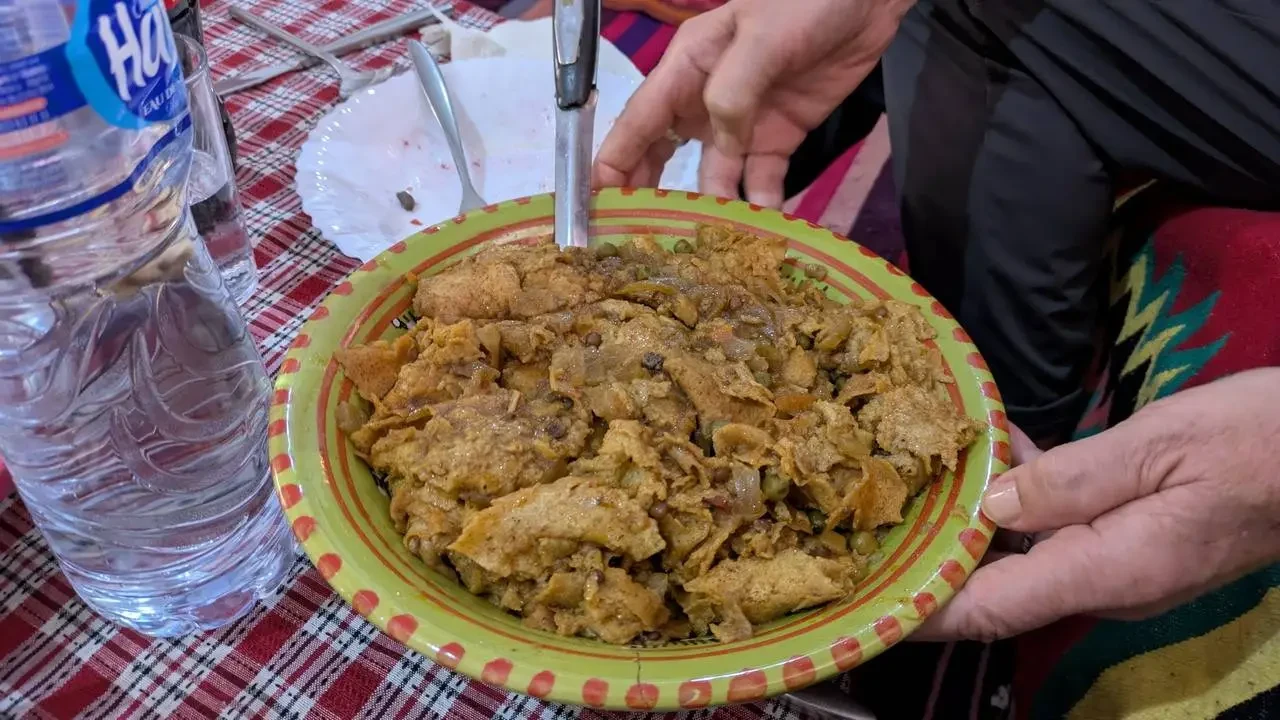


Dinner is in the same place where we had lunch, this time with musical accompaniment. At first the ear rejected what seemed like harsh music, difficult to listen to; over time it grew used to it so much that we let ourselves be drawn into dances compared with which the music seems like a melody.