Kandy, between market and shops
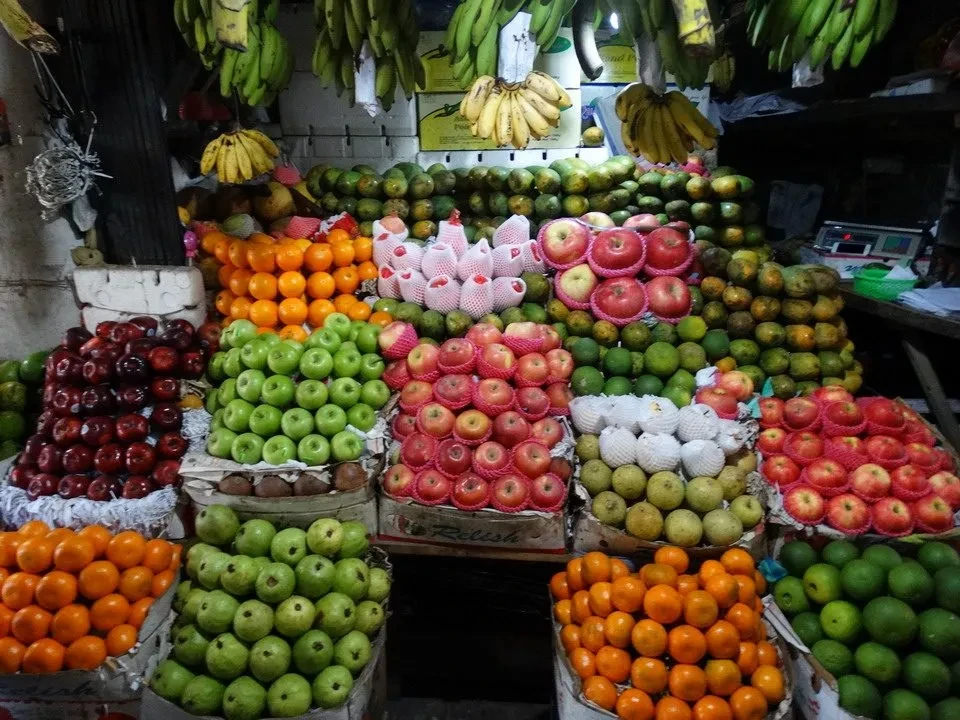
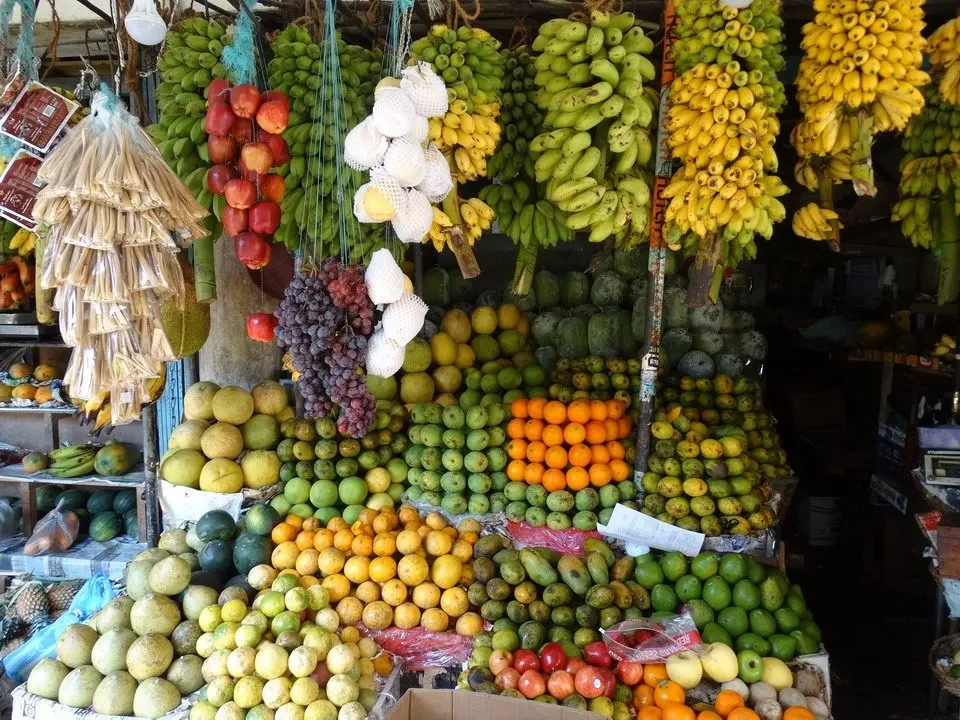
But Kandy is not just the Temple of the Tooth; it's worth seeing from above for a complete view of the beautiful central area with the wonderful island which like a gem adorns the center of the lake. We explore the heart of the city on foot, visiting first the market, where we buy spices in abundance... and taking a walk through the streets, where buildings of undeniable colonial origin stand out.
Unfortunately, like in every city or village in Sri Lanka, walking is a very difficult activity: the sidewalks are not continuous, the traffic is overwhelming, and vendors can be found everywhere. Noise, smog, and dust are constant elements that encourage minimizing walks on foot. The second city in the country has a very interesting and worthy history for its residents, having resisted both the Portuguese and the Dutch, and only falling into English hands in 1815 due to internal conflicts. When the sun has reached the position where it casts a short shadow on the hot asphalt, we return to the agreed meeting point to meet our driver and then travel by minibus to cover the few kilometers that separate us from a jewelry store and a wood carving workshop... a kind of woodworking shop-exhibition of carved wooden artifacts. The purpose of such exhibitions is clearly to attract visitors and sell them something. We are interested in seeing, understanding, and learning: if, as usually happens, we don't want to buy anything, a small tip will be the appropriate compensation for the guides.
Gems, wood and Ceylon tea
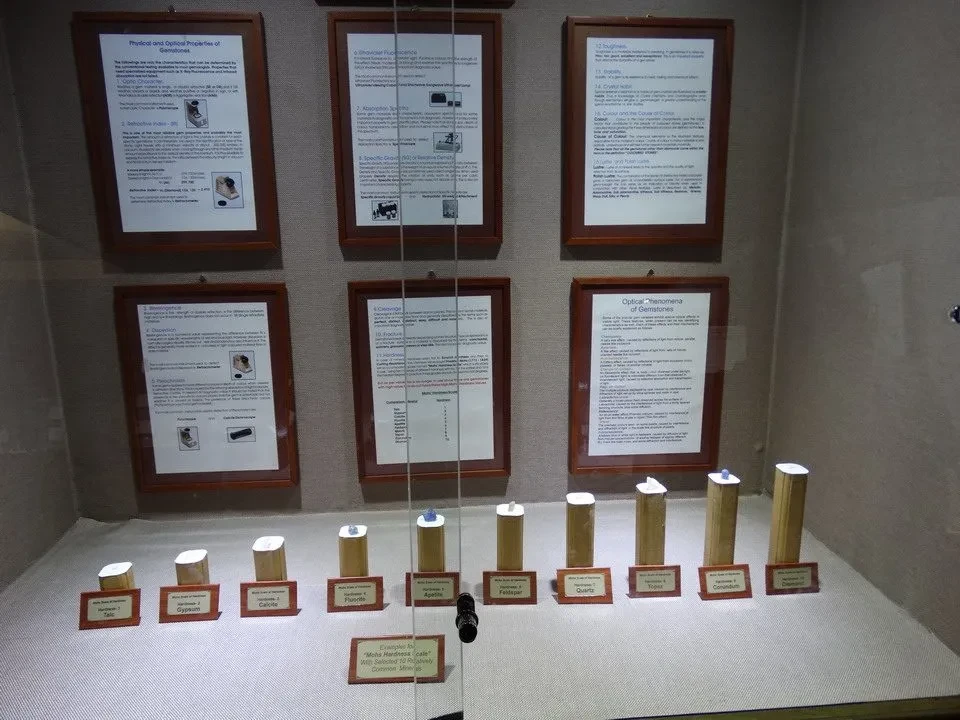
The gemstone sales point attracts attention through the video that illustrates how the sites for digging are identified. This is not a mine, but rather pits dug into the ground where poor people work at risk of being hit by falling material while their legs are immersed in water. To waterproof the well, a mesh made of crossed wooden stakes is built inside which are placed branches with foliage. The soil, which is believed to contain the gemstones, is brought to the surface and then sifted by experienced personnel. In other cases, the gemstones are searched for in the sand of rivers, similar to the Klondike style. Just seeing the video discourages purchasing the products, mainly due to ethical reasons. The explanation then moves on to the various types and classifications of gemstones before ending with a large jewelry store that, despite being full of beautiful specimens, fails to capture our interest. However, the carving factory offers a different impression: here we see skilled artisans carefully carving delicate lines into various types of wood. We are told which ones are most commonly used and for what applications: for example, teak is mainly used to make solid wooden tables, while mara is used for very elaborate crafts tables, chairs with inlaid wood, stylized animals, and it is very resistant to water up to the point of being called "rain tree", while for bowls or concave utensils coconut wood is used. Other woods used are jackfruit, from which the name of the fruit comes, and ebony. The company employs two hundred people in three different locations. The exhibition ranges from furniture to kitchen and home items, beautiful masks and animals that look so real. Between stops, it's a good idea to have a break with local cookies.
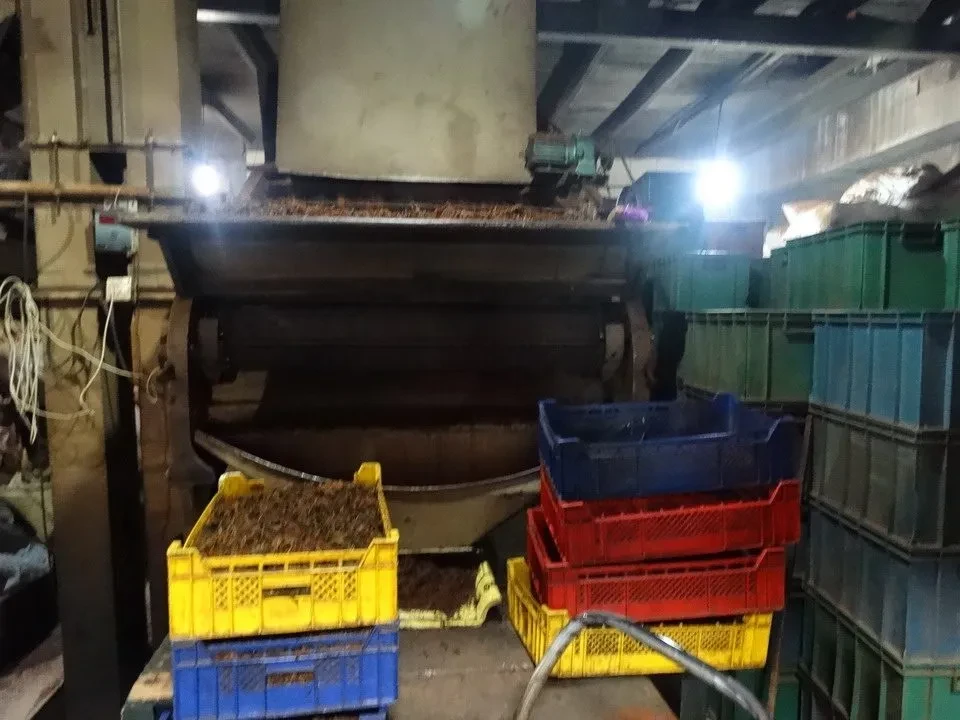
Another cultural and commercial experience, this time at a tea factory. We had never seen a tea plant before, and consequently, we only had a vague idea of how the leaves could be transformed into a drink. The experience was enlightening: first, it's important to note that Sri Lanka wasn't "created" as a destination specifically for tea plantations. It was due to a disease affecting the coffee plant that the British decided to switch to growing tea in the second half of the 19th century. After some trials, Ceylon tea gained popularity in the 1970s and became the main crop, enriching the dominant British class and providing sustenance for the poor locally. In the following days, we learn that the plantations are divided into large areas owned by important English colonial families, recently nationalized and finally leased for ninety-nine years to companies or foreign investors from China, Russia, and Arab countries, while still retaining their historic British names. The local population continues to receive a minimum living allowance called "survival," but in reality, there is no poverty; the people exude the typical cheerful spirit of the Sinhalese, and probably live better than the plantation owners: they certainly have more freedom. Returning to what we saw at the factory, we learn that there is only one type of tea: when harvested from the outer leaves, it's green, while the inner leaves produce black tea, as well as having a different degree of drying. There is also white tea, the most prized and expensive variety: it is obtained by cutting only the smallest leaflets. We witness production in an industrial setting that intensely smells of tea and at the same time has a distinct 19th-century colonial style. the leaves are first chopped up and then dried for about twenty minutes in long wood-fired ovens, after which they are transferred to a collector and subjected to steam for at least two or three hours. At this point, they are transported via conveyor belt to a new wood-fired drying oven. The drying process takes about twenty minutes, after which the leaves are separated by plant sections The separator, one of the few operations performed by machine, passes it twice, separating the tea leaves from the residue, which are then used to make a fertilizer. At this point the leaves are ready to be ground and packaged in tea bags, with staff guaranteeing that they are filled only with high-quality tea, while it seems that others fill them by mixing the tea with other less valuable and cheaper substances. The whole leaves are vacuum-packed and sealed for shipment worldwide. A separate area concerns the plants that have the tea buds, inserted directly into boiling water and reused up to three times, creating a white "blooming" tea inside the water. Another interesting variation is the so-called rooibos, red teas: they are simply black teas dried in a particular way, creating a reddish infusion. While green, black, and red teas are economically accessible, a good quality product costs 150 rupees (approximately one euro) for every 100 grams, while for white teas the same price is mentioned per gram.
Towards Dalhousie and Adam's Peak
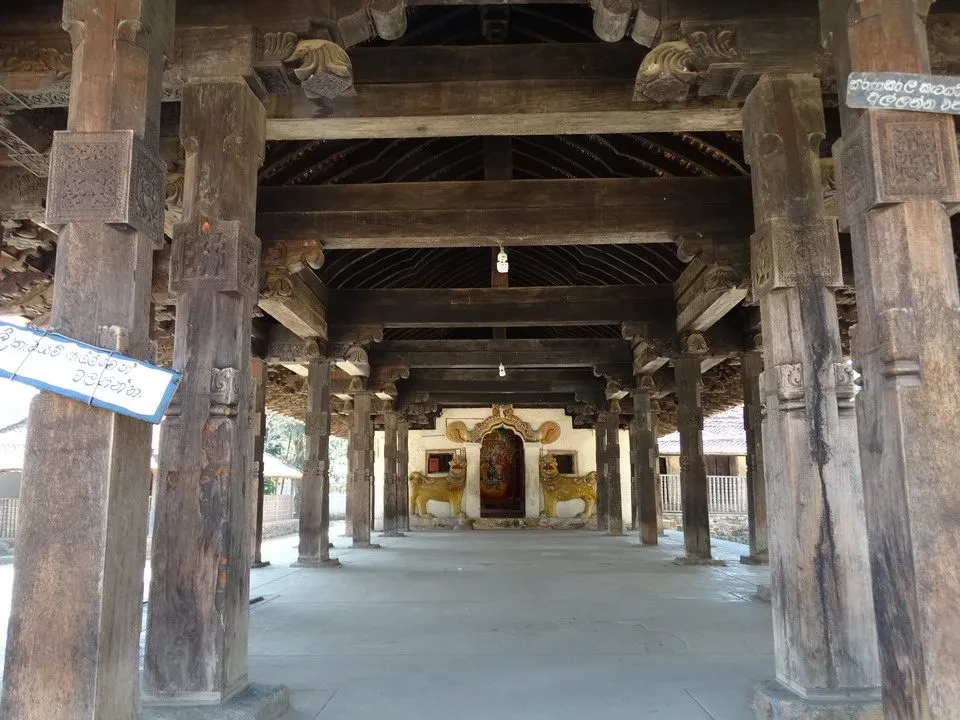
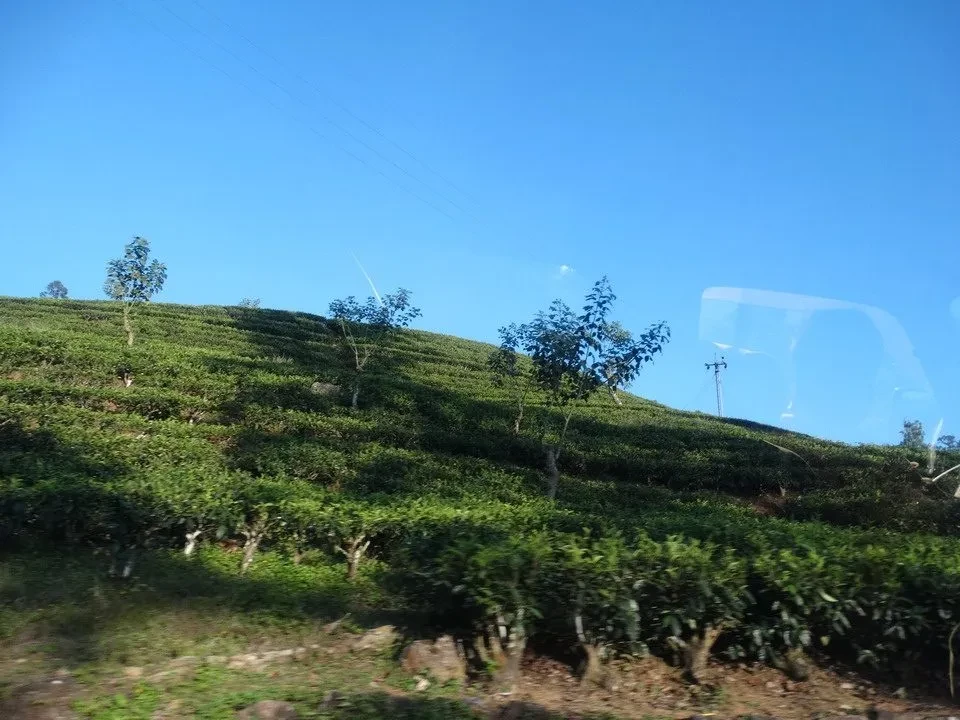
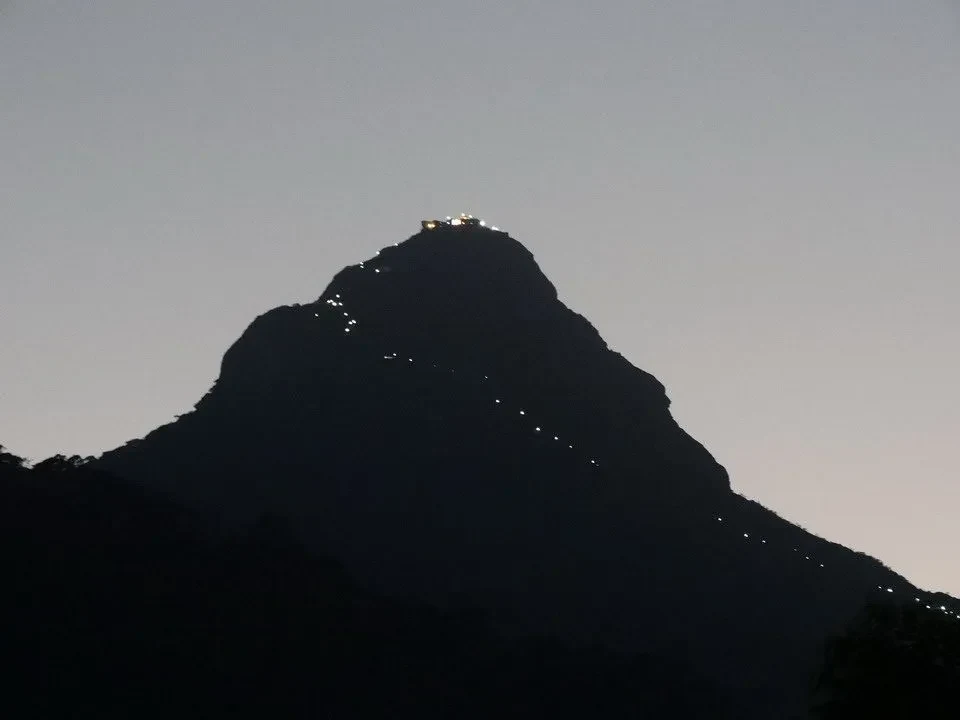
We are heading towards the mountainous areas for our itinerary, culminating with Adam's Peak, after a detour to the. Embekke Devalaya, a secluded temple that is particularly peaceful due to the lack of visitors. It is very interesting the wooden beams beautifully inlaid. The road becomes not so different from our mountain ones, the environment seems to have less grandeur since we are surrounded by large hills covered with vegetation due to the latitude. passing by fields of cultivation of tea, neatly arranged like hedges along the slopes. Such precision, reminiscent of a botanical garden, and the cleanliness is remarkable: it feels as though we have stumbled upon a tropical paradise. The whole scene is punctuated by small houses belonging to collectors, interspersed with occasional villages. Along the route, a landslide has blocked the road, but the operators quickly intervened, so the wait was short. The sun is setting. and gives a yellowish light that, on the perfectly manicured green of the plantations, creates a very evocative atmosphere. These are not terraces but rather slopes that follow the contours of the land, with square stones used for containment at the bottom. Order and cleanliness can be found everywhere, even in the cities, where we expected dirt and disorder. The principles of hygiene are respected much more than in other countries, where an organized waste collection system also exists. Walking along forests and artificial lakes We arrive at Dalhousie around 5:30 PM, which could be considered the "base camp" for Adam's Peak. It is a small village that owes its fame and economy to the sacred mountain overlooking it. This is where all the buses stop. The buses that arrive in line. The pilgrims are deposited in the central square of the town, filling the air with diesel fumes. The pilgrims will depart immediately, without staying overnight. Along the narrow road, there are open stalls that operate around the clock, offering everything and every type of hotel and guesthouse for all budgets. The place comes to life during the dry season, when every night pilgrims and tourists face the 5500 steps leading to the summit to watch the sunrise, becoming a real crush on full moon nights, the poya, in which religious meanings increase significantly. The mountain is venerated by all religions of Sri Lanka, and there are many, each of which attributes a similar but at the same time different meaning to the sacred footprint kept in the hilltop temple, depending on their affiliation: Buddha, Shiva, Saint Thomas, Adam, and others. What's great is seeing the simplicity of the pilgrims arriving and immediately setting off, entire families who have endured a long journey by crowded bus to reach this point and experience this unique moment for them. They struggle to climb the mountain, not used to scaling heights, accompanied by faith and the intention of doing something that doesn't seem like a playful game but rather a spiritual endeavor. And we will discover it tonight when we join them along the way. A walk before dinner to admire the offering in the shrine Right next to the start of the trail and everything is ready. At 6:30 PM we refuel at the best buffet on the entire trip, with smoked herring, eggplant, and mixed vegetable tempura, while looking up at the darkening sky and the mountain, which has already been traversed by a lit up by streetlights: along the path, lights were lit that culminate at the summit temple. Just a few more steps and you can go to sleep, so that at 2:30 am the alarm will ring for the ascent of one thousand meters to Adam's Peak in time to see the sunrise and attend the religious ceremony.