Anuradhapura, sacred stupa and fig tree
Today we delve into the heart of our itinerary with a visit to one of its most prized gems: the ancient city of Anuradhapura. The entrance fees are all extremely high, with absurd peaks at sites considered essential. The cost of an entry ticket for a foreigner in Anuradhapura amounts to the equivalent of 25 euros, or 10% of the average monthly income of a local resident.
We explore an archaeological site that seems straight out of an Indiana Jones movie: after being a Sinhalese settlement for 1300 years and the island's capital, the city fell in 993 AD due to conflict with the Tamils from southern India and was subsequently abandoned to transfer the central role to Polonnaruwa. From then on, it seems that history has forgotten this area, and the jungle has reclaimed the site, enveloping the buildings in a kind of green protection. When rediscovered in the 18th century, it must have left the incredulous explorers speechless, like a small Angkor: you can still see the photos that represent the temples and various buildings at the time of discovery.
Day trip to Dagoba, pilgrimage and red rock
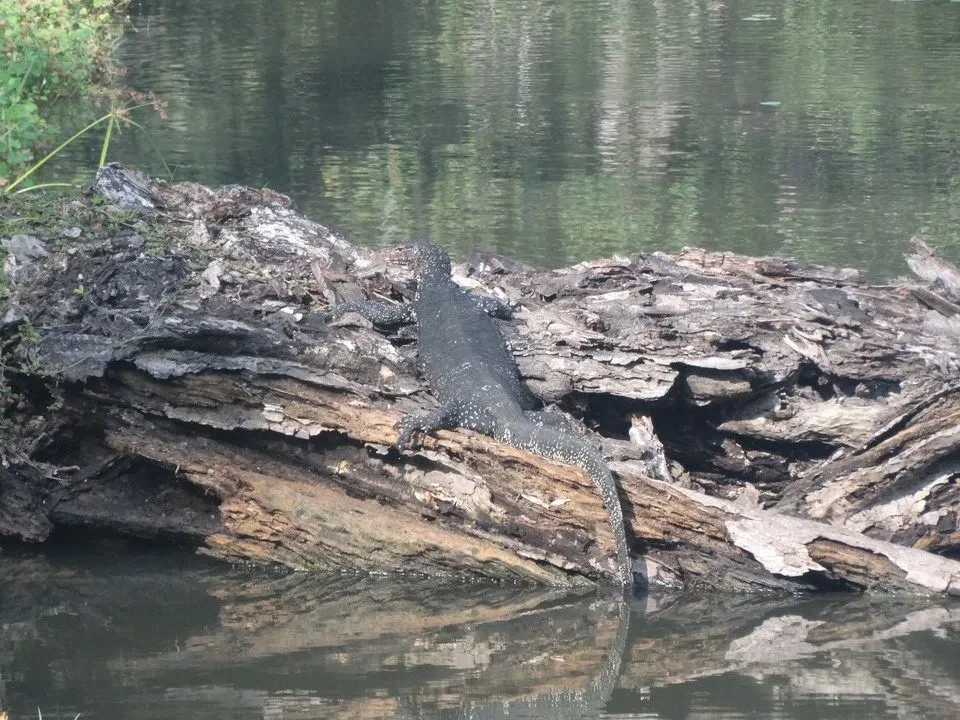
We passed by some Dagoba, semi-spherical structures that contained earth and bricks, with some relics inside, while religious activities took place outside the building. Some were made of exposed bricks, while others have been covered in white lime. The faithful are walking around it. stopping at the chapels positions corresponding to the four cardinal directions, where statues of Buddha and other deities from the Buddhist pantheon are usually found. We also visit the Sri Maha Bodhi, an old fig tree believed to originate from the tree under which Buddha had his enlightenment, and represents the most sacred spot, where people stop to recite mantras. Sri Lanka was indeed one of the first countries to convert to Buddhism, and it remains a stronghold for Buddhist traditions today. Around the tree, you can see numerous saplings growing: these are cuttings that will propagate the sacred fig species and be transplanted near other temples. Along the path, we also encounter a couple of varani, presence that cannot be described as graceful but do not pose a danger: they also seem to be remnants of another geological period.
Despite being in the dry season of a largely arid area, it's striking how the vegetation appears lush, and even the grass glistens green under the hot sun: it seems like it rained last week, and this could be the reason. Besides frangipani, from beautiful and fragrant flowers but abundant fallen leaves, which create an almost winter-like image where they are found in abundance, the ficus trees and other tall-trunked trees offer plenty of shade, despite the latitude placing the sun almost directly overhead during midday, and a concentrated green that is almost blinding. As in many other areas of the island, here too one can find… artificial lakes Created since ancient times, a few centuries BC, to maintain abundant water during the wet season and scarce in the dry season. The clay soil allows for good impermeability, so agriculture, and consequently life, has been able to flourish for millennia.
Unlike other destinations with temples, stupas, or various Buddhist structures, in Sri Lanka you can easily take photos inside the monuments without having to stand with your back to the Buddha, but you always need to remove your shoes and headscarf. This can sometimes cause inconvenience when our fragile Western feet are walking on uneven ground, causing us to jump when we encounter pebbles or the floor is exposed to sunlight: it's a typical sensation, although it's not surprising that we are no longer able to walk barefoot. Near particularly sacred places such as the Sri Maha Bodhi You will need to have long trousers, or alternatively, bring a wrap that can be used instead of a sarong.
By around 1 PM, we'll go for lunch at a self-service restaurant located near the hotel, where we can also find local cuisine adapted to Western tastes. In the coming days, we will try to find accommodation that allows us to best experience the local reality and enjoy authentic Sri Lankan cuisine.
Mihintale and sunset over Tissa Wewa
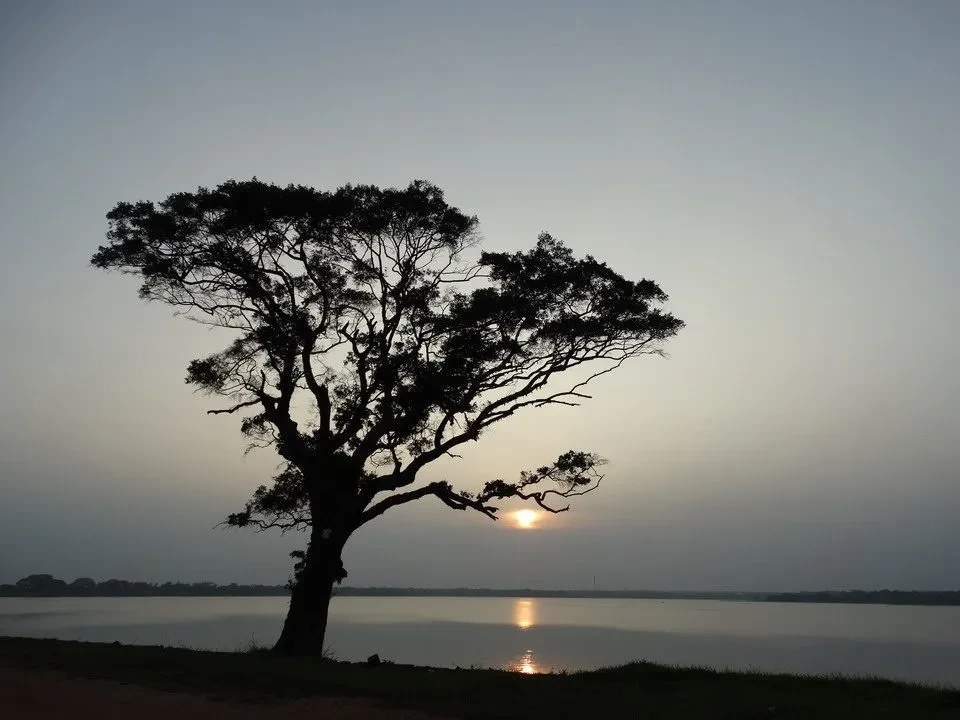
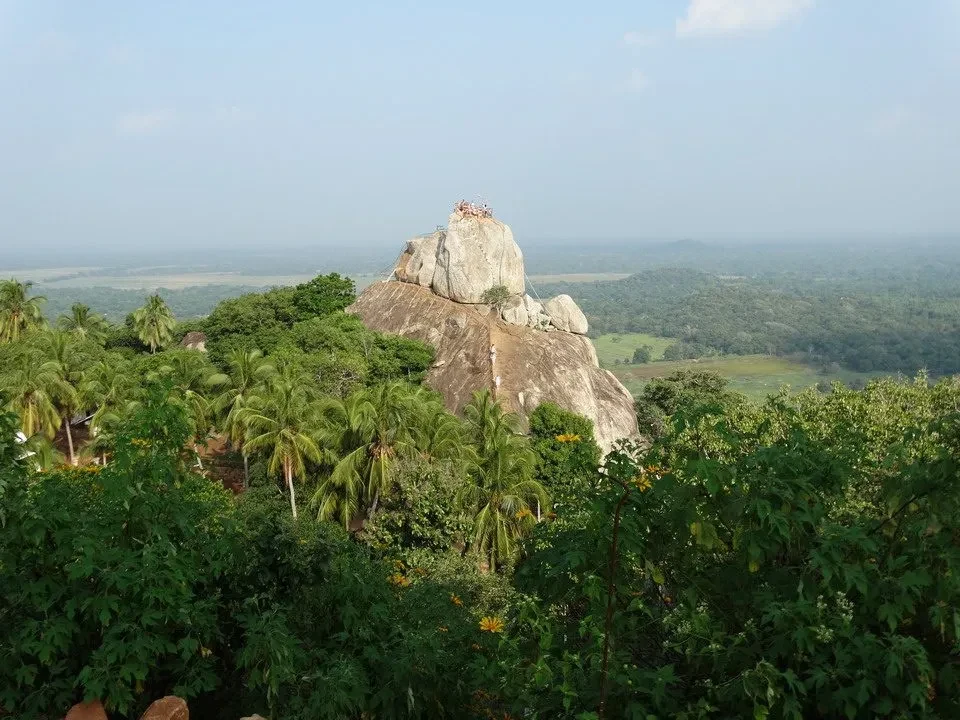
In the afternoon, we go to Mihintale. At the foot of the hill, at the base of the dagoba, we visit the museum, where the Ayurvedic techniques used in antiquity are highlighted, from which it becomes clear that they were so advanced that over a thousand years there was no way to substantially improve them. A concept almost perfect from the beginning. They explain to us the cultivation and preparation of medicinal herbs, we see the mortars and a sort of stone beds on which people would lie down for treatment. We are also impressed by the toilets, which reflect a concept that can be defined as the precursor to our Imhoff drains. The roofs of the houses were also covered with tiles not very dissimilar from those currently used, but we are talking about around two thousand years ago. Mihintale, which represents the place where Buddhism was introduced into the country, is a secluded corner in nature, in silence broken only by the singing of birds. We climb along a staircase surrounded by frangipani trees until we reach the point where we have to leave our shoes to enter the upper part of the hill, where history and mythology say that the meeting between the Sinhalese king and the messenger of the new religion took place. At the top, located on the left side, there is an immaculate Statue of the Buddha, shining brightly. against the cobalt sky. Walking barefoot on the sun-baked stone makes us feel like we're walking on hot coals, with the only difference being that we can't control our instincts and experience a strong sense of pain in our feet. We descend to the square where the Ambasthala obelisk is located, paying attention to the coconuts that fall from several meters high with a loud crash, and it's difficult to focus because you have to watch where you put your feet to climb back up the steep rocky path. Aradhana Gala and so, back to the Dagoba of Mahaseya. With the lower parts extremely worn, we take off our shoes and climb back up the steps among the worshippers. the monkeys playing celebrating under the mango trees, a sacred plant in Buddhism. Before dinner, we return to Anuradhapura for watch the sunset at Tissa Wewa. The lake takes on an orange hue while the sun seems to sink among the water lilies.
Despite being one of the most touristy cities, the first impression is that the level of civic education is very high. Money is welcome, but people are not particularly intrusive, while the cleanliness of public spaces is far superior to other Asian countries.
The local people's natural attitude is characterized by a good dose of friendliness and willingness to smile, all seasoned with a healthy sense of mischief aimed at attracting customers or leading them where they have some interest. While it can't be described as Mediterranean in the middle of the Indian Ocean, its key traits can still be observed, enhanced by the ability never to get angry, but always showing availability, which we also see in the relationships between the friendly inhabitants of this island. From an economic perspective, especially in the south, we will notice that a middle class is developing, capable of purchasing luxury goods offered in the numerous shops along the main streets. Alongside poverty, characterized by beggars, we can see how these recent years of peace have contributed to increasing living standards. It cannot yet be called well-being, but it is far from the conditions of a country that our literature would place in the Third World.
Paradoxically, the terrorism that is devastating people and economies in other countries offering beach and sea vacations actually helps Sri Lanka, where there are currently no dangerous situations, costs are still low, and places are pleasant. It's surprising to see many beggars asking for alms, most of whom have amputations; we can't understand whether these are the devastating effects of polio or rather the consequences of landmines that are still found unexploded in some areas: it should not be forgotten that the civil war ended only seven years ago. Beyond the true beggars, there is a widespread practice, essentially present throughout Asia but particularly felt here, of people offering useless services while expecting a tip. This forces us to be cautious before accepting information or help from anyone, and ultimately we impose very precise rules: tips are given to those who provide added value or perform a requested service; the rest is pure parasitism that can easily wait for the arrival of some more generous emirs.
A refreshing dip in the pool allows us to recover energy lost during the long and hot day, as well as partially alleviate fatigue from the 4.5-hour time difference.