Horton Plains and World's End
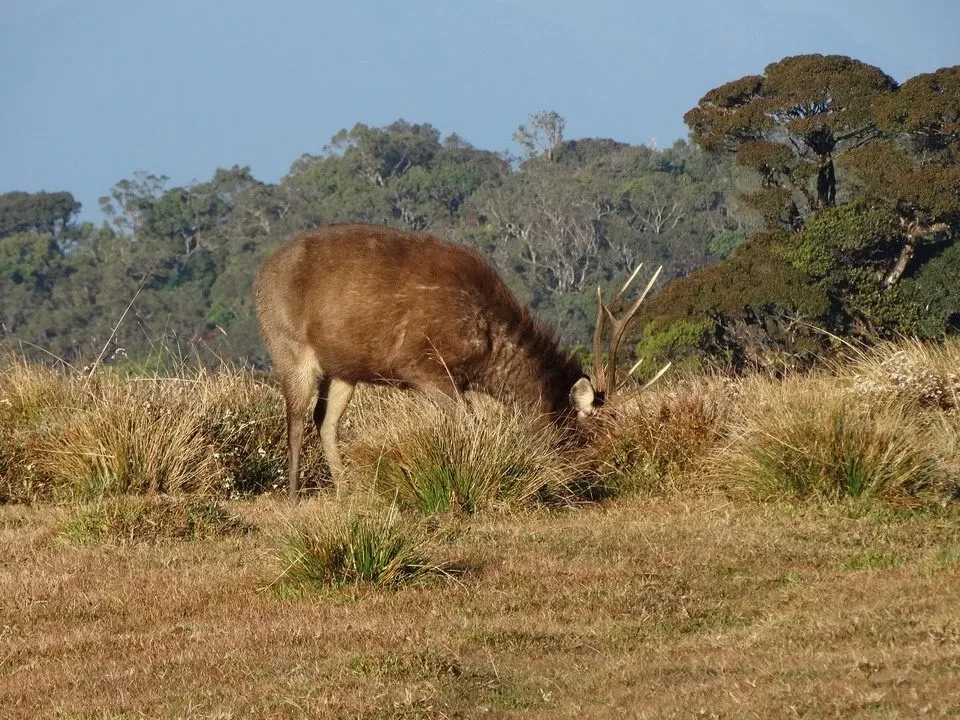
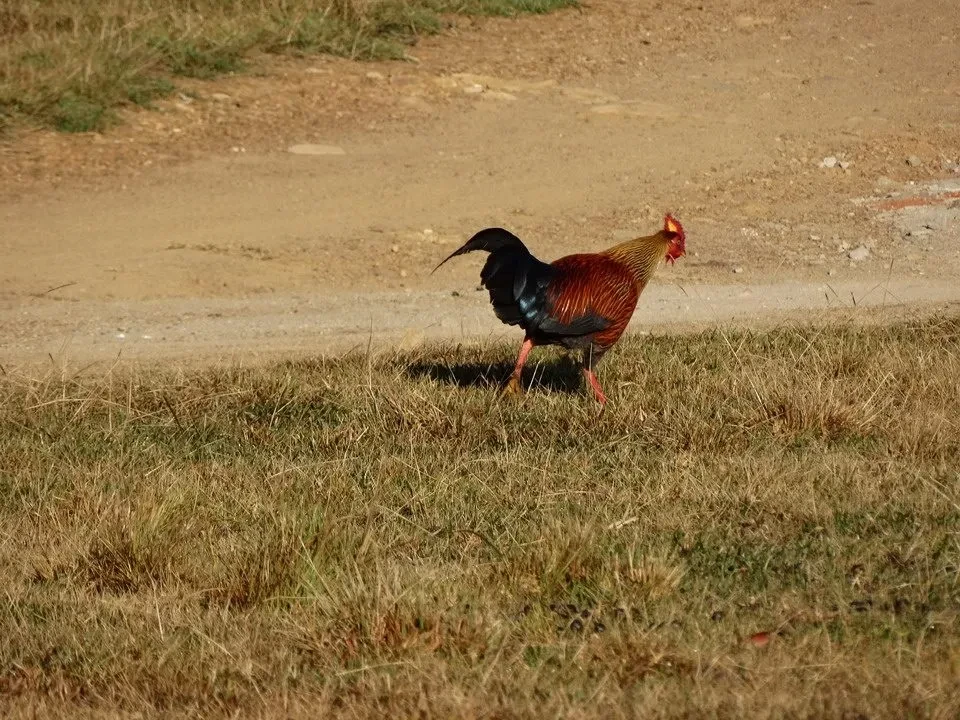
We leave Nuwara Eliya, which doesn't have any unforgettable sights, and at 6 am we head to the Horton Plains National Park. We drive past fields covered in frost while the dawn paints the landscape with its warm colors, climb along steep and winding paths until we reach the entrance of the park, where it’s striking to see people wearing heavy coats and sweaters, while just two days ago even a t-shirt was an unnecessary extra. A sign tells us how important it is to preserve the vegetation in order to maintain the thermal balance: where there's jungle that dampens extremes, there's a difference of up to 12 degrees between day and night, while in deforested areas, due to direct sunlight on the surface, temperatures can reach 28 degrees. In the park we make a clockwise loop, reaching Little Adam’s Peak and then World’s End. It's impossible to say that it was a unique experience; of course, the view from such a height of over 1000 meters is beautiful, even if sunny days don't prevent the formation of a mist in the distance. It's true that you can see the sea from here, but the calm days when this is possible must be decidedly rare. At the bottom of the valley, life flows quietly in some isolated villages. The forest is interesting as are the Baker Falls, which aren’t particularly rich in water given the season. The impression is that we're experiencing a period of drought due not so much to a prolonged period of low rainfall; rather, it seems that the local flora suffers greatly if it doesn't receive occasional rain. The presence of visitors isn't particularly noisy, well balanced between locals and foreigners. Sightings of animals are limited to the moment of arrival, when we see a family of sambhar deer, and the rooster symbol of Sri Lanka. The first part of the route winds almost exclusively through the jungle, while after World's End, there are alternating forests and plains The "mountain" sun makes its presence felt when we leave the park.
Okay, the temple and train for Ella
From there, we take the bus for about half an hour in the opposite direction along a series of turns, reaching Ohiya, a small cluster of buildings that surrounds the train station. Here, we will catch the highland train to Ella, but today is the day before the full moon, which here represents a monthly festival, and the first morning train has been cancelled. It doesn't matter, since we need to take the second one, which seems to be just delayed. We take a walk down, but there's nothing special. We are amazed by how it is permitted to stroll freely along the tracks; after all, the trains are few and those that are present make noise and travel slowly. We go up to see the local temple: it doesn't have any particular historical or architectural significance, but it is full of worshippers and children dressed in white, who are celebrate the day... with thoughts turning to ancestors who are no longer here. We were welcomed with great hospitality and invited to have lunch with them. The Westerners, we, look on hesitantly, wondering mentally whether it is acceptable or not. Considerations of hygiene, behavior, and other matters briefly pass through our minds, but we happily participate in the outdoor buffet, where we are served a variety of local specialties accompanied by rice, all in perfect cleanliness. We sit outside on a bench and, after washing our hands, begin to eat, picking up the food with our fingers, as is customary here. We must overcome the psychological reservations that have been instilled in us, but the hesitation does not last long, as we are drawn in by the aroma of the food on the plate. We should not judge whether our civilization of forks or that of using fingers to gather the rice into our mouths is better: they are two different ways of eating, both likely correct. However, washing our hands with curry sauce is still necessary after the meal. In the meantime, we are surrounded by some faithful people with whom we exchange a few words. We can see in them the serenity of those who allow themselves to be guided by spirit; some even offer us a kind of catechism. All these things are shared, their messages of peace and mutual respect should not know boundaries. It will be difficult to forget that white dome that stands out in the green of the jungle, nor the people who welcomed us as pilgrims appearing from a path but coming from another world. We do not want to: we have come here to see and learn, and we leave enriched by a universal message that transcends religious belief, so much so that it remains within humanity. It seems like a paradox, but at certain moments, the divine represents the means, not necessarily the end.
Before we departed, the faithful invited us to meet the monk who had officiated in the morning services. He was a young and alert man; we exchanged a few words and asked if we could leave a small donation. He couldn't handle money himself, so a local layperson took care of it for him. We said goodbye and started to leave when we were called upon, almost chased. The gentleman who had taken the money and whom we had already spoken with earlier told us that they couldn’t accept our payment for the meal, as it was a gift, and therefore they didn't intend to accept our donation. It seems unbelievable in a country where requests for tips appear to be at an institutional level. We explained that we did not intend to settle the restaurant bill but that our offer should be seen as a small contribution to a temple and a community that we had immediately perceived as friendly. After a brief negotiation, we convinced them to keep the money, and we headed towards the nearby station. The train was late, so we looked around, observing the quiet everyday life of this festive day. A monkey danced acrobatically between the tracks and the roof of the station; the staff were dozing while waiting for the event. At some point, we saw a gentleman in white uniform arrive; he seemed to be a ceremony official. We were warned that the event was approaching; a phone call probably with the train driver alerted us that the train was nearby. At this point, the station came alive: the ticket seller raised the curtain and with this gesture declared the ticket office open. The tickets cost only a few cents, an insignificant amount, but it's nice to see that they had only started selling them when they were sure that the train would arrive.
At this point, however, the negative experience begins: the convoy arrives with its size, it puts us face to face with overcrowded carriages, we can barely get through ragamuffins with dangling legs outside the door. I find myself standing next to a young Western girl who is sitting on the ground and appears to be suffering from a high fever. The heat is oppressive; it feels like we are trapped in hell. And we were expecting the classic train ride, even if not in Swiss style, where we could watch the landscapes of cultivated fields The carriages move slowly alongside, creating an ideal environment for taking photos and filming. We need to hold on tight to avoid being thrown off the track by the open doors. According to our guidebook, it's best to choose the second class for travelling with locals, as this allows you to open the windows even when the air conditioning is on. Although the train doesn't have a first-class carriage, the second class allows us to hear all the common European idioms being spoken. It feels like we are reliving an old advertisement for a coffee brand. There are many locals, but there are even more tourists, and we discover that the railway journey to Ella is not just our own initiative; many have had the same idea after reading guidebooks, and for many pale-faced people, it represents a detour from their holiday on the nearby beaches. It's possible that in the future, tourist trains will be organised, allowing those who want to enjoy the scenery in peace and quiet, at the expense of some originality that our experience has still managed to preserve. We realise that this is where the wild and touristy side of Sri Lanka ends. We enter the area frequented by holidaymakers, and from now on, we will have to live alongside them and their habits, which should also be ours. Fortunately, we will find a few neglected "islands" where we can breathe in fresh air. We arrive at the Ella station, packed like sardines, where we all get off and the train empties; the stunning scenery along the way was impressive, but we needed to hold on tightly to the handrails before getting distracted by looking out of the windows. As workers returning from work, we all head home, either on foot or using motor vehicles, which are plentiful in Ella. It's surprising how this country, although not unpleasant, offers very little and nothing particularly special. Given the beautiful weather and lush vegetation, the town centre is always chaotic and dusty, with buses, tuk-tuks, minibuses, jeeps, motorcycles, trucks, and anything else that the automotive industry, especially Indian manufacturers, can come up with.
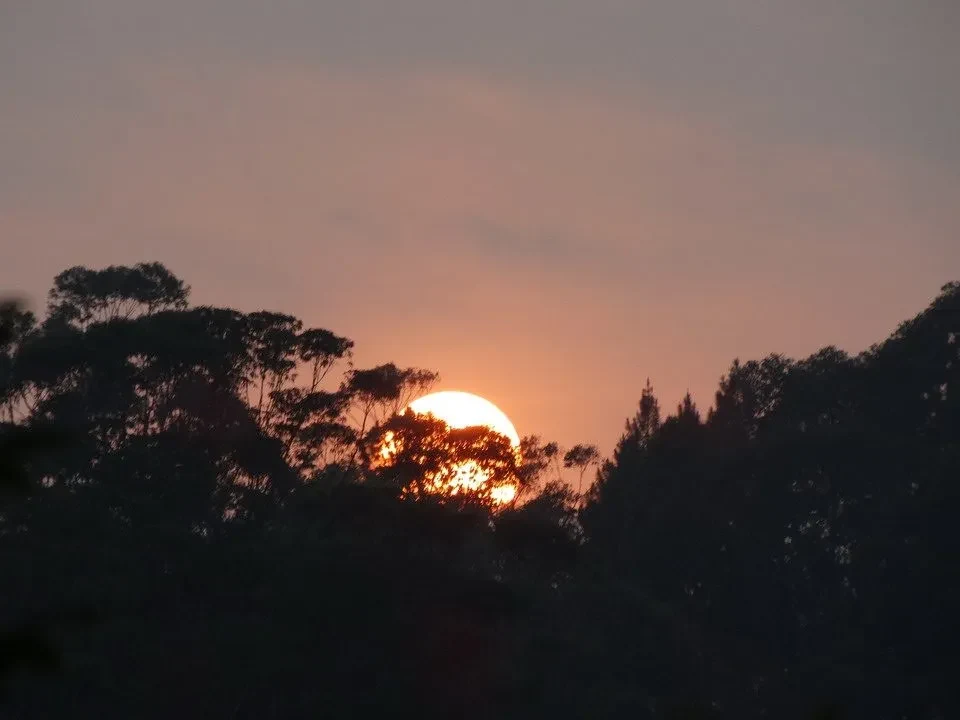
Sunset at the Nine Arches Bridge
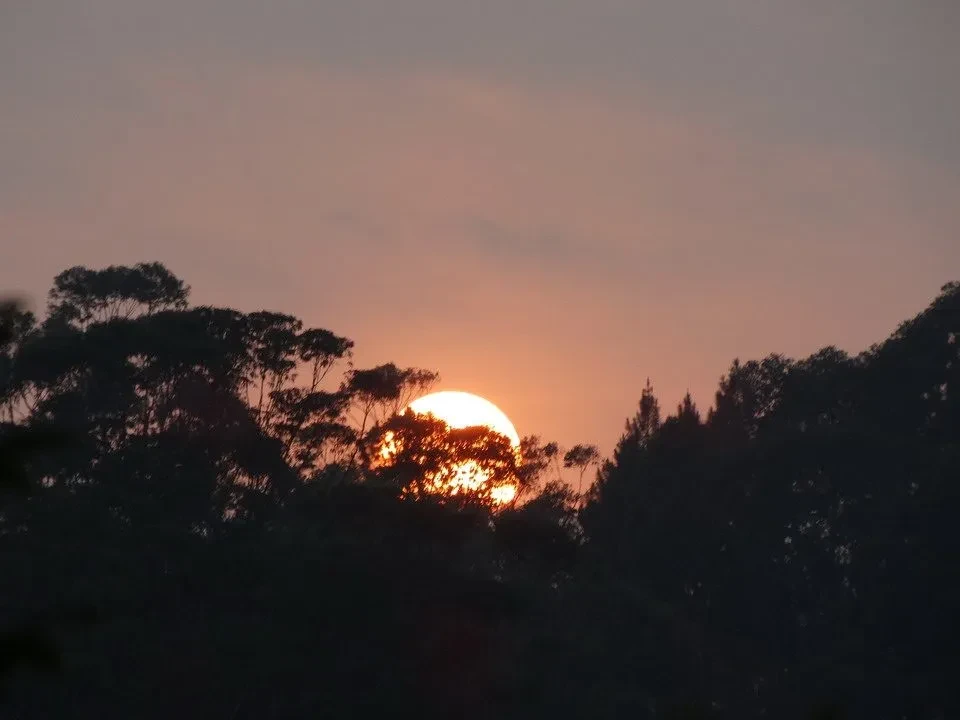
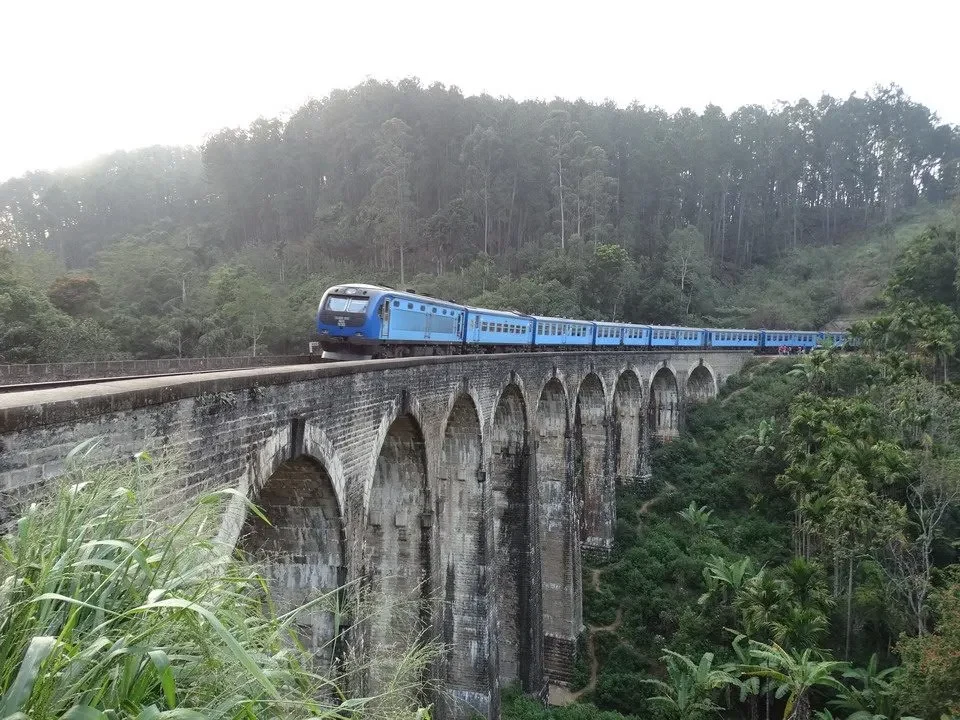
A short but enjoyable excursion takes us to see the train which passes after Ella at 5:30 PM on the same railway line, over a bridge called "nine arches". To get there, we walk along a path surrounded by greenery with several fruit trees, including jackfruit, wood apple, and others, notably a tall tree where a bamboo cane is used as a ladder to extract sap, which is then used to produce an alcoholic syrup, "arak." As if waiting for something to happen, some tourists and many locals They are standing on the tracks. Waiting for the train that arrives on time and offers a beautiful view along the iconic bridge built by the British, when they needed new communication routes to connect plantations with the coast. It slowly glides along the tracks, with black legs of children dangling from the doors. Others wave from the windows, and we respond in kind. This is one of those moments of peace; even better, because a party eventually ends, while serenity can last a lifetime. This view alone isn't worth the trip, but the train journey is, creating a more pleasant experience than the crowds we encountered before. For the record, we are at a point about half an hour's walk from the station where we disembarked, and which can be easily reached along the tracks. But we return on foot, enjoying the scenery. further sunset: this time we didn't specifically look for it, and perhaps that's why it will turn out to be one of the best.
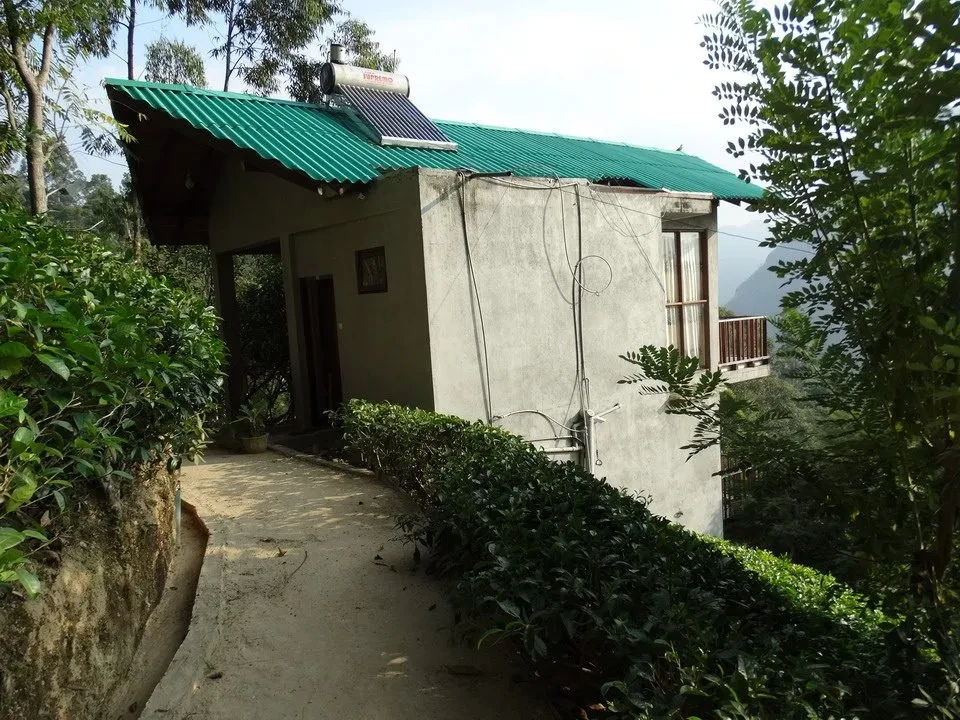
The hotel where we are staying consists of two-story bungalows on a slope amidst the tea plantations. In fact, the belief is that the residential units were taken from the plantations, and this is evidenced by a new one that is just emerging right next to it. Everything here is experiencing a tourism boom, an unprecedented economic surge: the end of the civil war and the beginning of terrorist conflicts elsewhere have changed things, bringing about growth in this area that was perhaps unimaginable only ten years ago, with all the positive and negative consequences that this entails.
They look like hedges, but the plants surrounding us before entering the room are tea plants. Around, there are only cultivated areas as far as the steep terrain allows; when the slopes no longer allow it, the mountain reclaims its vegetation, with barely cut-off rock formations along the road that runs on the edge of the cliff. We are at 1000 meters above sea level and the temperature can be considered a good compromise between the coolness of the highlands and the heat of the flat areas that await us tomorrow. Since it is a full moon night, alcoholic drinks are not served, so tonight we must give up our usual Lion’s Beer during dinner.