

Morning in Gallé
The mist foreshadows the dawn, making the coastline hazy, while we wait for the sun to rise from the east and bring some clarity, brightening the humid air. We have arrived on our last day, which promises to be challenging and full of appointments.
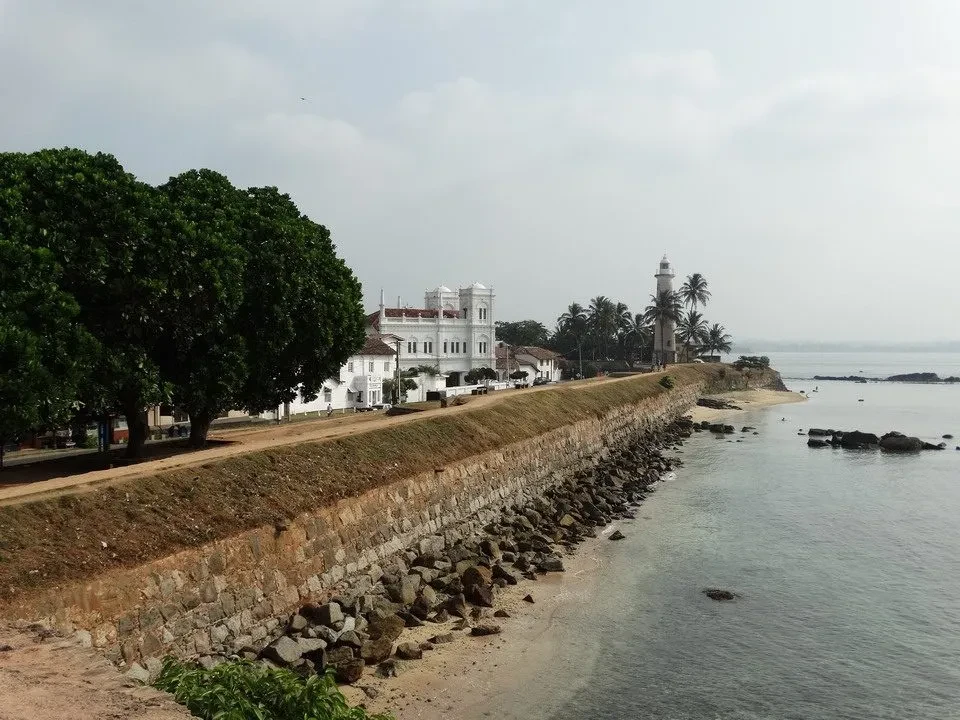
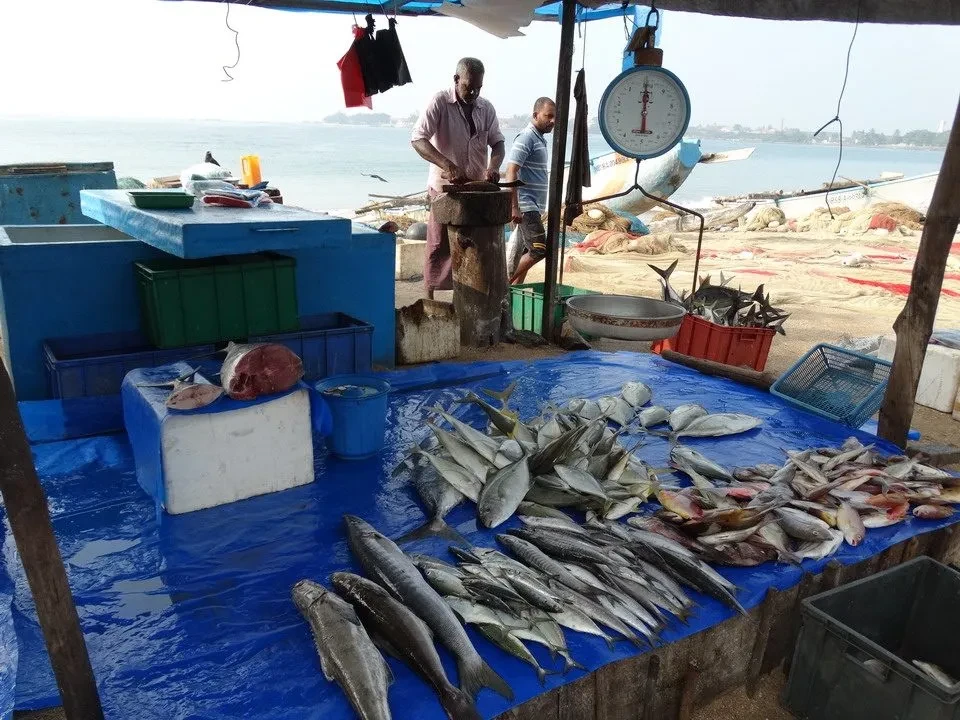
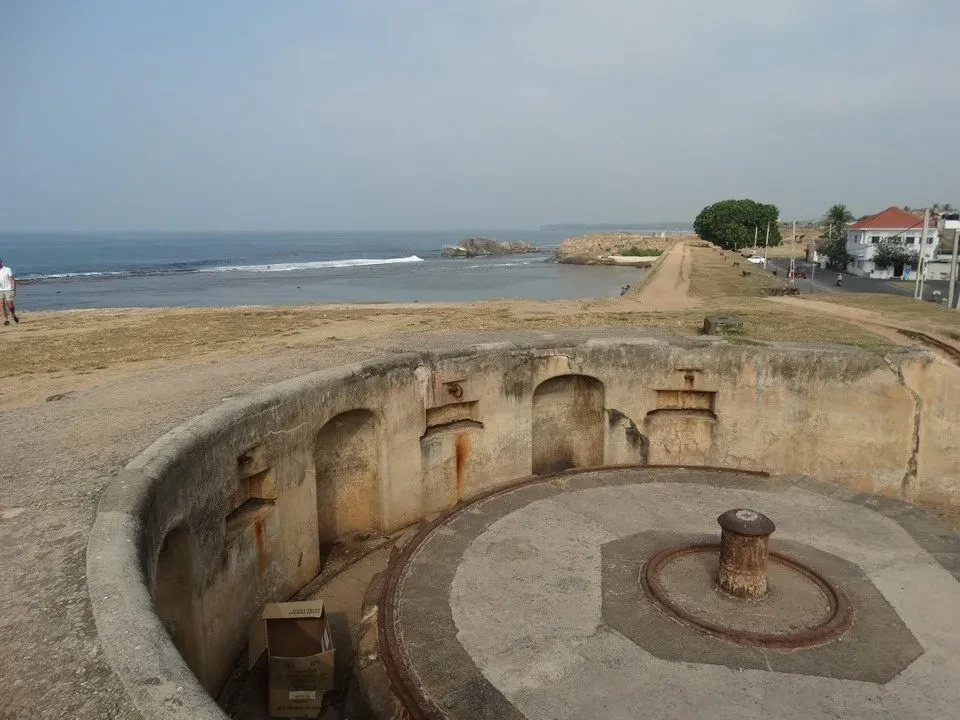
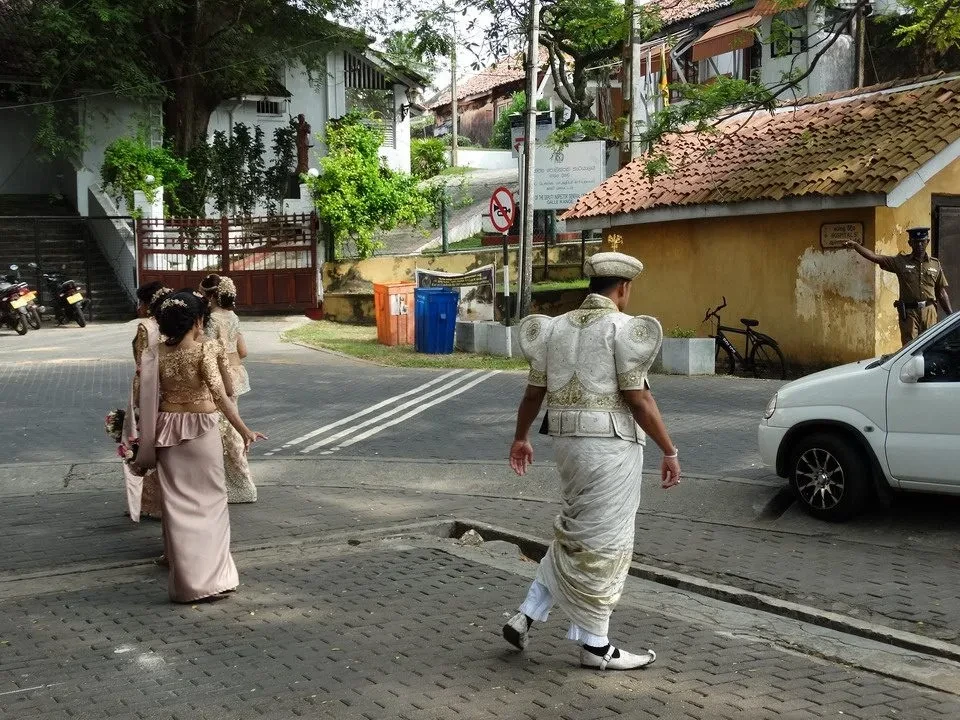
We continue along the road that follows the coast, spotting some fishermen on the poles, according to the historic Sinhalese tradition. These are very rich fishing areas, so much so that... fish markets They occur frequently. We don't know how to cook it, and for this reason we don't make purchases, but it serves to inspire and stimulate our instincts when lunchtime approaches. Between Koggala and Unawatuna are other beaches, some of which have been overused and now seem to be managed with more sensitivity. We continue towards Galle, rightly listed as a must-see destination. The fortification that surrounds The historic center is stunning; the water surrounding it has a shallow, crystal-clear seabed, and life in the narrow streets inside flows peacefully as if time had stopped. The city has always been known as a strategic port due to its location on the island and along the routes that cross the Indian Ocean westward. It was later expanded and fortified by the Dutch in the 18th century and developed under British rule, which eventually preferred the port of Colombo. We take a walk along the dramatic ramparts overlooking the sea; although it is only mid-morning today, the sun feels stronger than usual due to intense and irritating humidity. At the lighthouse, we descend into the center right next to the Muslim area, where the mosque and some Islamic educational buildings stand out. Continuing on, there are plenty of colonial buildings up to Court Square. Here we see a bride with her bridesmaids, all dressed in a beautiful cream-colored dress. We can't help but wish them well. We continue through the antique shops and houses, returning under the walls to find shelter from the heat in the air conditioning.
On the coast affected by the tsunami
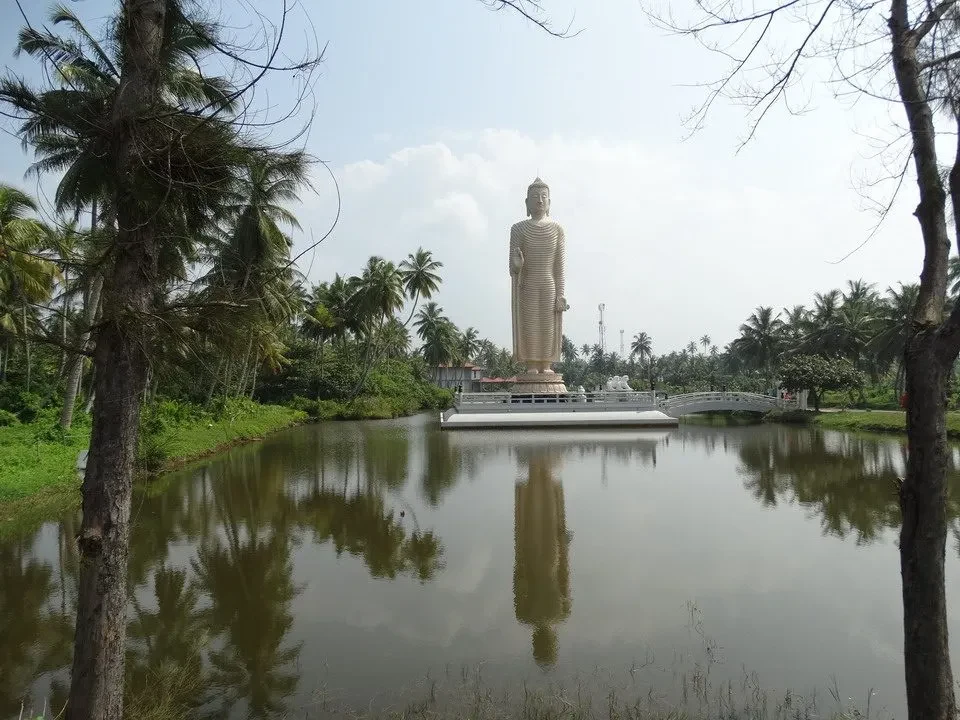
We headed towards Hikkaduwa and unfortunately we found ourselves in the area where the tsunami of December 2004 caused many casualties. Here, the wave swept everything away, killing a large portion of the approximately 40,000 people who perished in Sri Lanka. It was precisely in this area that a train was literally overwhelmed, resulting in 1270 deaths. On either side of the road, you can still see abandoned houses, some of which bear the marks of the impact at the window level. The force of the impact is clearly visible through the windows, destroying them and taking with it the lives of those who lived in the houses. Not far away there is the memorial stone to remember the victims… Tsunami Honganji Vihara, and just beyond there is a museum that illustrates the event with a series of impressive photographs. Alongside scientific documentation on how earthquakes and tsunamis often occur, there are the shocking photos depicting the disaster: the train thrown off the tracks as if it were a toy, houses overturned, piles of corpses awaiting burial, and the work of volunteers who arrived from all over the world. And also everything that makes us think that nature always has the final say. And it will continue to have more influence if we consider that the lesson hasn't been learned: we want to believe that there are now warning sounds that accompany the signs showing the way to follow in case of new disasters, but many houses and especially hotels are exactly where they were, on the sea. A clear example is where we stayed last night; and all this despite a law that requires new buildings to be built at a distance of no less than 100 meters from the sea. Thanks also to the intense economic development underway, the area no longer shows any scars, but we can't see what the survivors and those who witnessed the immediate consequences felt. They will remain marked for life.
Madu Ganga and the last lunch
The road follows faithfully along the coast, while on the left side there is the railway that leads to Colombo. Near the village of Balapitiya, along the Madu River Ganga, there is a center for boat safaris. The experience itself is interesting, but it is partially undermined by the impression that we are in a river shopping center. We pay the equivalent of 15 euros to take a ride in a motorboat through the mangrove forests that grow in the lagoon formed by the Madu River, just before it flows into the sea. It is a zone definitely suitable for all forms of aquatic life, thanks to the mixing of salt and fresh water. As soon as we left We spotted a large monitor lizard., then we can go to see a pier with some small swimming pools where many fish are the little red fish that should massage your feet after soaking them. We don't agree with this, and we continue to the next island where a local indigenous person shows us how to obtain... cinnamon from the branches of the corresponding plant: by removing the first layer of bark and extracting the second, which is then wrapped in concentric sticks and left to dry for 10 days in the shade. Here too, the man seems to be offended if we don't buy anything. His misfortune is that we are at the end of our trip and have already stocked up on all kinds of spices. As we head to the next stop, a young boy approaches our boat and offers us a monkey to cuddle, for a fee, of course; but we wouldn't have done it even if he had paid us. We visit an island where another temple rises, we visit shrines that don't seem very impressive, mixed with objects from a past not so distant. It seems they have pulled out the tools from the cellar to try and recreate the view admired by tourists. Finally, we are greeted by the local monk, and his attitude gives us an impression much less spiritual than what we have seen and experienced only a few days ago. There are just the two of us, but the impression is that of an assembly line: the priest explains... a pair of prayers... we are given a bracelet to wear on our wrists and the "third eye" is placed on our foreheads. Finally, he opens the donation book, and this is when all the deities transform into money. We read names, surnames, the origin of donors, and especially the amounts, which in most cases are not less than 20 euros. At this point, the impression of being cheated is almost complete, with the added pretense of religious purposes. It doesn't matter what the purpose of the donations is; it's the method of considering tourists as easy targets that we find unacceptable. With disdain, we exchange a 100 rupee note (approximately 0.65 euros) to emphasize that his teachings have not managed to open our hearts or wallets. In front of the simplicity and hospitality shown by the monk we met in Ohiya, we left much more behind, because he asked for nothing. The whole world is one country, and we shouldn't be shocked at how, alongside correct and detached religious ministers, there are others who are very sensitive to money. This seems to happen even in our latitudes, sometimes. It is significant that both at Madu Ganga and Buduruwagala, we found monks receptive to donations, while it was possible to encounter the true expression of religious faith in areas outside tourist circuits.
For our last lunch on the trip, we stopped at a restaurant to enjoy a dish of fresh seafood: yellow fin tuna and coral fish are of excellent quality and allow for an unforgettable culinary experience.
Traffic and skyline of Colombo
Let's head to Colombo, perhaps the only one we can skip. The city center isn't particularly beautiful, but it would still be worth a quick visit if it weren't for the heavy traffic. We slowly make our way along congested avenues and need to consider that the city is very large. While reaching the outskirts from the south is easy thanks to the fast highway, which we see with sections of forest with rubber trees, things become much more difficult afterwards, forcing the driver to experience additional stress and unnecessary hardship. A part of the center that represents the heart of political life remains closed to the public due to the risk of attacks, a legacy of the civil war.
Seema Malaka and the end of the trip
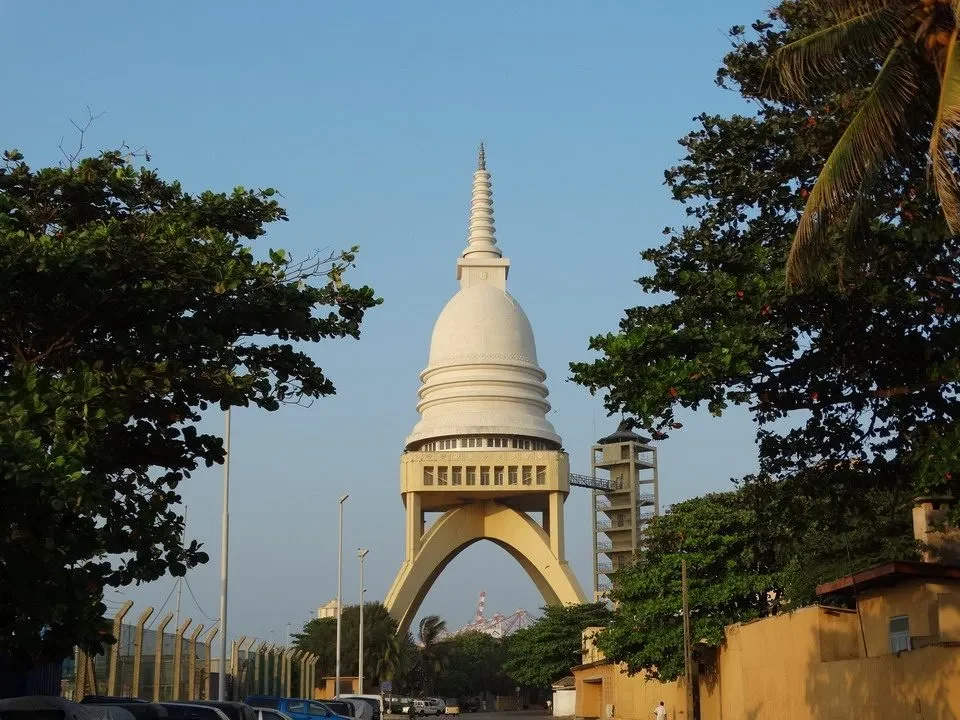
We head to the area around the fort to see the Sambodhi Chaitiya, an impressive wooden stupa built about fifty years ago to commemorate the 2500th anniversary of Buddha's death, a tour inside where you can find the clock tower. the parliament and a series of luxury hotels, plus the magnificent temple of Seema Malaka during the evening prayer... a true gem of peace nestled on a city lake with the skyline as a backdrop. Colombo is experiencing a period of significant expansion that we find difficult to justify. Tourism often overlooks this area, except perhaps for spending the first or last night of a tour. Many, like us, prefer to stay in Negombo, which is closer to the airport. From a business perspective, Sri Lanka is indeed growing, but it cannot be considered a major power, so it's unclear what function all these hotels and conference centers under construction will serve. There are massive Chinese investments that have created a sort of euphoria, leading some to believe that it could become a new Dubai in the near future. It would be desirable that it does not experience the same decline after such growth, especially since finding an emir nearby willing to help, like those from Abu Dhabi, is unlikely here. After building the port and obtaining management for 99 years, the Chinese are erecting skyscrapers "turnkey," meaning they will likely also handle the keys. We pass by the newly built Shangri-La hotel, a seven-star hotel designed and constructed entirely by the Chinese, with their workers easily identifiable as such. It also raises the question of how distinguished guests would reach the city center if congresses and events were truly held in buildings that exist or will soon exist. The constant traffic makes the city center difficult to access. Now is the time to get back into traffic and, after more than two hours, reach the hotel in Negombo, which is about twenty kilometers away. And it's worth noting that when we are on the highway, driving is decent, but exiting the city represents a real nightmare.
The airport runway renovations require the closure of the terminal from 8:30 AM until late afternoon for several months, so flights have been shifted to nighttime hours. With a flight at 6:55 and needing to be at the airport five hours beforehand, it's easy to see that the night will be short. But now it doesn't matter, we've become accustomed to living in a world where sleep schedules and alarms can be adjusted according to needs. At 1:30 PM, we arrive for the final leg, the one towards the airport, which marks the end of the journey. The van navigates through the streets of Negombo, which are unusually traffic-free, and within twenty minutes we arrive at our destination. We say goodbye to Kasun, the friendly and always smiling driver who accompanied us for the second part of the trip. The Oman Air flight to Muscat is on time, and we bid farewell to this country that has managed to impress us: we arrived with high expectations regarding historical sites, parks, and nature in general. We leave captivated by this people who know how to face life with a serenity unknown to us, but at the same time proud and confident in their history, religion, and culture. From this perspective, which is not inclined to compromise, as it should be for those who have been given reliable guidance through history, we are aware that everything that comes from outside does not necessarily need to be accepted without prior and careful evaluation. The defense of their culture does not appear to us as a form of intolerance.







Final thoughts
FINAL CONCLUSIONS:
• The trip was in some ways a return to our roots. Simple gestures like walking barefoot and eating with our hands brought us back to our primal selves, but also made us aware of how far we have strayed from them. It was a valuable opportunity to learn what we have forgotten and how certain cultures still teach us lessons of simplicity, as well as humility. Being returned to the source of human instinct, from which we have distanced ourselves over many generations.
• From the perspective of a Westerner living in a secularized society, seeing something everywhere that evokes religion is surprising. It was known that Tibet existed for its religious purposes, but we did not expect Sri Lanka to be similarly steeped in spirituality. The importance of religion in everyday life means that monks still hold significant importance, much like our clergy in the first half of the century.
• The lack of mantras and prayer flags makes it difficult for us to fully connect with this type of Buddhism, but we are probably so immersed in Tibetan Buddhism and the context in which it is found that it creates an unfair categorization within us.
• The fact that Buddhism does not have a supreme living authority, while preventing schisms like those in Christianity, also creates as many local religions as there are cultures on which they have taken root. In this case, it is very influenced by Hinduism and still quite different from the Theravada seen in other countries of Southern Asia. The fact that Sri Lanka was one of the first countries to be reached by Buddhism, not after the 3rd century BC, and without having had great influences in subsequent centuries, makes it considered somewhat original, and for this reason perhaps so close to Hinduism, and is considered a reference for the teachings of Theravada doctrines, having landed on the island during the early dissemination of Buddhist religion.
• Sri Lanka has never experienced a true period of peace, although Europe is certainly not an example to follow. From its earliest days, invasions and conflicts with the Tamil people from southern India have been seen, continuing for almost five centuries against the colonial powers of Portugal, Holland, and England in that order. Once independence was achieved, the painful civil wars between Sinhalese and Tamil people continued, resulting in all kinds of atrocities. The country has been experiencing a period of tranquility for seven years, and, due to terrorism or instability present in many other popular beach destinations, it is seeing significant development, hoping to continue its positive trend. The clouds gathering could be related to Islamic-based terrorism, which seems to have created some converts within the community. However, no attacks have yet occurred, and life is in a state of alert similar to that found elsewhere in the world.
• It is significant that, despite the brutality of the conflict between the two factions during the civil war, religion was never a subject or pretext for discrimination. This can be attributed to the proximity between Buddhism and Hinduism, which was particularly strong in Sri Lanka. However, this did not prevent the emergence of nationalist Buddhist groups who have fueled hatred against members of other ethnicities and religions within a Sinhalese-Buddhist connection that has often seen religion exceeding its role in political decisions.