

At dawn in the Bundala National Park
Another early wake-up call to visit the third and final national park of our trip. At 6 am, a jeep is waiting for us, and it takes about 40 minutes to reach the entrance of the Bundala National Park. Today, there's no chance, and no disappointment, of seeing leopards. Bundala is located right in front of the Indian Ocean and features many lagoons and wetlands that are home to an incredible variety of bird species and aquatic life. We see... anyway, elephants and abundant crocodiles and fewer people than yesterday. This allows us to interact better with the surroundings and feel like we are part of that large world for at least one day – the life of the savanna. Around 9 am, we stop at a rock overlooking the sea, offering a stunning view. a long distance, an elephant It seems small while eating in a meadow overlooking the beach, just a few meters from the ocean. We also open our breakfast packages and enjoy them with a view of the waves crashing below us. Our gaze is lost in the endless expanse of the ocean as we briefly think that in three days this trip will end and we will return to our usual routines and winter temperatures. With the driver, we talk about the habits of crocodiles: he explains that they are estuarine species and therefore do not live in the sea; they can only be found near the lagoons just inside, where they wait motionless for prey. During periods of drought, when the animals migrate in search of better pastures, they are able to remain still for one or two months without consuming energy, ready to attack the first unfortunate creature that passes by. They normally feed on wild boars, small buffaloes or deer, as well as fish when they are in the water and carcasses of dead animals. Although we are not ornithologists, we cannot ignore the splendor of these bird species we encounter, in a chromatic range that only nature can create. There are many peacocks, even outside the parks. We see a couple displaying their tail feathers, but the males also show vibrant colors, as if they were artificially designed. They also have the particularity of being the only peacocks capable of flying, and we often find them perched on the high branches of a bare tree. The image of the proud peacock on the tree with the full moon in the background will forever remain etched in our memory. Even the smaller species have spectacular plumage, although some water birds like aironi flamingos, pelicans o ibis: they excel in grace and nobility of bearing while searching for food in the slums of the lakes.

Afternoon in Tissa
The afternoon is largely free, as we left early for Bundala and had to depart late for Kataragama. We are staying at the Tissa Dagoba, another magnificent stupa that today, a day of celebration coinciding with the full moon, is frequented by worshippers just like in our churches on holidays. Walking barefoot around the dagoba is itself a gesture of penance, at least for us who are not used to it and have sensitive skin. It's hot, and a nearby stream offers… Singalese families the opportunity for some relaxation. While the children are playing water polo, the women are enjoying a swim in their clothes as swimwear seems not to be allowed. Some men are washing themselves completely while nude. We continue on foot to reach the dam road that runs along the Tissa Wewa, one of the three artificial lakes of Tissa. When we pass under one of the large Samanea trees, it feels like we're in a better place; the sun is perfectly aligned with our position. We head towards the center to return and have a couple of cookies at the same cafe as yesterday, then return to the hotel by tuk-tuk. Here, we have a couple of hours to relax and enjoy some time by the pool. This experience feels almost completely new: we don't remember having free time during our previous vacations, and we almost feel uncomfortable. We feel authorized when we think that this morning we left at 6 am and tonight we have the Kataragama puja at 6:30 pm.
The sacred night of Kataragama
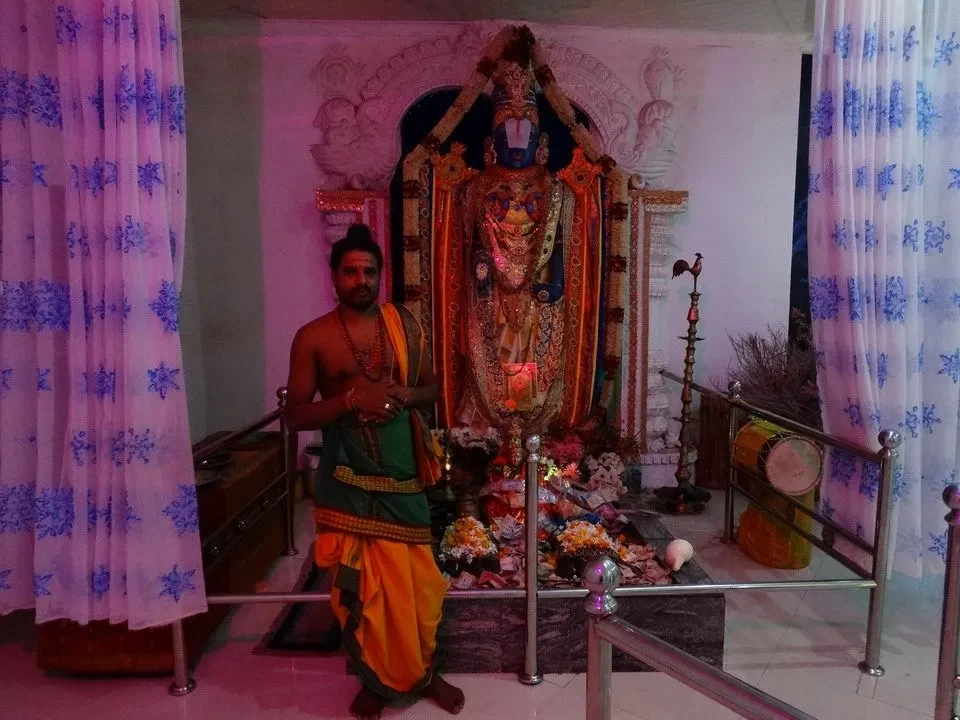
This will be one of the most touching and intense moments experienced in Sri Lanka. But first, let's visit a Hindu temple that is frequented by both Hindus and Buddhists, which, according to our perspective, seems inconceivable and is therefore all the more beautiful. It’s called Sella Kataragama: at the entrance, vendors offer lotus flowers that are opened on the spot, we take off our shoes and proceed barefoot in this temple, where paths lead towards the various Hindu shrines, some of which are dedicated to children, where parents bring their gave toys... soap or other useful items for children. This is because Vishnu and Parvati, upon marrying, had two children: Ganesh, with the elephant head, and Kataragama. The latter is one of the most popular deities on the island. When we leave a temple, we are stopped. from a religious person which takes us into a room called VIP, where there is a large Buddha statue. He recites a prayer for each of us, places the third eye sticker on our foreheads, and asks us to kneel so that we can rest our foreheads on the statue's foot. After a small offering, he allows us to take photos; it seems almost pleased to be photographed by our cameras. Interesting facts and mysticism blend together amidst all these allegories that adorn the temple. We visit the various shrines where worshippers pray to the deities present: Shiva, Vishnu, Kataragama, Hanuman, Kali and so on.
The Buddhist heart of the area and one of the three main pilgrimage sites, along with Adam's Peak and the Temple of the Tooth in Kandy, is located near the center of the town named after the deity itself. Darkness has fallen, and the area comes alive with a single flow of human activity through the streets. Devotion to Kataragama probably has pre-Buddhist origins: it seems to have been a warrior god for the Vedda people, the first inhabitants of the island in very ancient times, of whom only small enclaves still survive. Kataragama temple It is also frequented by both Buddhists and Hindus, in another wonderful example of syncretism, although the two religions attribute different origins and histories to it. The most important shrines are illuminated, while elsewhere one moves with caution as we are barefoot to reach the Maha Devale. Just before, there is a container where worshippers light a coconut shell, spend a few moments in prayer, and then throw it forcefully against the stone. Concentration is necessary to try to cracking the nut, because if this doesn't happen, one will be cursed by bad luck. We can see in some sections, which we will later examine, a young woman trying to exorcise the demon that had possessed her, a faith that goes beyond the two religions, merging with a sort of ancient animism never seen these days. In some shrines, the presence of sorcerers completes an atmosphere that is sometimes more magical than religious. These are festive days related to the recent holiday, and many have taken advantage to do what we would call a long weekend. After the Devale of Maha, which at this moment has an endless queue but we will return to see it, we walk through the along the avenue approximately 500 meters long, with a perimeter of from lotus flower vendors that leads to Kiri Vihara, a beautiful white pagoda from which you can hear the voice of a monk chanting of mantras, while worshippers circle the building with a ribbon... admiring the colors of the Buddhist flag, which is believed to have originated in Sri Lanka. We walk around the building clockwise with the pilgrims and return, still barefoot, to the most important religious complex, where the queue has now become manageable. The faithful carry vibrant fruit dishes offered to the gods, while some officials place it next to the statue before returning it, now blessed. Outside, those who brought the fruit offer them to friends or anyone simply nearby. We pass by several smaller shrines decorated and illuminated with LED chains, where other rituals are taking place, and the girl we mentioned earlier attempts an exorcism with practices that seem shamanistic, dancing nervously, falling to the ground in a gesture that we would not hesitate to call disturbing. As we move away, we hear screams, but we cannot tell if the exorcism was successful or not. Nearby is also a mosque, which at this time seems to be not very frequented. We travel the twenty kilometers separating us from Tissa for a delicious dinner.


