At dawn in the Kaudulla National Park
Meeting at 5:30 am, but we are woken up a few minutes earlier by some sort of Buddhist muezzin who prays, sings, and preaches through a loudspeaker as if it were daytime. We will be told that people usually go to sleep quite early, and an early morning sermon is a great way to strengthen the faith of the worshippers rather than angering them. We depart for the Kaudulla National Park: we take with us the breakfast boxes, which we will consume as soon as we have time, after seeing as many animals as possible. In fact, we had planned to visit the Minneriya park, but we are told that most of the elephants are currently in Kaudulla, so we easily choose this second destination. We are in the dry season; the animals move along what are called "corridors" in search of vegetation, but especially water to quench their thirst.
With our van, we head to Habarana, where we transfer to the jeep and go on a safari. In the parks, you must travel with authorized operators and cannot get off the vehicles. After about half an hour's journey, we reach the entrance to Kaudulla and continue along a dirt road. Actually, the drivers are free to drive as they please, so the roads become completely irrelevant, creating paths in the savanna and destroying the grassy ground. Puddles and ditches can be found everywhere, which means that what should be a protected area turns into an off-road driving zone. This abuse, in stark contrast with natural conservation, will be one of the rare occasions where environmental protection takes a back seat.
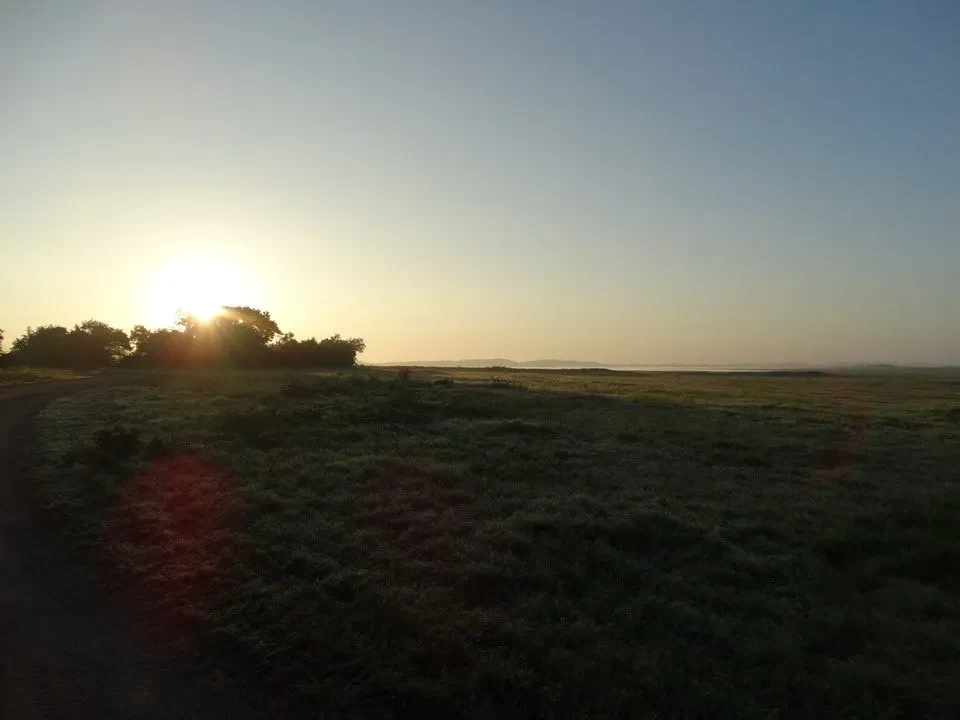
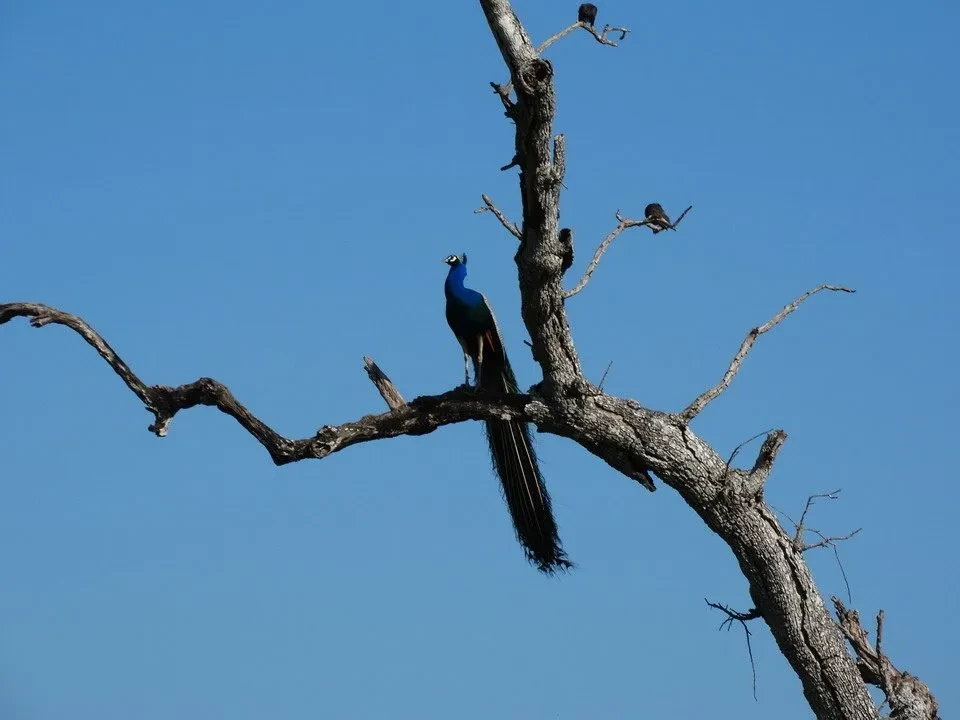
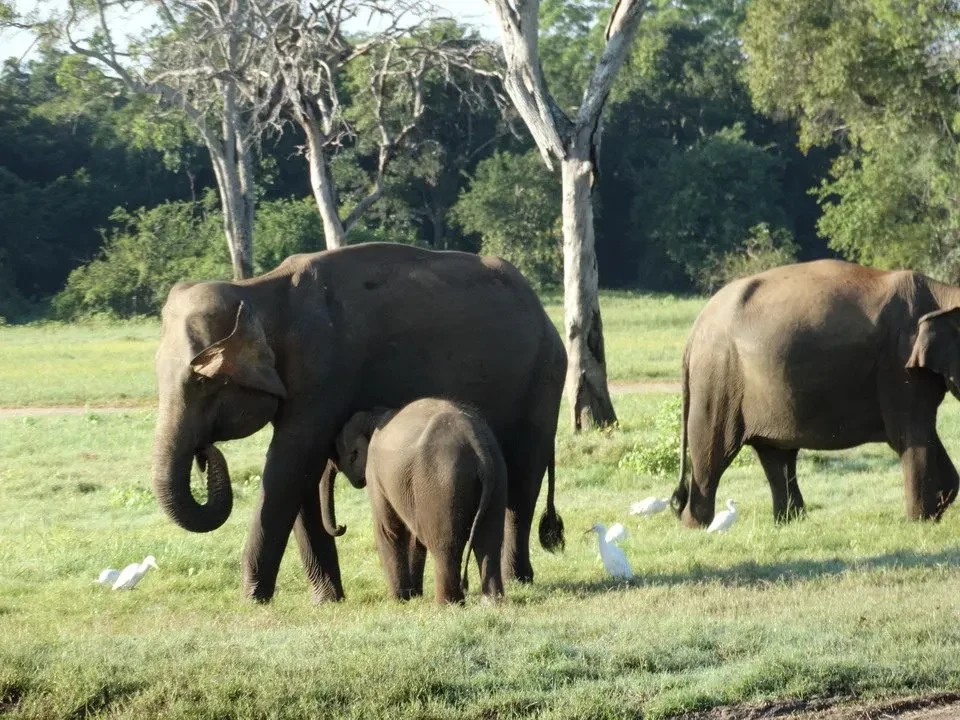
Upon arriving early, we were greeted by an incredible sight: Elephants are almost everywhere., I'm planning to have breakfast. with grass and foliage, accompanied by the countless white birds that followed them faithfully as if they were white guardian angels, and hyenas that hunt in groups to find prey. We were amazed by the sight of these canids, especially considering their poor reputation when compared to humans. Unlike humans, hyenas have a specific role in maintaining ecological balance and feed on dead or weakened prey that has lost its ability to escape naturally. Humans, often referred to as hyenas, also hunt in similar ways, but their function is unrelated to the natural order of things: they are themselves responsible for creating an imbalance, both natural and social. Among the other animals captured in our recordings, we find peacocks, male and female deer and every kind of bird. The sun that Meanwhile, the new day emerges from behind the trees, and its reflection makes the dew that the night had deposited on the meadows sparkle. Just this would be worth getting up early; the capital of the animals coming out of the jungle further enriches our experience. A lake forms a backdrop and is as if something has emerged from the water. forest of dead trees It seems they were already there before the flooding and are standing as a testament to their past. This forest brings to mind the sad images of Urla del silenzio, but fortunately, in this case, it doesn't carry tragic stories, only the creation of an aquatic space to promote agriculture in the surrounding area. In fact, water management is essential for life in the area: since the 3rd century BC, basins have been created to store the abundant rainfall that falls during the monsoon period, which are then used during the dry months for irrigating crops. Works on canals reveal how advanced the past hydraulic engineering systems were. We stop right by the lake to have breakfast, when it's already after 9 am and our "hunt" has passed its peak. It is a place of peace; there are no other jeeps, and the engine turned off allows us to clearly hear the silence of the park, only interrupted by the singing of birds and the gentle rustling of leaves in the warm breeze.
Between farm, spices and villages
After almost four hours of bumpy travel, we were eager for an Ayurvedic massage, and it seems like one is readily available in Habarana. We emerged an hour later feeling refreshed and covered in oil, carrying with us a lingering scent of oil that replaced our hairspray. Tonight's shower will be a real treat to wash away the strong fragrance.
The next experience is a short essay on silk production, with an attached shop. Or perhaps it would be more appropriate to say the opposite. We stroll through amidst beautiful saris and sarongs that, however, wouldn't really fit in a Western context, and then proceed to buy some items that we believe will be more useful and wearable at our latitudes.
When traveling to a new country, one shouldn't limit oneself to visiting archaeological or natural sites: consider that the most interesting part is learning how people live or seeing plants whose fruits are eaten or drunk daily. To partially fill this knowledge gap, we embark on a sort of triathlon with lunch in between. We start with a a cart pulled by a bull, a decidedly naive and perhaps avoidable experience, but we're sticking with it; we continue. crossing the lake on a rowing boat to reach a farm and return after lunch in a tuk-tuk The highlight was definitely the stop at this small farm, where we could see the crops and appreciate the simple daily routines that require skill and dexterity. We were able to watch them splitting a coconut, separate the bran either cook with rice grains or prepare a flour by grinding spices with the stone mill Let's get acquainted with the cacao, cassava, mango plants, of which there are fifteen different varieties, jackfruit, breadfruit tree, and many other exotic plants. We also learn about the two coffee varieties, Arabica and Robusta, although at first glance, there don't seem to be significant differences. Furthermore, we appreciate... lunch preparation From the host: dried lake fish, mango dipping sauce, lentils, pappadam, thinly sliced and fried sweet potato in coconut oil to create crispy chips, eggplant with onion, nutmeg, mustard seeds or other herbs and chili peppers, all served buffet-style. The plate we ate from had a leaf of sorrel on which the samples were placed. Savoring this freshly prepared dish in such a setting is an experience not to be missed. Culture is also this, and enrichment comes through small knowledge and daily lessons. Local customs do not involve using cutlery, so Western diners must wash their utensils and then pick up the food with their fingers and bring it to their mouths. This gesture, when performed as children, foreshadowed the educational "messy" meal prepared by mothers, which is why we still find it difficult. Since there was no other option and we didn't want to embarrass ourselves, we ventured into this primitive way of eating, paying attention not to drop the rice grains, which are more difficult to hold. The locals try to form a ball that allows for better cohesion. A hand wash at the end signifies that the meal is over and you can return.
Along the road that cuts through a village, we see white flags on either side of the houses: we discover they are a sign that someone has died, an expression of mourning. Indeed, we know that white is the color associated with loss, but curiously it also indicates purity or the color of the bride's wedding dress.
As Sigiriya approaches, the discussion continues, addressing serious topics. Theravada Buddhism also includes reincarnation, following the cycle of life linked to each person's behavior in their previous existence and their karma, therefore showing great respect for all beings in the animal kingdom. We are told the legend about a bull's yoke breaking into two pieces, which fall to the ground and are dragged towards the sea by two different rivers: they reunite, reforming the hole in the yoke. When the sea turtle emerges from the sea, seeing the moon through this hole, that will be the day when there will no longer be a moon. The moral is that certain events can happen, but the probability of them occurring is extremely rare. Unlike other civilizations with the same religion, here, it is customary to bury the dead, while monks are usually cremated. This practice is also becoming more common among ordinary people, especially in large cities where they try not to extend cemeteries too much. A growing problem is organ donation for economic reasons. In addition to free choice, there are illegal trafficking situations where poor people are forced to sell an organ, but only the clinics and intermediaries profit. We also learn that Buddhist weddings take place in places where meals are served, here civil formalities are carried out and a monk may even give a blessing. Religion eventually plays a marginal role compared to the ritual itself. Divorce is not easy, except when both spouses request it. In other situations, it can be very expensive. We learn that there are Sinhala, Tamil, and Muslim schools, and students of different ethnicities have the right to choose, with the exception of Sinhalese, who must enroll in a school of their ethnicity. This, which may initially seem like discrimination, is actually a way to bring as many people as possible towards the dominant culture. This still makes it clear how three ethnic groups, religions, and lifestyles coexist on the island, which probably will never meet. It is already an achievement that they do not clash. Colors also have symbolic meanings here: white for Buddhist mourning, yellow when a monk dies. The Sinhala language has nothing to do with Hindi or, if it does, has some distant connection to northern Indian dialects and Sanskrit. Therefore, Sinhala and Tamil languages have no common ground. In fact, even if a Tamil doesn't speak Sinhala, the minimum common denominator is English.
Sigiriya at sunset
Sigiriya, while not the primary location where Sri Lankan civil or religious history was made, is definitely the ideal place to visit, due to its unique geological features. We haven't found any other cylindrical rock outcrop that rises from the ground and reaches a height of 200 meters, with the remains of an ancient city on top. The climb up the stairs also requires you to be comfortable with heights, although everything is well protected by high railings. The view from the top ...it offers a wonderful view of the surrounding plains and gentle hills. If climbing the seemingly endless staircase in the afternoon is seen as a defiant act against fatigue and sweat, then... payment for a sunset from the top It is a currency that eliminates all fatigue. A careful visit allows us to understand how the need for defense had required a community to take refuge in such an inhospitable and difficult place, as well as to understand how the monks who later inhabited it were able to find here the tranquility for their meditations. Meditations that could actually be interrupted at times by the images of the girls of Sigiriya, pictorial representations in which... some girls The bold, almost imposing shapes, certainly grab the attention of even the most reserved visitors. It's hard to imagine what hormonal changes these monks, dedicated to a life of prayer and self-denial, might have experienced.
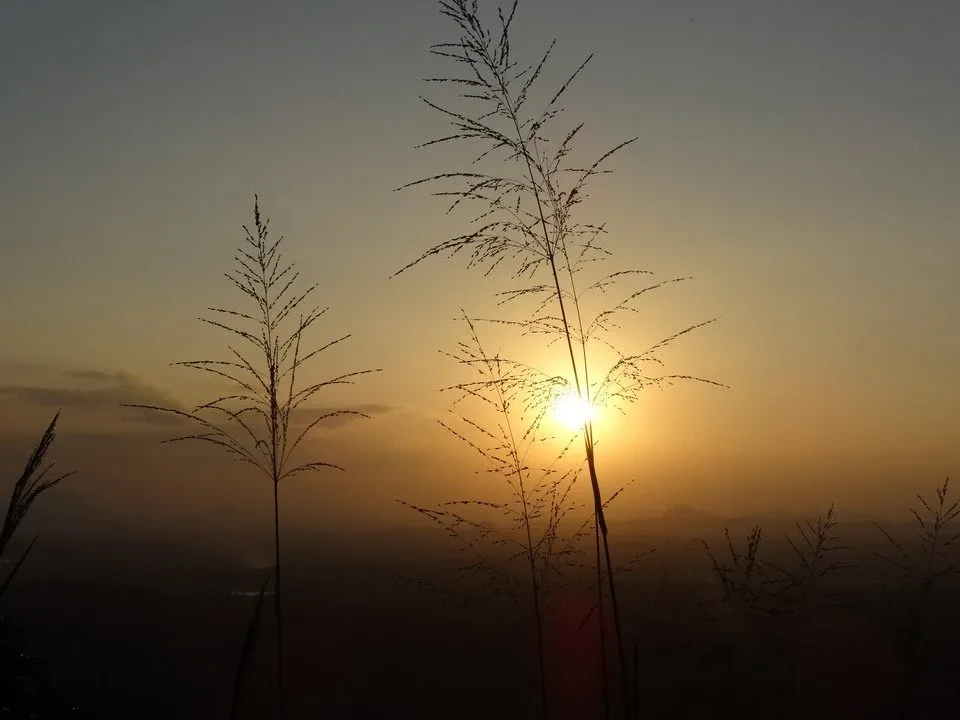
The area right next to the fortress is also of great interest. for its basins surrounded by lush green gardens. From here, you can take a walk along the steep slope Added more recently to reach the Gate of the Lion, a plaza at mid-level from which one could pass through. It's interesting that the entrance is located right between the claw of the stone feline, to access the upper part, a flat peak where the royal palace was located. The moment of sunset brings with it thoughts that touch the strings of the soul, historical and existential reflections intertwine as the sun casts its last rays in an intense orange to light up the fortress. Blades of grass sway almost to greet it and set the stage for the next day. Shortly after 6:15 PM, we were back at the base with those who had lingered during the descent. Nearby, statues that recall Christian religion can still be seen, even though we are now in an area with a clear Buddhist majority. Hinduism can be found in the plantation areas or to the north. Representations of Shiva or Vishnu are part of the syncretic effect exerted between these two major Asian religions.
We return to our hotel in Dambulla. We didn't stay out late tonight and can have a relaxing dinner. Hotels usually offer buffets with options ranging from spaghetti alla napoletana to local cuisine, such as kottu roti and hoppers, prepared by skilled Sri Lankan chefs. Of course, we prefer the second option: if we had wanted to eat authentic pasta, it would have been sufficient and easier to go to Campania. For dessert, you can find curd almost everywhere, a type of cheese that needs to be sweetened with honey. It is served in large terracotta containers.