Day 10
Kyrgyz Outback
From Bishkek through the first Kyrgyz mountains, towards a place of peace
From Bishkek to Kyzyl-Oi
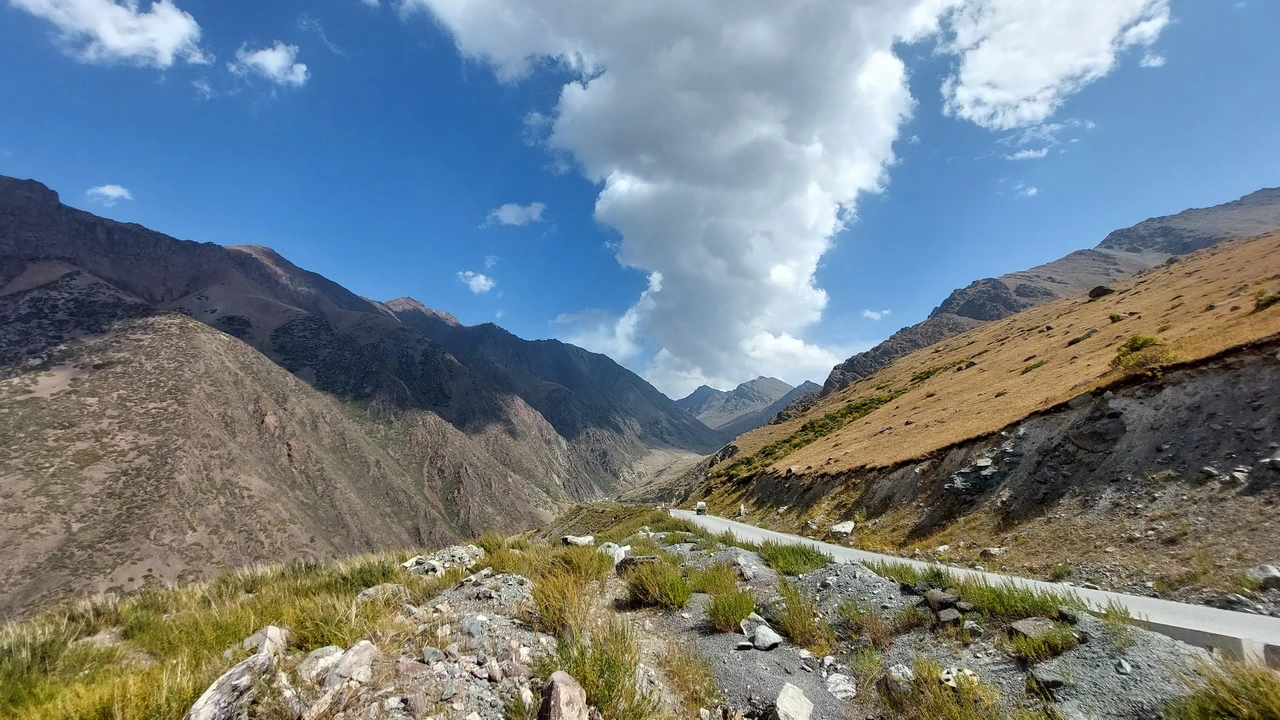
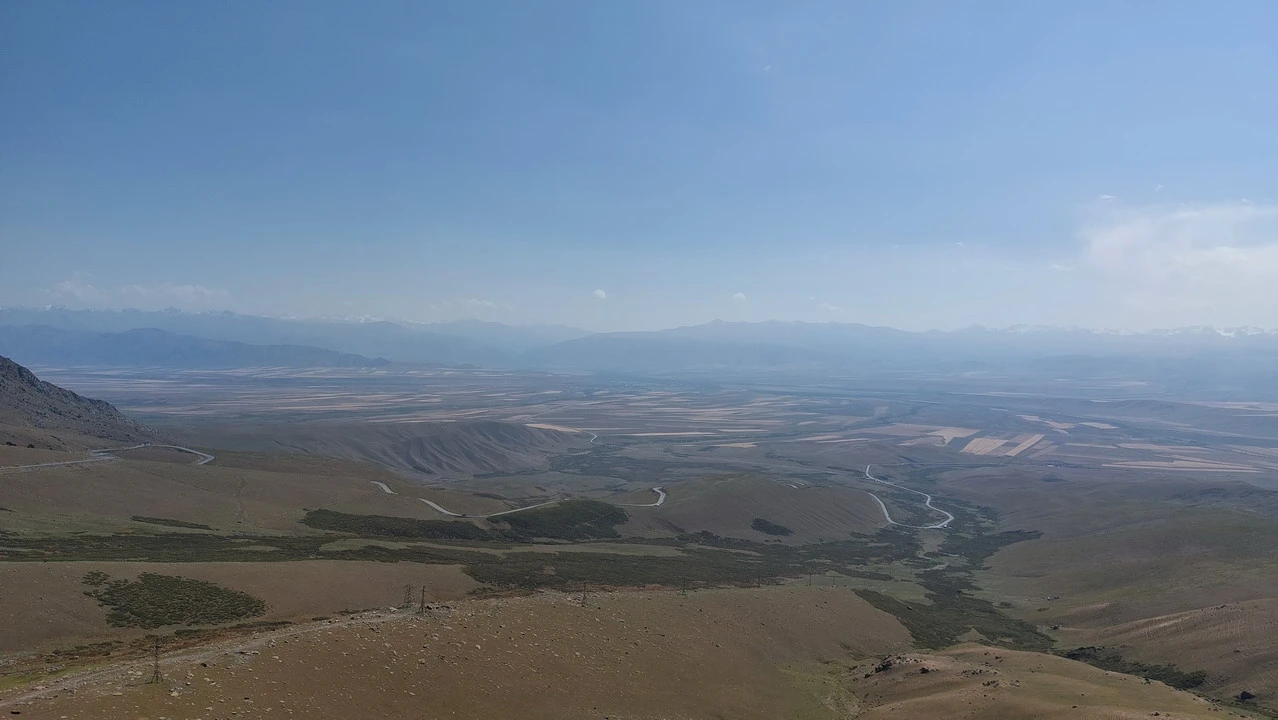
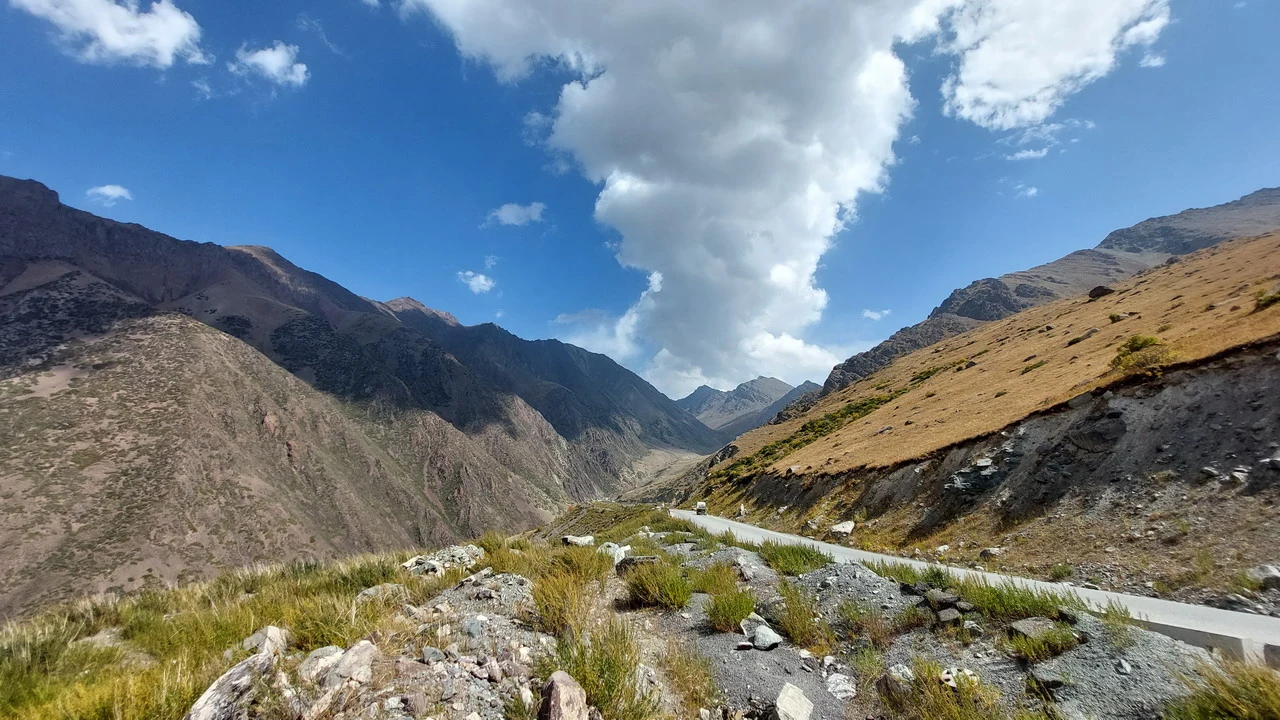
Last night we bought some frankfurters and some excellent cheese which we will consume in the room. After breakfast we meet the CBT (Community Based Tourism) official to start the tour, we get to know the Russian driver driving a van with the steering wheel on the right and in about an hour we are ready to leave. We leave the city heading south, with a couple of stops to stock up on fuel, water and snacks. When we are now on the outskirts of Bishkek we see a huge gathering of cars, as if there were an extraordinary event; instead we will discover that it is a car market where the inhabitants of the capital converge to sell and buy cars in the hope of finding something better, in the context of a decidedly uninviting panorama. We take the straight national road, a very frequent feature in these parts, which leads towards the Kazakh border and after a few dozen km we turn south, where the Kyrgyz hinterland awaits us. The road runs alongside the river on the valley floor and then begins to climb, it is wide and we encounter many trucks going very slowly downhill; every now and then someone is stopped waiting for repairs, others are carcasses that have come off the road and left there, forgotten metal corpses. We arrive at Too Ashuu hill, located at 3,180 m; a narrow and polluted three km long tunnel takes us there on the other side, which opens onto a large valley at the bottom of which there is an inn where we will have lunch: it is decidedly characteristic, essentially frequented by locals in transit. There are some first generation Sprinters parked and used as mashrutkas, they take out the passengers for a break, while the driver checks that the levels are OK, at least those, then they set off again in the direction of Bishkek or Osh. This artery leads to the Fergana valley, surrounding mountain ranges and borders that are not always friendly.
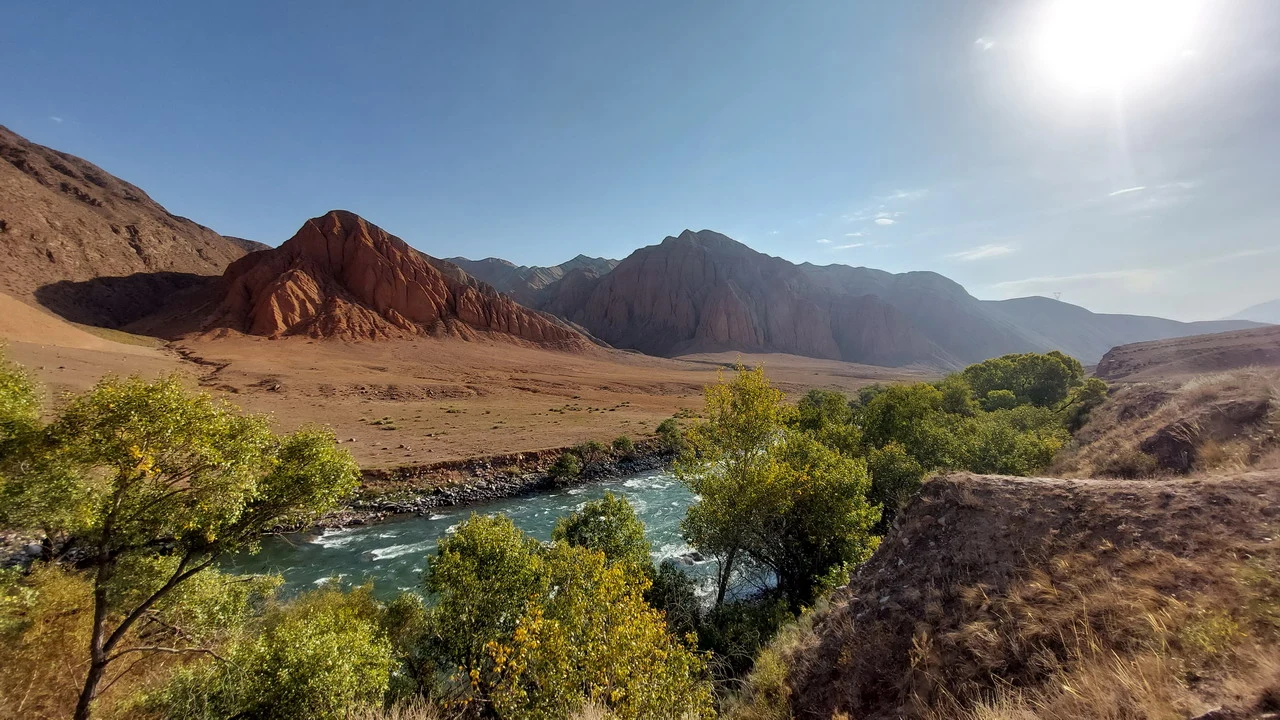
From here a detour starts in the Suusamyr Valley up dirt road and it will basically be like this for the whole week; the Karakol river is always by our side, there are people rafting, others fishing. We stop to see a historical monument, quite strange in such a natural context: it is a yurt built with mortar, where Kojumkul apparently lived, a giant who actually lived between the end of the 19th century and the mid-20th century, gifted with such strength that he became a national myth. A large cloud appears on the horizon, pours rain and dissolves just as, in mid-afternoon, we arrive in the village of Kyzyl-Oi where we will spend the night in a homestay. The accommodation is comfortable and clean, the lady who welcomes us obviously doesn't speak English but doesn't even try to empathize with smiles; it's their way of doing things, but they make sure not to miss anything, so that's fine. There is nothing touristy about the village and this is precisely why it is interesting to walk along the single, little-used road that cuts it in two: every now and then an old Audi 80 or a smoking Mercedes 190 passes by with some farmers on board. Not far away flows the river with clear waters, we can barely imagine what it's like in spring when the snow melts. Let's look around the courtyards of small farms to get an idea of rural life: i barns they have already been filled in preparation for the winter season, which must not be particularly hot also due to the position at the bottom of the valley; the gardens are still full waiting for the last harvest, some housewives are busy walking around before darkness hits the town. Normal life, not particularly cheerful, there aren't even any reasons for it. The only source of lightheartedness comes from the football pitch, well laid out with artificial grass, where kids chat between one match and another. I participate in an impromptu game; unlike adults, they can say a few words of English despite being just over 10 years old. It's a nice opportunity to interact with the most interesting part of local society. The guesthouse room is housed in a small house that contains others for guests, even if it's just us tonight. When you enter you must take off your shoes to respect the many carpets present. One of the rooms is used as a refectory, we don't understand if the house is permanently used by guests or if the owners live there during the long winters, who now live in a simpler one, just opposite. Dinner is discreet, even if modest: we will eat better in the next evenings despite being in more isolated areas. Afterwards we chat with the driver, the smartphones pick up the local network well and it is not difficult to communicate via Google's voice translator. He has points of view that do not exactly coincide with ours, but the situation leads us to understand him even if not to share him. Russian born in Kyrgyzstan, he has been living as a foreigner in his country for 30 years. If previously the Russians represented the ruling class in every sense of the word, political orders came from Moscow, specialized jobs were their prerogative, etc., now they are often considered as foreign bodies and barely tolerated. Many left after the collapse of the regime, further deepening the rift with ethnic Kyrgyz. He therefore misses the times of the Soviet Union, when everyone was equal, had a job and there was no careerism. The blame for all this is to be attributed to the United States and partly to Europe, guilty of being too accommodating and not very autonomous from its American relative. A picture emerges in which the West is fragile above all for having lost the foundations of its culture and the principles that characterized it, ending up no longer being itself. During the occupation in Afghanistan, the USA favored the proliferation of heroin factories, so that it also ended up in Russia via Kyrgyzstan, both for economic and political reasons. Furthermore, the Islamic risk is perceived as silent but high, which could only bring further difficulties to the population of Russian origin, and not only with the ban on drinking vodka. The independence of the Asian Republics brought corruption, unbridled capitalism and injustices that affected the most vulnerable classes. We were aware that Soros financed school education, but in his opinion he influenced the students' thinking, ending up causing disasters.
Our driver was a repair engineer of European-made medical equipment for a Swiss company. He worked in two children's hospitals in Bishkek and one in Jalalabad. He has been to Europe, to Stockholm, Antwerp and Brussels, but does not intend to return; not even in Germany, where his son lives in Frankfurt. Instead, he has a daughter who lives in Moscow.
Long and pleasant chat, even if not always shared, and perhaps, precisely for this reason, more educational. The night outside is cool and the duvets that cover us during sleep are very useful.