Day 15
Eagle hunting and Lake Issyk-Köl
Together with the eagle hunters, the second largest mountain lake in the world
From Eki Naryn to Issyk Lake
Breakfast was particularly appreciated for both its taste and origin. We were assured that everything on the table came from the local economy, with Naryn being the furthest source. Blackberry jam and apricot preserve are the stars, but everything else is also delicious. An interesting fact is the absence of knives; although the dishes are served in small pieces, there are situations where it would be helpful to have a knife to cut them.
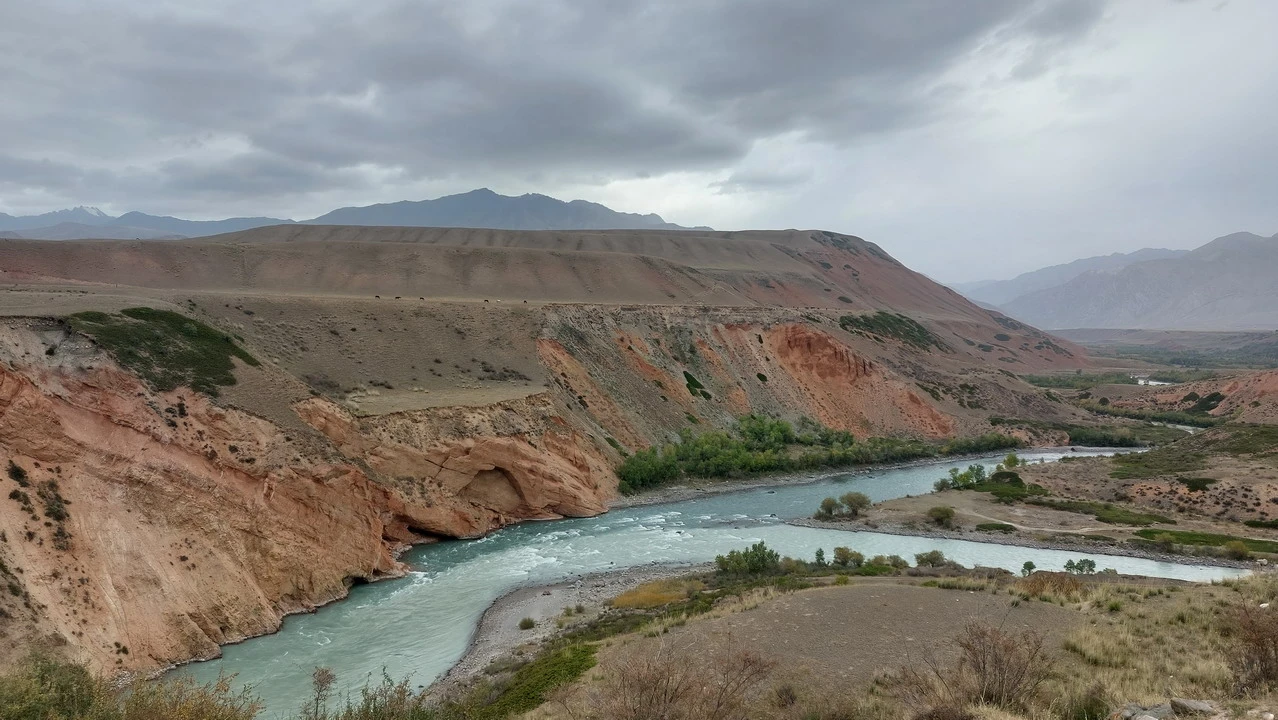
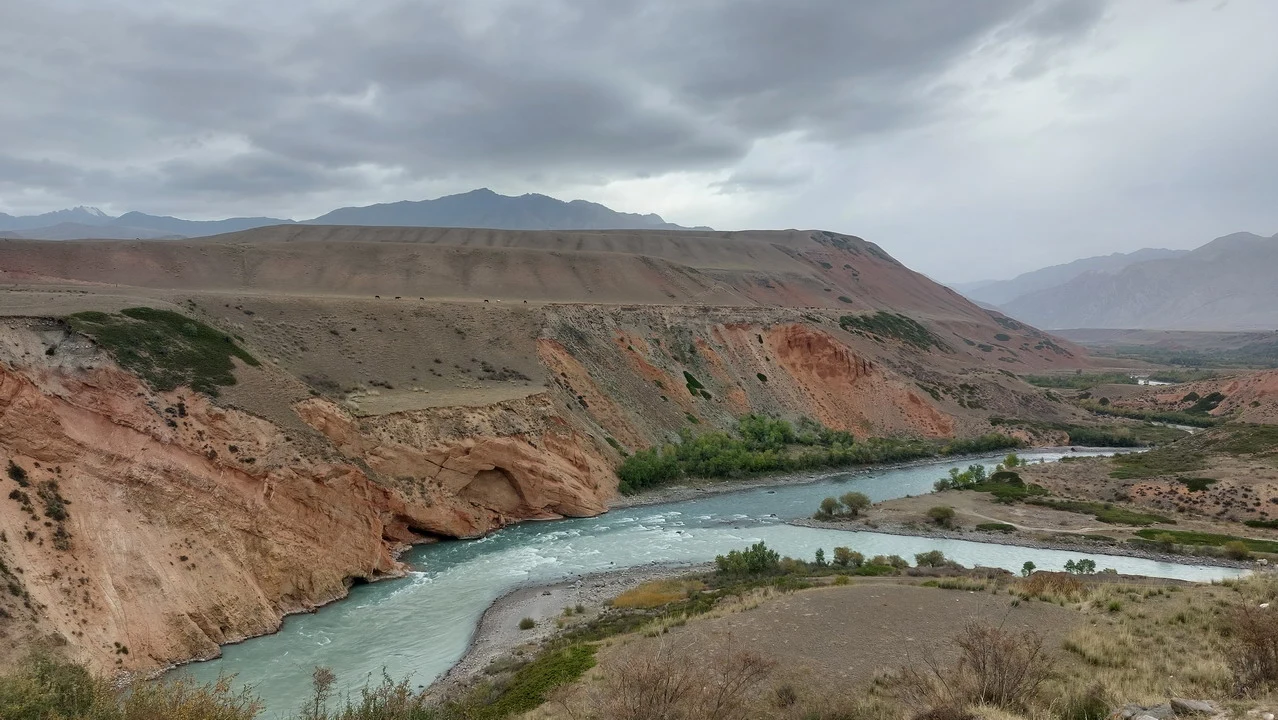
Unable to cross the Tosor Pass, we will be forced to go around it, returning to Naryn and passing through Kochkor. However, first we will go to see the point where the Two rivers meet. mixing the murky water of one with the clear water of the other at the bottom of a canyon with reddish walls. Upon arriving in the town, we find a tire shop whose workshop is a 40-foot container; here we... fix the tire that had deflated yesterday, finding a stake stuck inside. This will be a good quarter of an hour well spent because standing around here is not ideal, despite the great camaraderie among the drivers. We take advantage of this to look around and see the smartly dressed people going to the mosque; it's Friday. From now on, the road will be paved and you can go faster; these yurts are located along the river inside a green valley... a landscape characterized by cattle and horses that extend onto the road, stalls selling dairy products, and modern Western-style carriages. They are relatively close together, but even their inhabitants will soon need to return to less cold areas during the harsh winter. The highway is not very busy, but there are the usual trucks coming and going from China: the caravanserais are no longer needed, but the essence of traveling and transportation has not changed. Lake Issyk Köl appears to us at some point for what it is, a sea whose shores can only be seen with extremely clear skies.
Eagle hunting and evening in Bokonbaevo
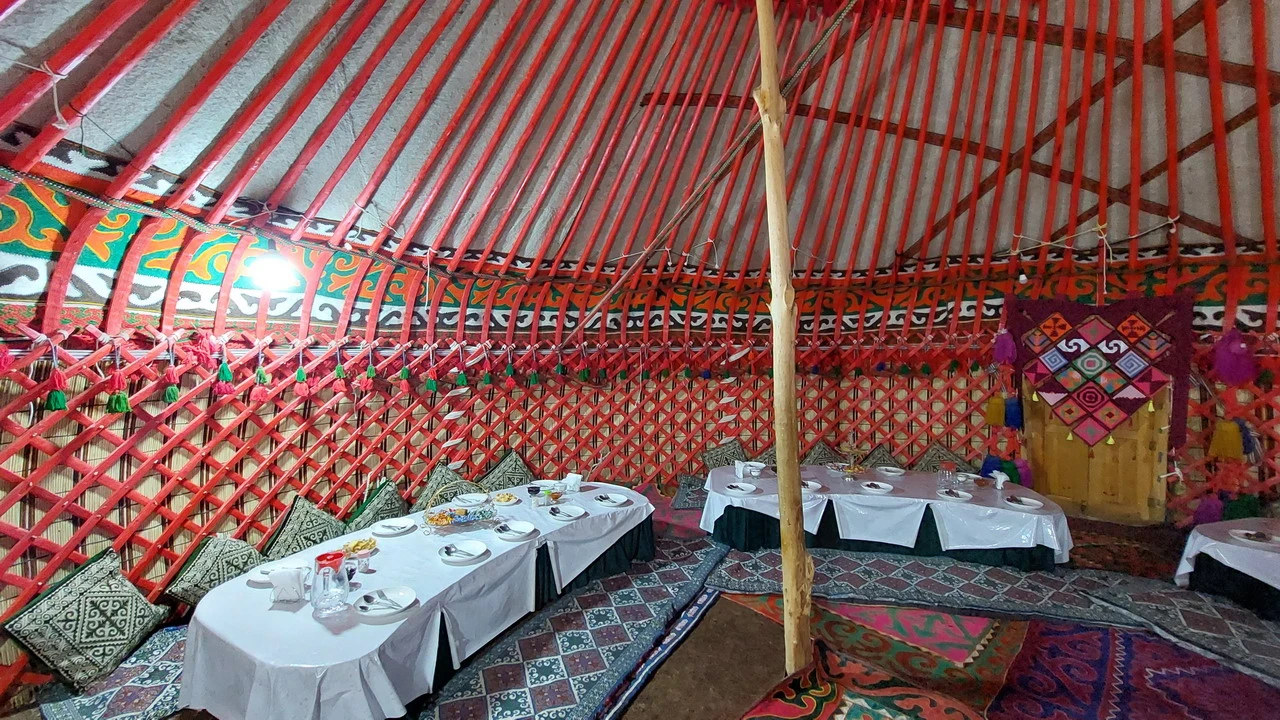
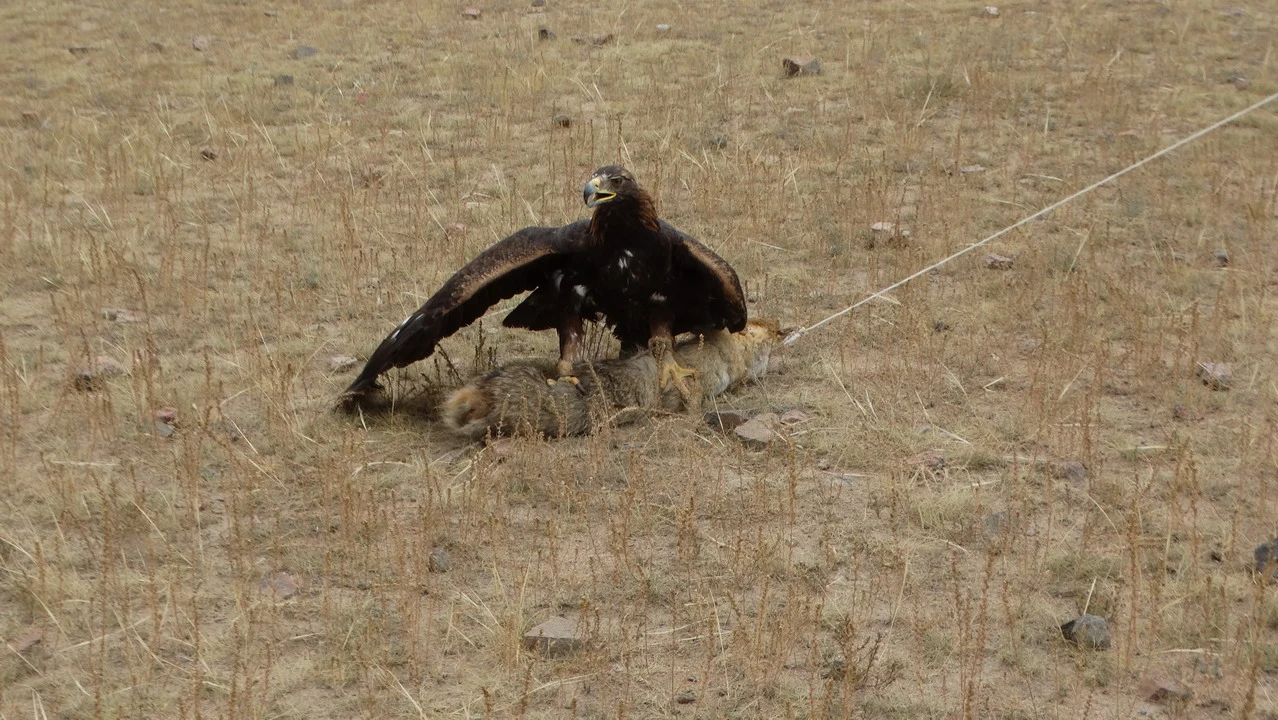
Before arriving at today's yurt camp, we still have an interesting appointment with the eagle hunting: we stop at a clearing far from residential areas and near some hills to meet with the eagle. his trainers. A certain type of show is sometimes put on for tourists, but in this case we are given interesting information about how young birds of prey are caught, trained, and their lives. Seeing animals in captivity is never enjoyable, even though in this case they are treated well and assure us that after a few years they are released to return to flying freely. The hunters take the eagles from their nests three months after birth, so as to determine their sex and only take the females. An eagle's age can be determined by its plumage; the more white feathers it has, the younger it is. The feathers are then replaced gradually, about 15% per year, so that the animal can fly without problems, especially the longer ones. An eagle can live up to 15 or 16 years; when they are about ten years old, they are released so that they can continue to breed. They usually have two broods per year, with two chicks each. A female weighs between 5 and 7 kg, while a male weighs up to 2 or 3 kilograms. Usually it is the female who goes hunting, and she is the key member of the family. As young birds, they hunt small prey such as marmots or rabbits, and even sheep, foxes, or wolves when they are adults. The males do not reach this level. Training involves placing prey at increasing distances, from 10 to 20 and then 30 meters. They follow a certain diet so that they don't become lazy due to being full, but also not too hungry and weak; they do not hunt in the summer, when the animals have their young, to avoid them being left without parents. They can see clearly up to 2 or 3 km, and they only eat fresh meat because, unlike condors, they would not be able to digest it. The show consists of giving an eagle a coyote pelt, while one of the hunters runs with the pelt tied to a string, while the other climbs onto a hill to release the bird in flight so that it dives down on the prey, grabs it with its claws, and receives the prize of a piece of fresh meat. In itself, the show is modest; what is interesting is understanding what happens elsewhere when hunting is real, an activity with ancient origins of which we had only heard about in Mongolia. To conclude, we try our hand at archery, a normal practice in this area, but it allows us to repeat the experience from last year in Tanzania with the Hadza tribe. In just a few minutes, we arrive in Bokonbaevo, where we look for a place to have lunch when it is already 15:30 and we try a dish called kebab, which is basically boiled lamb floating in its own broth. As we leave the town, the road approaches the lake, where our accommodation for tonight is located; the sky is covered with clouds, and we will only have time to take a walk on the pebbly shore of the lake before it starts to rain. The yurts are smaller, with 2 or 3 beds, while the yurt used as a dining room is very nicely decorated. vibrant colors As evening approached, the rain became constant and it was a pleasant sensation to hear the drops falling intensely on the yurt. After dinner, a group of Malaysian visitors had ordered a family apartment comprised of the grandfather, a couple of children and grandchildren: they play a whole series of violins and other instruments, with voices ranging from high-pitched squeaks to very pleasing harmonies. We get to appreciate the folklore of Kyrgyz culture both in its costumes and in its music.