

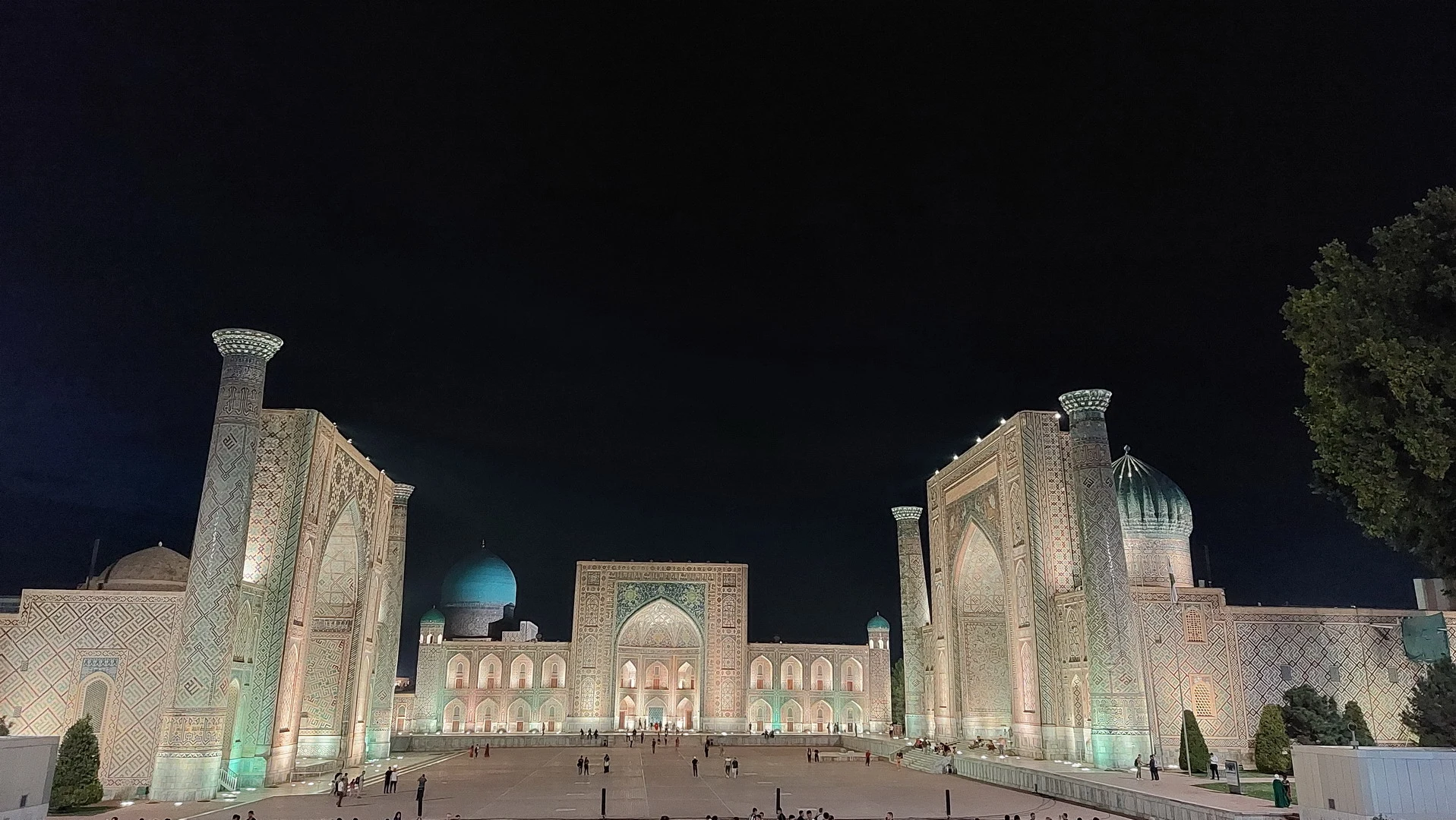
Central Asia (Uzbekistan, Kyrgyzstan, Kazakhstan)
Along the ancient Silk Road, immersed in history and culture in Uzbekistan, in nature in Kyrgyzstan, and a glimpse of Kazakhstan.
Map
Central Asia map - complete itinerary
My assessment of the country's geopolitical situation is regarding:
Aliseo Editorial - Central Asia
Last month, in February, we followed the routes of Columbus to reach Central America. This time, however, the inspiration comes from another great Italian traveler: Marco Polo on the Silk Road. In reality, this is a continuation towards the west of what was traveled about ten years ago in China, when we left from Beijing to reach Kashgar in Xinjiang, 4500 km further west. The Tash Rabat caravanserai is located in Kyrgyzstan, just over 50 km from the Uyghur city, near the Chinese border. From these mountains, a vast steppe opens up that crosses Central Asia, passing through Samarkand, Bukhara and Khiva. This last fortress will be the first place to visit, but also the furthest one towards the west: beyond lies only the border with the impenetrable Turkmenistan, and even further, the already visited Iran. Although everything has changed, retracing the routes of the Silk Road cannot help but bring you back in time, imagining the charm of those places and the hardships of that life. Mythologized by films and books, traveling in antiquity exposed to hardships and risks that are difficult to imagine today. The idea of freedom, of exchanging goods and ideas, clashed with everyday life, creating difficulties that only passion and necessity could overcome. Time has done its work, many regimes have succeeded each other, which, together with religion, shaped and reformed the character of the people; there are still historical sites, sometimes well restored, or in some cases even too much, or fragments of walls that the wind slowly but persistently batters, as if trying to erase the past. There is a lot to see in Central Asia, especially in Uzbekistan, and therefore a lot to preserve: already during the Soviet era, the most important monuments were restored, although sometimes there was a lack of attention in preserving their originality. Now, greater care is taken, knowing that tourism is an economically significant source for those who possess so many architectural treasures.
Between Uzbekistan and Kyrgyzstan
Unlike what was reported in the latest edition of Lonely Planet (2018) and several websites consulted, the situation has changed dramatically everywhere. After Karimov's death, the new president opened the country to tourism, which led to the removal of some typical barriers of the old regime, particularly the inappropriate interference of the police towards foreigners. Unlike what was read, border controls have been simplified: in addition to the absence of a visa, it is no longer necessary to declare exactly the amounts and currencies brought into the country. In Tashkent, we see many police officers around, especially in the areas surrounding government buildings. They have a respectful attitude and do not give any impression of being a threat, as could happen in a relatively recent past. We never feel like we are in danger, either from common criminals or those in uniform. There are still many agents in the guard posts, and the daily checks on people entering and leaving public buildings are a sign of a Soviet past that still has some active roots. Another tangible sign of the relative liberalization is the call to prayer, or rather the loudspeaker, which comes from the minarets and invites believers to pray. Under Karimov, this was prohibited in order to prevent any fundamentalist tendencies; prayer itself is not dangerous, but a certain radical interpretation of religion can turn it into a trigger for unrest. Even for us, non-believers in Islam, the sound of the call to prayer offers a pleasant sensation, not so much folkloric as human and spiritual, regardless.
City of caravans that was once part of the Silk Road: Samarkand, Bukhara and Khiva, with mosques, mausoleums, madrassas, caravanserais and minarets. An immersion following the footsteps of Tamerlane, where the wonders of Samarkand shine, the extraordinary walls of Khiva, desert fortresses, Bukhara and its treasures. The turquoise-tiled minarets stand tall and weathered. Everything has an eternal feel, along these streets that have seen all of humanity pass through. The pace of life is not rushed, which does not mean a lack of efficiency; elderly people chat under the shady avenues; sun-weathered faces, but also smiles and sparkling eyes; in the workshops, craftsmanship remains the key to quality and taste, depending on the gender. Old women with golden teeth sell fruit and vegetables in the bazaars, while small men with thick white beards and turbans sit peacefully cross-legged, in a setting where history seems not to have passed by.
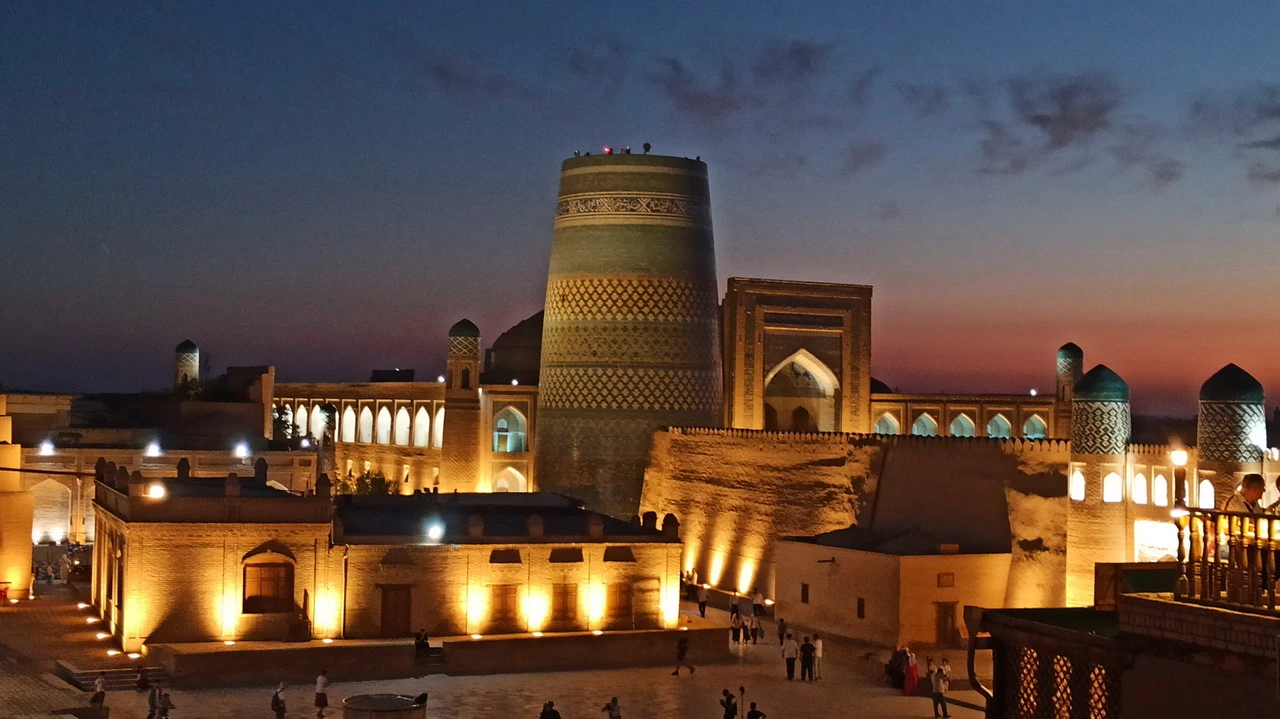
The country is successfully leveraging tourism and raw materials for profit, while agriculture remains heavily reliant on cotton and its water needs.
Mosaics, mosaic tiles and the same Arabic language, used as the current written form until the early decades of the 1900s, creates designs of great prestige. However, the style is less refined than Persian Islamic architecture, where the visual effects created by the inscriptions praising God take on a true visual delirium. From a distance, the decorations appear in perfect harmony; when you get closer, they reveal a greater simplicity, which nevertheless gives off a magnificent image. The Soviet period has copied the minds, making them square like its architecture, in stark contrast with the Arab-Islamic mentality, where there is little in terms of squares, both in thinking and artistic forms.

In Kyrgyzstan, the Soviet past is still present, from architecture to human attitudes. It's not surprising that statues of Lenin still exist, perhaps moved to more secluded locations, or symbols of the hammer and sickle on monuments and public buildings. Of course, they are no longer included in new constructions, but this says a lot about nostalgia rather than the implicit admission that life under the Soviet regime wasn't so bad after all. In a minimalist view, decent living was guaranteed without great effort, which was sufficient for most of the population, without particular initiative. The overall context is more backward than Uzbekistan: fewer resources, a generalized sense of poverty can be seen in the state of the buildings rather than the cars. Cities outside the capital perfectly reflect the concept of "bad," to which are added neglected and unkempt gardens, giving an idea of what other priorities exist or simply that no one cares. However, it should be acknowledged that Kyrgyzstan is smaller, mountainous, and located in a remote area, therefore more dependent on the interests of others.
To travel between the former Soviet republics, you only need a form of identification. passport This is only valid for the Baltic states, as they are part of the European Union, but no visas are required. Passport also valid for Turkmenistan, which is ethnically close but has an isolated and self-sufficient regime that essentially prevents trade in people and goods; there seems to be some cautious opening, but it's still too early to make positive assessments.
The Cuisine I really focused on lamb and beef dishes. The skewers (shashlik) were particularly appealing, first with their aroma and then with their taste, expertly seasoned with spices that didn't overpower the flavor. Of course, there was also Russian cuisine, such as borscht, other soups or desserts like baklava. It should also be noted that Tashkent remains the most Russian city in Uzbekistan, where the majority of the European-origin population still resides. Many people returned to Russia after 1991, but the impact is still evident in many aspects.
Language: In Kyrgyzstan, the Cyrillic alphabet is the only one used, including shop signs, and the local language, considered a priority, is also written in these characters. This situation regarding languages is quite unusual: after independence, Kyrgyz, a Turkic-speaking language, became the official language, and although there has been an exodus of Russians back to their homeland, many were born here. Russian is often used as a common denominator among different ethnicities and in relations with citizens of neighboring countries. For example, if a Kyrgyz, Kazakh, or Uzbek person wants to converse, Russian is the only way to do so. In Bishkek, as the capital and with a larger number of Russians, Russian is the first language spoken; as you move away from the city center, Kyrgyz becomes more prevalent. However, we are told that children begin to watch cartoons or programs imported from other Russian-speaking countries, and as they grow up, they find themselves more comfortable with this language. The school is trying to correct this imbalance, but it is difficult to maintain a language in a country of only six million people, and not everyone speaks the native language.
Geopolitics of Central Asia
What was once considered a forgotten periphery of the world, an insignificant province of the Soviet Empire, is regaining unusual centrality, for which one must go back many centuries. Even without invoking Tamerlane from his throne where he proudly resides in the city of Shahrisabz, near Samarkand, after the raids that he orchestrated and was a key figure in during the 14th century, history has had opportunities to frequently pass through Central Asia. What could be defined as the Silk Road crossroads is regaining relevance in a similar but also different form, when viewed from another angle. The similarities can be found in the directions along which goods move east-west, once consisting of dusty roads and caravanserais, now consisting of railways and stations, with all possible branches to better serve Chinese customers along the Euroasian axis. The differences lie in the greater connections and the actors involved: other empires and other ambitions.
Religion has unintentionally legitimized and consolidated the post-communist secular governments that emerged from the dissolution of the Soviet Union, a paradox only at first glance. With the exception of the controversial issue of Fergana Valley, where Stalin's will led to the creation of a distinctive ethnic mix characteristic of his policy aimed at disharmonizing the Soviet Republics, similar cases are currently in the spotlight in Donbass and Nagorno-Karabakh; the rest of the region has never been characterized by religious irredentism or fundamentalist tendencies, even during the Soviet era, when mosques and religious schools served as warehouses or factories. The nomadic lifestyle of Kazakhs and Kyrgyz has shaped an Islam with symbolic connotations related to nature and less orthodox than Arab doctrine; the freezing winters and Russian colonization did not have difficulty in legitimizing the consumption of alcoholic beverages, although it does not appear as a plague, it is true that beer and vodka can be consumed freely; even architecture does not strictly adhere to religious dictates, and it is common to see decorations depicting animals when these are prohibited by doctrine. The proximity to Afghanistan then represented the glue that convinced major powers to close their eyes, allowing the secretaries of individual Republics to perpetuate their power, becoming satraps of independent states. Just read some pages of the illuminating Good night, Mr. Lenin by Tiziano Terzani, written in 1991, to understand how the path was immediately clear, without any ifs or buts. The relationships between the countries that separated have not always been excellent: territorial disputes involving several exclaves within the complex border area where Uzbekistan, Kyrgyzstan and Tajikistan meet and clash have led to the use of weapons even recently. This is further complicated by competing demands for water and arable land: Uzbekistan and Kyrgyzstan recently agreed on territorial exchanges specifically to balance their respective interests. Even though it doesn't directly relate to borders, the story of Lake Aral offers an example of how the change in regime, which actually didn’t happen, did not coincide with an environmental shift. The fourth largest lake in the world, during the Soviet era, was considered a mistake by nature and its area was reduced to 40% by diverting the two inflows; subsequently, a dam was built on the Amu-Darya River, leaving only fragments of water covering just 10% of the original surface. The impossibility of abandoning cotton cultivation, which began in the 1960s, has now sealed its fate; the resulting drying up has left the desired fertile lands barren due to salt accumulation and pollution caused by the indiscriminate use of fertilizers that have contaminated the soil.
We are also at a linguistic crossroads, with the alphabet having transitioned from Arabic to Cyrillic in the early part of the last century, and facing current attempts to switch to Latin, although these have so far been unsuccessful. Chinese remains confined beyond the Tian Shan mountain range for now.
The congenital disease of Central Asia remains in its peripheral position, linked to an unfavorable topography, high mountains to the south and nothing to the north, and distance from the seas. As a statistical note, Uzbekistan together with Liechtenstein is one of the two countries in the world without double access to the sea; this means that neither Uzbekistan nor neighboring countries have coastlines on open seas or oceans. The new Silk Roads, BRI, will contribute to reducing marginalization, but they will be more useful for positioning the region at the center from a strategic point of view before even logistically.
The delicate current situation requires the Central Asian republics to maintain diplomatic balance on various international political issues. Taking an open position against Russia regarding Ukraine, for example, would put at risk the return of the 3 million Uzbek workers in the Federation, with a loss of substantial remittances and increased unemployment due to their return. Conversely, recently there has been a reverse migration phenomenon, where young Russians have reached Tashkent and other major cities to escape mobilization by their government following the war in Ukraine. This phenomenon has gradually subsided as certain categories have been exempted, but evidence can still be found in the high cost of rentals, which remains significant even today despite the return of those not affected by recruitment, such as IT professionals. The immigration also involved Ukrainians fleeing the war and some, including those forced into service. The Uzbek government has declared its neutrality, banning demonstrations from both sides and prohibiting the display of flags, even on private balconies. This is a difficult balance to maintain, especially with other indirectly belligerent countries. Last month, US Secretary of State Blinken visited Tashkent and stated that Uzbekistan, with its 36 million inhabitants, is an important country and therefore must take a position. President Mirziyoyev responded that he would follow the wishes of his people, without much demagoguery, but essentially did not support sanctions. In addition to the issue of remittances from migrants in Russia, Uzbekistan also derives valuable currency from Russian tourism, which is unable to travel to Europe and elsewhere, as well as from the significant business of smuggling goods under sanctions. Goods arrive in Turkey or through Poland, are transported by truck or train through Russia and then reach Uzbekistan; from there they regularly return to Russia. We saw a group of Belarusian trucks near Chorsu in Tashkent: the suspicion that they were not there to deliver goods for the bazaar seems more than justified.
Mirziyoyev has implemented a series of reforms aimed at opening the country to the world, easing police control, promoting tourism also through the elimination of visas for many countries, and seeking to break free from the cotton industry, which imposed sanctions from Western countries. Reforms are also evident in certain details, such as the possibility of photographing the beautiful interiors of Tashkent's metro stations, which were previously considered sensitive areas. The Fergana Valley is traditionally conservative, and the interpretation of Islam is particularly orthodox, but it seems that fundamentalist trends do not pose a threat. Of course, the return of the Taliban to neighboring Afghanistan is a latent and risky factor of contagion. The government is considering banning veils in order to combat and prevent an integralist view of religion, which is not very widespread.
In the past, Karimov had aggressive tendencies, sending special forces at night to seize land immediately followed by workers laying barbed wire; the next day, the Kyrgyz found themselves facing a shifted border and struggled to regain the occupied territory due to the smaller military forces available. Much of the Kyrgyz army consists of non-professionals, and in case of border incidents, Uzbek repression was disproportionate compared to the losses suffered. Subsequently, normalization of relations with Kyrgyzstan went through the granting and exchange of small territories. According to an Uzbek, Kyrgyz people are nomadic, which is not easy; but it would be unusual to hear favorable comments about neighbors. Even during Karimov's time, some mutual concessions and passage rights towards exclaves had improved relations, preventing the Kyrgyz military from conducting meticulous border checks, making it practically impossible for people to reach cities surrounded by their territory. In more recent times, Uzbekistan has ceded plots of uninhabited but arable land in exchange for mountainous territories rich in water to irrigate its arid lands. There are still minor disputes with Tajikistan, but they seem to be of lesser importance.
Itinerary
Travel days
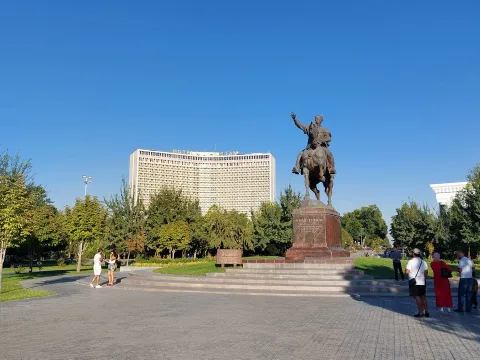
Tashkent
The capital of Uzbekistan, modern and interesting.
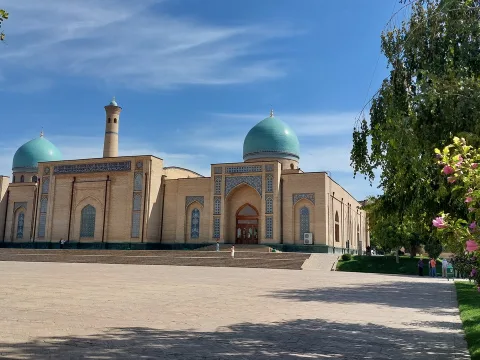
Tashkent and Khiva
Visit to Tashkent, experiencing the plov dish, and then flying to Khiva for an evening visit.
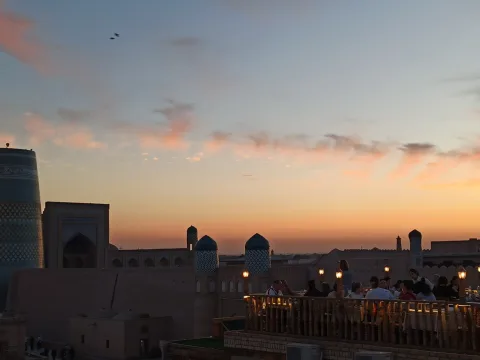
Khiva
Khiva, in a key oasis on the Silk Road.
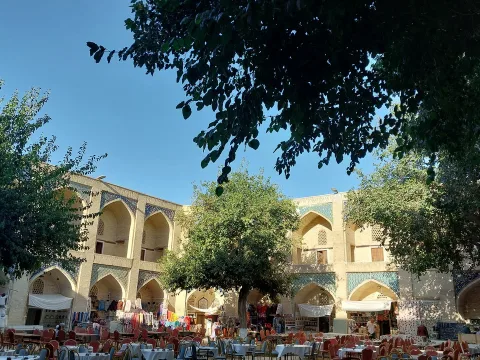
From Khiva to Bukhara
Endless steppe between Khiva and Bukhara, then the religious gem of Uzbekistan.
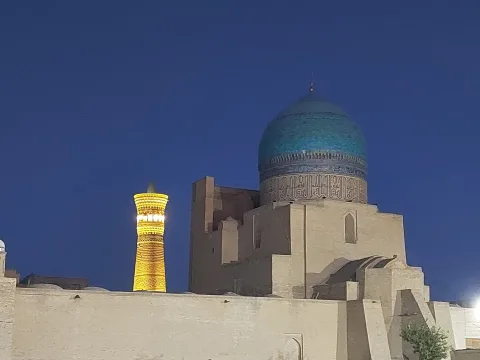
Bukhara
Visit to Bukhara, abundance of mosques, schools and towers.
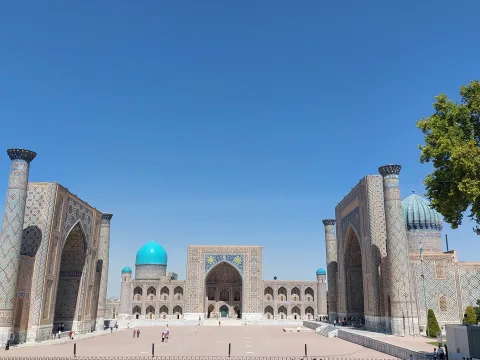
From Bukhara to Samarkand
Fast train to Samarkand, and finally my dream comes true.
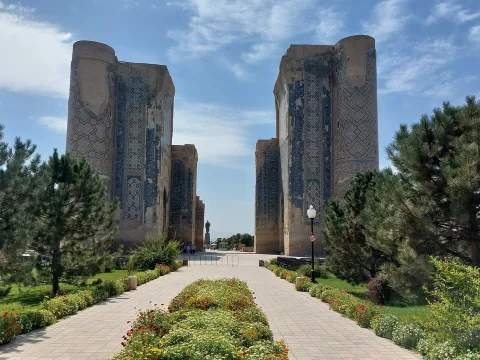
Shahrisabz
Tamerlane's birthplace
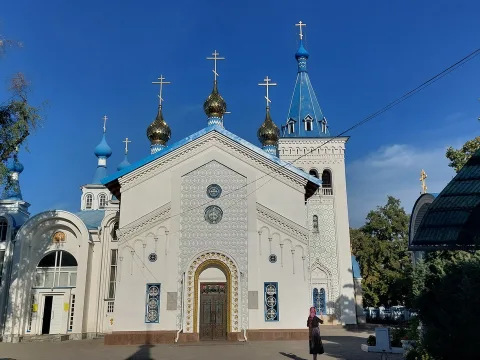
From Uzbekistan to Kyrgyzstan
Breakfast in Samarkand, lunch in Tashkent and dinner in Bishkek, Kyrgyzstan.
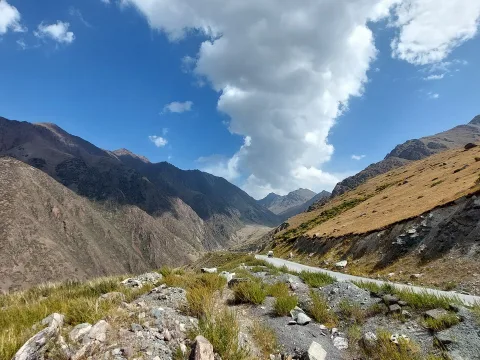
Kyrgyz Outback
From Bishkek through the first Kyrgyz mountains, towards a place of peace
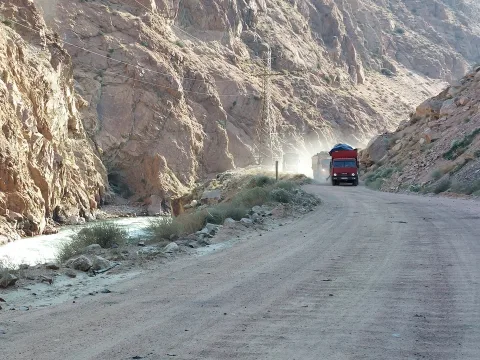
High pastures and herds
Amidst the black of coal, the white of sheep, and the blue of Lake Song Köl.
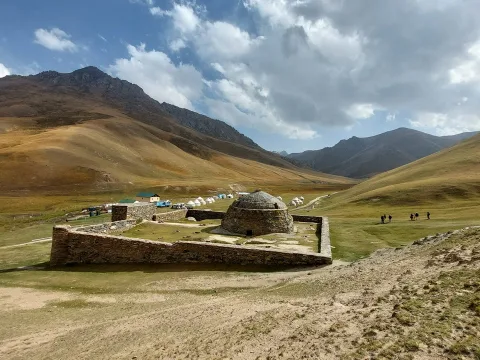
Southward, towards China.
The sunrise from the yurts near Song Köl, the remote caravanserai of Tash Rabat.
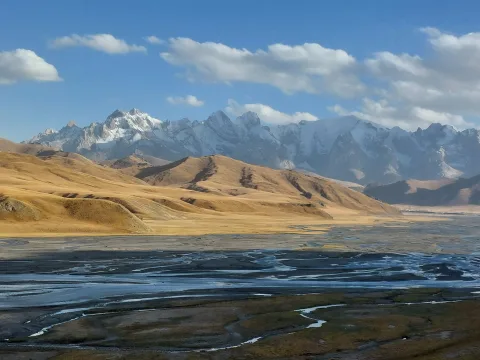
In the shadow of the Tian Shan Mountains
Far away from everything, paradise exists and can be found in Köl Suu.
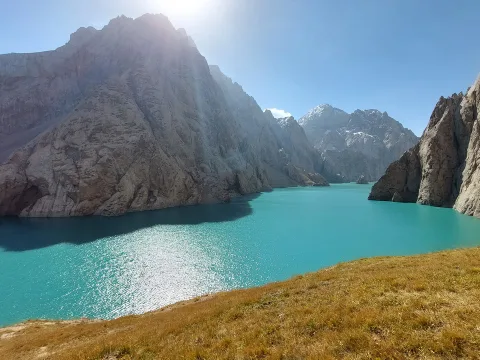
Lake Köl Suu
The cobalt blue of a lake that touches the soul.
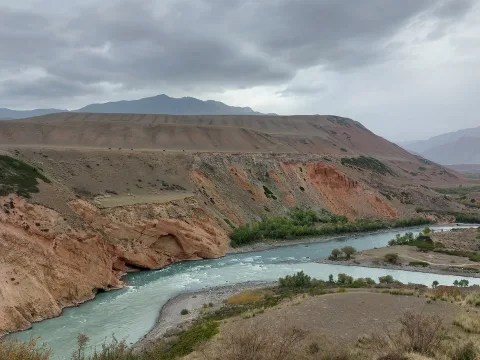
Eagle hunting and Lake Issyk-Köl
Together with the eagle hunters, the second largest mountain lake in the world
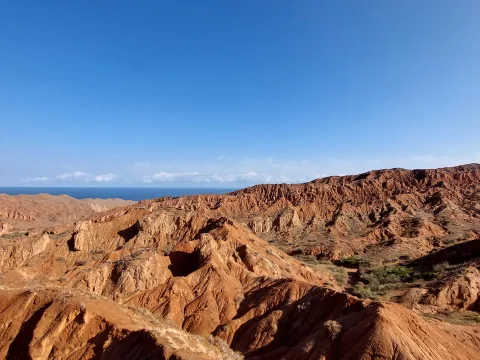
Skazka Canyon
The warm colors of the Fairy Canyon, the backdrop of Lake Issyk, and returning to Bishkek.
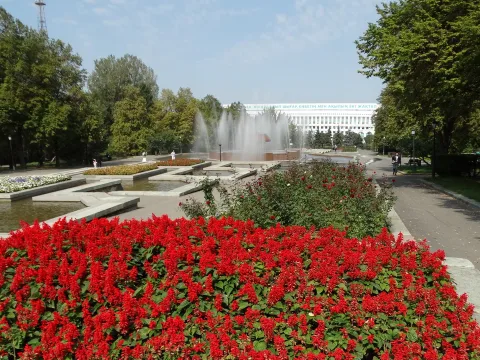
Almaty in Kazakhstan
The city of apples on its birthday