Day 13
In the shadow of the Tian Shan Mountains
Far away from everything, paradise exists and can be found in Köl Suu.
Towards the remote Kol Suu
The morning light floods the valley with its warm colors, although the temperature cannot be considered high; the thick blankets have become very useful again. The yaks are already grazing. And now it's our turn to have breakfast with eggs, sausage, cheese, but especially with a delicious strawberry jam and apricot preserve. The elderly gentleman who manages the camp is one of those people who inspires trust and serenity just by looking at him; he speaks some French and English, so we can at least exchange a few simple concepts with him. We give him a ride to the first village, which is about 50 km away, where he presumably does his shopping, while we continue north towards Naryn. While we refuel, we see a Chinese truck transporting cars: they are MG Morris Garages, an English brand acquired by the Chinese, and this shows that the Dragon can control its tentacles wherever in the world. We turn east onto a dirt road, and from here, over 125 km, we'll be surprised, but the mountain scenery is definitely worth it. In fact, there is another road that goes around Chatyr Köl, but it seems to be in worse condition and leads towards the Chinese border; perhaps further permits are needed. We pass by a cemetery, and here it's best to briefly describe some details: especially the older ones have dome-shaped tombs similar to small mosques, unfortunately they are often abandoned and the arches collapse so that they seem like necropolises of bygone eras. A stop for refueling drinks in a village where there is… local cowboy is leading a herd of horses along the main street. Others, of every color, are moving across the meadows, creating a picture that evokes principles of freedom, in scenes never before seen with so many. Horses grazing. A few marmots peek out, careful not to get caught by the birds of prey. We encounter, and not only here, several monuments dedicated to animals, eagles, ibexes, wolves, foxes, whose meaning we can only understand in a context of love for nature, although this concept is hardly suitable for the regime that has governed the country for so many decades. It often happens that the main road does not offer good transit conditions, so side paths are created where travel is slightly better. While dust is a constant everywhere, being able to travel at 50 km/h already represents a success. After about fifty kilometers, the check point where we hand over passports and visas for stamping: being located in the border zone with China requires recording entries so that the exit is then recorded on the agreed date; it's located in the middle of nowhere, and we don't have any trouble understanding the friendly but indifferent attitude of the officials. Strangely, there are a couple of cars, but within ten minutes we get the necessary documents. The relations between Kyrgyzstan and China seem to be good, and there appear to be no territorial claims; the military controls the border zones because, despite the high mountains, there are paths that allow for pedestrian access to Xinjiang. However, the demarcation line is open to allow for animal migration, or more simply, because it would not be possible to have continuous and effective control.
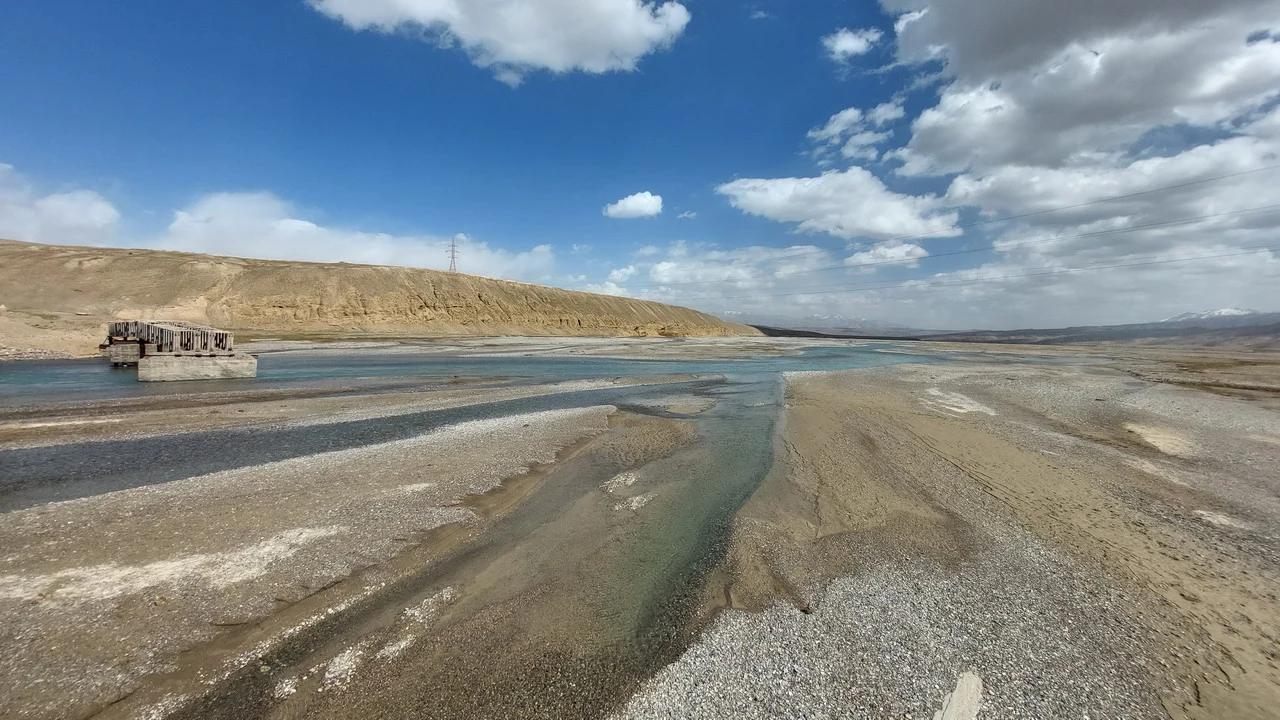
The minivan continues on a road that gradually becomes more challenging, except when it opens up into the valley where the river flows. Ak Say River; we cross it heading towards the beautiful glaciers that are starting to appear in the background. The horizon now takes on its most majestic meaning, the Chain of Tian Shan The altitude reaches heights well over 4,000 meters.
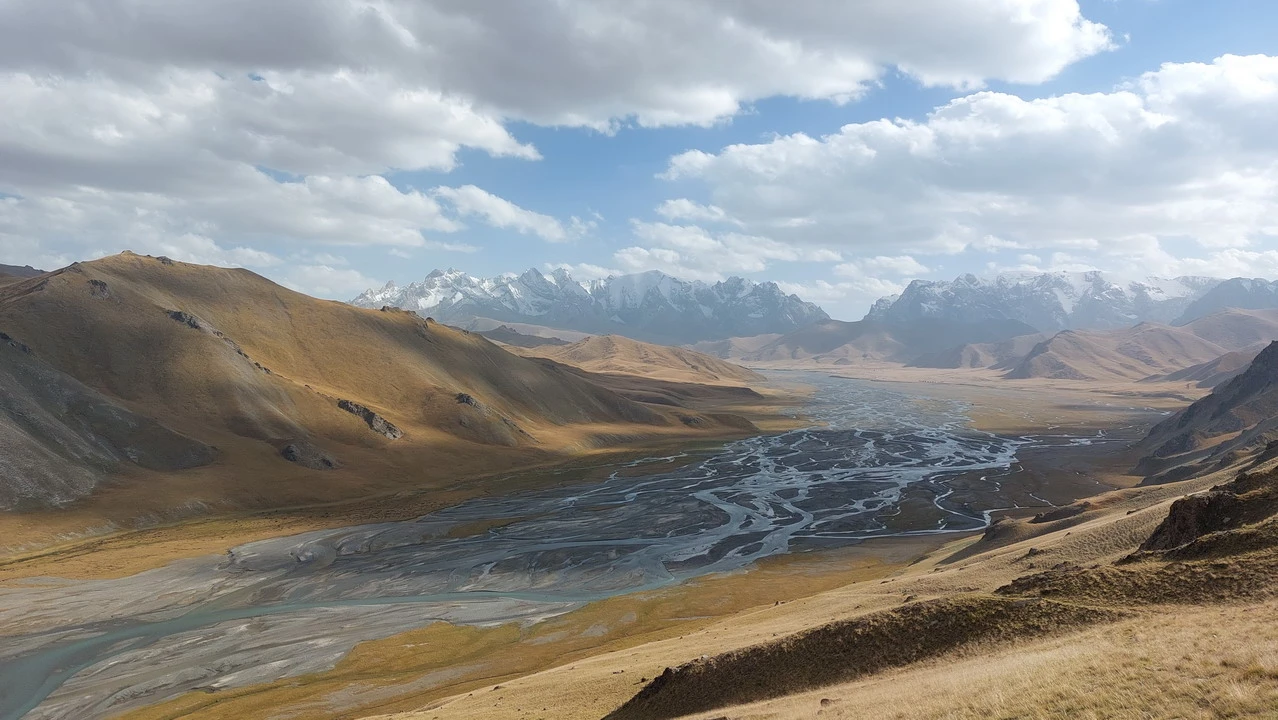
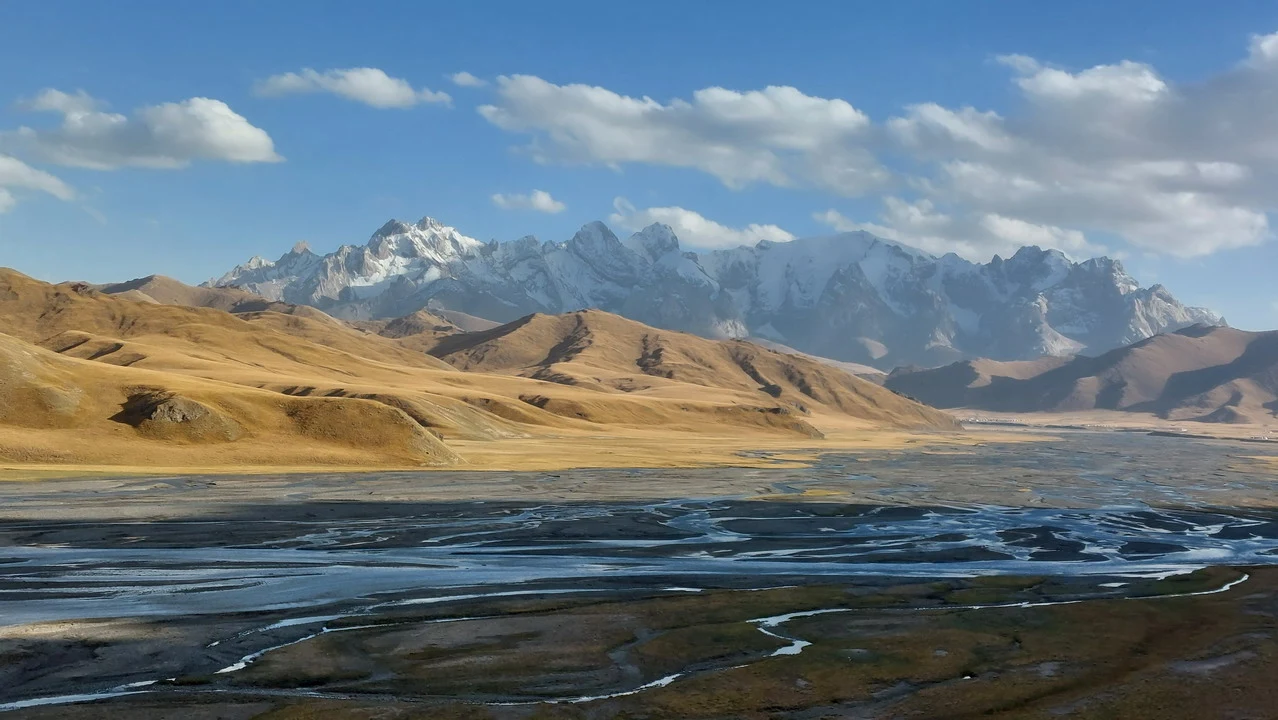
The yurt camp tonight is managed by the daughter of the gentleman I met at the Tash Rabat camp. She speaks English and it's a real pleasure to have information that complements what we are seeing. We also arrive a little late for the traditional lunch time, but even at 2:30 pm, we don't mind. Half an hour later, we are ready to set off on an excursion that will take us to a peak from which Enjoy stunning views., in particular about the valley from which we climbed, with the river that splits in countless shades of water to create a sense of even greater grandeur, with always the perpetual snow in the background The valley floor is literally covered in alpine flowers and small purple blossoms that remind me of "Don't Forget Me". The view from above is unforgettable, stretching from the wide river that runs through the entire valley to the snow-capped peaks.
It seems there are no particular risks for hikers: wolves hunt small animals like marmots and foxes, while the snow leopard lives further inside and is rarely seen.
The week before, it snowed for three days, followed by rain that quickly melted the snow at the camp. The higher altitude means there is less snow and this explains the bright white glow of the glaciers at the end of the season. The manager tells us that they will soon dismantle the yurts and put them inside a newly built shed which will serve as a storage facility; in early October, they will return to the Tokmok area where they live for most of the year. The shepherds will remain here, where the yurt is their only home and where the livestock will continue to graze on sparse patches of grass under the snow. The sheep go down to the plains for the winter, while yaks and horses stay behind, and like the shepherds, they will face extremely cold temperatures. The animals seek out the sunny side to graze, taking advantage of the rapid melting of the snow on this slope, although there is very little grass left to eat. The winter temperatures reach -37/-39 °C, although -42 °C has already been recorded. A certain type of tourism seems to be growing, as we can see several yurt camps in the process of expansion. At the Golden Moon camp, being in such a remote location, supplies are brought in via the Sabyrbek camp of Tash Rabat, managed by his father, using drivers who readily offer their assistance. There is no phone signal and they only communicate via radio. We arrive just before 6:30 PM, and soon it will be time for dinner, with yak stew. I also have a chat with Tursunai, who tells me about Uyghur people who came to Bishkek to trade and then stayed due to the restrictions they face at home. Her grandfather had nine children and was a shepherd; he sent them to school but they remain tied to their homes. The women from the Fergana Valley are trying to marry in the north because there are fewer religious and social constraints. In Kashgar, it seems that the mosques have been closed. In the village where Tursunai grew up, there were no mosques; now there are three, but they operate with respect and freedom for both their followers and the rest of the population.
It's getting late, and we huddle together in our sleeping bags for another chilly night.