Day 2
Tashkent
The capital of Uzbekistan, modern and interesting.
Arrival in Tashkent
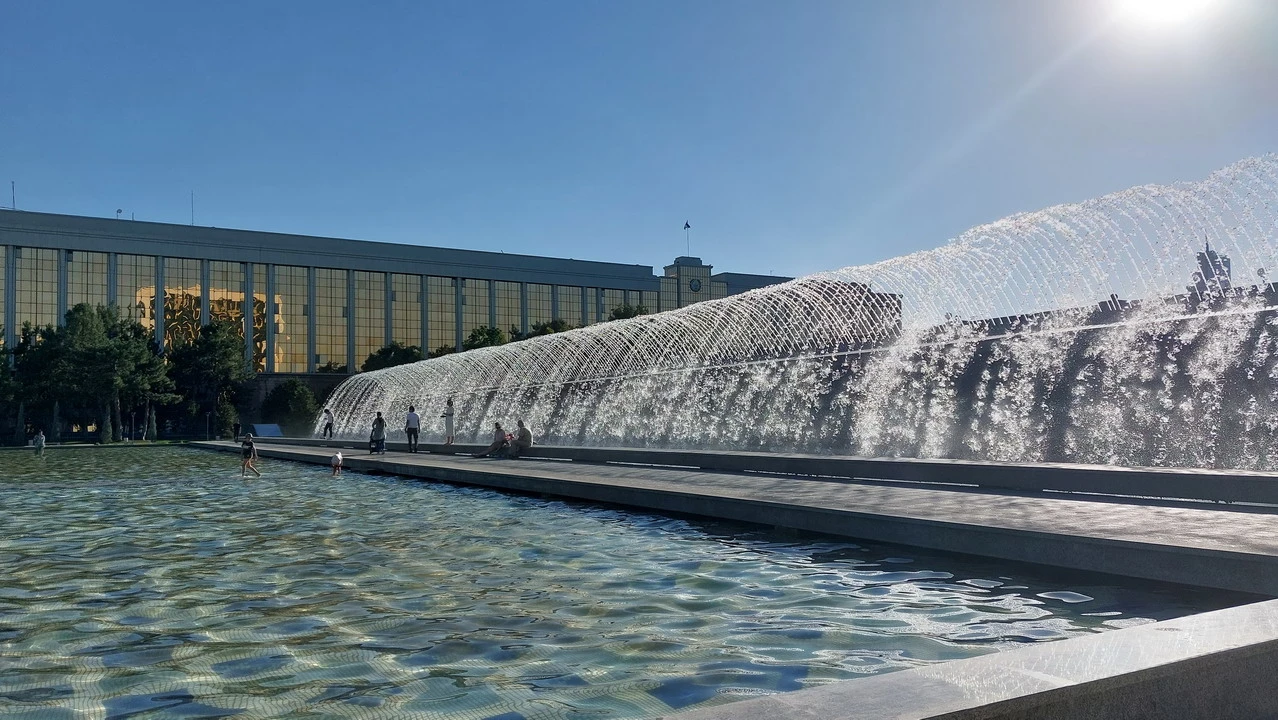
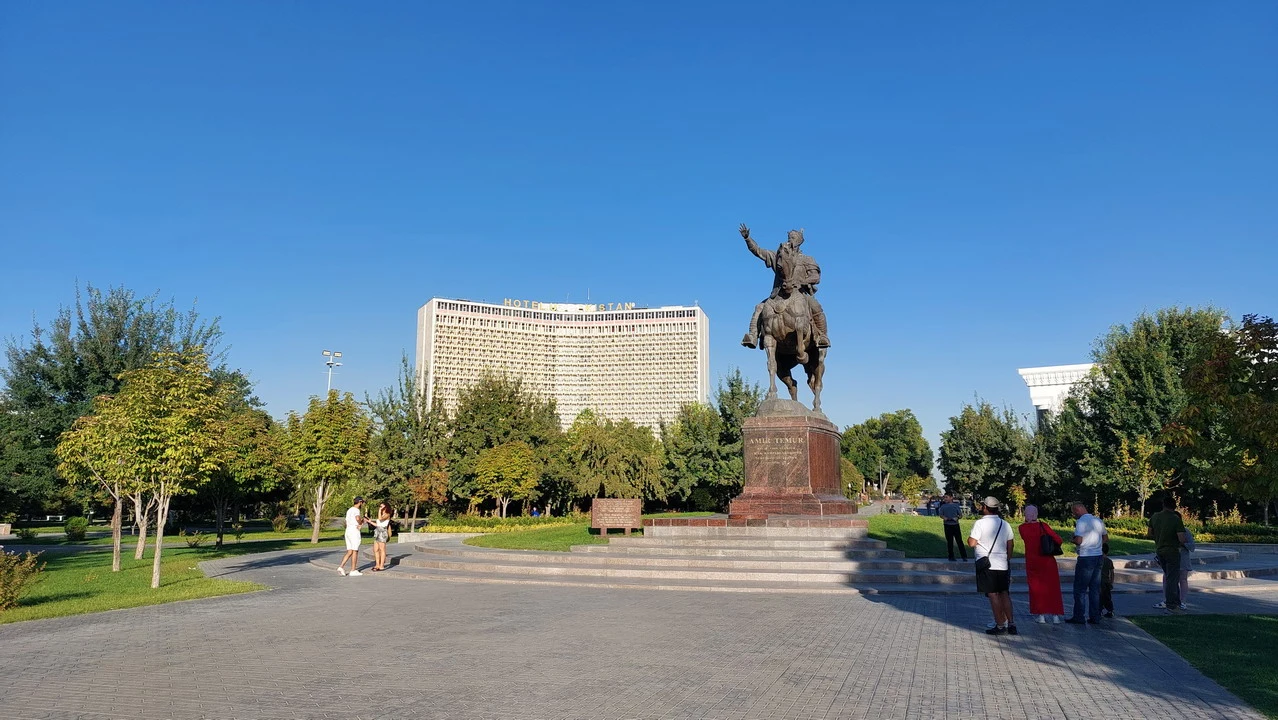
Despite having chosen a quiet and secluded area, sleeping on the benches at Istanbul Airport will not be particularly restful. But the hours pass, we manage to rest, and convince our bodies that they have had their necessary sleep. As we prepare for departure, we start seeing the typical characters of Central Asia: some elderly people with a rural appearance, thin physiques, mustaches, and hats, accompanied by women of large size and sometimes wearing the chador. Other individuals have Mongolian, Arab features, or even typically Eastern facial characteristics; the only pale faces are ours, as Westerners. The flight will be 4 hours and 30 minutes on a Boeing 737, and when we land in the capital of Uzbekistan, we arrive ready for our appointment. From the beginning, everything goes smoothly and efficiently: stamp on the passport without any particular queues or difficulties, no visa is required, we exchange euros for Uzbek som and purchase a local Beeline SIM card with 12 GB for just 4 euros. We get a taxi and head to the hotel we booked in a quiet area but at an acceptable distance to walk to the center. In fact, the idea of stretching our legs after so many hours of immobility is even pleasant; walking along the wide residential streets also provides us with a first contact with Tashkent. A metropolis with ancient and recent history, industrial but from its lively and vital appearance Let's see right away that the signs are mainly in Cyrillic, but Latin characters are also present, which is completely absent in Kyrgyzstan; the shops also display products suitable for a rising middle class, such as those offered by Tecnogym, which are not only intended to meet strictly necessary life needs. Similarly to the capitals of Eastern Europe, the main streets leading to the center are wide, tree-lined avenues with multiple lanes, deliberately designed to allow armored vehicles to pass in case of riots. Although it is late summer, there are still 30°C and Tashkent has lush vegetation, which seems incompatible with the scarce rainfall and not particularly mild winters. However, a public irrigation system is present everywhere, and obviously, sources of supply are plentiful. The architecture ranges from Soviet-style square buildings, also known as brutalist, to refined mosques or madrassas covered in tiles and precious decorations. Even newly built public buildings, banks, and hotels are designed with imposing, massive forms to demonstrate imperial solidity, dominated by steel, glass, and right angles. With a walk along Navoiy Shoh Ko’chasi, we can see some everyday life and reach the central area by passing through the stream located in the city center. In a lush park, which seems like springtime, is located the memorial to the 400,000 Uzbeks who died during World War II: two open corridors marked on one side by beautiful wooden columns, typical of the local style, while on the other are niches containing metal pages with the names of thousands of young people engraved on them. At the back, almost to unite the two wings of this small park of remembrance, there is a perpetual flame surmounted by a Mother of Sorrows statue... a bronze statue of a woman bent in a gesture of suffering. Following the park, we move towards the Independence Monument, with its large spaces and beautiful... fountains' games, behind which lies, not easy to see, but a truly great Presidential Palace Fences and guards block the way. We walk past the Romanov Palace, the only one remaining in the style of the Tsarist era, to reach the Broadway which is crowded with people waiting for Saturday night; it's the street of shops and entertainment. We are interested in seeing the equestrian monument located in the middle of a beautiful square, with the backdrop of the Hotel Uzbekistan; what we would certainly define as an "eco-monster" during the Soviet era was the hotel frequented by the elite, where a KGB office was permanently located on the seventh floor, and if its walls could speak, one would be astonished and probably need to rewrite many books. In fact, those walls, if they haven't spoken, have certainly listened, given the espionage games that took place there. The Statue of Timur (Tamerlane) And the symbol of the Soviet regime, now removed, share the same sky just a short distance away, but, apart from a few tourists and some elderly people playing chess on benches, it seems that few are interested in the historical events related to this moment: the sun is setting, the lights are about to come on, and it's time to enjoy the fun that a little bit of well-being is starting to provide for the residents of the capital. Broadway is bustling with vendors and attractions, like a fairground stretching along the street; some Western tourists mingle with others of Asian origin, but the majority consists of locals looking for a stroll in the city center with their children. Although it's still early, after the snack eaten during the flight, we look for a restaurant where we can enjoy dolma, minced lamb wrapped in grape leaves, and some skewers that will soon become familiar in our Uzbek diet and beyond. As a dessert, bakhlava won't be originally from this place, but they have learned to make it very well.
The Tashkent metro
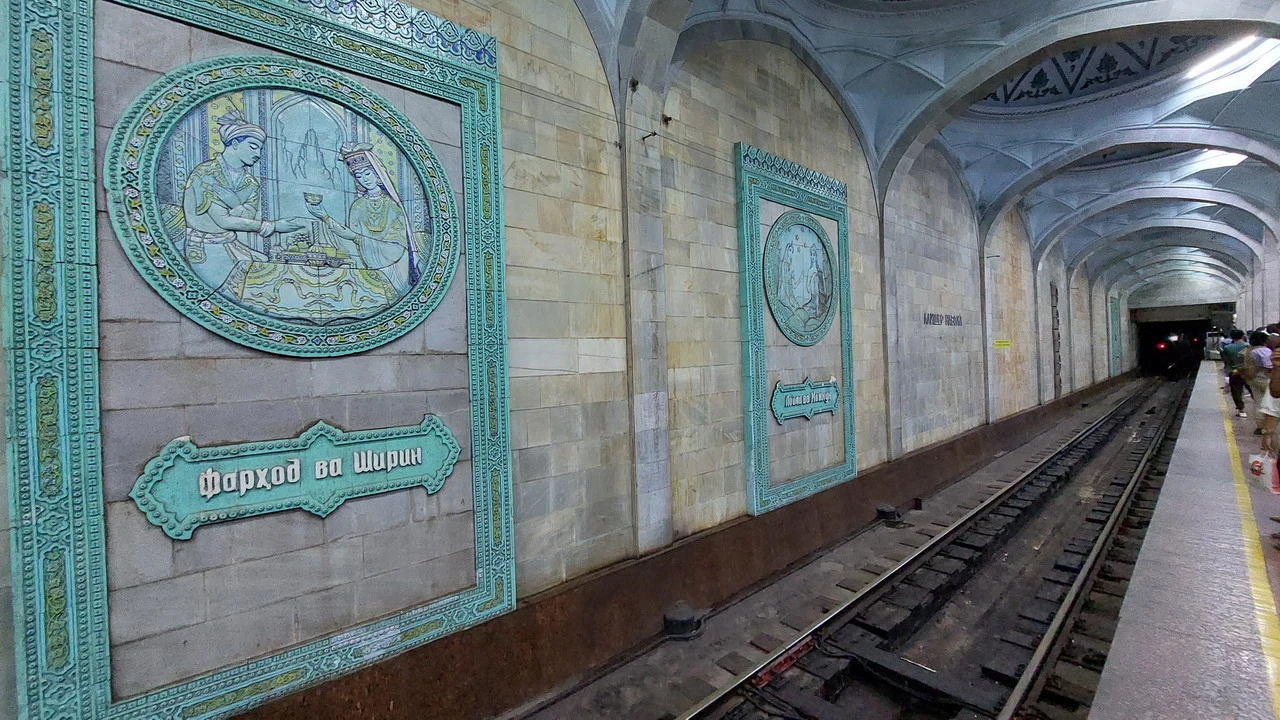
It's not too late, and it's time to immerse ourselves in subway to see the most beautiful stations decorate a theme: by selectively choosing the five most interesting ones, we can get a decidedly positive picture, even though we are still far from the opulence that can be seen in Moscow. After all, it should be noted that this was the capital of the Empire, while Tashkent was the capital of one of the Soviet Republics. The question remains as to how Russians valued the artistic and aesthetic aspects of the metro stations so much. At the entrance, some police officers with a somewhat indifferent attitude occasionally check the contents of bags, but frankly, you could get away with anything. Finally, the ban on taking photos has been lifted, and in general, there is a more peaceful atmosphere thanks to the reduced risk of attacks by Islamic extremists. At the bottom of the escalators leading to the platforms, friendly journalists of all ages check that everything is running smoothly and are readily available to help in case of an accident or need, which are rare occurrences but useful for distributing some minimum wages. The trains are clean, orderly, and the people who use the metro have a decidedly civil attitude. We finally arrive at the People's Friendship, from which we reach the hotel in about ten minutes for a well-deserved rest after the uncomfortable night at the Turkish stopover.
In the city, we immediately see the tolerant contrasts between women of all ages, some wearing the chador and younger ones dressed in jeans and t-shirts. It should be noted and emphasized that in Uzbekistan, young people have good taste in their clothing: even in simple outfits, they maintain decorum and do not chase extravagant trends. The boys wear jeans or tight trousers with a shirt that comes out of the trousers themselves, while the girls show off dresses with long skirts with fanciful patterns along with low-cut t-shirts; a simple way of dressing tending towards the Western style. It seems like we are returning to our 1970s, when appearance was part of a person's identity. In those areas, wearing worn jeans is only for those who cannot afford decent ones. The elderly wear hats or other typical Central Asian hats, also as a symbol of pride, having grown up in an era when their culture was either suppressed or annihilated by Soviet-style egalitarianism. Tashkent and the Fergana Valley are areas where religious concepts are more prevalent, so we see more women wearing hijabs.
The wide avenues that allow vehicles to enter the city center ensure a smooth flow of traffic, which can be quite busy. All the traffic lights show the countdown timer to indicate how much time is left until the next color, a useful service for both drivers and pedestrians. The green figure of the little man who simulates crossing the street and speeds up when it's about to turn red for pedestrians is particularly charming.
First impressions of Tashkent
After an initial exploration, it proves difficult to identify the city based on familiar patterns: while it has Western-style shops, it quickly becomes clear that we are in a different context; at the same time, we don't immediately feel like we are in Asia in the most immediate and stereotypical way we are used to imagining. The communist-style buildings stand in stark contrast to the soft curves created by domes and religious structures, which echo Arab or Persian styles. Therefore, it is difficult to contextualize this part of the world within the classic clichés with which we are accustomed to associating races and cultures.