

Day 11
Chichicastenango
The modern Mayan world, presented in its most authentic form: the market.
Chichicastenango: market, rituals and colorful cemetery
We're not wasting any time because there's still so much to see and the days are quickly running out. The end of the trip is approaching; the itinerary has been fully respected with great satisfaction, but we can't afford to rest on our laurels. There's still one major highlight to discover: Lake Atitlán. However, first we will stop for a few hours in Chichicastenango, where we had planned to visit today — a day when the famous market is held. colorful market. But let's go step by step: at 7:00 am we meet at the square in front of the Iglesia de la Merced for another shuttle bus to Chichi, while the city is gradually coming to life, given it's a public holiday. Along the winding hillside streets, we end up enveloped in fog, and even when we arrive at our destination around 9:15 am, the sky remains grey. The city, quite large – with over 170,000 inhabitants – is located on a hilly area and represents the cultural heart of the modern Maya; therefore, the market holds particular interest. Along the narrow streets, we find stalls on both sides The space in the middle feels cramped and there are many people; everything is covered with tarpaulins or fixed metal roofs. Although this area is not particularly crowded, it can be a haven for pickpockets, so vigilance is essential. The market lives up to expectations, although I have never found myself bored wandering between stalls: there is an entire world to observe in its everyday life, from both an anthropological and commercial perspective; here, we also add the cultural aspect, with very little that is European, starting with clothing, people's stature, their behavior, and the products on display. Not to mention the religious connotations, which need to be mentioned from three social perspectives. While politely moving along with the flow of people, at some point a small procession arrives from a side street carrying a Maya deities under a canopy; some men dressed in traditional costumes precede him, playing a local flute and keeping time with drums. A small group of followers closes the procession: it feels like we have gone back in time. The second interesting case is found in front of the Church of Santo Tomás, where on the 20-step staircase – corresponding to the months of the Mayan calendar – some gentleman dressed in traditional attire They sell flowers, and under the entrance, offerings are burned. Copal tower with corn, bread and sugar, accompanied by candles and wooden sticks, around small fires. It is here that the syncretism between Catholicism and the ancient Maya religion becomes tangible: the first adapts to the compromise of accepting the old rituals, while the other supports the new religion imposed, perpetuating in some way the rituals induced by an ancestral tradition. Inside Candles are burned on small altars placed in the central hallway; women and children kneel to observe them while praying. From above, a God watches with compassion, regardless of the gestures presented to him. There is a sense of mysticism and contrast at the same time – not an impression of hypocrisy, at least not among ordinary people. Outside, in front of the door, some elderly people are kneeling before the offerings; even if we asked, we wouldn't be able to understand – here, only one of the 18 Mayan languages is spoken, and Spanish is perceived as a foreign language.
On the other side of a square packed with stalls, you can find the Calvary Chapel... where similar rituals are performed. However, the third aspect of great interest is the cemetery, located two blocks away from the Chapel. Used to our cemeteries where marble and cold-colored stones dominate, which testify to a place where nostalgia and sadness reign – at best, hope for resurrection – we are amazed by the abundance of colour range Each tomb – usually covered with a layer of cement, as are those that house niches – is painted in a variety of original ways, providing a surprisingly cheerful sight. Talking to a gentleman we meet, we learn that in the past, specific colors were used: white for children, yellow for men to signify corn and therefore food, and so on. In more recent times, the preferred color of the deceased is used, making the chromatic variety even richer. It feels like being in Kathmandu when we see some flames were burning under a makeshift shelter: in this case, we are talking about offers made according to traditional Mayan customs, presided over by some shamans, to request various types of favors. The cemetery comes alive during the period of the Saints, when everyone visits to decorate the tombs and have virtual picnics together with the deceased, cooking whatever they enjoyed in life. For those who loved alcohol, the tomb is flooded with their preferred liquor – and the most popular drink in these lands is chicha, derived from the fermentation of corn. In fact, what we call "maize" was the main crop for pre-Columbian populations, just as wheat was for us.
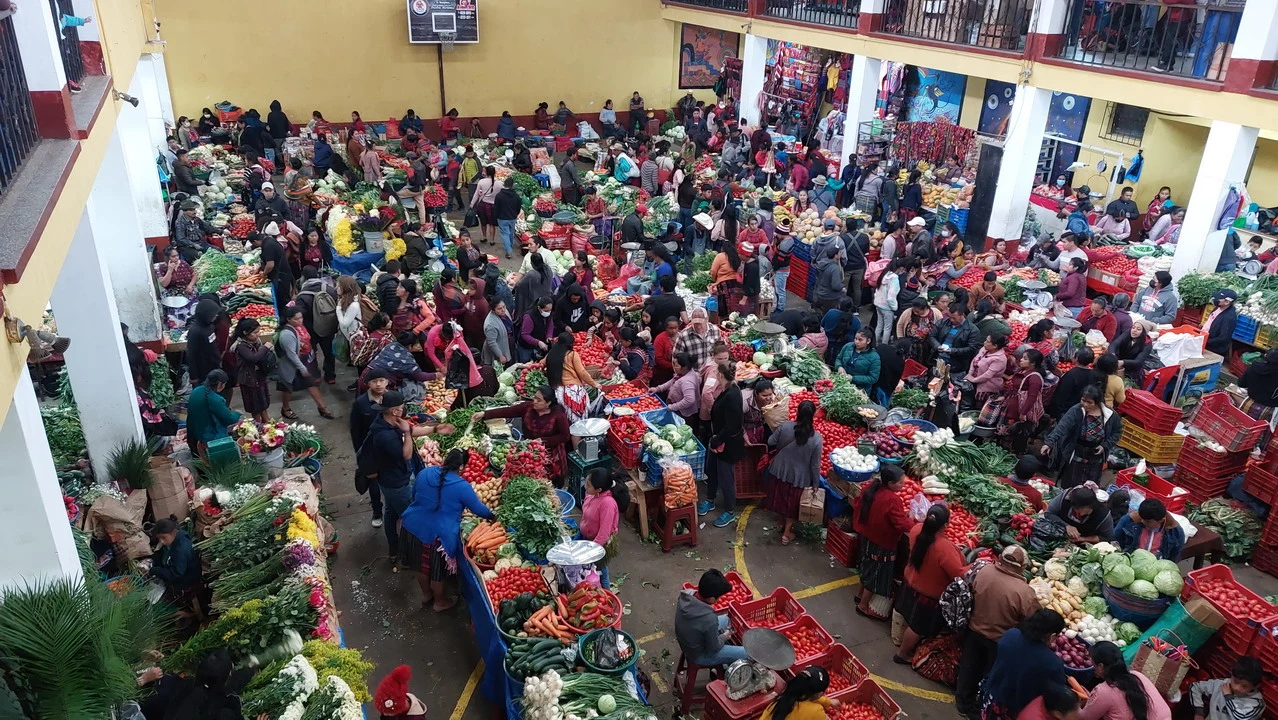
We return to the market, where inside a building adjacent to the square, there is an area dedicated to fruit and vegetables Tomatoes, sweet potatoes and various tropical fruits stand out. The ability to climb two floors and see the scene from above creates a vibrant mix of colors: this is how life and death meet in the variety of colors, as in a transition where everything changes but everything remains. We have lunch at a small restaurant, not trusting even these attractive stalls with gas stoves. Everything is cooked fresh on the spot. — particularly breaded and then fried in oil, which is not exactly what nutritionists recommend, but the aroma is truly tempting. Spread across a large area of the square, these restaurants They serve as a meeting point for those who have come to the market to buy and those who are selling; around midday, needs converge, and it's also convenient for us to wander among the stalls taking advantage of the reduced human traffic. Several vendors display agricultural tools, while those selling magical potions aimed at solving any problem are particularly interesting; traditional solutions are also available: blister packs of pills and medicines arranged on small tables – with Diclofenac in the front row. Among the flowers, chrysanthemums stand out, especially on the staircase at the base of the Iglesia de Santo Tomás: clearly, here they have a more cheerful meaning than we unjustly attribute to them. Satisfied with this interesting experience, we leave the market area without having made a couple of purchases of local crafts; we also see some characteristic corners of Chichicastenango and shortly before 4 pm, we meet at the designated meeting point. At that time, all the buses depart: some return to Antigua, others take different routes – including one to Panajachel on Lake Atitlán. We retrieve our luggage, which was stacked on the roof of the previous bus, and load it onto the next.
Lake Atitlan and the sunset in Panajachel
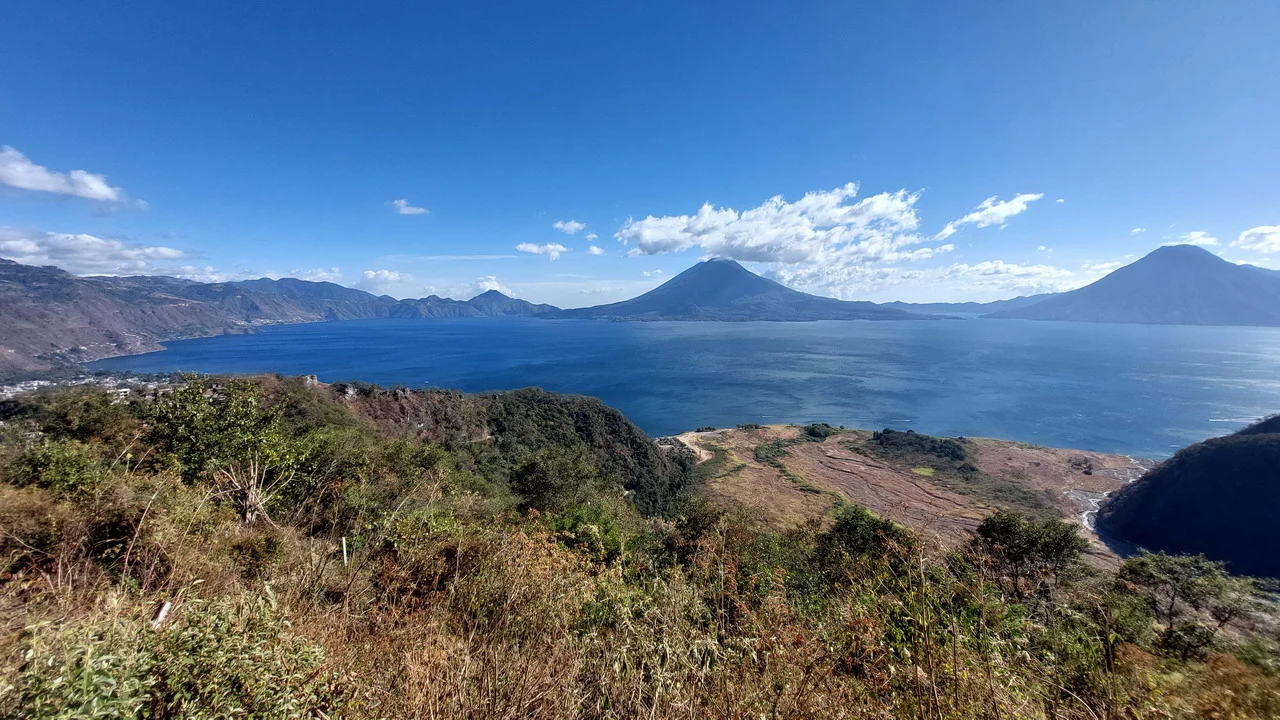
We are lucky to meet a guide – this was not planned, as it is not a guided tour – who explains interesting details about the places we are passing through to those who speak Spanish. We stop at a viewpoint from which we can see the bustling Chichi in its Sunday hustle and bustle; then we arrive at another where paradise is literally realized in the heavenly view of the Lake Atitlan. Someone recognizes it as the most beautiful lake in the world; perhaps it's not appropriate to create rankings, but the fact remains that the large blue expanse where hills and volcanoes reflect is something impressive – a sunken caldera where the basin was formed. The San Pedro volcano The campsite is right across from us on the other side. The whole scene is even more vivid thanks to the dry air – the morning clouds remain over the city and here, at about 2,000 meters above sea level while the lake is at 1,600, the colors seem to glow with their own light. The minibus carefully descends towards its final destination; we check in at the simple but well-equipped hotel booked in Panajachel and go out to explore the town, but surprises are still to come. The shadows are lengthening; while walking along Calle Santander, which runs perpendicular to the lake, you find all kinds of shops or establishments that might interest a tourist, so much so that Panajachel has ironically been renamed Gringotenango – Tenango It is the Mayan suffix used to indicate cities. On a small square overlooking the beach, a local complex is playing music. marimba melodies, a proud musical symbol of Guatemala. The coincidence is that at that moment the sun greets the day just a short distance from the peak of San Pedro and the other two volcanoes; it's difficult to find the right words to express the delight that the senses experience simultaneously when seeing and hearing. Unplanned moments, in which we happened to be – and therefore even more appreciated, to be lived intensely. The lake changes from blue to yellow, finally to brown. The night falls. but the group continues to play until they too receive their well-deserved final applause. The sense of taste remains the one that still makes its demands, and we will satisfy it with ceviche ...a plate of seafood – shrimp, crab, mussels and white fish. A breeze blows during the transition from day to night, calming down when it's time for bed.


