

Central America (Guatemala-El Salvador-Honduras)
Volcanoes, Mayan culture, forests and colonial cities are the highlights of a trip that cannot be taken for granted. The availability of local people, combined with their friendly Latin American behavior, overcomes the difficulties in a region of contrasts.
Map
Central America map - complete itinerary
My assessment of the country's geopolitical situation is regarding:
Read the detailed information on Aliseo Editoriale.
Introduction
In a world full of prominent figures and sometimes eccentric personalities, Central America lives on the ashes of intense social conflicts that affected it in the last quarter of the 20th century, but with roots much deeper. Simply put, the world's attention has shifted elsewhere, and the small countries that connect the north and south of the continent seem to have faded into obscurity. However, even though the large-scale weapons are silent, the smaller ones have continued to cause casualties among gangs that control territories. The American "Pax" has led to the emergence of a more moderate political class, but not less corrupt; it has at least narrowed the distance between the population, which was once divided between communism and pure fascism. This has not prevented the evolution of organized crime, likely stemming from commanders and fighters of various backgrounds, in an economically backward and impoverished context, both in terms of money and ideas. A fertile region (volcanoes don't just cause earthquakes, but also arable land), sunny, with the ability to choose between two oceans that almost touch; however, it cannot take off due to intrinsic and extrinsic reasons, the latter being more pronounced in the north.
The post-Covid world has emerged with broken bones, especially in its poorest latitudes. While Western countries have recovered from the social blackout, with several billion more euros of debt on their state budgets, the so-called Third World has also had to endure the long-term effects of the crisis, finding itself even further impoverished and with even less to lose. Social unrest can erupt at any moment in riots, civil wars or regional crises if exploited by opportunistic individuals eager to capitalize on discontent. The situation is still evolving, closely linked to the interests of competing powers. But this is not about local structure or disorder.
Once again, we need to determine the key to our trip: how to organize transportation and, consequently, which sites to visit and where to stay. Since we couldn't rent a car due to heavy traffic and safety concerns, but also didn't want to be stuck in an organized tour with an Italian-speaking guide, we opted for public transport or shuttles that connect the various points of interest. Limiting our activities between Guatemala (the base of our trip), El Salvador, and part of Honduras – northern Central America – we tried to find information online about all the possibilities. This was not easy, as the shuttles aren't daily services, but especially because it was difficult to get answers from everyone we contacted. This was a frustrating situation, especially since we were on an organized trip with European standards and schedules. Perhaps this is where the problem lies: going to the other side of the world just to see some scenery and visit a few ancient stones doesn't fit our plans. In the end, we managed to connect the interesting highlights using buses, shuttles, and taxis. This was not an easy or foolproof operation at the time of departure, but we did need to take initiative. In reality, things will go much better than expected, and we will finish our trip without any unexpected problems or adventures to tell.
The ingredients are of great interest. After coming into contact with Inca culture in Peru, it will be interesting to draw parallels with another pre-Columbian civilization, that of the Maya, which flourished in this very region (along with the Mexican Yucatan) during the second part of the first millennium AD. The same applies to the post-Maya society, although altered by the rules imposed by Spanish colonizers, but not entirely disappeared; rather, it is still present in customs and even within the Catholic religion, whose rituals have been partially adapted to pre-existing beliefs. This form of syncretism, unintentional but inevitable, was created to maintain continuity and make the new imposed faith digestible. The tropical region has lush vegetation, with large-scale plantations of bananas, coffee, cocoa, etc., which have consolidated the power of dominant families as well as American multinational corporations at the expense of peasant farmers reduced to agricultural sub-proletariat. The landscape is never monotonous; rolling hills alternate with volcanic peaks covered in green, which stimulate hiking ambitions.
National Character
Although residents of Central America perceive differences between the various countries, it is difficult for a first-time visitor to appreciate them. We are told, and we will notice, that the Spanish spoken in Guatemala is sweet or melodic, while in El Salvador or Honduras it is more classically Spanish. Nicaraguans are also easily recognizable by their accent. However, beyond this point, it is really impossible to perceive particular differences, so we will simply make a general statement when talking about the main characteristics of the visited countries. The Guatemaltecs are smaller and have a physique similar to that of the ancient Maya, probably because there are fewer mixed-race people and they are close to the ancient Maya; we will notice this when walking around Chichicastenango, where we will be able to observe everything from above, obviously only from a physical point of view.
Meanwhile, we were favorably impressed by the hard work of the residents, who are always busy (although never rushed), and constantly on the move. We noticed some small groups near the bars, but they represent a negligible and sometimes justified minority. The European-style stress is absent, which is good for them, but attention and the lack of superficiality are evident in every situation. There's an impression of organized chaos, in what appears to be an organized and rule-free environment, where this characteristic makes everything possible. The shuttles make sure to collect all those who have booked, even if they are late, at the expense of arrival punctuality; interpersonal relationships are governed by collaboration and a lack of conflict, making it difficult to meet angry people. This certainly has advantages in terms of customer service and avoiding encounters with criminals (although we didn't experience this during our trip), but it also leads to delays, as you have to move from hotel to hotel. During our stay, we never heard anyone raise their voice; instead, we always witnessed an attempt to resolve problems, or at least reduce them. This attitude seems more inherent in people than imposed by written rules and regulations issued by a government. It seems that social relationships enjoy a celestial imprint, although this feeling is certainly tempered by our partial view, both in time and space. On the sidewalks, we found several beggars with disabilities or deformities, but we were unable to determine whether they are victims of war (for example, unexploded bombs) or accidents.
There is ample room for improvement in the area of safety: without taking European standards as an example, which sometimes exceed and bureaucratize society, the risks one runs while walking on the street or even simply placing one's feet on a sidewalk instead of a walkway are clear. In Guatemala, traffic on two-lane roads operates independently on either side, so overtaking can also occur on the right, and pickup trucks are often used for transportation, but it is important to consider what happens in case of sudden braking. This lack is not just an opinion: while driving from Copan to Antigua, we were stuck for half an hour, only to see a body wrapped in black nylon being taken away, while they tied him up. In the early morning, as we left Santa Ana, a jeep in front of us ended up in a ditch, possibly due to falling asleep. And during our return from Rio Dulce, shortly after the intersection leading to Puerto Barrios, a collision between trucks resulted in about 20 kilometers of traffic (see below). Walking on sidewalks and using smartphones as we do can lead to falling into an open drain instead of stumbling over uneven surfaces. And this is just one example; there are also precarious working conditions everywhere, faulty electrical connections in hotels, and so on. Poverty combined with a concept of safety that is still developing leads to a heightened risk of accidents of all kinds. tombs, which we call "dossi"; sometimes they appear in such sequences that they can even be irritating, but their effectiveness is clearly very limited.
There are also many public works projects (on buildings and roads), as well as frequent construction sites for the renovation or building of new homes, which indicates that the economic situation is improving. Although the economic conditions remain typical of developing countries, there is a certain nobility here, stemming from the attempt to keep homes tidy and the care for people that is not found elsewhere. This all takes place in objectively difficult conditions, in villages where sometimes the sewage systems are nothing more than open channels on the sides of the roads, and dogs scavenge through piles of garbage located nearby. Perhaps a sense of pride permeates these populations with noble origins, which were then undermined by colonial and neocolonial invasions. Unlike the Inca seen in Peru (and the Aztecs, yet to visit), the Mayan civilization was never a single, cohesive empire, but rather a collection of city-states in conflict and mutual consumption. Therefore, when the Spanish arrived, the civilization was already in decline and the various kingdoms were at war with each other, making it easy to conquer them. This situation made the Spanish conquest easier, but it did not prevent the physical and intellectual destruction of the civilization. The replacement, or rather the integration of the gods, occurred in a brutal way, ending in a mixture of rituals that distort the very essence of faith; as often happens with compromises, this was sanctified by the name of syncretism.
As everywhere in Latin America, religion plays a dominant role in people's minds and therefore also among different segments of the population. Catholicism, firmly integrated into the Mayan pantheon of gods, has nonetheless solidified the social structure around the ruling class, which was the real aim of both past and recent conquerors. However, it is surprising to see fewer churches than in other areas with strong Catholic beliefs: perhaps because due to earthquakes they have had to concentrate on reinforcing higher structures, but also perhaps because people prefer to experience spirituality individually. In recent years, there has been a decline in the number of Catholic faithful, absorbed by the competition from evangelical churches. Along the roads traveled, it was possible to see religious buildings everywhere, even along the shores of the lake leading to Livingston, in an area with only a few huts at the edge of the forest. There is talk of significant availability of American funds; one cannot speak of religious colonization, but one certainly does not expect preachers to come and preach against the country that sends them and finances them.
The Spanish imposed directly with force and fire in the past, and the Americans did so indirectly in a more recent past. Perhaps even more fiercely, by pitting different aspects of civil society against each other in fratricidal wars that affected all countries in Central America. It takes generations to wash away the blood spilled and the mutual distrust, while frequent coups, corruption, and organized crime have dominated the region for third parties, which is otherwise rich in resources. Perhaps these have fueled the appetites of large corporations, combined with the fact that the US would hardly accept governments not aligned at home. One was enough: Cuba. It's too early to say that a turnaround is underway, but several governments seem to be moving in the right direction, starting with El Salvador, which was once the black sheep of the area. Here, President Bukele, who has origins in Palestine, has carried out a ruthless crackdown on crime, imprisoning about 60,000 criminals who were previously only listed, quickly building prisons without many amenities. Perhaps the methods used have offended the sensibilities of residents in countries with so-called evolved democracies, but in extreme cases, there was no other choice than to implement extreme measures. In response, he provided data showing that homicides had fallen from 60/70 per day to a few units, and highlighted how it is better to protect potential victims rather than assassins. The population has supported the change, and the economy is recovering on all fronts: tourists feel safer, and businesses are no longer forced to divert profits as protection money. It remains to be seen what the large and imposing neighbor to the north will think, if the new policy aligns with his interests. Coups piloted by outsiders would not be a novelty at these latitudes. At the moment everything seems to be working well, so Guatemala and Honduras are also moving in the same direction, following the success of El Salvador. Only Nicaragua (not visited) is missing, where dictator Ortega continues his authoritarian policies, positioning himself outside of history. And it's worth noting that Nicaraguans are great people, as several locals have assured us. Politics is still a very important and active topic, especially in Guatemala, we see intense propaganda from various political movements. Advertising, banners, sponsorships and walls decorated everywhere, in stark contrast to the economic difficulties experienced by much of the population, denounce on one hand that politics seeks to capture the minds of simple people, but also that disillusionment has not yet arrived as it does in our country. In several countries in Central America, the first three sources of income are: remittances from emigrants, drug trafficking and tourism. We can say without fear of contradiction that the only healthy (and not always) source is tourism. But a careful management against crime can eliminate both the scourge of drug trafficking and the need to emigrate due to lack of honest alternatives.
Probably due to genetics inherited from the Maya ancestors, the inhabitants (especially in the highlands of Guatemala) are small and slender, not necessarily victims of excessive or unbalanced diets. In particular, women from a young age have rounded figures, further accentuated by their short stature. Conversely, children have soft features that do not suggest future development.
The impact of Covid has been deadly from an economic perspective as well. As in our country, distance learning classes were established (I don't know how many had PCs), allowing people to work from home and taxi drivers handled deliveries. In the center of San Salvador, not far from the main one, a Covid hospital was created in the fairgrounds area; it is currently still used but for specialized diseases, creating a hub that makes it the largest healthcare district in Central America as well as the only one specializing in respiratory illnesses. Currently, people working with the public must wear masks (even priests while celebrating Mass) and there is a noticeable lack of attention from our side; essentially, we encounter each other regularly at these latitudes, and if the virus were still dangerous, taking a bus would be enough to cause a catastrophe. Those working in the tourism sector saw their jobs disappear overnight, and public subsidies (when they existed) barely covered basic needs. Probably the remittances from many emigrants to the USA prevented the disaster. Perhaps this is why, now that everything has restarted, the future seems even brighter and there is more motivation to do so. During peak season, customers are plentiful, and, with the exception of the very famous Antigua, it feels like operators see tourists and travelers as a resource and don't intend to exploit them. The dichotomy between tourists and travelers deserves some environmental considerations: the anthropological characteristics of the foreigners we met clearly favor the second category. The "tell me where you're going and I'll tell you who you'll meet" principle has impressed us with the visitors to Central America: many young people (especially women) traveling alone or in pairs, often of the same gender, probably for a post-graduation experience, some millennials and generally those who love simple living. Their number is more surprising than their quality. Another factor that surprised us was the average length of stay: few people stayed less than a month; some had two months of vacation (paid or unpaid), others had temporarily/permanently left their jobs, while others didn't have a job and were taking advantage of the opportunity to take a break or try new experiences. This was facilitated by low costs and ease of organization, which became even simpler when there was time available. It is rare to find people traveling with pre-booked accommodations (except for some shuttles); those who can afford it travel without a plan, deciding where to go and booking a few days in advance, taking advantage of the experiences and advice of others. This is a great way to travel!
Itinerary
Travel days
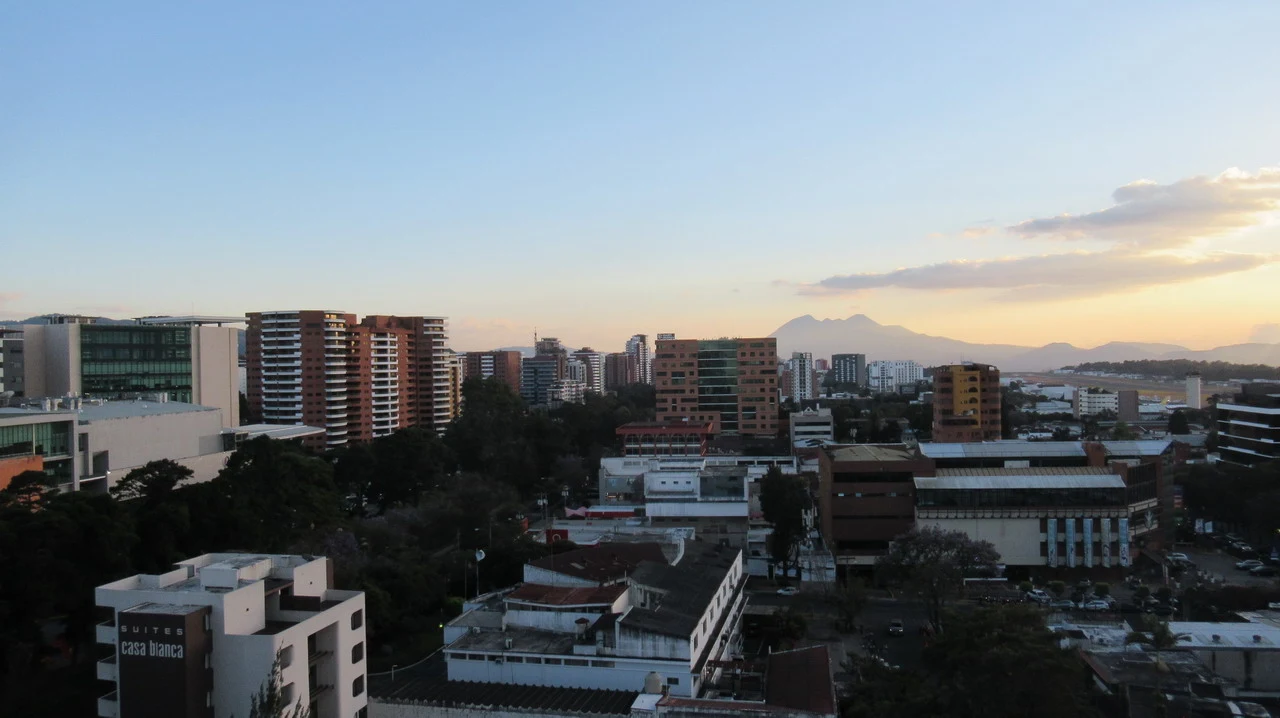
Guatemala City
A chaotic but welcoming capital.
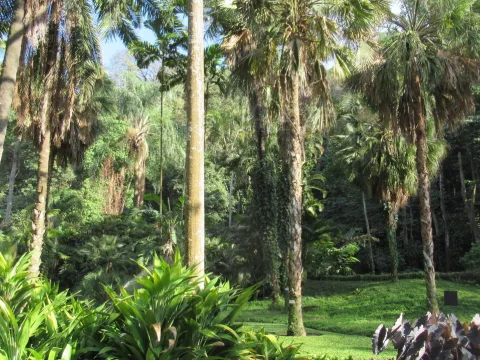
San Salvador
El Salvador: A country without fear anymore
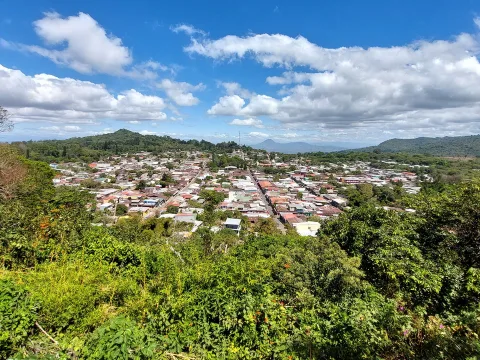
Santa Ana
Route of Flowers: Colonial villages, plantations and colorful markets.
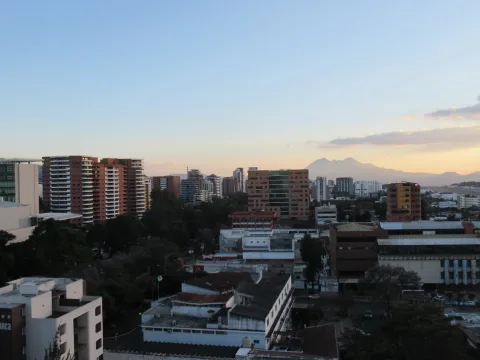
Volcán Santa Ana
When volcanoes contain water instead of fire.
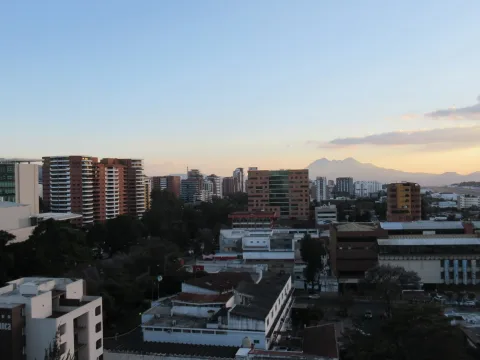
Honduras
Copán Ruins, the sophisticated Mayan version of Paris.
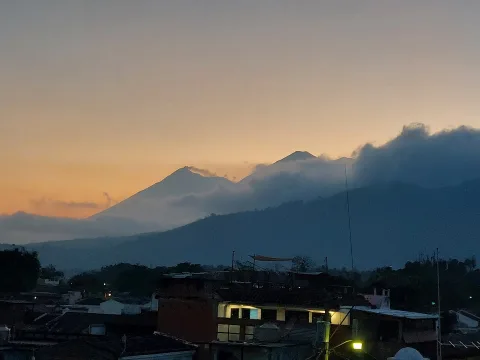
Antigua
The city of colors, surrounded by volcanoes.
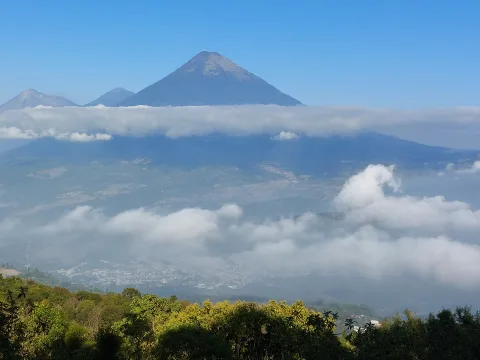
Volcán Pacaya
From the fire that comes from the earth to the earth, the Mayan myth.
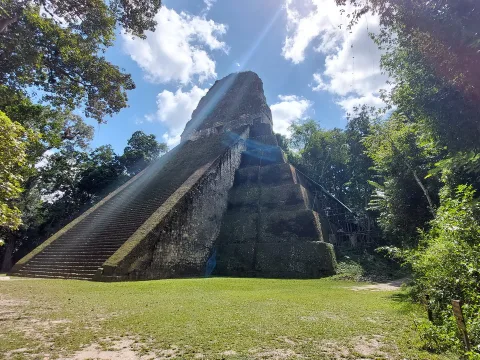
Tikal
The Mayan city nestled in the jungle, where history and legend meet.
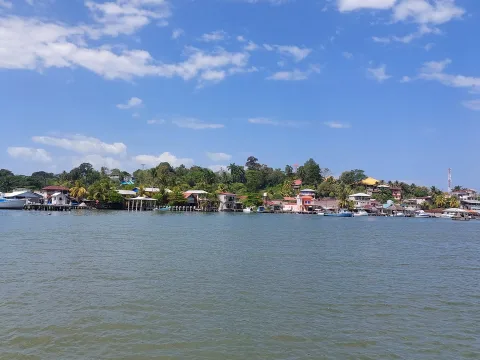
Rio Dulce
Lagoon and mangroves, Garifuna village and access to the Caribbean Sea.
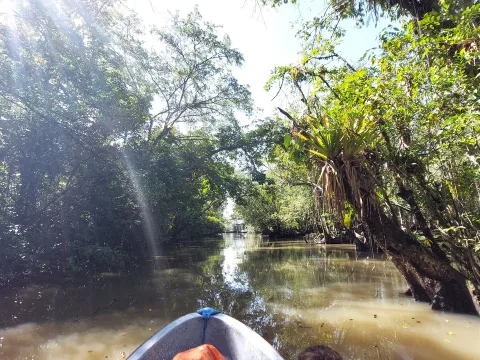
From Rio Dulce to Antigua
Transfer day, without any major issues.
Chichicastenango
The modern Mayan world, presented in its most authentic form: the market.
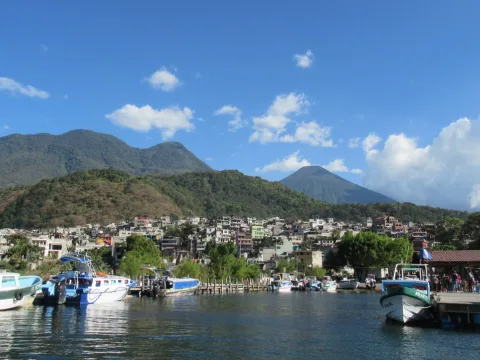
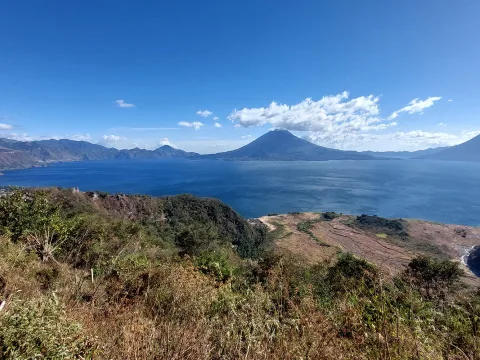
Lake Atitlan
The lake that seems to exist only in dreams, until you actually see it with your own eyes.
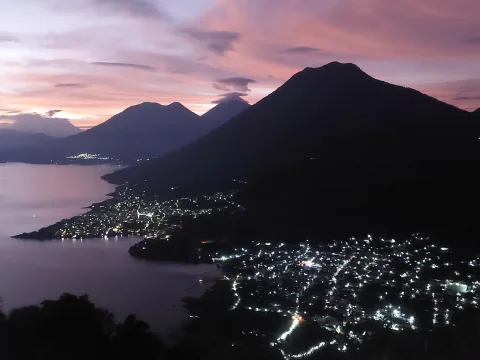
Sunrise over Lake Atitlan
The sun casts its first rays on the lake; the magic of the Mayan world seems to come true.