

Day 2
San Salvador
El Salvador: A country without fear anymore
From Guatemala City to San Salvador
The hotel room is actually an apartment and we have no trouble preparing a good breakfast with some pastries purchased yesterday evening. It's still dark but they tell us that we can easily walk to the terminal; in fact, we don't feel any sense of danger moving at this early morning hour. On the bus, there will only be four of us, with a hostess providing breakfast and drinks – excellent service – while we observe the intense urban traffic that already congests the capital of Guatemala shortly after 6 am. The city buses, known as "chicken buses", are instead old North American school buses, colorful and equipped with flashing lights everywhere, with the front door open from which the assistant shouts out the destination in a loud voice to attract passengers, in a sort of basic but effective marketing strategy. The Panamericana winds its way through sweet hills until reaching the border with El Salvador. The borders in these countries are always interesting and intriguing at the same time: when leaving, we receive a stamp and board the bus, dodging black market vendors who roam freely among the police; upon arrival, our luggage is checked but no stamp is even applied to the passport. Another hour or so and we arrive at the arrivals terminal, located just a few hundred meters from the hotel, in the Rosa district, considered a safe area where several embassies and the Sheraton are located. We have accumulated a delay of almost an hour, but leaving Guatemala City was challenging. The roads in El Salvador seem to be in better condition and travel is smoother, at least according to our experience. Intercity routes are often located between two banks covered with vegetation and bushes, with the risk of landslides when heavy rains arrive.
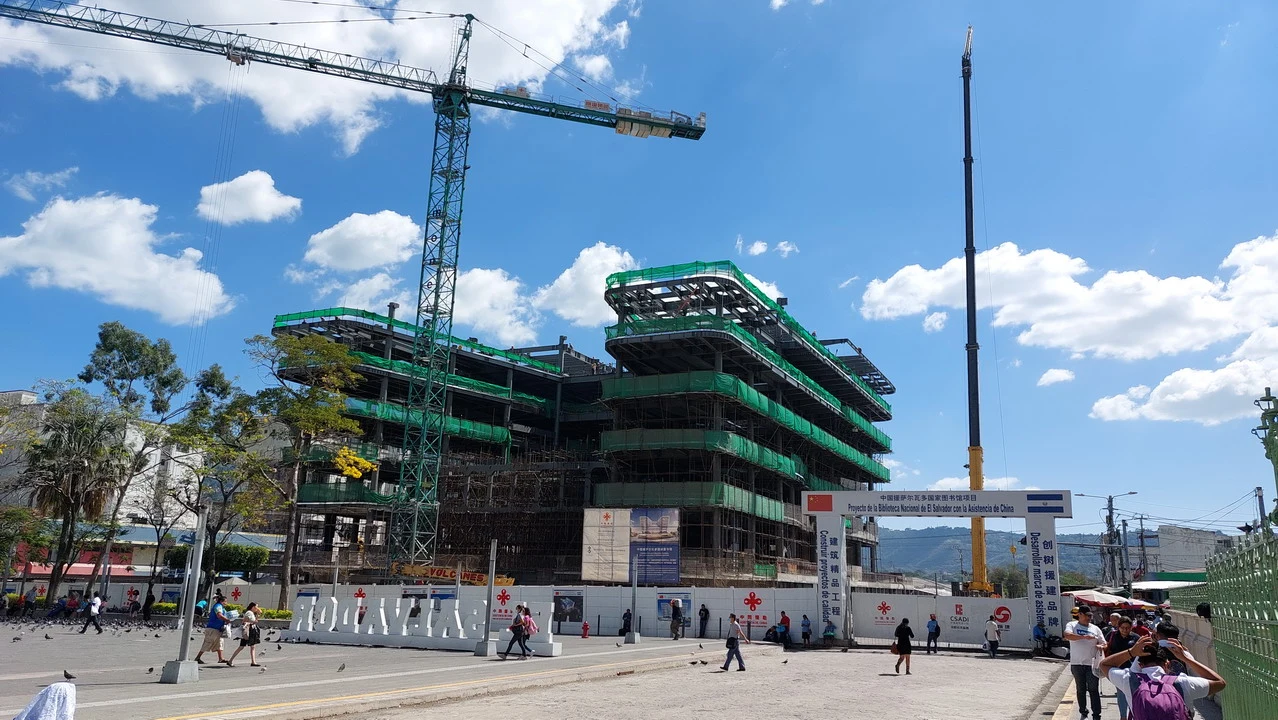
We check in at the Cinco, a sort of hotel/hostel with simple but efficient features, located in a maze of corridors and partially outdoor stairs where flower and tropical plants are arranged. We take an Uber to the city center. The only problem is that we don't have a Salvadorean SIM card and we always need to connect to Wi-Fi, so using Uber will be tricky. San Salvador might be the only capital worth visiting that takes up half a day. At first glance, it seems poorer than Guatemala City, with buildings that conceal colonial beauty but appear dilapidated as if in an immediate post-war setting. However, it has some monuments of definite interest: we can see the Palacio Nacional from the outside and visit the beautiful… Metropolitan Cathedral and the underground crypt where he is buried. Monsignor Romero, a symbol of the struggle against the dictatorial regime of the 1980s, was killed while celebrating Mass nearby. Perhaps his martyrdom contributed to a turning point, and we have no doubt that he would appreciate the well-wishing efforts being made by his country to emerge from the corruption and crime. His image will be present everywhere, accompanying us even outside places of worship and even outside El Salvador. On the opposite side of the square, Barrios is seeing the construction of the new headquarters of National Library, where propaganda posters promoting collaboration between El Salvador and China are displayed, thanks to the project's sponsorship. In principle, culture should not have political or ideological connotations; however, some doubts about the purely philanthropic nature of this Chinese patronage may seem reasonable, and above all, legitimate concerns exist regarding any potential US reactions if their foreign policy is seen as dangerously approaching China. We are in an area where banana cultivation represents the main crop: for Bukele, slipping into a Chinese-branded peel would be a real mistake after everything good he has been doing, but there is no doubt that the USA will not exchange a good Salvadoran government with its unconditional loyalty.
San Salvador: gardens, museums and dinner on Friday
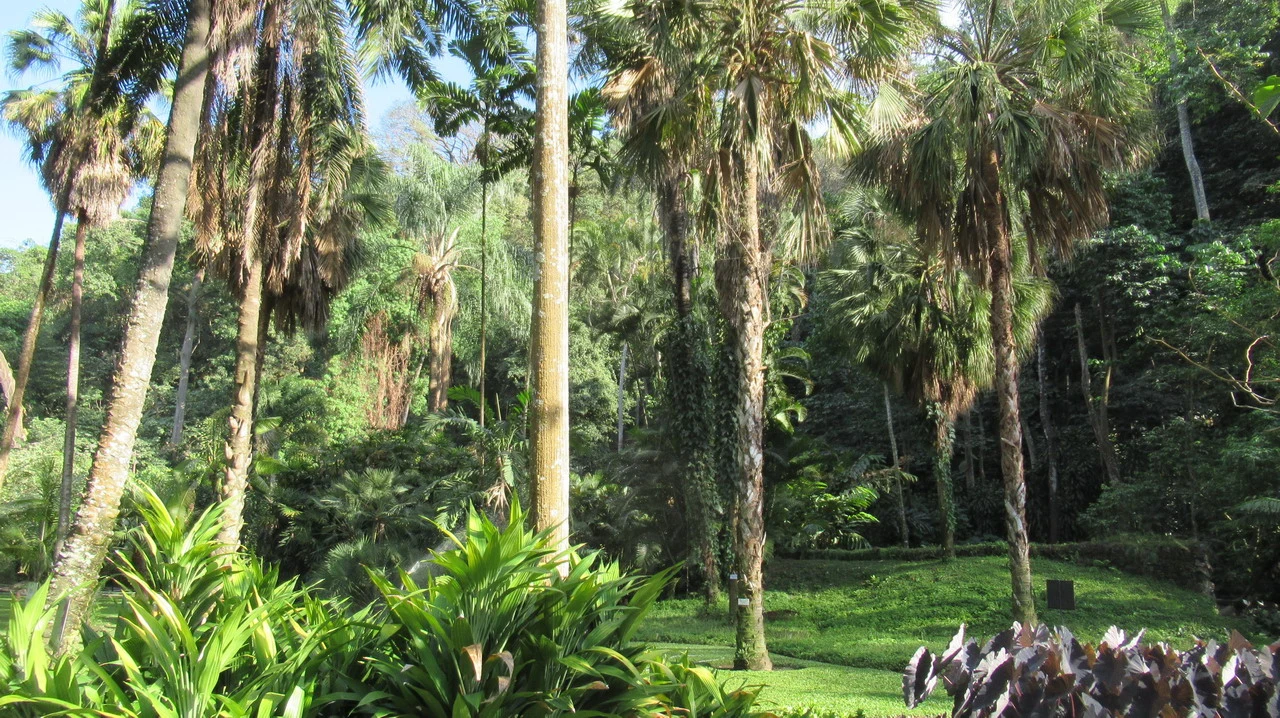
A walk takes us to the rather unremarkable Mercado Ex-Cuartel, then to see the beautiful facade of the National Theatre and the Iglesia del Rosario, a rather drab concrete block that houses a jewel of decorations inside – it's a shame it's closed for painting. We cross the pleasant Plaza Libertad and, using the Wi-Fi at the little restaurant where we have a snack, we call Uber and they take us to the UCA, the university campus where a small museum has been set up in memory of some deceased bishops who died for freedom. Shocking images Clothes and traditional attire, adorned with striking patterns, remind us of the cruelty of times not so distant past. The next stop is lighter and of a completely different order: the Botanical Garden The Laguna allows us to discover new plant species in a clearly explained setting, far away from the urban traffic for a moment. The garden is located in the middle of an industrial area, but once inside, you can appreciate a pleasant isolation from noisy activities and the numerous trucks just outside the site. We learn about how... Sansevieria are a native species cultivated in full ground and mainly used as borders. Those that we call Christmas Stars are actually trees here, while in the garden there are plenty of anthurium, ginger, strelitzia, heliconia, and much more; not only flora but also some charming specimens of Agouti Striped They peek through the bushes. The driver is waiting for us and takes us back to the hotel, from where we will go for a short walk to enjoy a delicious Salvadoran dinner at a restaurant that opened just three months ago. It's Friday evening, there are many people around, the area is well lit, and the architecture is opulent – much better than in the city center. It’s best to return early, as tomorrow morning we will wake up refreshed. Before leaving, we hear… Zombie dedicated to the struggles in Northern Ireland. Another continent and other claims, but the same violence and many similarities to what we have observed today.
Talking to the locals, we learn about the high level of approval enjoyed by the current government – a rare characteristic not only in this country, but particularly at these latitudes. While the 96% approval rate seems excessive, we are given a percentage around 90% from other sources. Even if we disregard the plebiscite figures, it remains a fact that Bukele has succeeded in breaking through with his anti-crime policies in a country where crime had reached institutional levels. The same Uber driver confirms that in the past he refused to take customers to certain neighborhoods of the capital, while now he freely circulates throughout the city without fear. He can work freely, whereas before he and his colleagues were forced to pay $30–$35 per month as protection money, making much of their work pointless. This policy also has positive effects on emigration: being able to work without restrictions and without fear reduces the need to leave the country in search of honest employment. Before, the only options were to starve, emigrate, or enter one of the marasFrom an educational perspective, the youth are taking a virtuous path, as they are no longer seen as criminals imprisoned as examples to follow; the current message is that they are not at all heroes. However, it remains difficult to understand how a government was able to bring about such a strong and sudden change. This was not petty crime: it was deeply rooted in the highest ranks of power, and the fact that the country was freed must have found support and interests among the upper echelons of society, who accompanied the goodwill of the young President. The reference is to landowners, the military, and the judiciary, without mentioning external interference that shaped events for decades. In a fragile state apparatus, this sudden moralization must surely hide some interests; but what matters most now is the sense of freedom among Salvadorans – whether and how long it will last, we will know in a few years.


