Day 9
Rio Dulce
Lagoon and mangroves, Garifuna village and access to the Caribbean Sea.
From Flores to Rio Dulce by boat
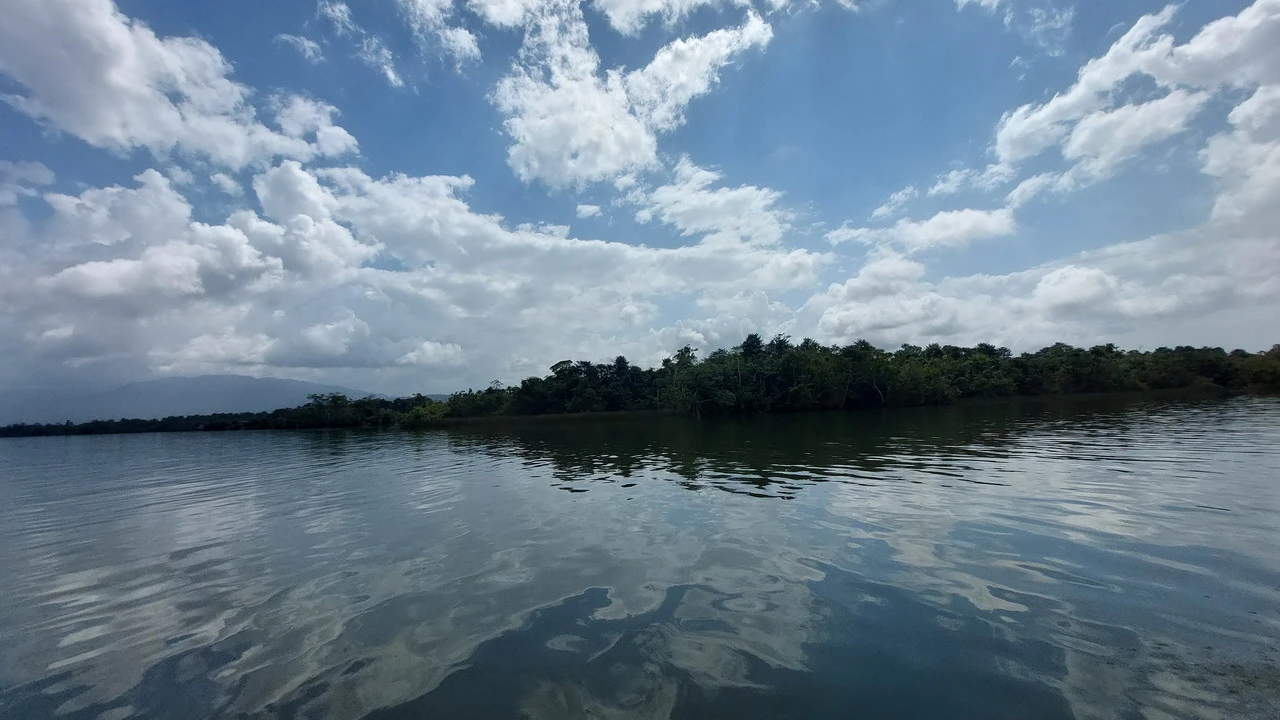
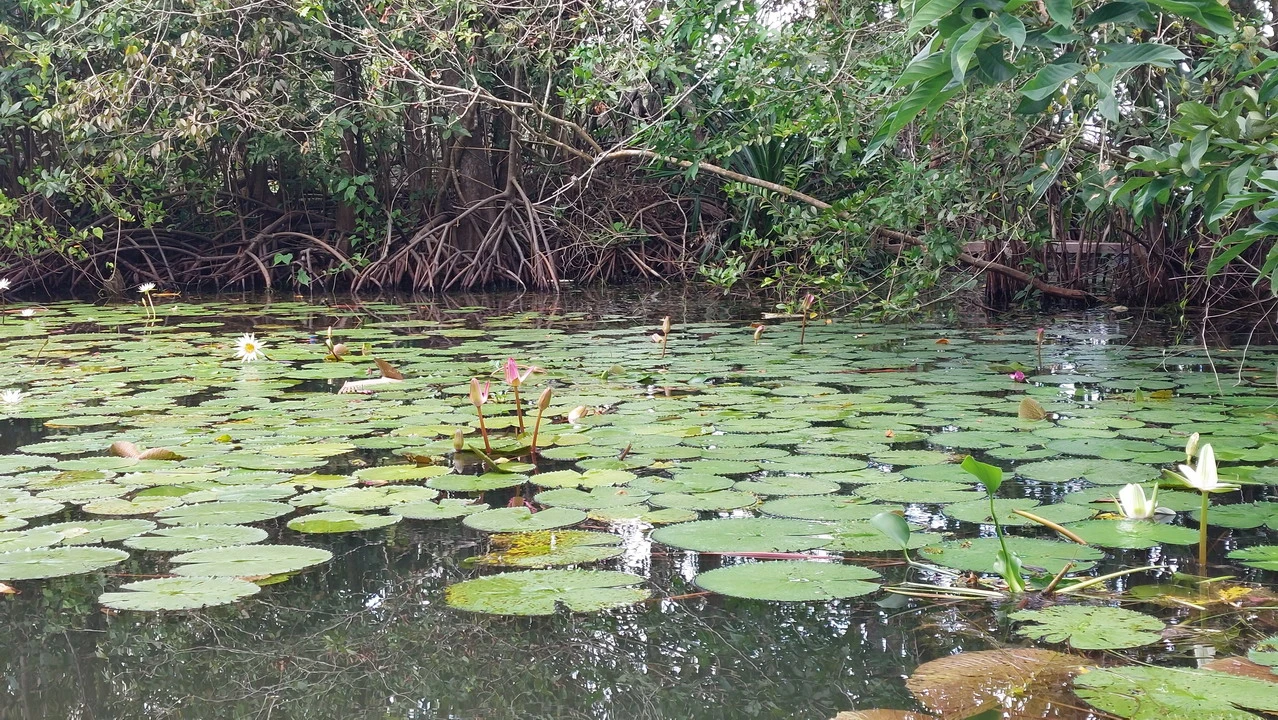
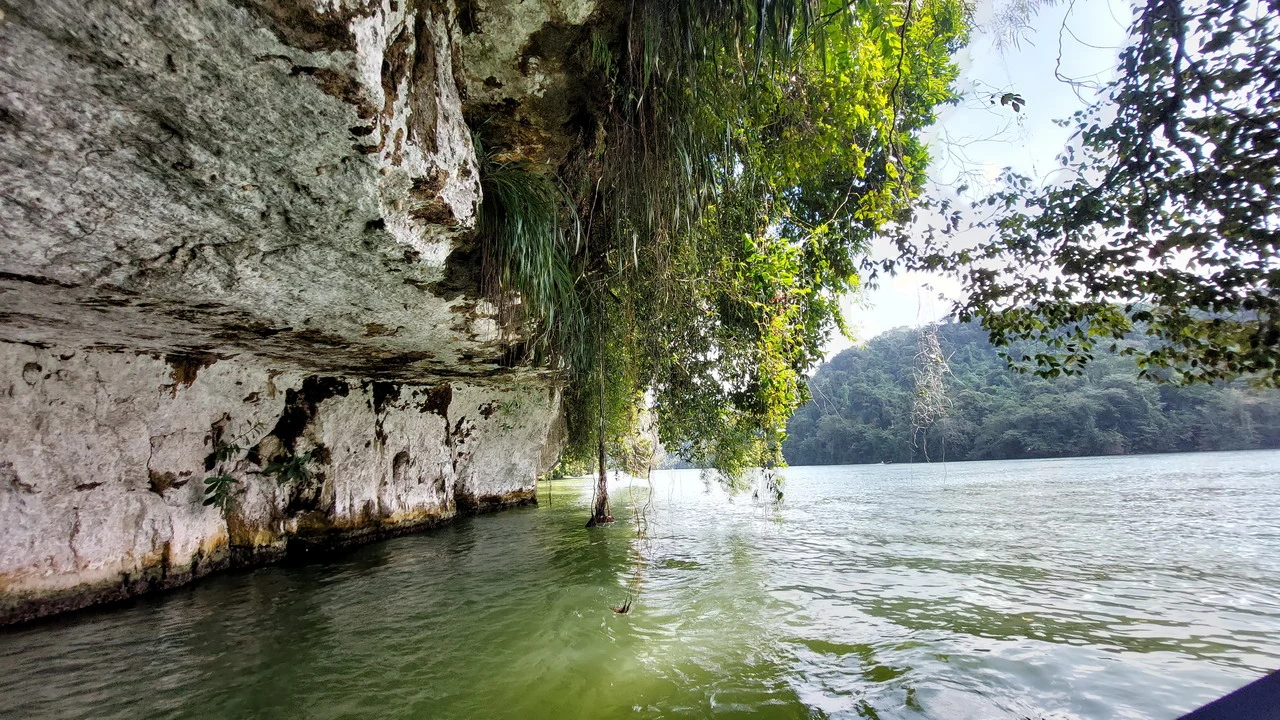
Breakfast was the same as yesterday, but unfortunately, it didn't match the gentle start to the day for our fellow travelers, who delayed departure by half an hour from the originally scheduled time of 6:00 AM. This demonstrated the attention of drivers and organizers in ensuring that no one was left behind. The shuttle bus to Rio Dulce only departed when all the booked passengers were on board. The first flat stretch went quickly; however, as the hills appeared, with a more pleasant landscape featuring palm trees scattered across undulating fields, the heavy vehicles – especially those carrying large logs – began to cause overtaking difficulties and extended travel times. At one point, the road reached a fork just a few hundred meters from the border with Belize, in an area with intense truck traffic of all kinds. Another half hour would be spent waiting at alternating traffic lights due to roadworks, and another half hour for stopping at a service station to allow everyone to have breakfast. Our concern was that we had booked a private boat – these are only available in the mornings – for exploring the lake area from Rio Dulce to Livingston, and based on forecasts of afternoon rain (which didn't materialize). Instead of departing at 10:00 AM, we arrived around 11:30 AM. In the meantime, we contacted the agency that manages the boats, which has a desk in the bar opposite where the shuttle bus is parked, so there was no wasted time. We then continued for a while along the Izabal Lake to see from the outside the Castillo de San Felipe de Lara, so we cross the Golfe to get into what can be considered a wide river until its mouth in the Caribbean Sea. The shores and some small islands are rich in mangrove forests with the typical branches that detach from the trunk to submerge and become roots, where they stay. cormorans and other birds, as well as some residents on stilts Suspended between jungle and lake. We are told that the lake is shallow – at most thirty meters deep – and has fresh water, but it is flooded with saltwater during the rainy season, causing the death of some fish species that first sink and then reappear, no longer being edible. This happens despite the area being protected from hurricanes and tornadoes that have always plagued the Caribbean region and the southeastern United States. Other types of fish have instead adapted to the increased salinity and survive. Our boat glides gently on the calm water, which in many places is covered with beautiful flowers belonging to the lotus family, during the magical moment of blooming. We are surrounded by an explosion of white, pink, and yellow flowers that contrast with the emerald green of the water under the sun's rays. Despite the lake environment, drinking water must be obtained from a source that comes from a rocky wall, appropriately supplied via pipes for filling the tanks; Livingston has its own sources, but it's not easy to refuel every time with the motorized pumps. The slightly rippled lake-river, the mangroves on the shore and the feeling of being in another world make this moment an unforgettable image. With my hair tousled by the wind, the boat travels quickly and lightly on the water; after just over an hour of navigation, we arrive at Livingston, a country unlike any other.
Livingston: a corner of Africa on the Guatemalan Caribbean.
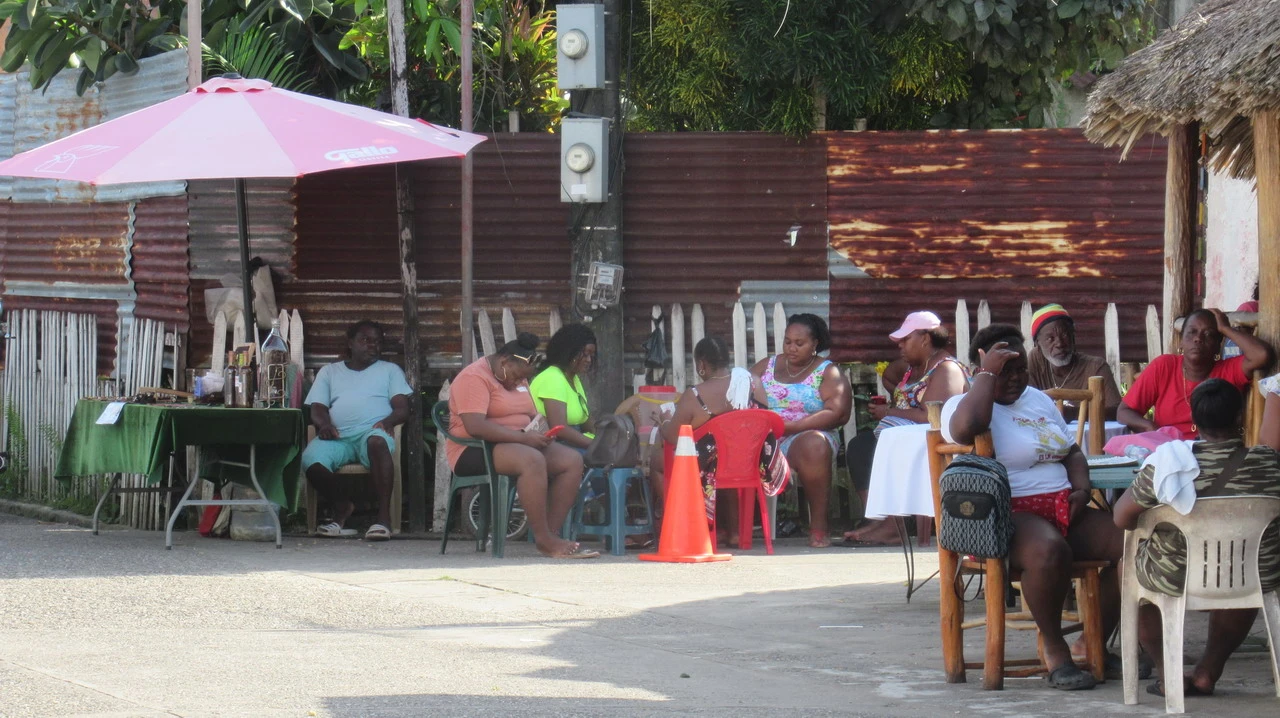
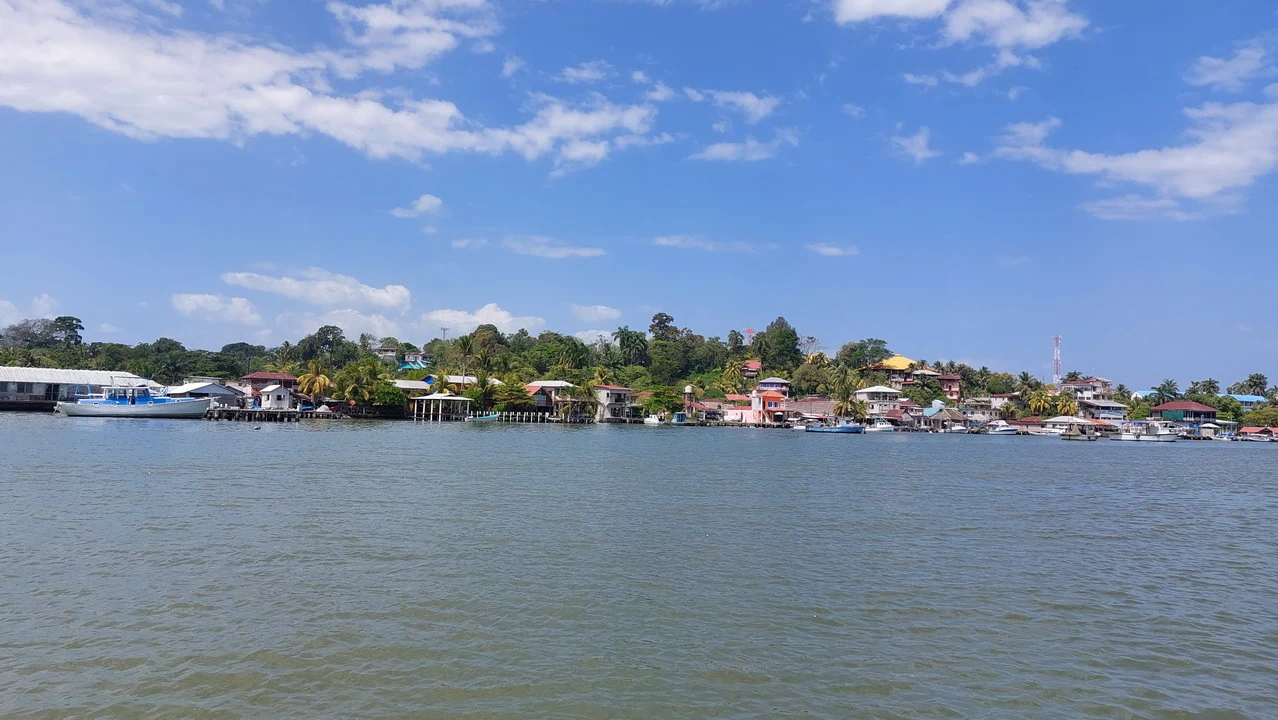
We are still in Guatemala, but we can't quite pinpoint our exact location: a narrow strip of land facing the Atlantic – or Caribbean Sea If you prefer — a close proximity to Belize and Honduras, without other cities worthy of this name nearby, without connections to the rest of the country except by ferry and road (six hours to reach Rio Dulce via Belize, when it takes only one hour by boat) and with the sea entering inland for about a hundred kilometers, creating two large lakes. From its location, Livingston seems more suitable for a penal colony than a tourist settlement. Visitors are drawn more by the uniqueness of the place and its people than by unavoidable natural beauties. The dominant cultures are not traditionally Spanish or Mayan, as found in the rest of the country, but predominantly Afro-Caribbean or Garifuna, derived from the migrations of former slaves from nearby large islands. In some ways, it feels almost like being in Africa, with wooden handicrafts and restaurants where you can taste the local ethnic cuisine. In reality, the place doesn't inspire much confidence: dirt and a slightly shady atmosphere make us cautious in the hot and humid sun. We walk through the village along the main street to reach the sea on the other side of the lower promontory; we browse among the medicinal potions, oils and spices of various kinds, looking for photo opportunities such as a fish drying center Subsequently packed, likely for animal feed. Here too, there are recruitment centers for political parties, competing with each other in the search for supporters ahead of the election campaign that will lead to elections at the end of the year. Another signal, not necessarily positive, is given by the many people sitting behind a lottery feast waiting for customers, just like in every bar there is at least one slot machine. The atmosphere in some of these places is really charming and traditional. women playing cards near an intersection. It's very hot – we're over 30 degrees Celsius with 96% humidity. We see some tourists who we identify as Americans; when they leave, only a few alternative young people remain. Lunch with ice cream and just before 4:00 PM – the maximum limit to avoid returning in the dark – we are back at the port, where we observe the hustle and bustle: the police check movements with little attention. We are at a very strategic crossroads for non-strictly legal traffic, and it should not be forgotten that San Pedro Sula, in nearby Honduras, is only a few dozen kilometers away – and San Pedro has been the city with the highest crime rate in the world for years. In the still clear sky, some clouds tend towards a dark gray, but overall the weather remains stable, giving us a dream come true. Finally, we notice that Livingston is located in a beautiful natural setting, overlooking a sea that would be postcard-worthy – but the overall impression isn't great. Just before Rio Dulce, we stop at a hotel managed by a Swiss person and hidden within an… river inlet, in a secluded area resembling a botanical garden. The main building, entirely constructed from wooden logs, is connected to the cottage via walkways; considering that the small complex is only accessible by boat, we find ourselves in a state of almost complete tranquility. The humidity is a constant presence, but the Moza beer — a local dark ale — goes down very well, as does the mojarra, a typical fish from the lake, cooked on the grill. All that remains is to go to sleep in an environment necessarily simple but with touches of elegance, in furnishings that we could define as tropical chic. The bed with mosquito net should be a guarantee against unwanted insects.