Day 3
Santa Ana
Route of Flowers: Colonial villages, plantations and colorful markets.
Arrival in Santa Ana and Ruta de las Flores
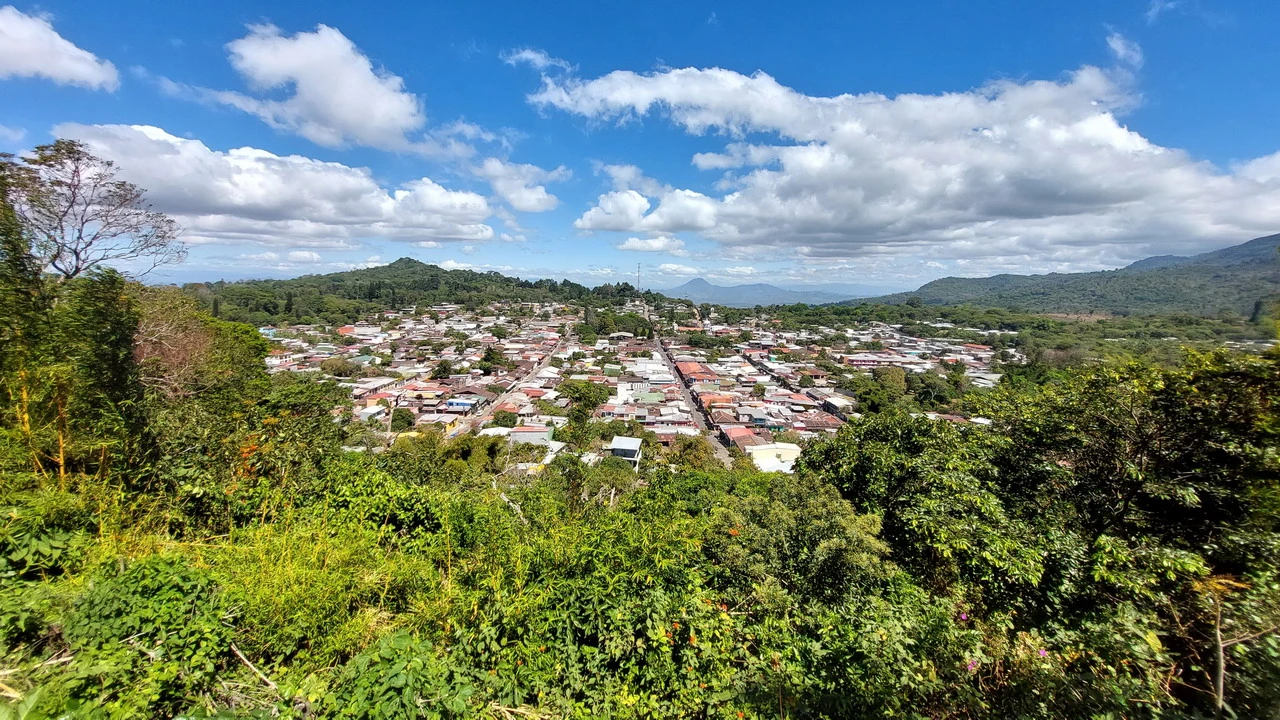
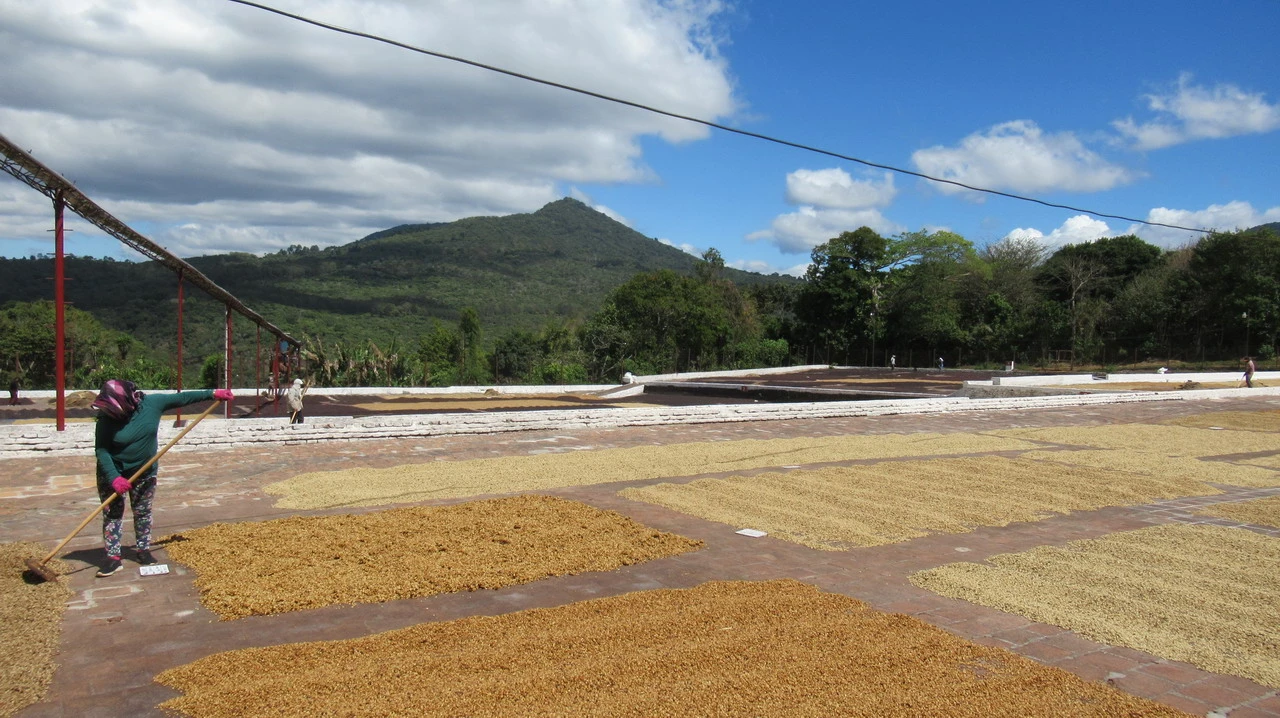
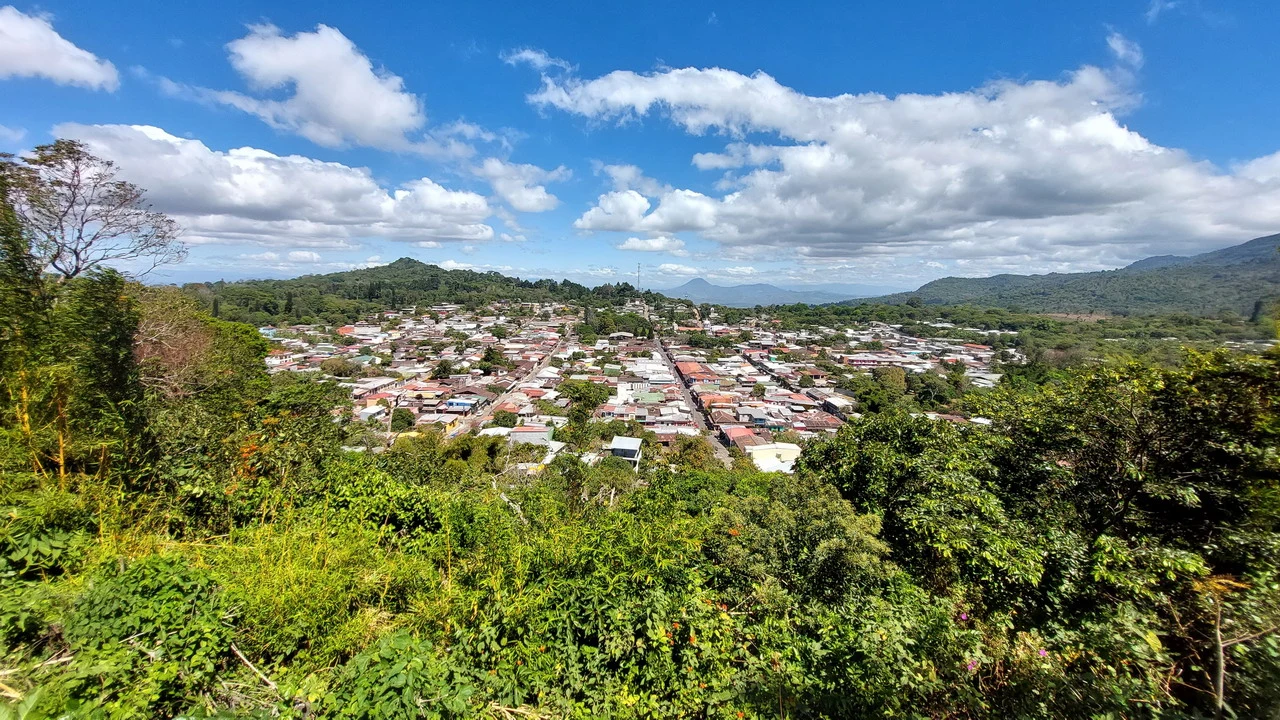
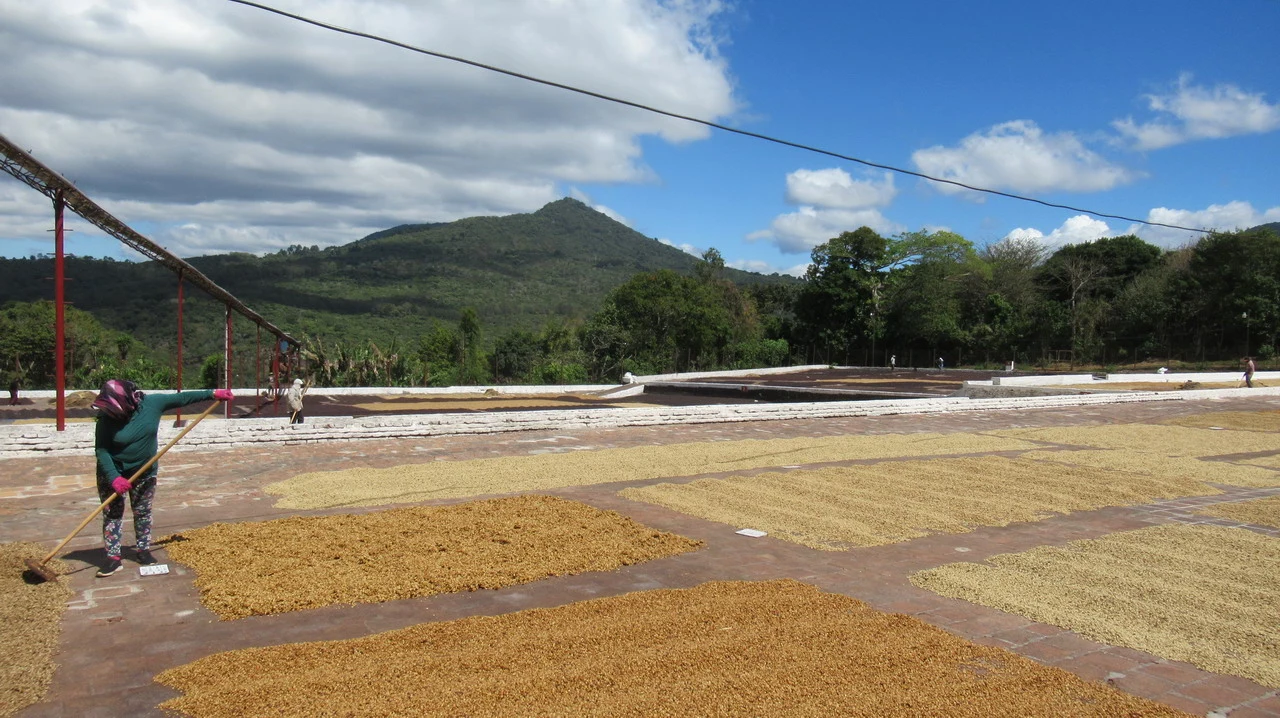
Originally, we had planned to take the line 201 bus to Santa Ana, but since Transportes del Sur offers the same service at a higher price, we chose this option so that we wouldn't have to move around in San Salvador at 5 am. With just a few steps, we were back at the terminal and by 7:00 am, we arrived at our destination after an hour's journey. In reality, the stop is a bit outside, at a gas station (Puma) on the Pan-American Highway, but we hopped onto one of the urban buses heading towards the city center, and with a walk of about a kilometer, we crossed over to beautiful central square where is located the town hall, while it starts to get warm, we arrive at the hostel just as the guests are having breakfast. We find the system of paying the ticket directly to the driver at the time of boarding the bus to be extremely convenient and efficient. Even in this context, we observe the extreme courtesy and politeness of the passengers, as well as considerable efficiency and professionalism among the drivers, who are always willing to provide directions and advice to anyone who asks. At the booked hostel, we are offered a cup of coffee and are ready to set off for the Ruta de las Flores. During this trip, we meet a friendly couple from France, who will join us and with whom we will also share the hike to Volcán Santa Ana the following day. Amy, the manager, explains how to reach the town by public bus. Ahuachapan, located at the beginning of the Ruta. The disrupted trip The delay of over an hour allows me to chat with some ladies who are heading to the market to sell clothing items. It's nice to exchange opinions and impressions with ordinary people, facilitated by the fact that I can speak their language – something rare when traveling around the world and forced dialogue must take place in a third language. With a sort of hop-on hop-off on local buses, we visit four classic towns along the Ruta: Ahuachapán itself offers a beautiful church, murals, and a market where we browse among stalls selling fruit and vegetables, not forgetting that tomatoes, pumpkins, peppers, onions, and many other vegetables originate from Central America. The fact that it's Saturday allows us to see colorful markets and local fairs, where the population gathers for shopping but especially for a form of social interaction that is at the heart of life in these communities. The next stop is at Ataco... where a 15-minute walk takes us to the viewpoint overlooking the town with views of the surrounding volcanoes; the urban center is dotted with murals on the walls of the houses, which are usually single-story and face streets that intersect at right angles. Although they differ in grandeur and beauty, one can speak of the same urban layout in Antigua. Even today, we have lunch at a small restaurant where the veranda on the first floor offers the opportunity to watch the hustle and bustle; for coffee, we decide to go directly to the source. Just a few hundred meters away is a establishment dedicated to processing the precious berry. Having never witnessed the processes that transform it into a product for grinding, we follow with great interest the explanation provided during the transitions between departments. The coffee plants They enjoy tropical temperatures but not too high, so they often serve as undergrowth, protected by tall trees that only allow some sunlight to pass through, creating an ideal play of light and shadow for cultivation. The most prized one is the mountain one, above 2,000 meters, and in fact, much of the country's crops are found at this altitude – which justifies its worldwide recognition. For information, the altitude measures 2,100 meters, although on a plateau they are not noticeable. Depending on the desired effect, the berries They can be presented with the peel intact, without the shell but with a kind of sticky resin, or completely stripped of their shells. The peels are separated and used as fuel to produce heat during the drying process. An initial phase takes place outdoors, where operators constantly stir the beans in the sun. Separation occurs based on size into four categories; there is also a fifth and final category, used to produce instant coffee. The beans then pass onto a conveyor belt where operators manually remove impurities, with well-defined times for sorting. The cleaned coffee is then put into sacks and left to dry further for 60 days: holes are made to check its maturity, a sample is extracted and tasted by specialists; after that it is ready for roasting, an operation that is only carried out on site for the coffee intended for internal consumption. It is usually exported roasted, as each market has different needs related to the taste of its clientele, almost bordering on distinct philosophical currents. The tour concludes with a cup of coffee prepared using the traditional filter method and poured directly into the cups.
We were able to gather some current comments and, in this instance as well, the positive situation that the country is experiencing, in relation to its recent past, is confirmed. The entrepreneurs were exhausted from having to hand over profits to the groups that exploited them; this led to a drastic reduction in production in previous years. Before the civil war, and then extortion, had driven many coffee producers to close their businesses. As a result, unemployed workers had to emigrate or also join the marasThe history of the Mara Salvatrucha gang originated from the civil war, when many Salvadorans emigrated to the USA, including outlaws who established criminal activities in the States, learning new techniques. They were imprisoned, extradited, and once repatriated, they put their acquired experiences and knowledge to use, as well as exploiting the contacts and information they had gained. The fertile ground that fell into the hands of the Mara Salvatrucha clan favored an alliance with Mexican drug gangs, also interested in sharing the large illegal businesses, especially those related to the trafficking of drugs and people from South America to the USA. When the situation threatened to deteriorate, US intelligence warned the Salvadoran government about the risks of destabilization; instead of intervening, it seemed that the government supported the idea that crime was a lesser evil because it provided employment. It certainly also created an indirect benefit for police forces and funeral home businesses.
A short stop at Apaneca, to see the church and a walk through the main streets; finally, walking along a low and undulating forest decorated with extinct volcanoes, we reach the final stop of Juayúa... where there is a distinctive church with a statue of Christ Negro inside and a festival takes place where delicious dishes are served – meat, fish or prawns beautifully presented. From here, the last bus line, number 238, will take us directly to Santa Ana, completing the circle and ending the wonderful day.
Dogs, buses and good manners
There are dogs everywhere, but they are extremely peaceful and their condition reflects the situation of the local population: thin and almost dragging themselves around in the suburbs and in some small towns, or plump and well-groomed where they seem to be doing better.
Another feature observed during the day – during which we gained some experience with local buses – is the courtesy shown on public transport: people willingly give up their seats to older individuals, and there is no typical shouting or noise common in other Latin American countries. The only sharp tones come from the music, which seems impossible to listen to at anything but maximum volume, but it doesn't bother anyone when you hear the melodies. Everything happens in a respectful context, such as when pedestrians help the drivers with maneuvering.
Pupusas and a night in El Salvador
Back in Santa Ana, we walk through the night for almost a kilometer – you wouldn't have guessed it was in the dangerous El Salvador when we left! We pass by a relatively new church, built according to modern architectural principles and brightly lit with spotlights (we’re not sure about the origin of this intense lighting). The restaurant we choose isn't particularly attractive: some outdoor tables are decent, but the interior – due to the smoke coming from the kitchen near the entrance – is more like a steamy sauna. However, the food will be excellent, and we can tell by how crowded it is with locals on a hot Saturday evening. We try… pupusas: These are typical Salvadoran tortillas that, before being flattened into the traditional round shape, are filled with available options — meat, chicken, chorizo, bacon, black bean puree, vegetables, cheese and many others. Simple yet delicious, it's also interesting to observe the process of preparing the pasta as the girls take the dough, form it into a ball, add the required ingredients, and flatten it to create the classic round shape. Finally, we treat ourselves to another canoe: a banana cut lengthwise and filled with dulce de leche.