

Day 2
Amarbayasgalant
Towards the north, to Amarbayasgalant, where religion and nature blend together.
The urban face of Amarbayasgalant
We leave the capital on a beautiful day after making sure we had everything we needed, including provisions for overnight stays in tents. We head west and then continue north. Ulan Bataar is located in a region with mountains in the northern area and high hills in the southern area, extending east-west. The traffic is considerable. And the smoke coming from the exhaust pipes serves as a backup supply for days when we need to avoid smog. The outskirts are dotted with fields of gers that have sprung up in recent years following the numerous particularly cold winters (known as "zud") that occurred in the early years of this century. By eliminating the livestock they relied on, shepherds found themselves facing a much sadder journey into the city. This increased the number of poor people, without any real job, who were ill-suited to living a life that was not their own: that of a shepherd in rural areas. This has also increased the use of alcoholic beverages such as vodka, which initially served to alleviate the pain of having lost everything, but actually only exacerbated their distress. This alcoholic beverage was introduced into society by the Soviets in the 1970s and is still widely used, although many sources claim that vodka consumption is declining and young people prefer local beer. We will find many drunk people, sometimes disruptive to others, but never aggressive. Here too, we can see the peaceful nature, despite the problem of alcoholism. As we move further away, the ger fields disappear to make way for the first meadows with rare isolated tents: finally, we find them in the right place, as intended by Nature. While we proceed, we encounter the capital's crematorium and then the cemetery. The religious rule dictates that bodies should be cremated before burial. However, it would be unthinkable to bury bodies in the ground considering the harsh winter temperatures.
Just before Darkhan, we turn west. Continuing north, we would have reached Siberia in just a few dozen kilometers. It's amazing how, despite this significant intersection, there are no directional signs. A self-driving driver would certainly find it difficult not only to navigate but also to choose the right route. We will encounter this lack of signage in many of the intersections we come across. The road has been paved so far, although with noticeable potholes, but taking the Erdenet route improves it. Near the paved roads, there are toll booths that require payment (usually around 5000 T.). The average speed is around 90 km/h. We stop for a few minutes in Hötög, a village clearly designed and built according to Soviet style, where our guide lived for 4 years when he was a child and his father worked as a police officer. The guide explains that she is half Bayad ethnic group and the other half Khalkha. Her grandmother came from the Uvs province, where she moved during World War II as a military doctor.
Visit to the Monastery of Amarbayasgalant
Finally, we turn onto a dirt track that is in poor condition and takes us 35 km to reach the Amarbayasgalant Monastery. Actually, there are two and sometimes even three tracks running parallel to each other at a distance of just a few meters, and they often intersect. It is up to the drivers to choose the best one in order to encounter fewer potholes. This system is used to avoid vehicles coming in the opposite direction and to overtake others. In this case, however, you need to focus on the fastest track in terms of bumps. Overtaking someone also means consuming less dust at the expense of those behind. We cross cross frequently... where we see several cars stuck in the mud with passengers trying to push them out of the water. The journey from the capital takes a total of 5 hours, most of which is on paved roads. But don't get too excited: from now on, the unpaved road will represent almost the entirety of our itinerary.
Traditions and spirituality
The monastery is one of the most beautiful and important in Mongolia. It was built between 1727 and 1737 by the Manchu emperor Kansu, according to Chinese style standards. It is dedicated to Zanabazar, the first emperor-lama, scientist, and great sculptor, whose remains were transferred here in 1779. You immediately notice that the temples have a Chinese origin, and this is confirmed by seeing the prayers written in the same language.
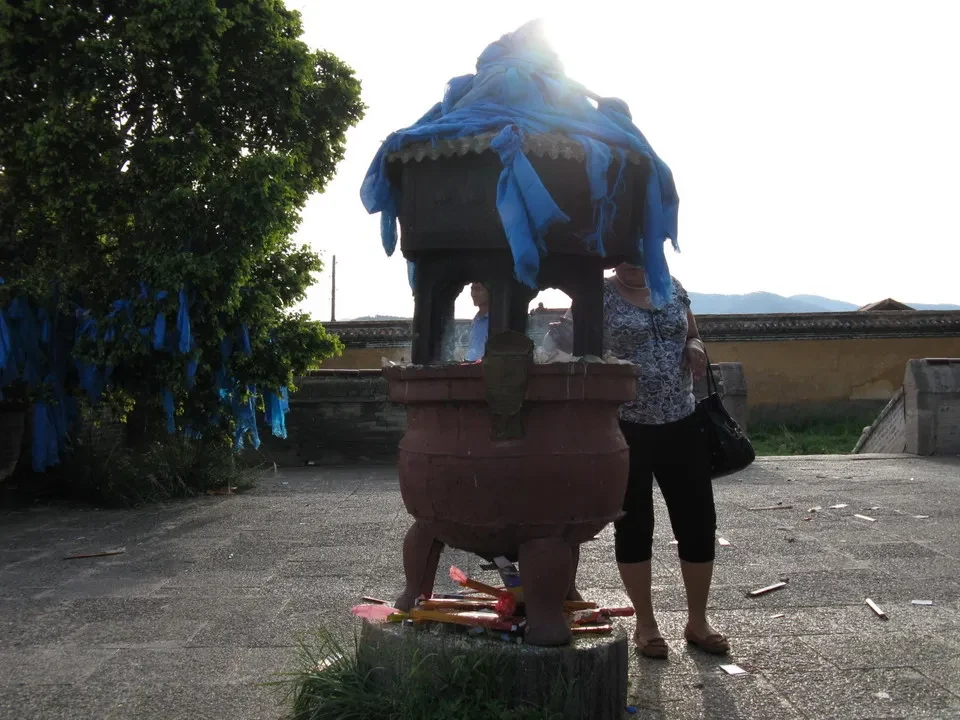
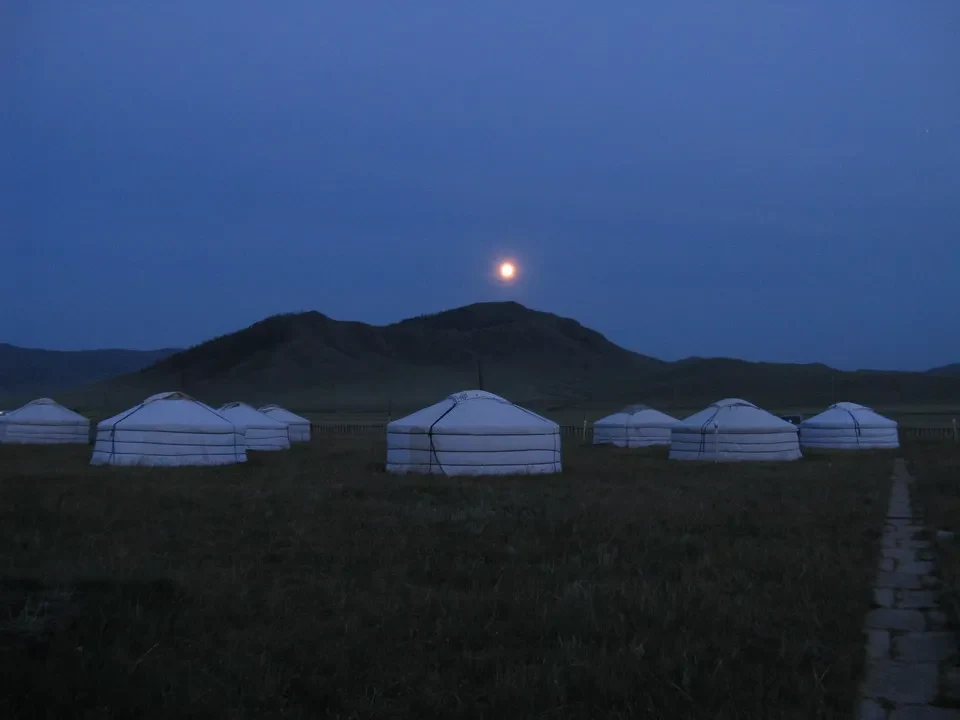
We find the place incredibly crowded due to a religious event, which is also accompanied by... Naadam(horseback rides, usually with ponies and guided by children from the age of 3, which the Mongols consider their favorite summer sport), from which we can see the arrival in flight. We are looking for the Ger camp, which is located approximately 10 km before the monastery. Late lunch with local specialties. buuz(pasta rolls filled with lamb and onion, cooked using steam), with an intense but exceptionally delicious flavor. The view is pleasant. and clean, with outdoor facilities, as always happens in ger camps. We return to the Monastery to visit its interior in a joyful festive atmosphere, although the celebrations have already ended. Vendors selling airag and other drinks and toys decorate the entrance, while inside, the scent of incense fills the air. According to Buddhist tradition, special offers in honor of of various deities, ranging from small amounts of money to food (rice, biscuits and pieces of cheese). The whole thing gives our eyes a sense of disorder and dirt, but it is part of the tradition. It also happens that there are offers of money placed on the ovoo, without anyone collecting them.
We have dinner at the campsite with Korean-style wraps and enjoy tea, which is usually served with meals. The herds of livestock are very common, and it's nice to see the cowboys on horseback as they gather them. Perhaps this is one of the most representative images of rural life in Mongolia, and it evokes a sense of freedom. This, in contrast, explains the discomfort these men experience living in the city.
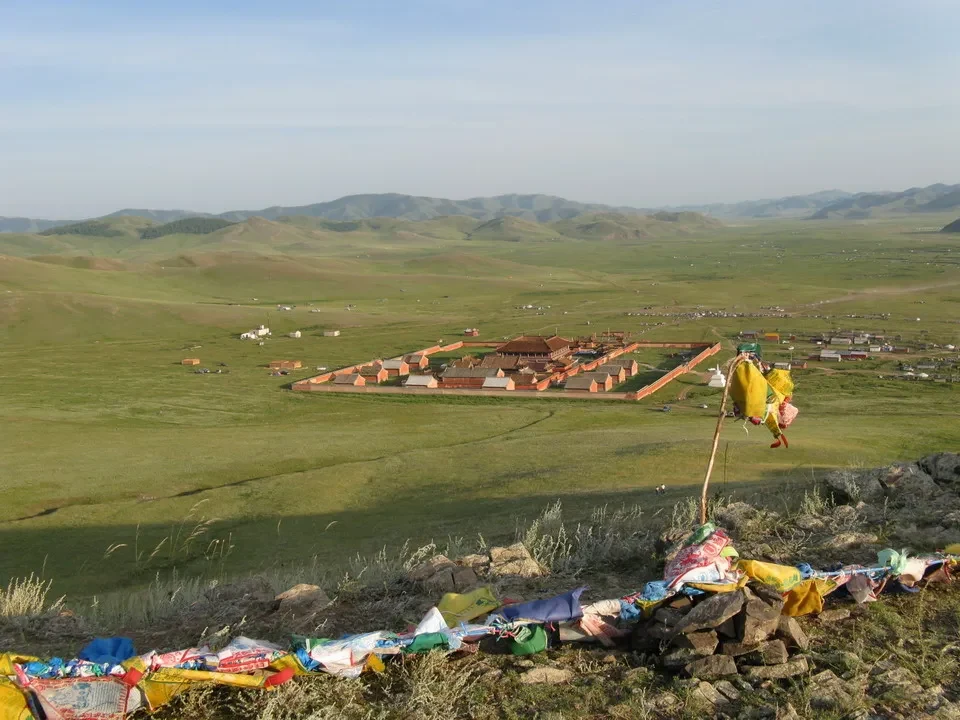
We also visited the surroundings of the monastery, climbing a hill whose peak is adorned with Tibetan prayer flags and Ovoos, to admire the landscape from above. In fact, the view of the Monastery, with its distinctive red color amidst the green of the surrounding meadows and low mountains, offers a charming panorama.


