Day 6
Huvsgul II – Tsaatan
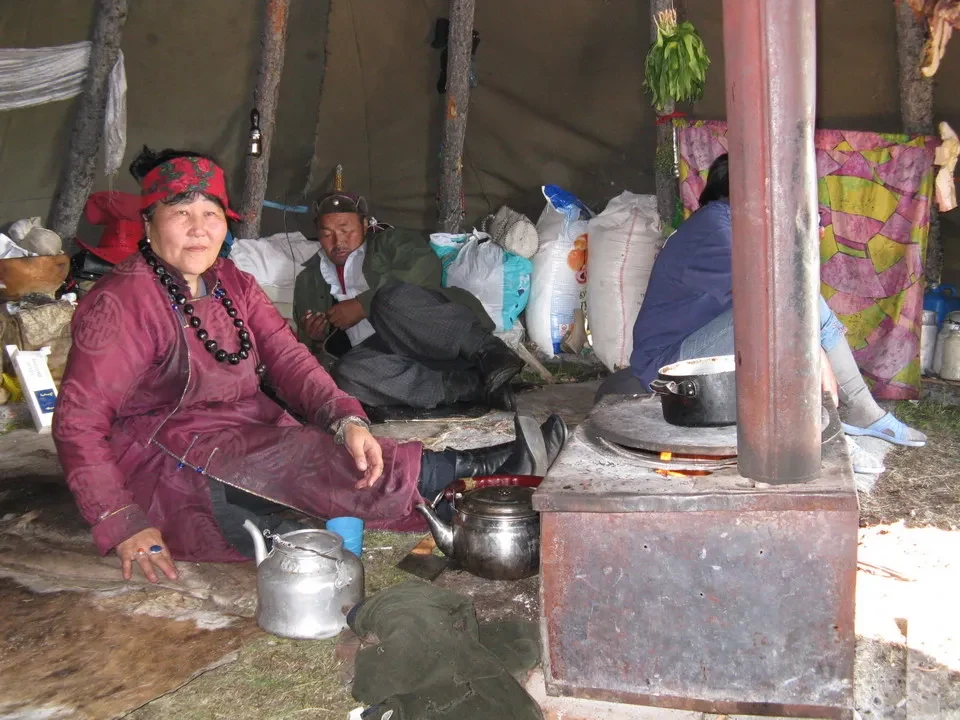
At the home of the Tsaatan people: a symbol of pride.
Huvsgul Tsaatan
At 5 in the morning, a staff member comes to light the stove in our guesthouse. The warmth we feel gives us the courage to get out of bed at 6:30. Breakfast is at 7 am. Today's schedule includes meeting with a Tsaatan family, the people known for herding reindeer. The language
We cover the 26 km that take us to Tsaatan tent on a bumpy road. When we see a cone-shaped tent made of larch wood and covered with an impermeable tarp, we know we have reached our destination. They are already more advanced: in the past they used animal skins to cover the tents. A smoking chimney rises from the center of the roof, indicating a stove. Despite being open, they will tell us that the heat from the chimney prevents rain from entering. It will be so! We enter and find a lady dressed in a deel, which was originally intended to be purple in color. We settle on the right side (left from the entrance), traditionally reserved for guests, while she occupies the opposite position. After a few formalities and translating the guidebook, she asks if we have any questions. We learn that she raises 17 reindeer. She is 59 years old and has 6 children, some of whom are still young, and we are amazed to find ourselves in front of a shaman. As such, it is also the medical term for the tribe. Preventing any objections, she tells us that there are no hospitals nearby and that shamanic rituals, unlike Western medicine, have no side effects. While we often end up damaging one organ while trying to heal another. Too easy, but also difficult to counter, so we drop the conversation. Hanging inside the tent is a meat cut into strips... and drying them. On the other side, there are also medicinal herbs that are being dried. Behind the shamaness, we see the garments they use during their ceremonies. These rituals are celebrated on specific occasions such as funerals or holidays. Their dialect is very close to the Tuvan language, so they must speak in Mongolian, at least to understand our guide. We were offered some pieces of fried bread in butter and they don't rise, it's called bortzig. They look almost like salty babas. If you forget the devastating impact they could have on our already stressed livers, they might even be good. The hospitality also includes offering boiled and cold venison ribs. We just take a small taste, while our companions are happy to indulge. Inside a wok placed directly on the stove, they cook tea leaves, adding milk from their cows (recycled Coca-Cola is a necessity before anything else), straining it to separate the tea leaves, and serving it in bowls. We bravely overcome the sight of the strainer and cups and drink the mixture. Now we feel like part of their family, and even with some pride.
Talking about reindeer we encountered in large numbers during a previous trip to Lapland, they ask if it would be possible to send some to us. Their race is weakening due to continuous inbreeding and their stature is decreasing. The tribe has only slightly more than one thousand reindeer, certainly not many considering that it is almost the only source of sustenance. Another problem is represented by the young people, who are increasingly unwilling to face a life of sacrifice like this. The natural consequence is their exodus towards the cities. This means that what was said by a Tsaatan leader is only partially true: here no one is obliged to stay, for this reason no one will leave. A particular aspect of those following shamanic religion is in the burials: they do not bury the dead but allow them to be eaten by animals, attributing a different meaning depending on whether it is land animals or birds that consume them.
The children attend school. a Khatgal: from September to June, they stay with their families for the summer holidays, also to work on tasks related to their jobs. What we would call child labor there is called education in the workplace. Another lesson we teach them.
We found the tent near the lake for the summer camp, but the rest of the Tsaatan people live in the more remote areas, which can only be reached after several days of horseback riding. It is clear that this family is already accustomed to meeting tourists. They ask for 5000 T. to take photos inside the tent, but we were able to discover a culture even more isolated than other Mongolian ethnic groups. The many cigarettes seen being smoked during the encounter and some bottles of vodka left inside the tent suggest that they have been exposed to something. Their lifestyle is slightly better than that of other members of their ethnic group thanks to tourist income. In a bag hanging at the bottom of the tent, we found a mobile phone, which is present wherever there is coverage. The men spend their time playing cards while the children play happily, collecting flowers.
Nearby, you can find stalls offering local crafts: bone carvings, gloves and sandals made from camel wool, and other souvenirs.
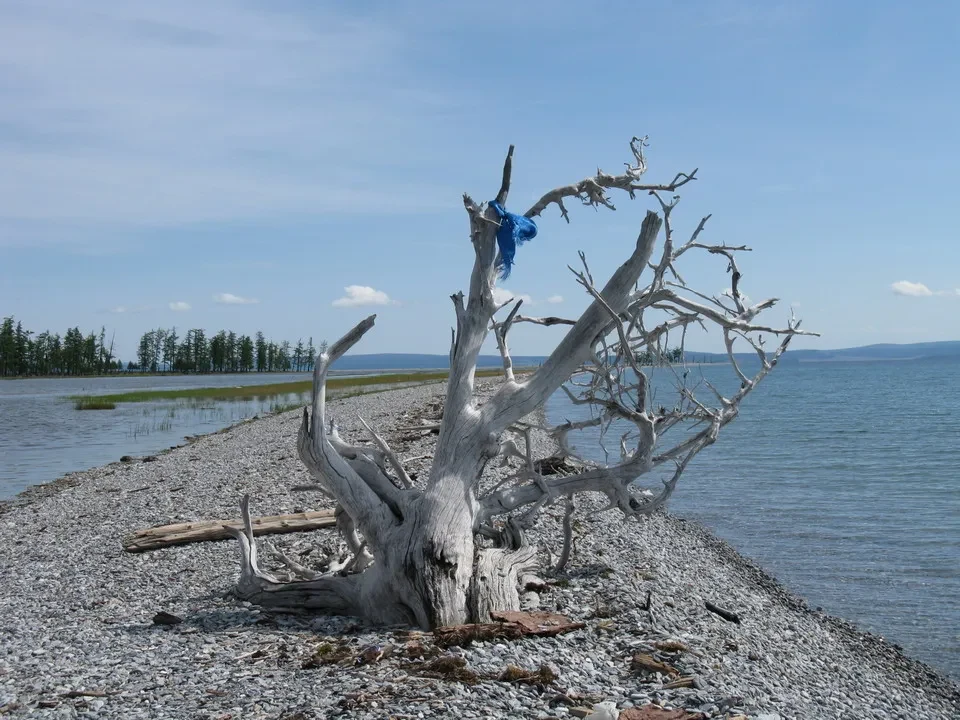
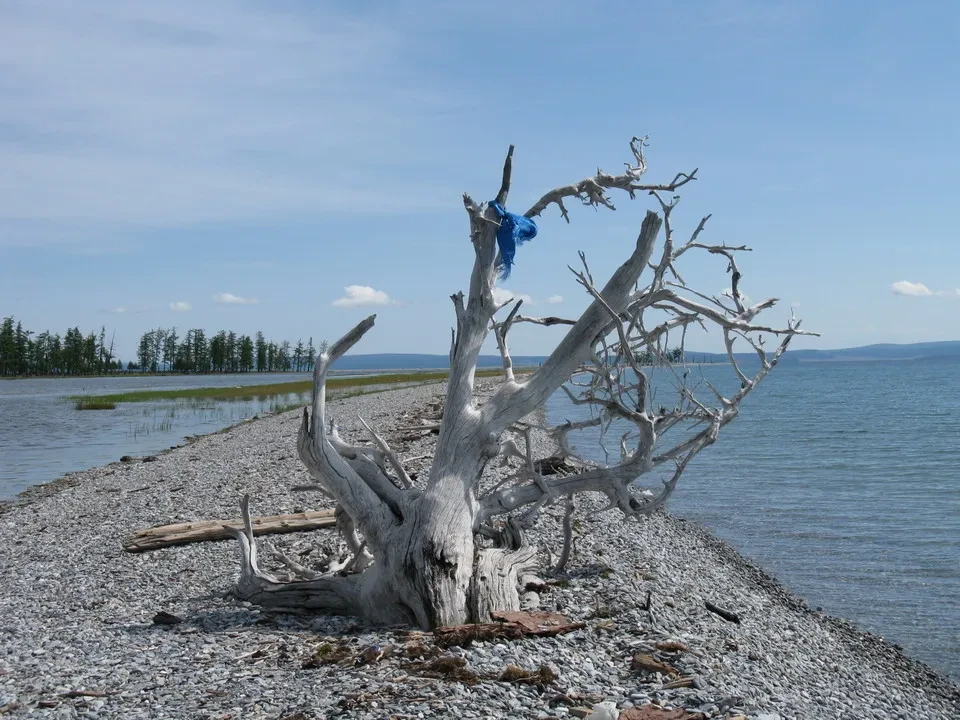
On the way back, we ask our driver to drop us off at the lagoon from yesterday, where we complete the unfinished photo shoot due to some clouds appearing. During lunch, we learn that the Great Wall of China was not built to defend against the armies of Genghis Khan, but rather against the attacks of the Unns, who centuries earlier inhabited Mongolia and had shown ambitions for conquest in neighboring China.
The menu includes a tomato soup and delicious local dishes. A walk south to see... grazing sheep, while we were Stagliano with the lake in the background The sun still warms us for a few minutes outside our tent while we play chess, the board is naturally made of felt, and the king could only be represented by Genghis Khan. Dinner includes spaghetti with meat sauce. Yes, these are endemic to this part of the world; they were brought here by Marco Polo. At 7:30 PM, we watched the sun set behind the mountains. A few minutes later, the sky darkened until it started to rain with lightning that created dramatic effects on the lake and the surrounding forest. The fireplace is lit, the tent illuminated by the dim light of a candle, and the rain falling on the outer tarp creates a surreal atmosphere. We wouldn't want to be anywhere else right now.