Day 12
Ongyin Khiid
Karakoram and Ongyin Khiid along barely visible tracks between rain and snow.
Morning at Ongyin Khiid
At 6:30, we were woken up by the piercing barks of a drunk Mongolian man who had clearly overindulged in vodka. The previous evening, we had seen the "manager" of the campsite supporting some friends after celebrating his new Olympic medal.
We hear the gentle patter of raindrops bouncing on the roof, which is almost pleasant, like music. It's less enjoyable when you step out without an umbrella, as the strong wind would immediately cause a downpour. The services are among the best we have encountered so far, and hot water is readily available. After all, Kahrkorin is one of the most sought-after destinations for tourism. A generous breakfast is served, and we head to town, which is just a few hundred meters away. The high cost of fuel has depleted our driver's supplies, so we go to meet someone who will provide our guide with the essential funds to complete the journey.
Visit to the Monastery of Shankh Khiid
Under a late autumn rain, we leave the former capital and continue south towards the Shankh Khiid monastery, where the flags of Genghis Khan are preserved. The strong wind leaves little room for outdoor filming. Meanwhile, the guide has decided to fully utilize the potential of the GPS.
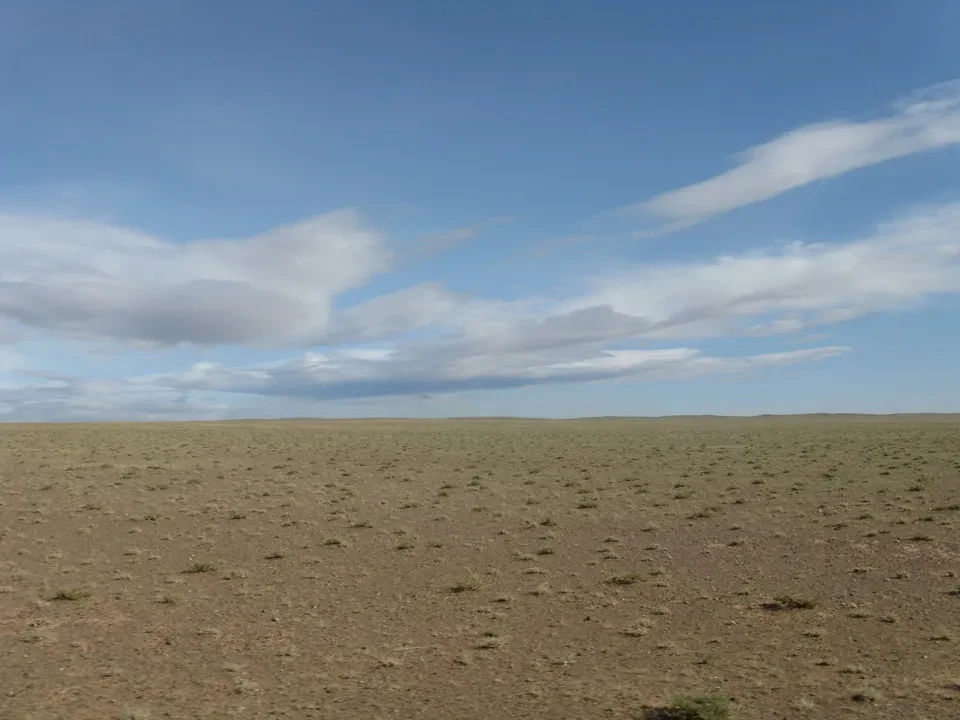
heading straight towards the next destination of the monastery Ongiin Khiid, instead of following the main road. The result is an extra 80 km and three hours' delay compared to those who took the main route. It is true that we saw very remote places and discovered that where there are no roads, there are actually many. Indeed, the steppe has a network of tracks that cross each other, taking the one closest to the desired destination. This, however, involves time-consuming and long zigzags. We crossed plateaus, and the time remained stable with sometimes poor visibility. Despite being in a desolate land, we occasionally saw herds accompanied by sporadic horses and riders who, undisturbed by the adverse weather, traversed the plains. We began to see the first groups of wild camels. As we climbed
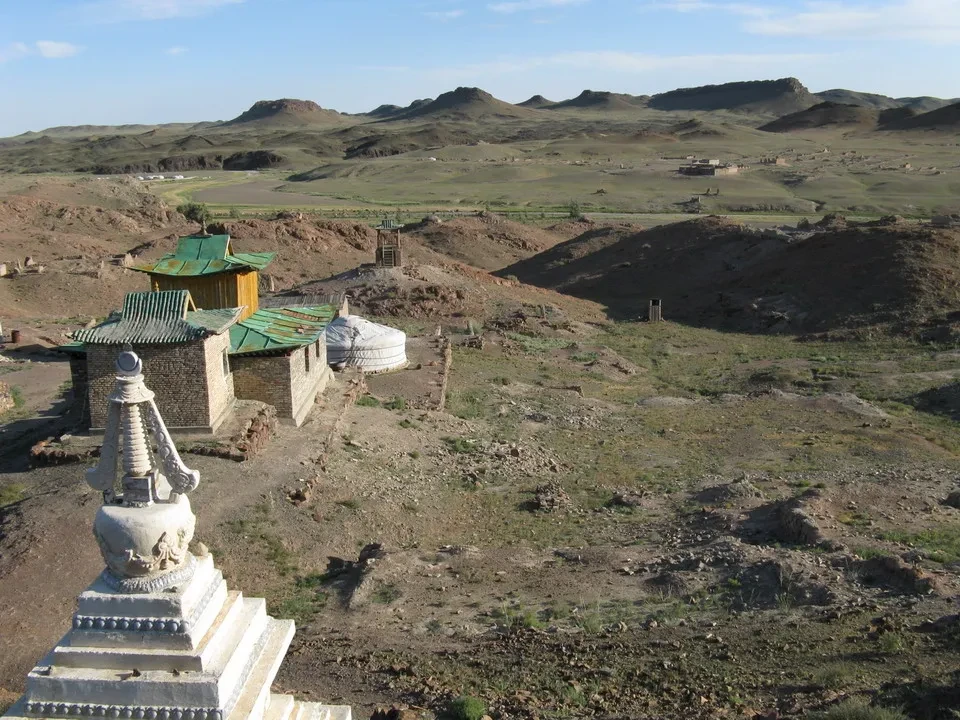
We also encounter snow. We have lunch in the car; getting out would mean being blown away by the wind, while the jeep rocks violently. Further on, we come across a completely snowy area, where the track is barely visible. The animals, bewildered, stay close together to keep warm from the strange weather conditions, which are absolutely unusual for this season and in these locations. The driving is further slowed down by deep puddles. When we thought that the nightmare had become permanent, we entered... a desert area where the weather is always perfect. We are approaching to one of the rare countries to get some guidance on the path to take. Unfortunately, we consulted the wrong person – a drunk motorcyclist who, at the moment of stopping, fell heavily under the weight of his vehicle. The vodka didn't help him get up, and so our group decided to continue while the poor man struggled unsuccessfully to stand again. The sky is stable for about 100 km with beautiful weather; we are now in the Gobi Desert. We go to visit the ruins of the Ongiin Khiid monastery, located on the banks of an idyllic river, also called Ongiin, amidst the desert. In reality, there are two monasteries, but the one south of the river is simply a pile of stones. The communist fury also fell upon the temples (destroyed) and the monks (deported or killed). Only in 1937 were more than 27,000 people murdered or missing, including 17,000 monks. The temple on the north side, which was renovated in 2004, and two sheds intended as a museum where the other temples once stood. They contain artifacts from the buildings that were destroyed. It is curious, how macabre, to notice a bowl made from a human skull. Currently, there are two llamas living in the area, pursuing the reconstruction project started several years ago by a group of 13 monks. A strong wind tells us how difficult life is in this place, while The sun is lengthening the shadows. and disappears behind the mountains, leaving magical lights visible.
Politics and society
What we saw today with the cold and snow is considered a natural disaster, as it risks forcing shepherds to sudden migrations and, regardless, causing them to lose their animals. Even the children, while gathering the livestock, risk not returning. We will later learn that on Lake Huvsgul, where we were only a few days ago, there was heavy snowfall, and some tell us they saw trees along the lake bent by the snow.
Dinner is light, consisting of soup and salad, but it's fine since we spent the whole day on the jeep.