Day 11
Erdene Zuu, Karakorum
History, myths and legends come together at Erdene Zuu in Karakoram.
Erdene Zuu, Karakorum
The night passes as if we were lying on a hammock, such is the curvature of the mattress. At 6:30 am, we think it might be enough and jump out to see the Tsetserleg on Sunday morning. There are few people around and the workers' palaces We can't find anything we like more than the previous day. We return at 8:00 and have breakfast.
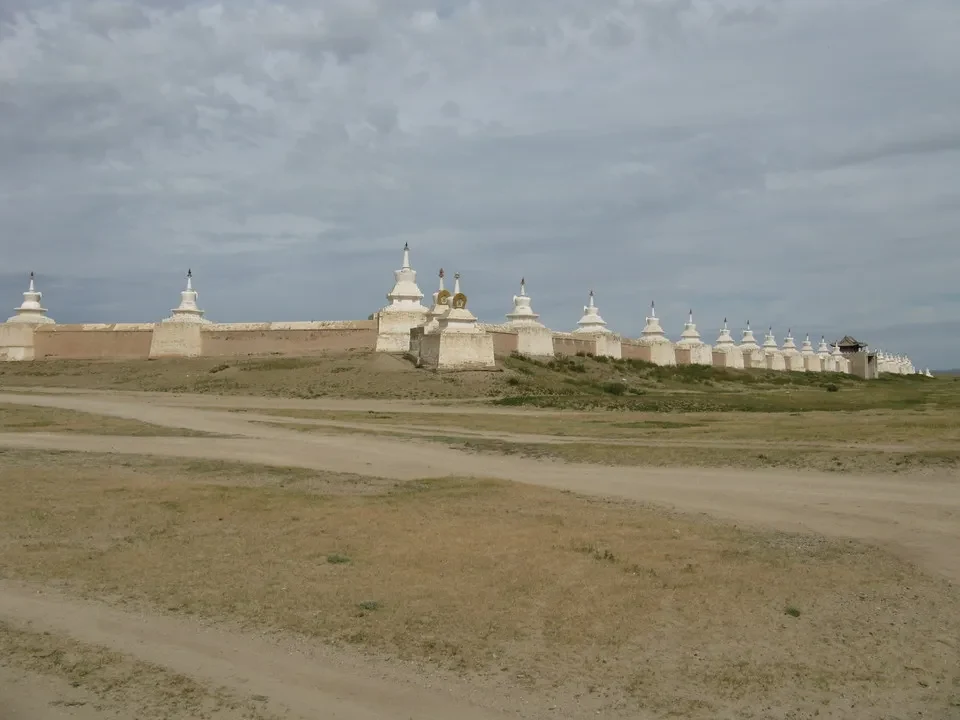
In some sections there are bridges and even structures that we could call viaducts, but we must follow the terrain contours, which nevertheless allows for greater speed. It is interesting to note that there are frequent piles of sand on the main road, intended to improve its surface. They have probably been there for years, and the work has stopped. Things that happen even at home. We are heading south-east towards Karakorum/Kharkhorin, the ancient capital of the Mongol Empire in 1220. The weather is cloudy and humid, with a sandstorm expected later. Check-in at the ger camp and finally visit the monastery. Erdene Zuu (one hundred treasures).
Traditions and spirituality
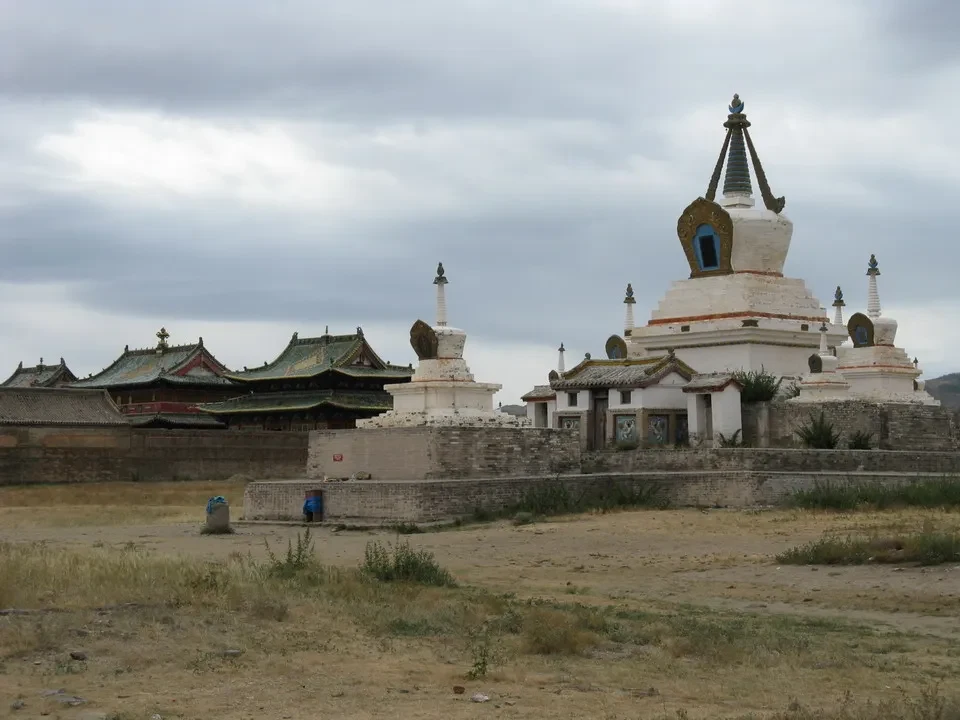
We enter the temples., which would require significant restoration. Despite the current precarious state and past damage, one can still see the great splendor that this place must have had, where more than ten thousand Lamas prayed. A shiver runs down our spines when we think about all the history that has passed through here, the capital of the largest empire ever to exist in history. But even the most ravaged by destruction, first by the Chinese and then by the Soviets. China, the bogeyman of our times, not only was conquered, but the grandson of Genghis Khan, Kublai Khan, was the ancestor of the Yuan dynasty and he established the capital at Khanbalik, i.e., Beijing. It was the time of Marco Polo. We pass by the Golden stupa of prayer and we enter the large white temple in Tibetan style, the Lavrin Sum, where a religious ceremony is taking place, which we observe silently. We exit through the northern door of the monastery to see the Turtle of Karakoram, which indicated the entrance to the various palaces of the capital. Everywhere you find stalls selling local crafts and supposedly historical-archaeological objects that are presented as being from the 13th century. If they were genuine, it would certainly lead to problems when leaving Mongolia.
We return for lunch at the best restaurant in Kharkhorin, perhaps even the only one. But here we experience an exciting moment watching the final of the Olympic boxing tournament, where the Mongolian athlete overwhelms his Cuban opponent to the general applause. Everyone temporarily abandons their activities to witness this event and returns with the satisfaction of winning a new Olympic gold medal. It is a magical moment in which the pride of a nation emerges. We cannot help but get involved, and for one day, everything else takes a back seat.
We enjoy delicious khuushuur, fried pastries filled with mutton and onion.
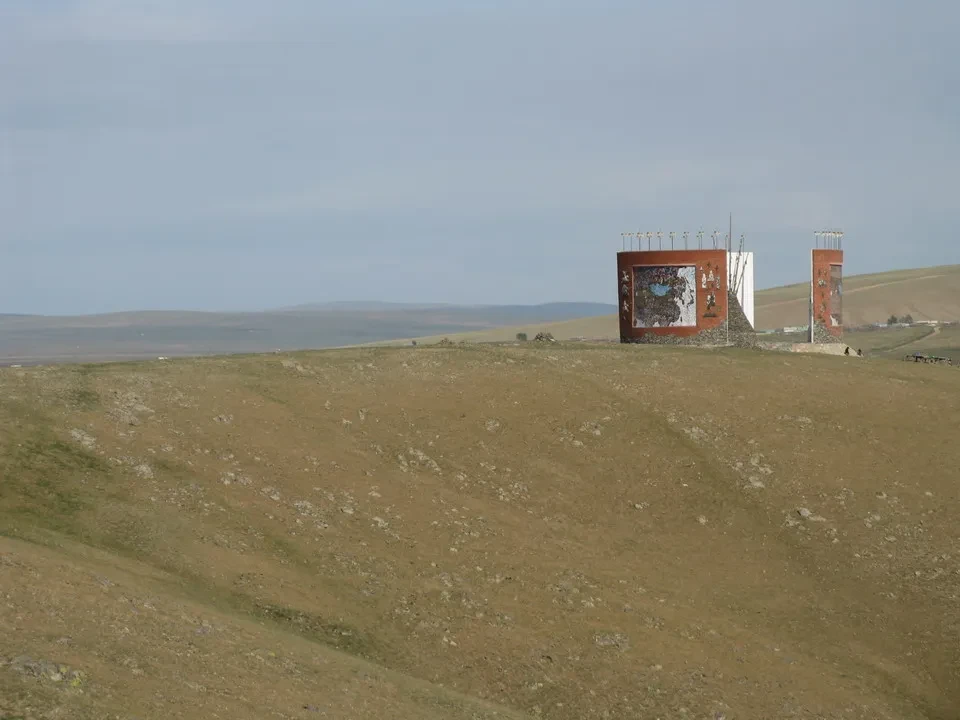
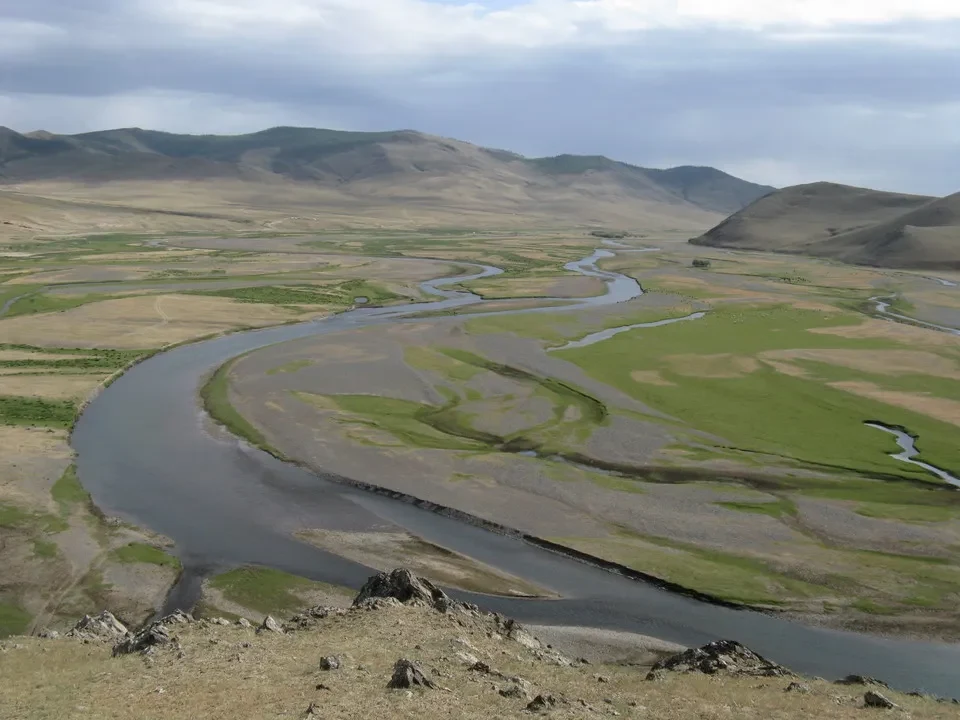
The Ger Camp is located on the banks of the Orkhon River The weather is improving, the sandstorm has passed, and we head up to the hill next to the river to admire the mosaic monument Dedicated to the three Mongol empires (the Scythian one, the one of Genghis Khan, and the largest empire ever on Earth). We descend towards the river (the second largest in the country, but still not very large here), taking some photos with a heavenly light, along its right bank. Some children, ignoring the wind and cool climate, are swimming in the river. We return to our accommodation and watch curiously as a yurt is dismantled right in front of us. A whole culture to learn. The local restaurant consists of two large yurts connected by a third building that serves as a kitchen.
Local wildlife
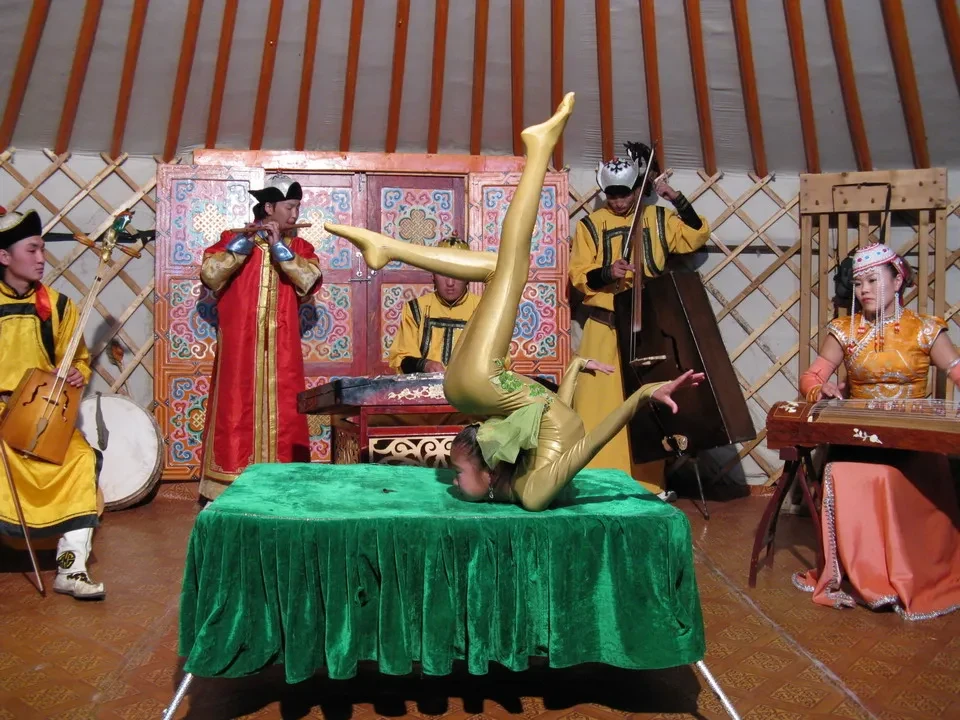
Dinner is at 7 pm, followed by a show. Kharkhorin group, consisting of two Morin Khuur players (the horse-head fiddle of the steppes), a classical harp and a horizontal instrument. There are also throat singing or "khöömi" performances and the daring performances of a flexible child The ability to twist and bend is a classic in Mongolian performances. The girls are trained from a very young age to develop their joints so that they can perform movements that would otherwise be impossible.
Evening at Erdene Zuu, Karakoram
After dinner, we enjoy spending time with other Italians (it seems like we all have a meeting here tonight), and we share our experiences so far.