Day 13
Kashgar
In Kashgar, time seems to have stopped at the Silk Road era: but not for long!
The urban face of Kashgar
In the prefecture of KASHGAR, 72% of the population is Uighur, 4% are Kyrgyz or Tajik shepherds, and the rest are Han. There are a total of 280,000 inhabitants. The city is located at an altitude of 1260 meters between the Tian Shan mountains to the north (which divide the Zungaria and Tarim basins), Pamir to the east, and further south, the Karakorum. It's no coincidence that Kashgar means "meeting point for people." It was a strategic caravan center along the Silk Road at the intersection of routes that, encircling the Taklamakan Desert to the north and south, connected China with Central Asia. One can say that this is where the desert circumnavigation began, which opened or closed at Dunhuang. In the era when merchants traveled on the Silk Road, the journey from Xi'An to Kashgar required at least 5 months. The prefecture of Kashgar borders 5 countries, which contributes to its political importance. Three of these borders are open (Pakistan, Kyrgyzstan and Tajikistan), while those with India and Afghanistan are closed.
The majority of the population is still Uyghur. In recent years, there has been an immigration of around 25% Han people. After taking power in the 1950s, these were mostly prisoners sent into exile. They lived here in isolation and were forced to do hard labor, but they could still move freely within the area. Others were encouraged, and those who could return from where they had come from did so, given the living and environmental conditions. Currently, thanks to some improvements that have arrived here, people are able to find a more favorable environment. It is always very hot in summer and cold in winter, but overall the conditions are acceptable. The central government has invested heavily, bringing the highway here in 2007 and trying to industrialize the area. The mistake was not considering that this is an oasis and that resources are limited. First, water: in Kashgar, there are only 15 mm of rainfall per year, so all the water must come through runoff from the mountains or underground. This can be a lot, but it cannot withstand unrestrained industrialization. Second, food resources are becoming scarce: converting agricultural land into industrial land reduces the already limited fertile lands, resulting in decreased harvests and increased prices for goods, sometimes even tripled.
Close to the center, facing a large square, is the Mao statue. There are very few left in China, and this seems almost like a taunt for the Uyghurs, who claim it's used to mark pigeon gatherings. Pigeons that irreverently leave their mark on the captain's hat.
Evening in Kashgar
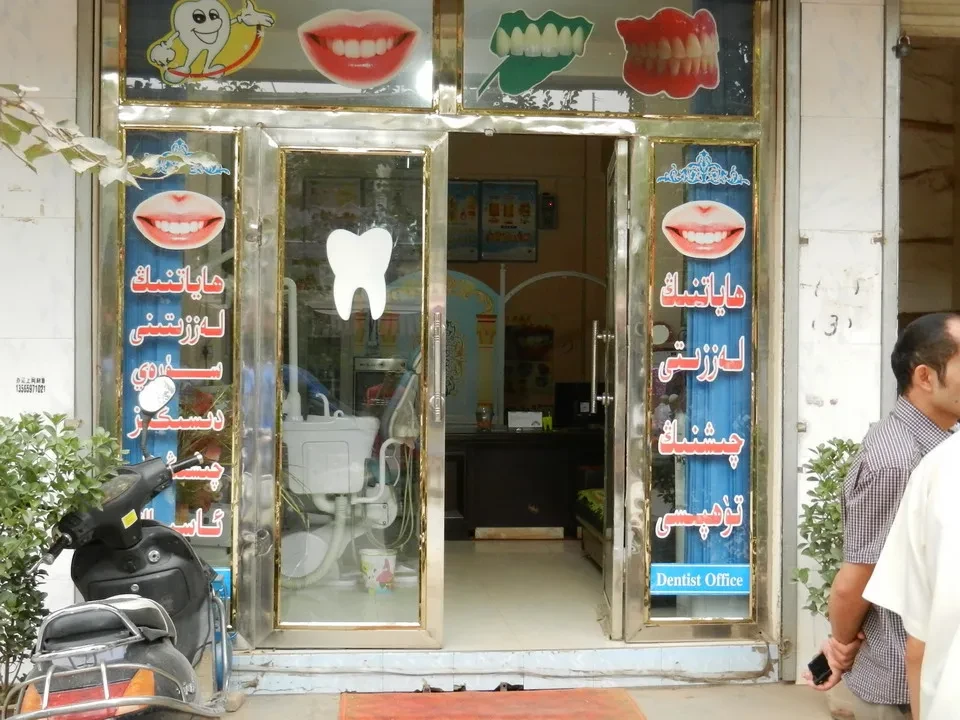
With our guide, we will do a stroll through the bazaar that we had already seen on our own yesterday evening. Actually, yesterday we asked a lot of questions and today we are looking for the answers. It's surprising to see so many dental clinics, which appear as shops with immediate access to the armchair. Here they almost blend in with the ubiquitous barbers. Although the Prophet prescribed personal hygiene, it seems that these are not very strict and consequently create a lot of work for dentists. We also see some types of catheters made from wood for children, which are wrapped and forced to maintain their position during the night. One particular thing that at least perplexes us is seeing children with their pants down in the arms of their parents. An alternative to diapers. At the market, there are small dried snakes to be used as a medicine, while bats or dry turtles are only used as an attraction.
The historic center is undergoing complete transformation: the old houses are being demolished to make way for new constructions. Previously, the homes were built with earth mixed with straw, while now they are made of concrete or bricks with a cladding that recalls the traditional Uyghur style. Fortunately, the style remains the same and the impact should be minimal. What is striking is the contemporaneity of these renovations: it seems that everything must be demolished and rebuilt at the same time. Everywhere you see construction sites and rubble. The impression is that you are facing the next phase of the aftermath of an earthquake Perhaps the earthquake really happened and its epicenter is located in Beijing. Once again, the government imposes rebuilding, offering incentives that can reach up to 60/70%, but those who don't have the remaining funds can only sell to hungry speculators. The price per square meter ranges from 10/12 million ¥. Regarding excessive construction, we had heard about the case of a hutong owner in Beijing, who refused to sell his property because it was going to be demolished to make way for new buildings, raising the house on top of another building between skyscrapers. Usually, authorities don't hesitate, but in some cases they concede to requests accompanied by a gift.
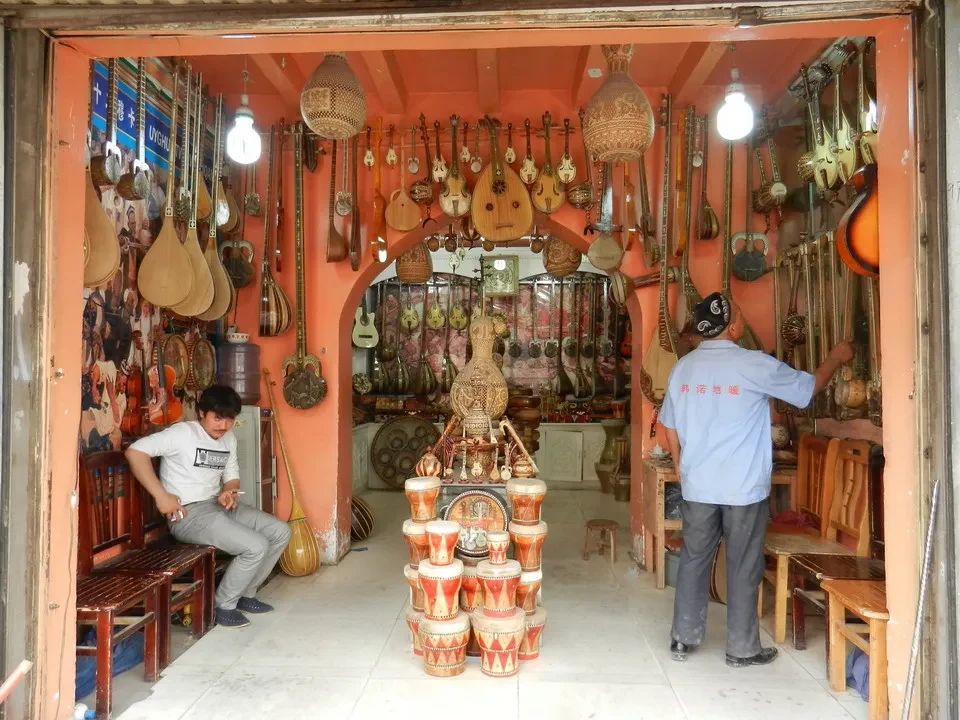
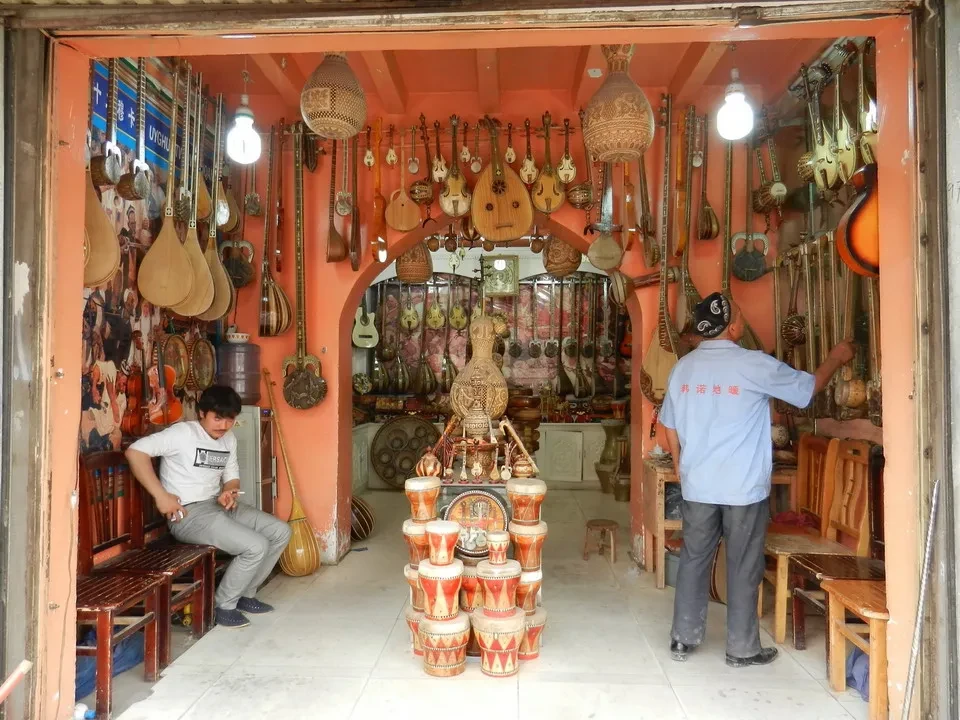
Let's enter a small artisan workshop. Uigur violins and we discover the details of the finishes. Just for decoration The exterior requires between 3 and 25 days of work, as black squares made from cow horns and other materials, along with finely cut white material, are applied.
Another gem of Kashgar's craftsmanship is the production of the famous knives. However, the market for these tools is declining due to the ban on carrying them on airplanes (it seems that it is not even possible to bring them in checked baggage). Conversely, due to the difficulties encountered when visiting countries like Pakistan or Afghanistan, merchants import carpets which they sell in this quieter location.
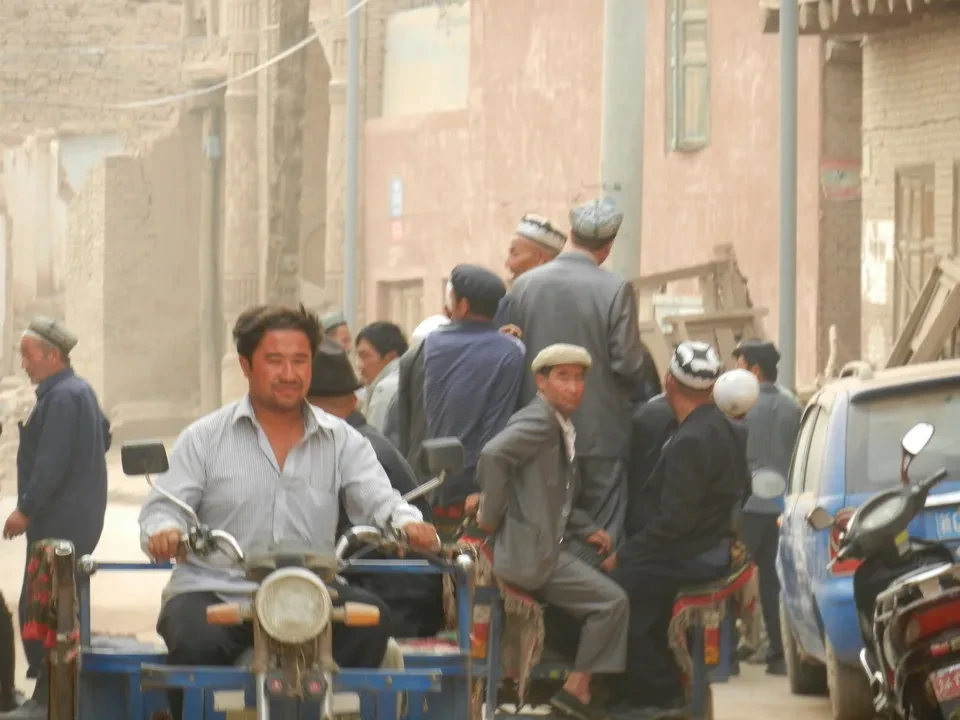
On one side of the main square, I can see many men gathered: they are workers who have finished their season in the fields (mainly cotton crops), and We arrive in town. to look for daily work. This part of the square serves as an improvised employment office where, if things go well, they are hired to do masonry work for a few days. Due to the ban on gatherings to avoid past riots, the police officers are trying to disperse the large group of people waiting. The high unemployment rate is even being thwarted by the ban on being in a particular location while looking for work.
Traditions and spirituality
We arrive at the Id Kah Mosque It is the largest in China. can accommodate 20,000 people and is almost certainly the most active one in the country. Built in 1442 by Saqsiz Mirza on the site where his parents were buried. Unable to reach Mecca due to the obstruction created by the Persians, he used the money to build the mosque. You can also hear the call to prayer resonating in the city center, a rare sound in China. A few days ago, during the end of Ramadan, more than 60,000 people gathered in front of the Mosque. Currently, work is also underway here, and it's surprising to see masons working in this place where it would be more logical to see Uyghurs.
The Islam practiced here is tolerant, and it's true that you can find both women wearing the burqa and young girls in mini-skirts on the streets. They follow the Sunni branch of Islam, which makes them less prone to fundamentalism.
At the same time, China has an interest in completely controlling the region without allowing even the slightest opposition or dissent. Apart from the geography that links the southern border of Xinjiang with the northern border of Tibet, a Uighur irredentist movement would only trigger the second one, with difficult-to-imagine consequences. Despite starting from different stories and assumptions with religions very far apart, the two regions form an enormous extension and contain within their depths resources to which China is beginning to tap. Finally, although mostly remote areas, they represent a valve for emigration for the overpopulated Chinese interior.
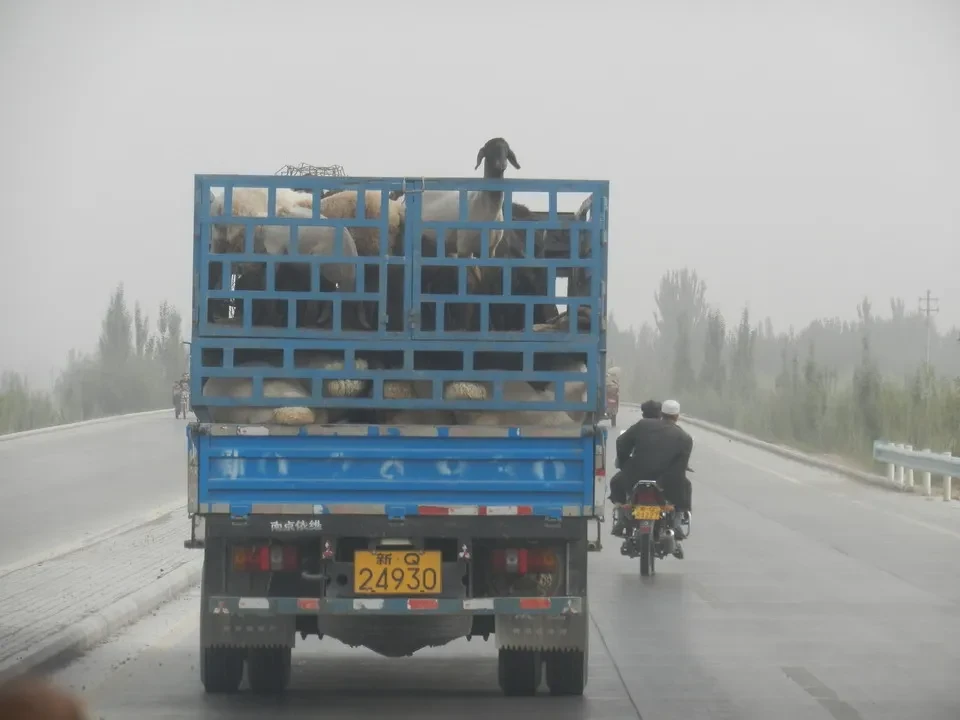
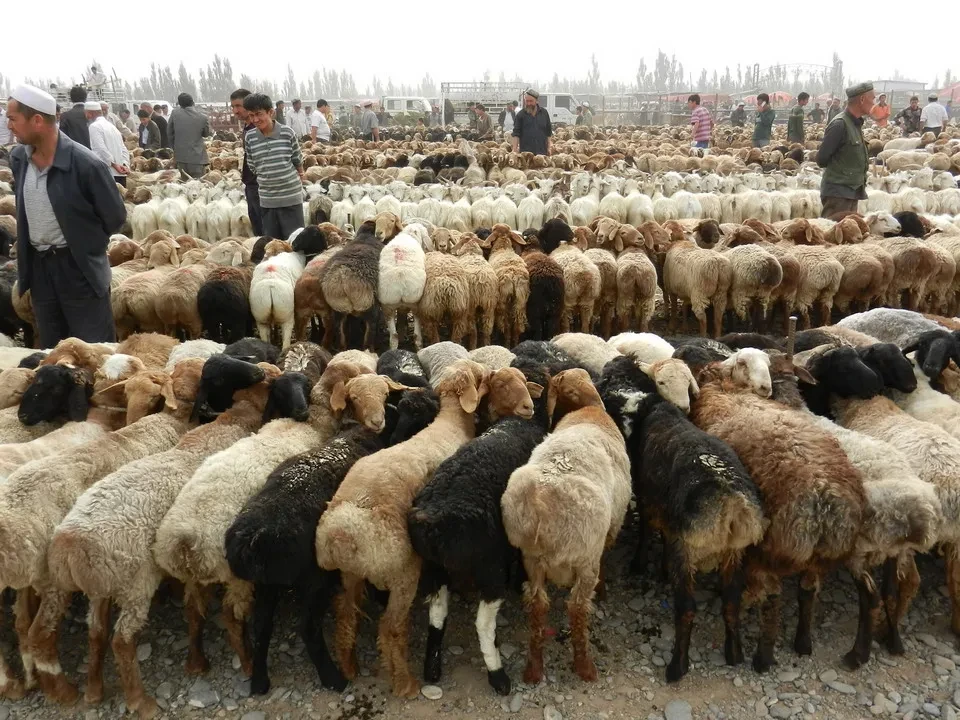
On Sunday, the population of Kashgar increases by 50,000 people. coming from the surrounding areas for the Sunday market. Thousands of farmers with carts and sheep They arrive from the countryside for this important event. In reality, there are two markets: the most interesting one is definitely the livestock market located around Aizilaiti Lu, east of the Tuman River.
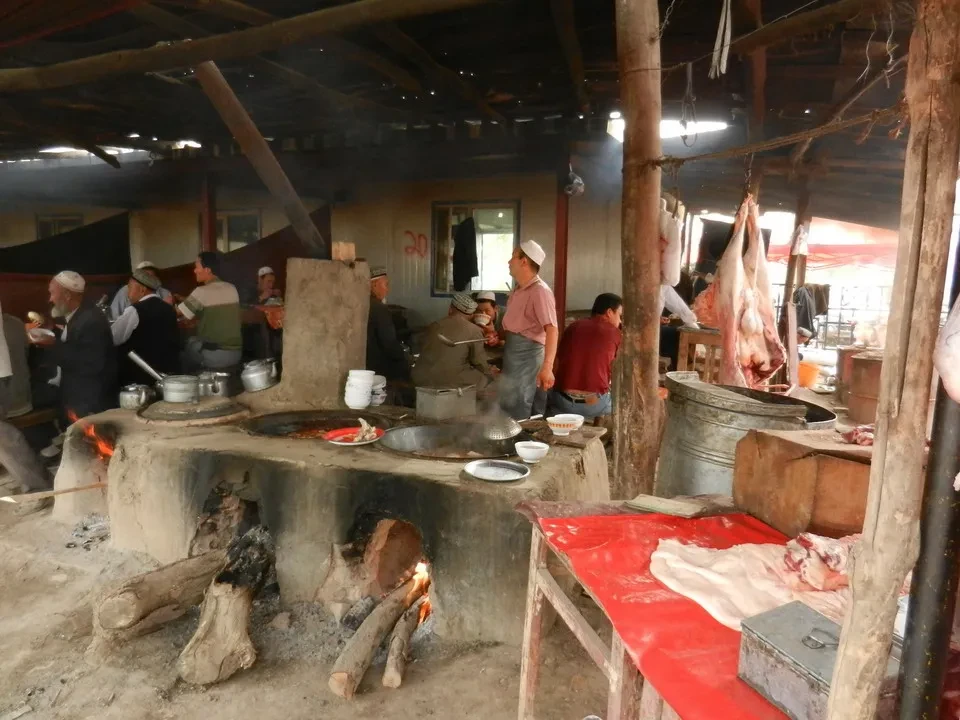
The shepherds or merchants arrive around 10:30 local time. When we arrive, the market is already set up according to the orders, but other trucks carrying livestock are still waiting in line to enter: along the perimeter, a queue of stalls that cook, in the exhibition area, you'll first find the cattle. so, the sheep and the goats. Towards the bottom the donkeys, yak and one camel It's quite remarkable to see the sheep lined up on both sides of a rope. There are three types: those from northern Xinjiang and mountain sheep, which sell for around 800 yuan, and city sheep, which sell for 1000-1200 yuan. These are animals about one year old, and all that are purchased end up being slaughtered, except for the young ones, which are bought in the spring and raised on the mountains. Because the price is subject to fluctuations, if the farmers aren't satisfied, they return in subsequent weeks hoping to get a better deal.
The market held in the city (not the usual one in the historic center) has largely lost its significance due to the influx of Chinese products. However, it remains interesting for its size (sort of a... city within a city) and for the variety of exhibited items. I stalls that they sell fabrics, carpets and the essential spices They are particularly beautiful because they are richly colored. Instead, the shops displaying appliances draw attention, which represents a real contrast to the rest of the market.
After a quick lunch at a wonderful Uyghur restaurant, we head to the airport to begin the series of flights that will bring us back to Milan. However, we won't leave without first seeing the largest Uyghur cemetery It is located on the street and provides us with an opportunity to say goodbye to this community. There are usually no inscriptions of names or dates, as family members clearly remember where their loved ones' graves are: after Friday prayers, Muslims must go to the cemetery with a handful of wheat or corn as a reminder of the deceased. Another element that distinguishes them from the Chinese is the lack of superstition or fear, which also influences their religious aspects. It seems that the Chinese need idols rather than a God.
Although small, the airport is modern and functional, especially considering its peripheral location within Kashgar. And it's from here, at the heart of Central Asia, that We bid farewell to this culture. So ancient and proud to be back in Beijing via Urumqi, with a flight time of almost 5 hours. We had warned ourselves that we were quite far from the capital. Who knows if it will still be this way in a few years?
Flight from Kashgar to Urumqi (CZ6806 - 14:50-16:30) and then on to Beijing (CZ6909 - 20:00-23:25)