Day 8
Silk Road
Dafosi: Buddhist monastery in China. The desert and the Silk Road come to life.
The urban face of the reclining Great Buddha
In ZHANGYE, 97% of the 1.9 million residents belong to the Han ethnic group. The name of the city means "open arms" and symbolizes a structure designed for protection. It is said that there are no major industries; instead, there is a lot of agriculture that represents the agricultural center of Gansu. Those who live in the city seem to be mainly involved in services. In the center, you can find many shops, including those selling fashion and clothing. For centuries, it was one of the most important stops on the Silk Road, and Marco Polo spent more than a year there.
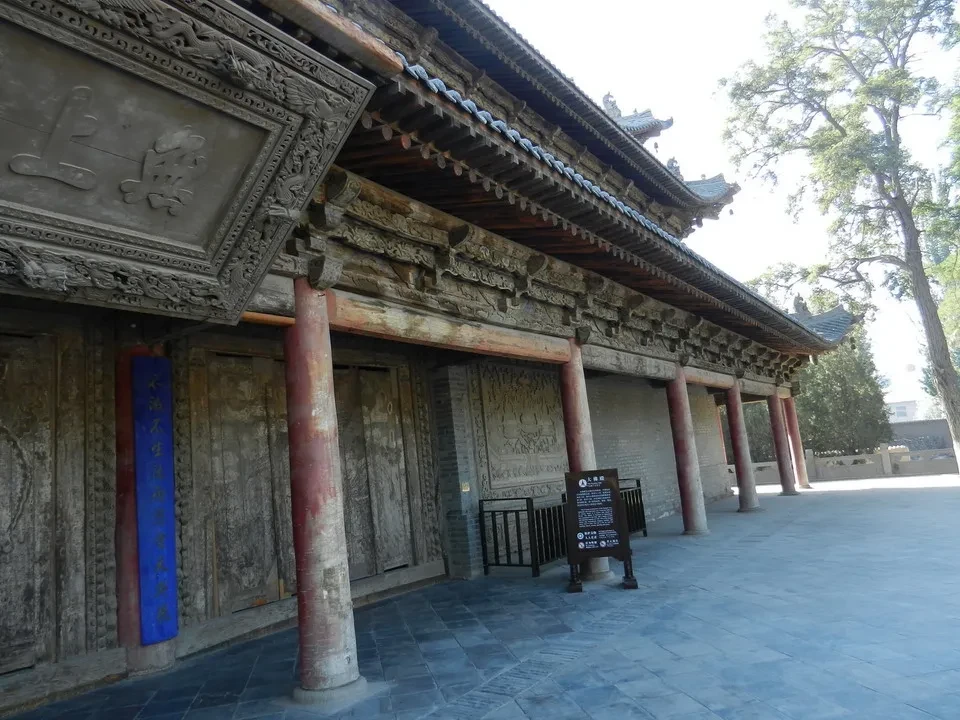
Dafosi Temple: this time it's about Han Buddhism, so Chinese and therefore with different features in comparison to what we saw in the previous two days. One of the temples contains a Large reclining Buddha …a long, 34 meters structure representing the image of the Buddha from the past. The statue dates back to the 11th-13th century and it's interesting to see how it was built: starting with a wooden frame, it was covered in kalk (similar to cement) before being painted. We visited… other temples of the complex, within which are also found mythical figures of characters who have nothing to do with it. with God, but they represent heroes from whom to learn. Even here, we see the faithful kneeling and paying homage. Also worth seeing is the museum, which is mainly dedicated to sutras: it explains how they were written and how they traveled in caravans along the Silk Road. Many of them are in ancient Chinese, which was read from top to bottom and right to left, while others, which are more recent, are written in modern Chinese, which can be read like our alphabet, with only one detail: they are ideograms. At the back of the complex There is a large white stupa 20 meters high and featuring a pavilion decorated with intricately carved wood. At Dafo Si, you won't see monks as the area is primarily historical and tourist-oriented. No rituals are held here, although many pilgrims can be seen praying. In reality, there are no church services or other religious functions in Buddhism: if someone wants to get married or attend a funeral, they can call upon a monk to participate.
Traditions and spirituality
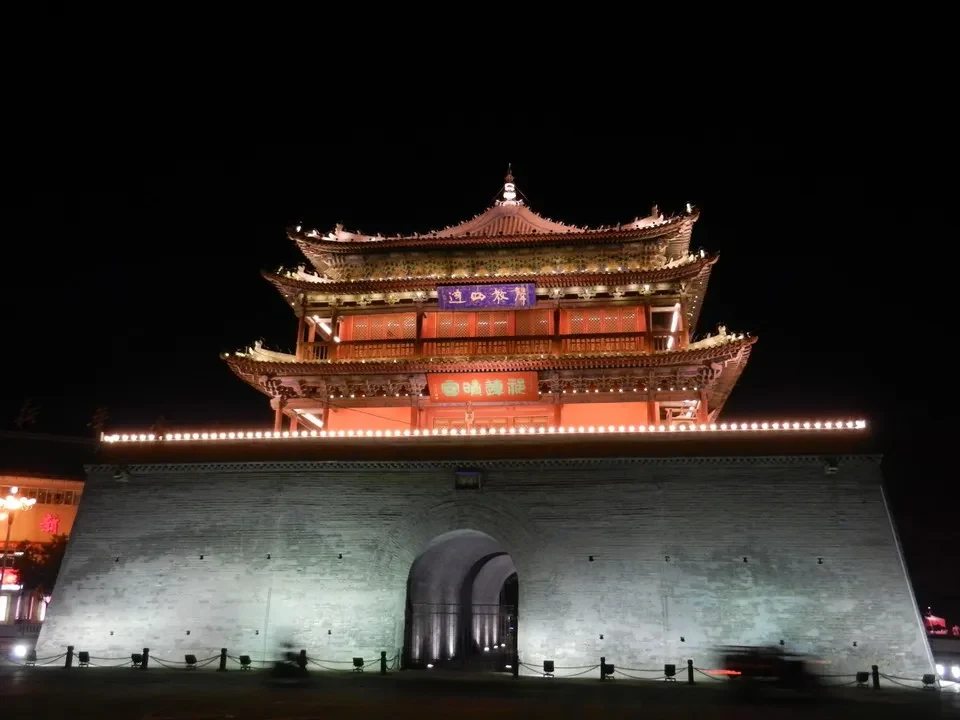
We walk through the square where last night there were musical groups performing accompanied by more or less improvised dancers under the dazzling light of the neon signs, to reach the Mu Ta Pagoda. dedicated to the Buddha, Shakyamuni, we climb up to the slender peak for an observation from above. At the entrance, there is a statue of the Buddha in the center And all around, paintings depicting his life. There is also a concept of paradise in Buddhism, but it means that the body is destined to die, while the soul remains and is reborn into other people or animals depending on how one has behaved in life. In the worst case scenario, complete reincarnation may not occur. This philosophy leads to the reincarnation of the living Buddha. Saying that the face of a character resembles Confucius could offend the sensibilities of Chinese Buddhists: Confucius was a teacher of life, while Buddhism is a religion. The Drum Tower is closed, so we go directly for lunch on a street essentially dedicated to restaurants. As we proceed, we start hearing loud noises in different parts of the neighborhood, almost as if there were a war. We are reassured that it is just a coincidence that happens at noon during a specific lunar phase. We discover that in this period, anyone celebrating something invites friends and family for lunch at a local restaurant. This applies to weddings, passing exams, or any other happy event. What is particular about this is that people take advantage of the lunchtime break to go there and then return to work. We join a group of children who are celebrating a classmate who has just passed a difficult exam; the family enters the restaurant and at a certain moment, they are given a powder keg Right outside the entrance. It's undeniable that the Chinese are very organized in this area, but their system of coordinated explosions to make it seem like a war is something even the most authentic Neapolitan would envy. Afterwards, they ask us to take a photo. together with the young man: Seeing two Italians is already an event in itself. Those with more time celebrate instead with a dinner rather than taking advantage of the lunch break. Today we also didn't see anyone arriving from our part of the world; people here observe us as if we were coming from another planet. One might think that the last European to pass through here was our compatriot Marco Polo. And this is in a city of almost two million inhabitants, not a remote mountain village.
We continue through the Hexi Corridor, the narrow strip of land stretching over a thousand kilometers, which for centuries has been the only route for travelers arriving or departing from China. The road to Jiayuguan is now entirely highway, approximately 250 km long, along which high-voltage cables run. high-speed rail construction site a railway line intended to reach Urumqi in a short time. In fact, there is already an existing railway with high train traffic, while the highway is not very busy, mainly used by trucks. The heat is noticeable even though it's a dry climate in a desert environment. The vegetation is reduced to some bushes that are struggling on the rocky terrain. From time to time, you can sense that we are running along the mountains, but the concept of a corridor should be understood in a very broad sense. After all, if compared to the extent of the mountains stretching so far north and south (Qilian), it becomes clear what kind of corridor this is. Just before our destination, we come across fields of corn again.
Jiayuguan It is located at the gates of the western deserts and represents the extreme end of the defensive system of the Great Wall. The city has absolutely nothing to recall the glorious past as a bastion defending China from invasions by barbarians from Central Asia. The center is entirely made up of recent construction, with wide avenues cutting through it. They tell us that the city thrives on a large steel industry, but it seems unusual that this alone would justify such opulence. Tourism certainly plays an important role, although it is mainly composed of Chinese people themselves. There is a surreal atmosphere: few people around and many shops that have closed, well-irrigated gardens and fountains try to give the town a pleasant appearance. The traffic is less intense than in other cities seen so far. When night falls the lights come on almost as if I were creating it myself small Las Vegasandgas and also the music, whether played on a stereo or live. with related dances, on a calm and cool night. Everything takes place under the watchful eye of law enforcement, with large police deployments visible everywhere. At first glance, one might think that the threat of international terrorism has never seriously threatened China: Muslims do not have fundamentalist positions, and Tibet does not use this system to claim autonomy. The real risk seems to be the demand for democracy, which would ultimately destroy China.