Day 1
Beijing
Beijing: The new center of a world moving at breakneck speed towards the unknown.
Flight to Beijing
The flight from Moscow arrives with an hour delay, but we are rested and therefore ready to begin our adventure in China. After completing the necessary formalities, we find the guide waiting for us and without hesitation, we set off to explore PEKIN.
The first impression is that we are in a luxurious and orderly city, not far from the center of the world. Heavy traffic on highways that penetrate towards the urban core, and surprising greenery for the season. It’s still late summer, but it was a very rainy period. Just three weeks ago, news arrived about floods so severe that they required the closure of Beijing Airport. The spring-like climate gives us new energy after spending the night on the Aeroflot aircraft.
Visit to Temple of Heaven
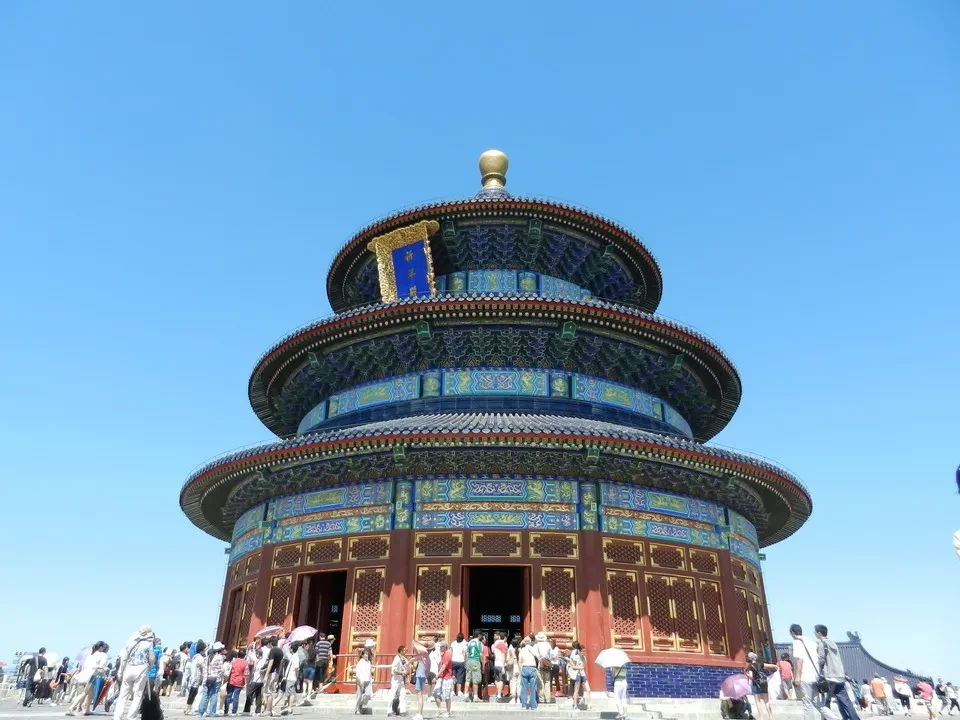
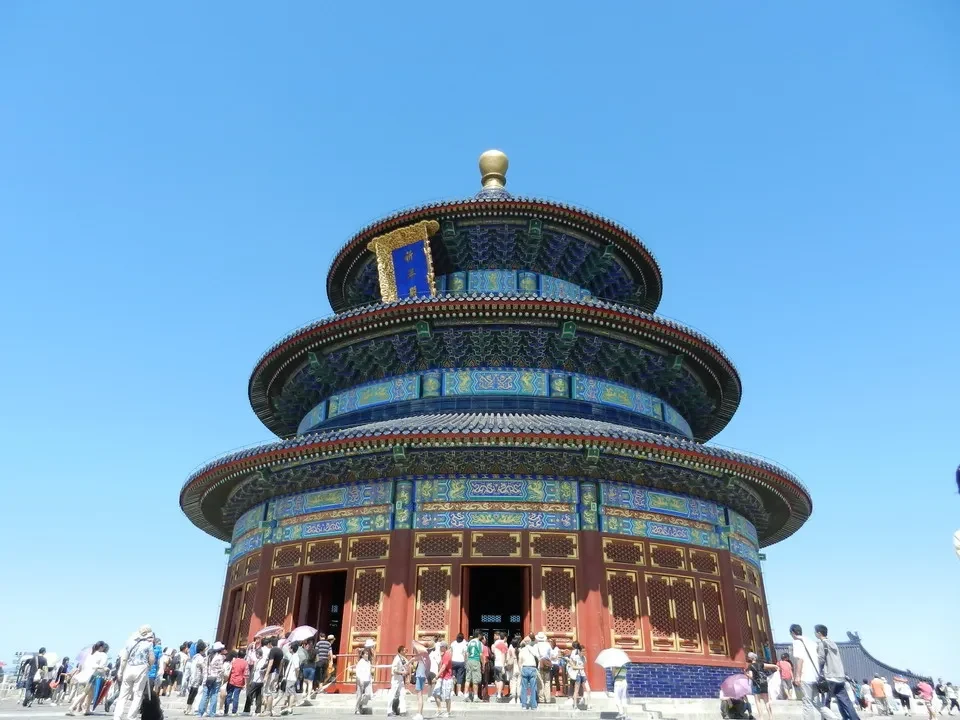
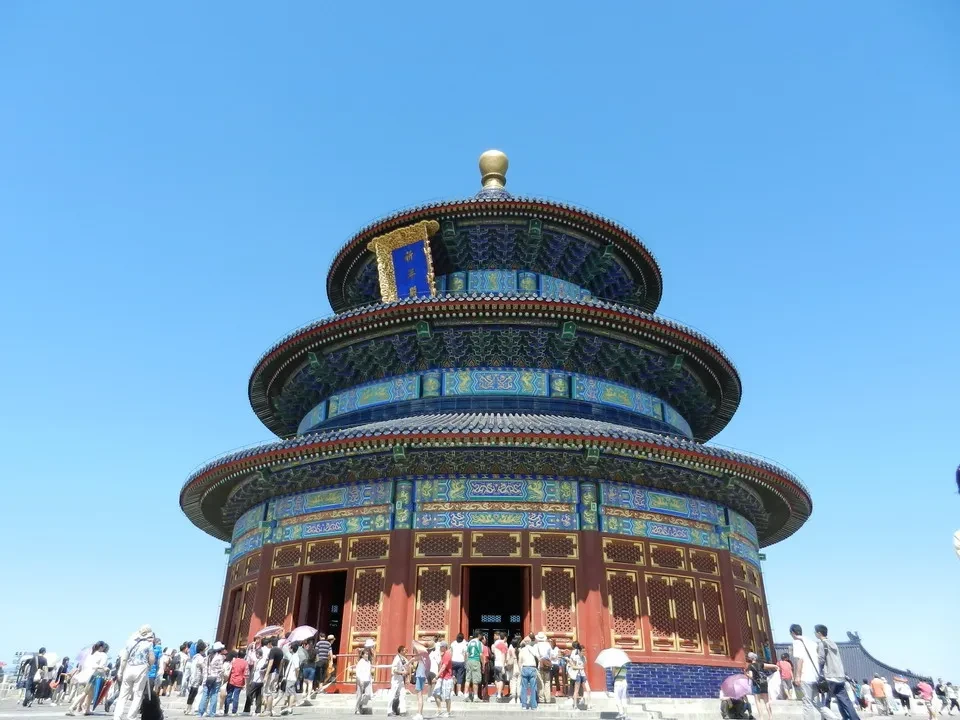
Let's start with a visit to the Temple of Heaven, 273 hectares of complex, three times the size of the Forbidden City. The circular base of the temple and the square plaza in front of it symbolize respectively the sky (or heavenly realm) and the earth: the point of contact is usually associated with the figure of the Emperor, i.e., the intermediary between the two geometries. This was particularly true during the Ming dynasty, as construction began around 1400. The dominant color is a deep red, which brings good fortune. Recurring numbers are mainly odd ones, as they bring good luck, especially the number 9, which represents the highest among the odd numbers. This will be the first of a long series of encounters with Chinese superstition, a superstitious people who associate everything with good luck and beliefs. All the crew members I am in Jade, the national stone that is used in jewelry in its most precious form and in construction as a marble to create beautiful floors and various decorations. Even in large pieces, it has a shine that seems to hide sparkles inside. High-quality jade has a color tending towards pale green, is transparent, and becomes even more so over time; it also has a rounder sound than crystal.
Nearby the temple, you will also find the echo wall: speaking normally from one side, your voice can be clearly heard a few dozen meters away. The same applies to the three stones located in the center of the temple: when standing on the first, you hear an echo once, on the second it resonates twice, and on the third three times.
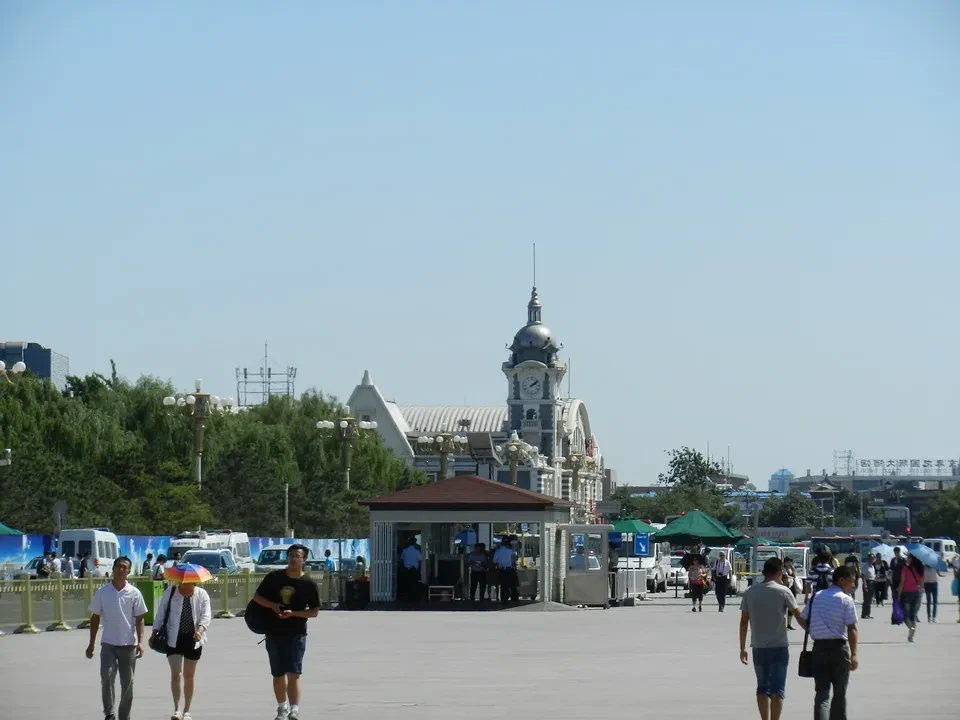
Lunch was enjoyed at a self-service restaurant that was very popular with tourists who didn't want to spend too much time on food. We visited a museum/shopping center dedicated to silk, in order to better understand the origin and processing of this fabric, which will (and I mean it) be the main theme of our journey, following in the footsteps of Marco Polo and the merchants who exported silk to the West and eventually to Rome. With warm sunshine and clear skies, a rarity in Beijing, we continued by visiting... Tiananmen Square, the largest urban space in the world located in the heart of Beijing. And here we come into contact with real China: images that made headlines around the world, featuring a protester facing a tank in 1989, come to mind. To access the square, you need to pass through photo cars, luggage, and yourself under the metal detector They explain that these are safety rules, as the square represents the heart of modern China and is the political target of any opponents to the system. But we know that the demonstrations they want to prevent are those against the established power. This is just the first in a series of preventive actions aimed at maintaining the status quo.
Forbidden City and Lamaist Temple
The presence of Mao's image at Tiananmen Square also represents the legacy of his work, just as the actions of the former airline are remembered.
Although it is the largest square in the world, it seems smaller than it actually is, being cut off in the middle of Mao's mausoleum, a macabre structure both in its content and appearance. The square is surrounded by buildings... Soviet style, grey and cold, making the overall impression rather negative: it's probably more famous for the historical events that passed through here than for its intrinsic beauty.
What is instead a true work of art is the Forbidden City, covering an area of 720,000 square meters. It houses rare treasures and interesting facts after being the Imperial Palace for 500 years. Within its walls are a total of 9999 buildings. Passed through the first doors and continuing towards the center ( where the emperor lived) a new world unfolds that only imagination can represent. Especially if you consider that this city has been truly forbidden to the public access.
To demonstrate how much the rulers feared attacks at the time, the outer pavement consists of a thickness of 15 layers, to prevent malicious individuals from digging underground tunnels and entering the City. The wing dedicated to the emperor's bedrooms also consists of 27 rooms: one was always used differently to deflect any potential attacks. The place is very popular with visitors, mostly Chinese who tell us they come from other cities, as a testament to how domestic tourism has become a solid and important reality in the national economy. It is clear that the center of Beijing represents the ideal destination for all Chinese, and the summer season is when you see the most tourists, but it remains the fact that moving around within the Forbidden City is truly difficult. We exit from the north side under Jingshan Park Hill, an artificial elevation created by digging out the lake surrounding the imperial area. Fires were a real problem: there were more than 300 containers made of copper, intended to collect rainwater, as well as some internal pools The water source to use in case of fire: the containers were covered in gold, and you can still see the carvings made by invaders from the early part of the last century who had scraped away the precious metal.
Let's stroll along the many tree-lined avenues, passing by a pearl processing center with beautiful flower gardens. We are shown how pearls are extracted from oysters, some of which produce pearls of colors found only in China due to the type of seabed where they live. We go for dinner at a charming restaurant where we sample the Peking duck, which immediately creates a connection with our taste buds.
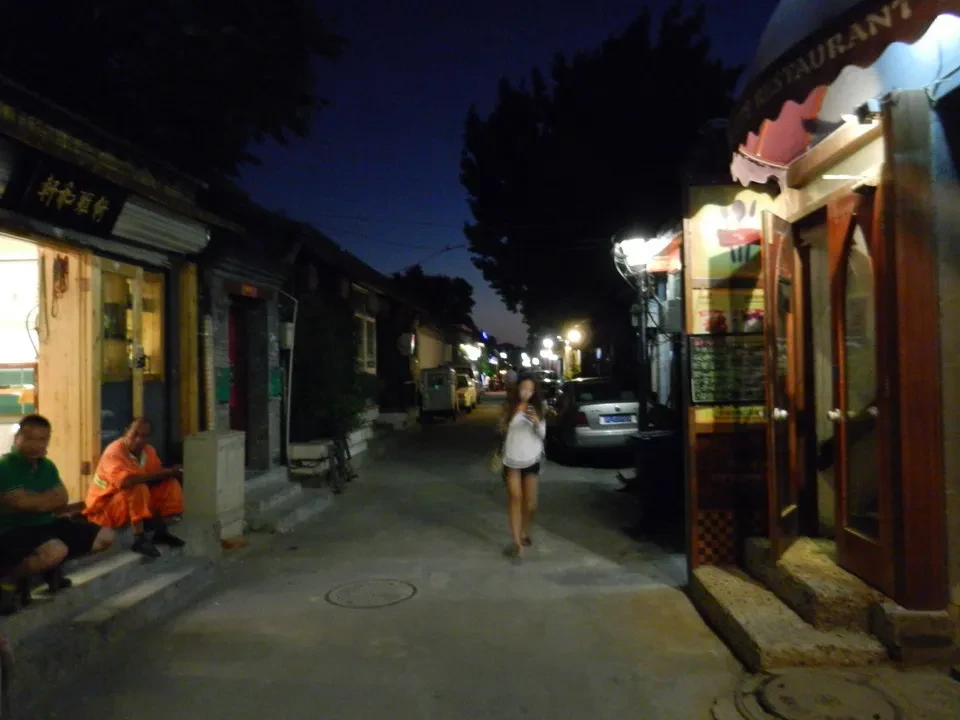
Finally, we also see our hotel located in the Olympic area, where we can go to drop off our luggage and then depart immediately on our own to explore a more central area from the outside. Lamaista Temple, the one dedicated to Confucius and the hutongs of Ochao. Talking to taxi drivers is pointless, and showing them a map doesn't really help: they can't read our characters, and obviously they know the city better through experience than by looking at maps. Eventually, we manage to get our point across and visit what remains of old Beijing. The narrow streets lined with small houses with courtyards enclosed by walls (hutongs) tell us about a time long gone. There are few lights, mostly left to the initiative of vendors who linger around. along the narrow streets It's a shame that all this is being destroyed to make way for skyscrapers. If we were somewhere else, we would be worried, but here we feel safe and imagine how life must have been during the Ming Dynasty, as well as in more recent times when modest homes were considered capitalist property and had to be shared among several families. We finish our tour of the Drum Tower, which with its sounds announced the setting sun. We return by taxi, almost losing our way, but finally arrive tired and satisfied in our apartments.
It is undeniable that the city has undergone a barely controlled evolution, such that it appears to be a regression in certain aspects. buildings that grow with remarkable speed, at the expense of traditional hutongs and even the earliest city walls. The positive aspect is that even in the suburbs, you don't see the classic slums of expanding cities, but this doesn't mean that there are no contrasts or exploited workers, rather than poverty. It just means that everything is enclosed in apartment complexes, which can also be acceptable solutions since northern China faces particularly harsh winters. Alongside a high density of individual houses, miserable people bent under the strain of work pass by. Those who are at the peak of success live with the clichés and style of the wealthy, while those below struggle to make others rich: this is communism in Chinese version. The euphoria manifests itself in futuristic constructions where glass and steel dominate.