Day 6
Kilimanjaro 5: The summit
At the top, on the mountain that we conquered before we conquered her from Barafu Camp (4,663 meters) – to Summit (5,896 meters) – to Mweka Camp (3,048 meters).
From Barafu to Stella Point
Location: Arctic
Around midnight, we set off towards the summit between the Rebmann and Ratzel glaciers. We head north-west and ascend through heavy scree to Stella Point, on the edge of the crater. This is the most challenging part, both mentally and physically, of the entire trek. At Stella Point, at 5,740 meters, we stop for a short break and are often rewarded with the most magnificent sunrise of the entire ascent. From here, you can encounter snow during the last hour towards the summit. Then we arrive at Uhuru Peak, at 5,895 meters, the highest point on Mount Kilimanjaro and of the entire African continent. From the summit, we descend directly to Mweka Camp, with a stop at Barafu for lunch. Gaiters and trekking poles are very helpful in descending on the loose scree. The path is not technically difficult and descends through rocks and debris, then through the moorland and finally into the forest. The camp is located in the upper part of the forest, where fog or rain are not uncommon in the late afternoon.
At 11:30 PM, the alarm goes off, as agreed with Joseph, and the first morning is not exactly what we had hoped for. When I pull back the curtain to open it, a layer of ice falls down, reminding us that it's certainly not warm outside. We are now automatons pursuing our own destiny: we ignore the fact that we are well below freezing, that the night has just begun, and that we need to ascend almost 1,300 meters starting from a high altitude. Breakfast is as usual, abundant, but we feel it's best to be light, since our stomachs wouldn't appreciate overeating. A cup of tea with something solid would be perfect. Getting dressed is another delicate operation: starting from the bottom, we have thermal underwear and two pairs of socks, three layers under our thermal trousers, four layers for the torso, gloves and mittens, a balaclava and mask that we will soon remove, as they represent an additional obstacle to our already difficult breathing. At this point, the backpack is light: plenty of water and only a few remaining clothes. Checking the oxygen level with the saturimeter also shows values definitely good for the altitude, 88%, which provides further reassurance. The equipment works.
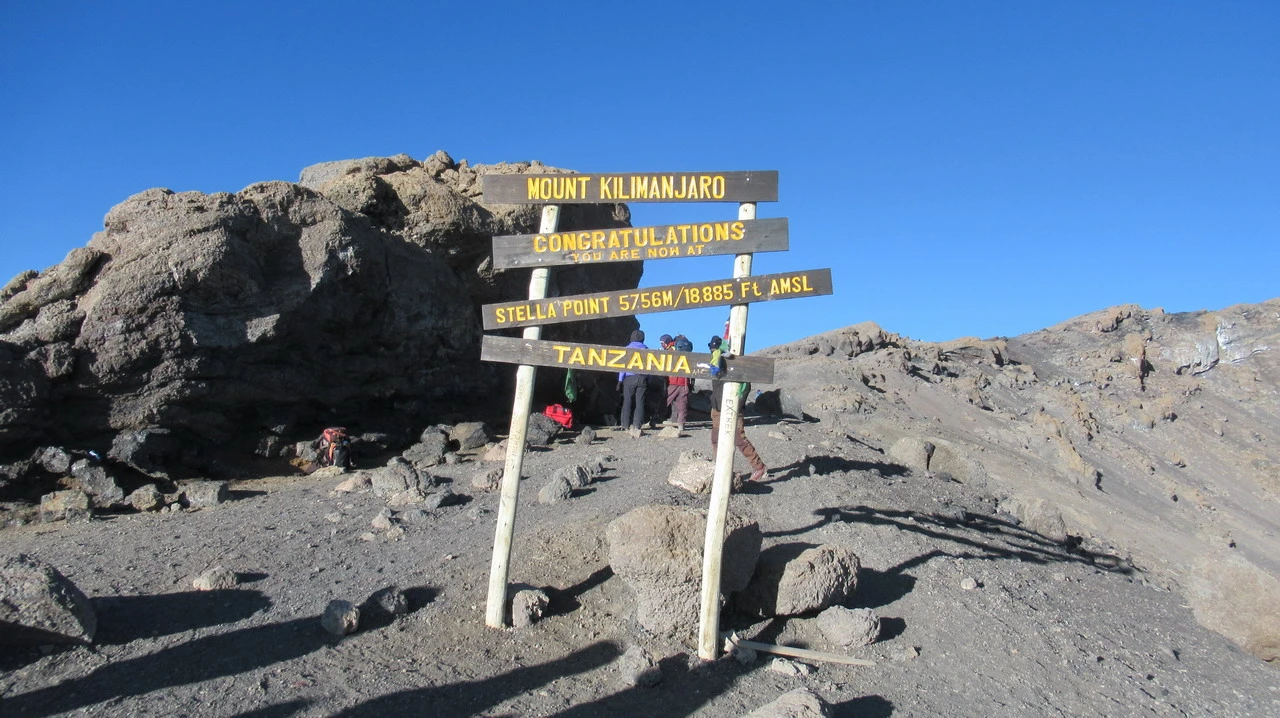
If the backpack doesn't weigh much, the weight we feel on our shoulders is entirely related to the moment's responsibility: two years of waiting, a series of unusual events, training and fatigue now find their culmination. We attempt the summit and there will be no appeal, unlike what can happen on our Alps. We live in the moment without particular apprehension, too focused on gathering what we need and trying to have the necessary calm. The cold is intense. With headlamps, we leave the campsite area where we were staying, when it's already Saturday night at midnight, at the same time as people in our cities enjoy a break from the heat in the evening by the sea or in some mountain resort. I think of Bonatti, who almost envied those who didn't have certain ambitions and for this reason could live better; but immediately I think that when we are up there no one will be able to equal our happiness. So let's go. Joseph starts with his pace, at times not exactly in line with the much-proclaimed "pole pole", while Jackson closes the small group of four people. We pass over some rocks, easy if it weren't for the visual limits caused by darkness and the long steps on the boulders weighing like stones. We briefly overtake other groups that proceed more slowly or are resting: the beginning is good, but we must continue like this because there are almost 1300 meters of altitude difference from the starting point. After a couple of hours, we have already overtaken those who started before us, including the good Catalans with whom we shared emotions and opinions in the previous days. Around 3 pm, the most critical moment arrives: the altitude makes itself felt more strongly, the body begins to suffer and the mind knows that there is still much to go. In one word, the psychological anchors are weakening due to fatigue. The guides use intelligence to stimulate us, we make frequent stops, drink hot water from a thermos and start again. The altitude makes it so that when you stop, you feel a sense of well-being, but as soon as you take a step uphill, your heart seems to come out of your chest. And fortunately, the problems are limited to this, without further stomach or other difficulties. It becomes increasingly difficult to proceed: the zigzag that we were told is much steeper than we thought. After all, if this is the hardest route, there must be a reason for it, even though it's also the one that offers better acclimatization. Then comes almost a magical moment, in which Joseph suggests listening to gospel music from his smartphone. The notes keep us company and partially distract the mind from fatigue; the starry sky above us completes this dream, tiring but still a dream. At some point, the summit seems far away and with it our goal: there is still much to go and the tiredness is great. Thinking back to Thin air by Jon Krakauer, we use the trick of counting steps up to twenty or thirty and then stopping to rest; we also slow down our pace, pausing for a second between each step. Despite everything, the few headlamps on our route still mark a considerable distance from Stella Point. We continue at a slower pace but don't give up; the guides are with us and support us, knowing that time is on our side, thanks to the good rhythm we have maintained so far. They know us now and they know that we won't back down unless there is a very serious reason. As we look upwards, it seems like the peak is getting closer, even thanks to a little light that begins to appear to the east. We finally reach the moment when Joseph tells us that there are only five minutes left until Stella Point. To the east, the lights of the hikers along the Marangu Route mark the peak and become increasingly visible; a large marker is already above us, just a few meters away. Perhaps this is the moment we realize that the challenge is becoming reality: one final push, if you will, in a steep climb when we are already at 5,750 meters, and the usual wooden totem congratulating us on our arrival at the junction between the two paths appears. Stella Point.
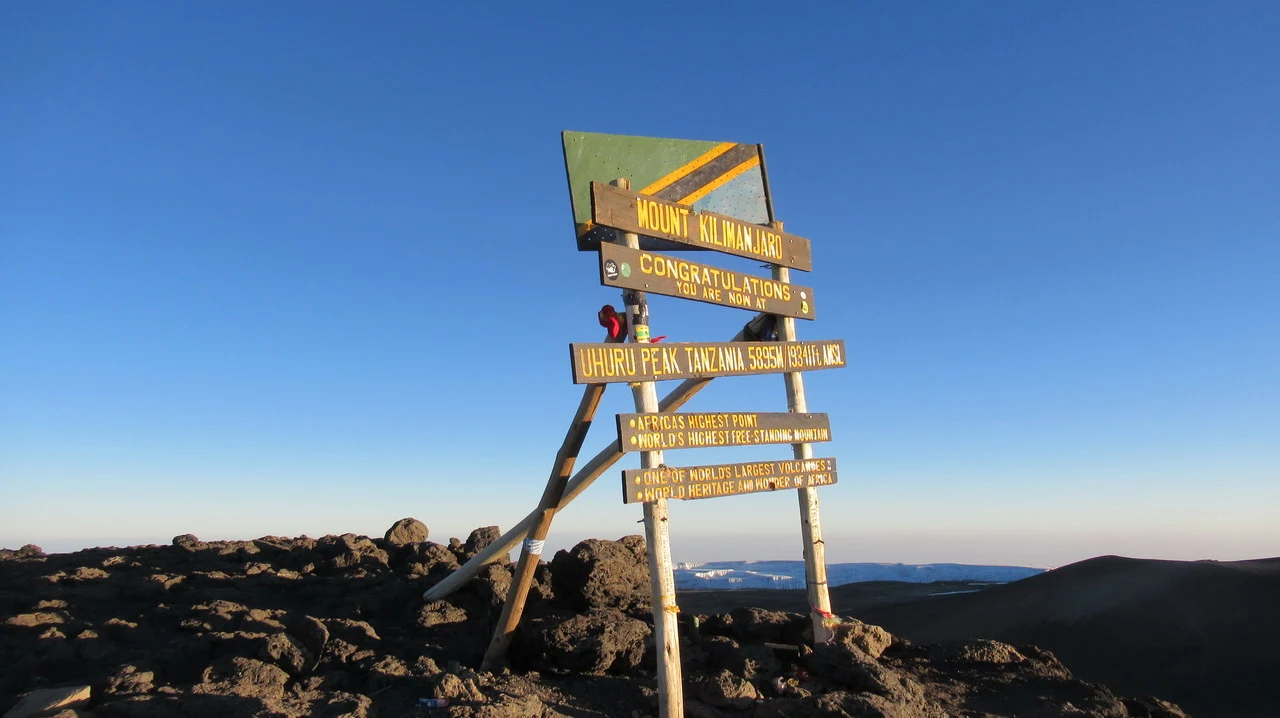
Uhuru Peak, the highest peak in Africa.
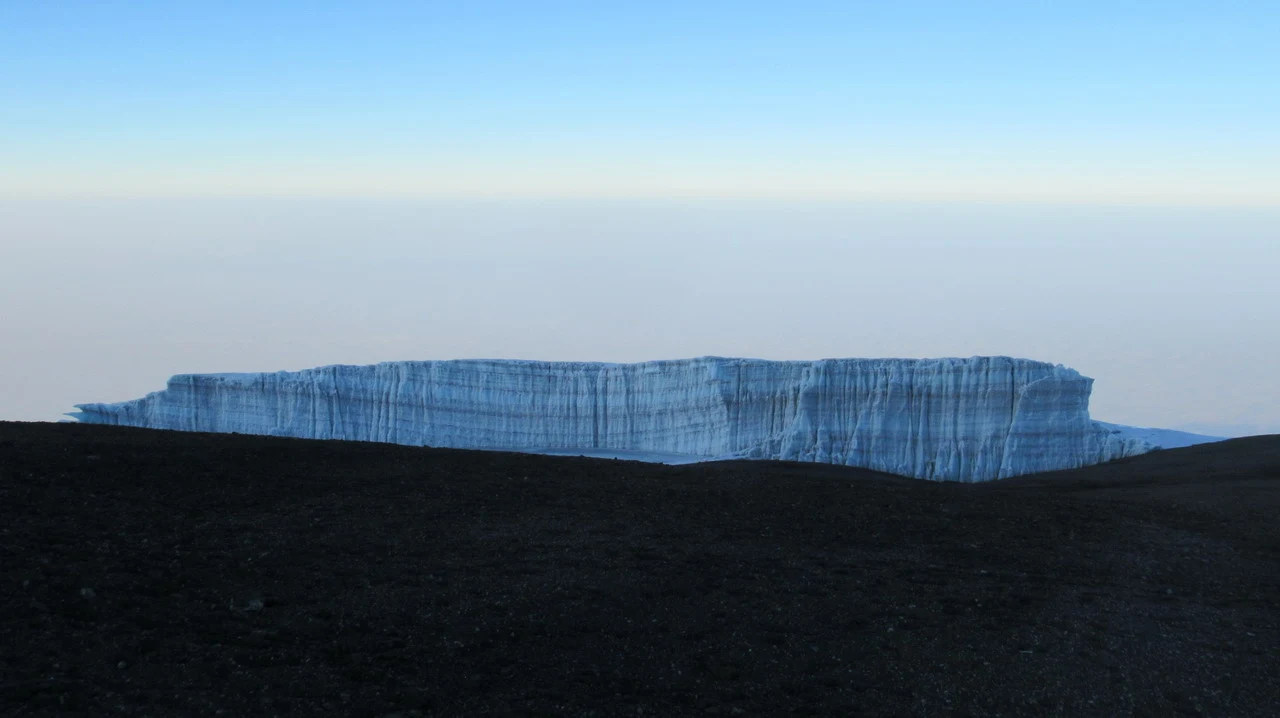
What further reason for optimism? the light appears behind us, which means the dawn. Not just any dawn: a crescent moon advances timidly to illuminate this part of the planet. We knew that Mount Kilimanjaro was the highest peak in the world not belonging to a mountain range, but here is the visual confirmation. The Earth globe is taking on color and offers further incentive to climb the last 250 meters. It's cold, there's altitude, we have 1,000 meters of elevation gain at this height, but our destiny now appears clearly defined. Optimism becomes a reality, reinforced by the fact that the ascent will take place along a much softer ridge of how far I have climbed so far. Every now and then, my gaze returns to the east, where the landscape takes on a more and more vibrant reddish hue. Slowly, the sun reaches... shed light on glaciers that begin to take shape Ahead of us, towards the summit. A steeper section, followed by another passage on the right side that directly leads to the huge crater avoiding some rocks, therefore a slight ascent to which one can see at the end Finally, the sign with yellow writing clearly marked on sturdy wooden planks indicating the finish line. A couple of groups are already descending, and we barely realize where we are and what we're doing. Just a few more steps and we arrive at... experiencing a moment of eternity... something not just longed for, but experienced between dream and obsession. The guides embrace us in a deserved and mutual hug, which feels like solidarity and sharing, beyond purely professional aspects. Yes, because we climbed this mountain together, and it's right that we all embrace each other. It's difficult to think, as so many thoughts cross my mind at this moment; we take advantage of a few minutes when the summit sign is free to take the customary photos, even with banners indicating dedications to places and friends that we want to remember right here. Other groups arrive meanwhile, and we take some pictures of what surrounds us. A void takes over me: in the end, I have reached the top, conquering nothing and everything at the same time. Nothing because I climbed a mountain like so many others, everything because I took advantage of this opportunity and finally achieved my goal. turned out to be a winner. Many won't understand and will consider it a waste of energy and money: I don't need to justify this to anyone; I see this undertaking as a desire to move forward and beyond, despite difficulties that were more organizational than mountaineering-related. Never before has the saying through hardship to the stars I accept the situation. I now realize that, just as I reached the summit of Kilimanjaro, I had taken off my gloves to take photos and hold up the flags; given that the temperature is about twenty degrees below zero, it might be best to put them back on quickly. The warmth from the excitement is fine, but it's better not to overdo it.
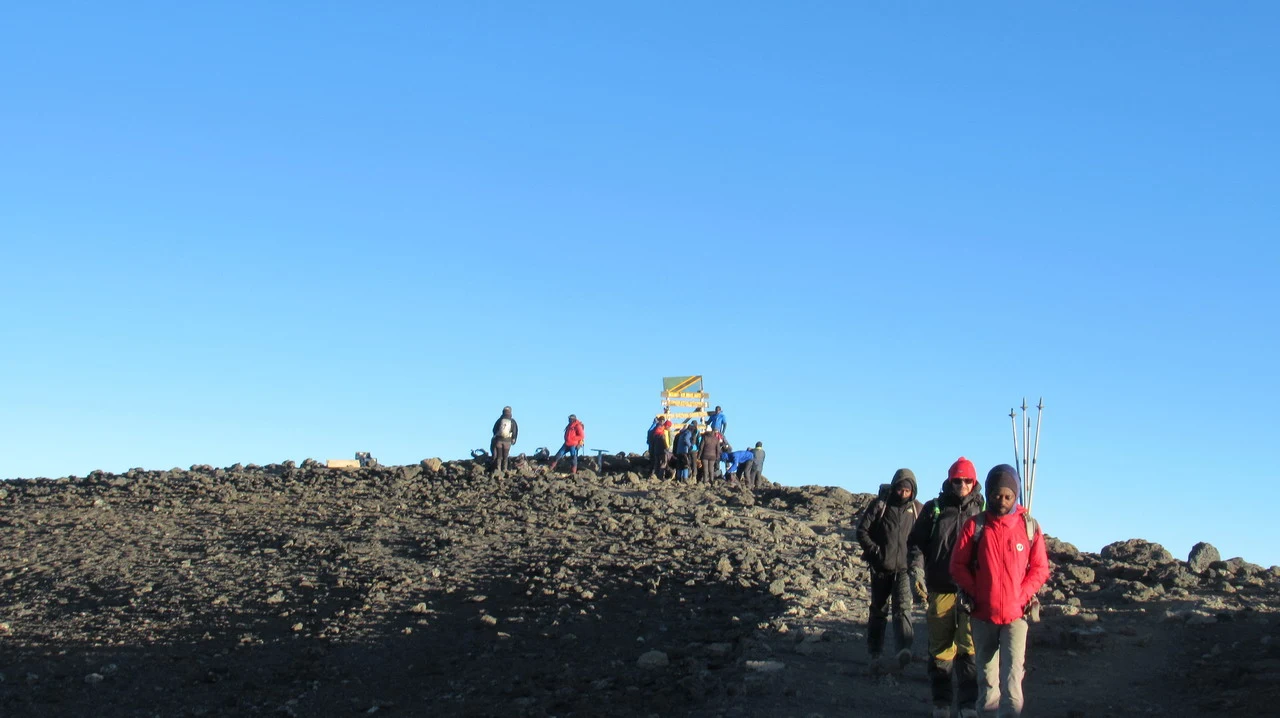
The long descent to Mweka Camp
This mountain is not so different from others in terms of its dynamics. Therefore, Now it's time to get off., knowing that there are 2,800 meters of elevation gain to reach the Mweka Camp; but we no longer fear it, now that we have reached our goal and the effort doesn't bother us, especially since the difficulties related to altitude feel much less as we descend. We just need to be careful not to make mistakes due to fatigue. Such a long descent after a night of hard work is certainly not what our legs would like. However, there is the pleasure of observing the change of scenery according to the rate. We will depart from the high-altitude arid desert to start seeing the first low vegetation, continue through the moorland area, where the green becomes increasingly bold, and finally venture into the last section of the forest, with the damp ground now covered in grass and tall trees that provide pleasant shade. We are still wearing all the layers for high altitude, and as we descend, we begin to remove them, although taking off our trousers would take time, and we see that the guides are keen to proceed quickly. This is understandable, as the day is still long and the afternoon weather in this area is usually characterized by rain. Just above Barafu, two of our porters meet us, with whom a warm handshake marks the successful completion of the journey, thanks also to their invaluable contribution. Barafou We collect congratulations from the team remaining at what we could define as the high camp, have a fruit juice with Joseph, are given half an hour of rest and fall asleep instantly, except to curse the alarm when it brings us back to reality shortly after. We tidy up our clothes and equipment in the backpack, have a quick wash and are called for lunch when it's 10:30. It should be noted that there are no water sources at Barafu, as there is also none at Karanga: the porters must climb back up with heavy buckets on their heads from a valley located just below this last camp, so water must be used very sparingly. As soon as possible we start again towards lower altitudes. The reliable Jackson sets the pace for the descent and, after only a few dozen meters in common with the ascent of the previous day, we take the path that leads to Mweka. It is interesting to note how the slope is gentle and the incline gradually decreases, allowing almost a straight line downwards. At some point we meet strange beds with only one wheel and a cylinder whose role should be to cushion the terrain for the patient. When we see them, we realize how useful it is not to get hurt on the mountain. We are also told that there was an helicopter rescue service, and the numerous "H" signs near the fields demonstrate this; the contract had been awarded to a private company that turned out to be using the permits primarily for its own purposes and to bring in customers. At the moment everything is suspended, and having a serious injury, we fear, could cost the unfortunate person dearly. We can say that the stretchers are fine in case of fractures or other problems with the limbs, but the descent times remain long. The injured person is strapped onto the stretcher, and six people, three on each side, operate the vehicle until it reaches the dirt road where a jeep can arrive. The pace is set, but not particularly fast, and although we don't stop, we are overtaken by porters and reached by Joseph. Our legs and bodies now want to rest; the adrenaline is coming down, even though we have not yet fully realized how much we have done. Everything happened so quickly that it is difficult to reconstruct the long day that has just passed, and we are still only in the afternoon. Along the path, there are porters descending to set up the Mweka camp for customers; others are ascending to bring supplies to Karanga. They are the only ones authorized to do this, as there is a kind of one-way system: those who descend from Marangu must also descend from Mweka, and those doing the Machame or Lemosho routes must descend from Mweka. This is to avoid congestion between those descending and ascending; the paths are very busy, considering the traffic caused by the numerous porters. Despite our fatigue, we can still appreciate the amazing blooms in a true botanical garden, surrounded by the green of low coniferous trees. The path requires great care, as it is often dug and full of stones of various sizes. On some sections, steps have been built or the stones have been cemented to form a unique, but irregular pavement, which also requires careful attention: today we will descend for a total of 2,800 meters in altitude to Mweka. By 4 pm, we reach our destination for the day, after passing through the Millennium intermediate camp. It is located in a shaded area; fortunately, today it is clear, something that was far from guaranteed given that we are now in the rainforest zone. Now we really start to realize that it's done: legitimate fatigue does not prevent us from realizing that the trek has been successfully completed. A little rest in the tent, a good dinner and no difficulty falling asleep after the triumphant day, which we will not forget even if we have to live forever. After dinner, Joseph approaches with a sly and eager demeanor, as if he had something delicate to communicate. We were waiting for him and know what he wants to talk about: tips. We are not surprised and prepare ourselves, confirming our complete satisfaction with the service provided by everyone and communicating to each of them how much we intend to give in return based on their role. As expected, a brief negotiation follows, but we remain firm in our position. In the end, he emerges from the tent with a satisfied expression.