Day 11
Serengeti National Park
The quintessential African savanna, where the life cycle is most evident.
From Ngorongoro to the northern Serengeti
For breakfast, Modi informs us about a minor issue with the Land Rover's bumper, which needs to be repaired at a nearby location. He quickly finishes his breakfast and is back within an hour. We take advantage of this to have a short walk around the demolition site, as we do every day to make room for the new construction.
First meetings in the Serengeti
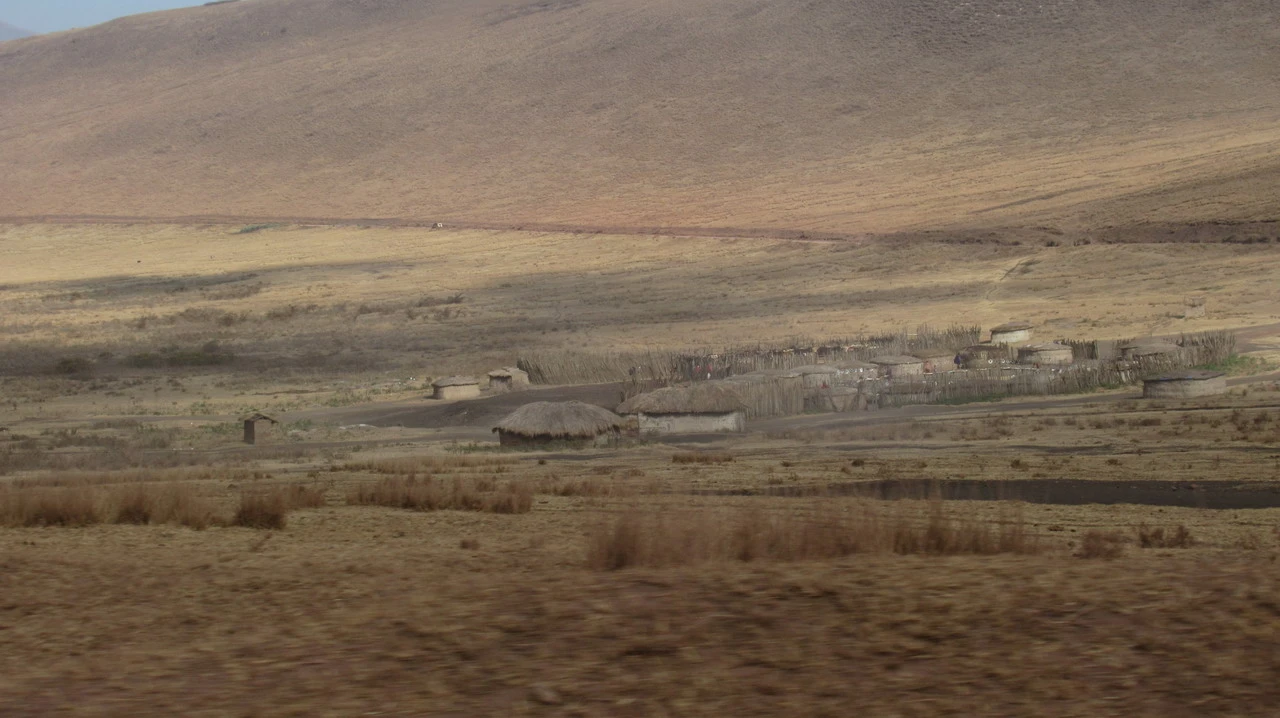
We set off towards the Serengeti National Park, exiting north of Ngorongoro. We are still within the park and there are... Masai villages, traditionally dedicated to pastoral activities; we actually meet some shepherds They are mainly children who graze herds of goats, sheep, and occasionally cattle or donkeys. The proximity to the predators present in the enclosure forces them to create enclosures consisting of tall posts that offer protection during the night. Some of the feline animals in the park would cause chaos among the domestic animals. In the Serengeti, the Masai and other tribes cannot live or graze; this has historically led to conflicts with authorities, but we do not know the exact current situation. Some wild animals roam in the solitude of the savanna, where the yellowish hues have now come to dominate over the green. The entrance point of Serengeti National Park Don't delay your arrival; we stop to complete the necessary paperwork at two separate locations just a few kilometers apart, without fully understanding why. We simply have to wait for a few minutes, which we happily spend observing what is happening around us, even becoming curious when we see that one... rickety bus A bus carrying countless passengers, which we struggle to understand where they were crammed into. Further on, a truck that has been parked for days, waiting for spare parts – a common practice throughout Africa – is sheltering under its chassis. a lion looking for a cool place.
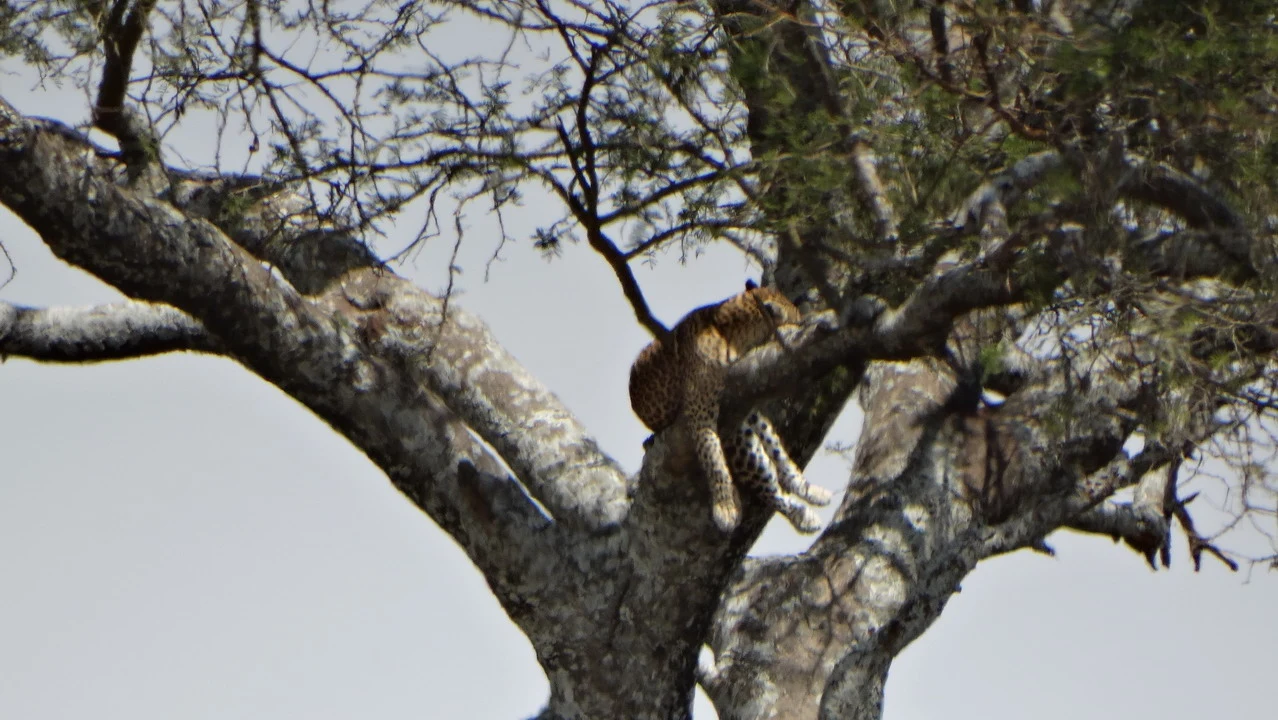
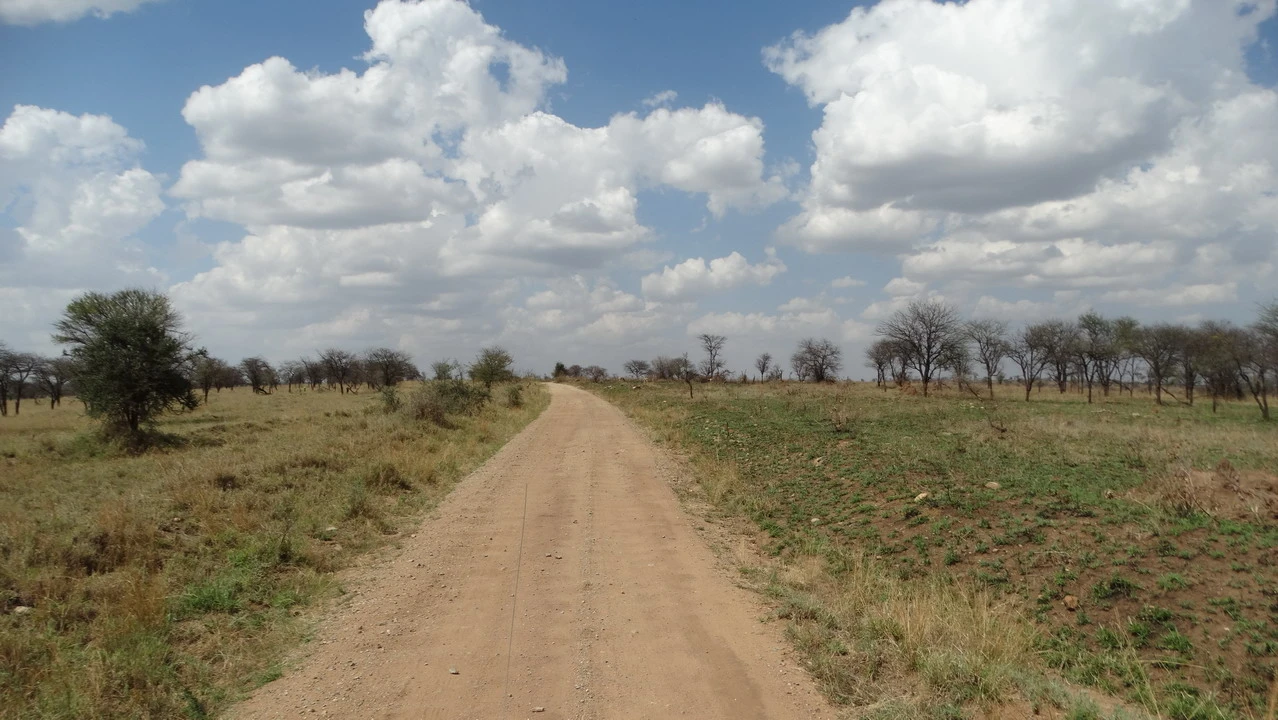
But just a short distance away, nature presents us with a true work of art, embodied by two lionesses and a puppy lying under a tree, dozing, and this happens just a few meters from the road. We admire every detail of these cute but dangerous felines; they seem almost playful and content to be admired and photographed by a human audience. They appear tired, swaying, occasionally lifting their heads before letting them fall and sleeping for a few minutes. The silence is complete, due to the intense interest and wonder of the scene. It's not enough: after a few kilometers, this time at a distance, a leopard is taking a nap with dangling legs and tail hanging from an African acacia. The tree seems perfectly designed as a raised platform; it might seem like an uncomfortable spot, but clearly it provides better ventilation for the whole body. The plain dotted with acacias, bushes, and vast grasslands still holds some surprises, such as a solitary lioness and several mammals lying in the shade. Near the picnic area located on a small hill protected from intruders, one can see the damage caused by human-induced fires to quickly regrow the grass. Although the Serengeti plain doesn't offer the same emotional experience as animal gatherings, it undoubtedly represents the image that everyone has of Africa, the one seen in documentaries, the one we dream of when planning a safari, with open spaces and a sky that seems to want to merge with the earth. The plains stretch out with minimal undulations, and animals can be seen from a distance. If you look carefully in the shadows under or on top of the trees, you might even encounter some of the large felines. A world worth experiencing! And which, in our perception, could take on greater intensity if not for the primary reason for the trip, which we only discovered a few days ago. It's unfair to limit these images to being a secondary experience, but the key difference is that there, we were the main characters and here, we are simply observers of an unparalleled spectacle.
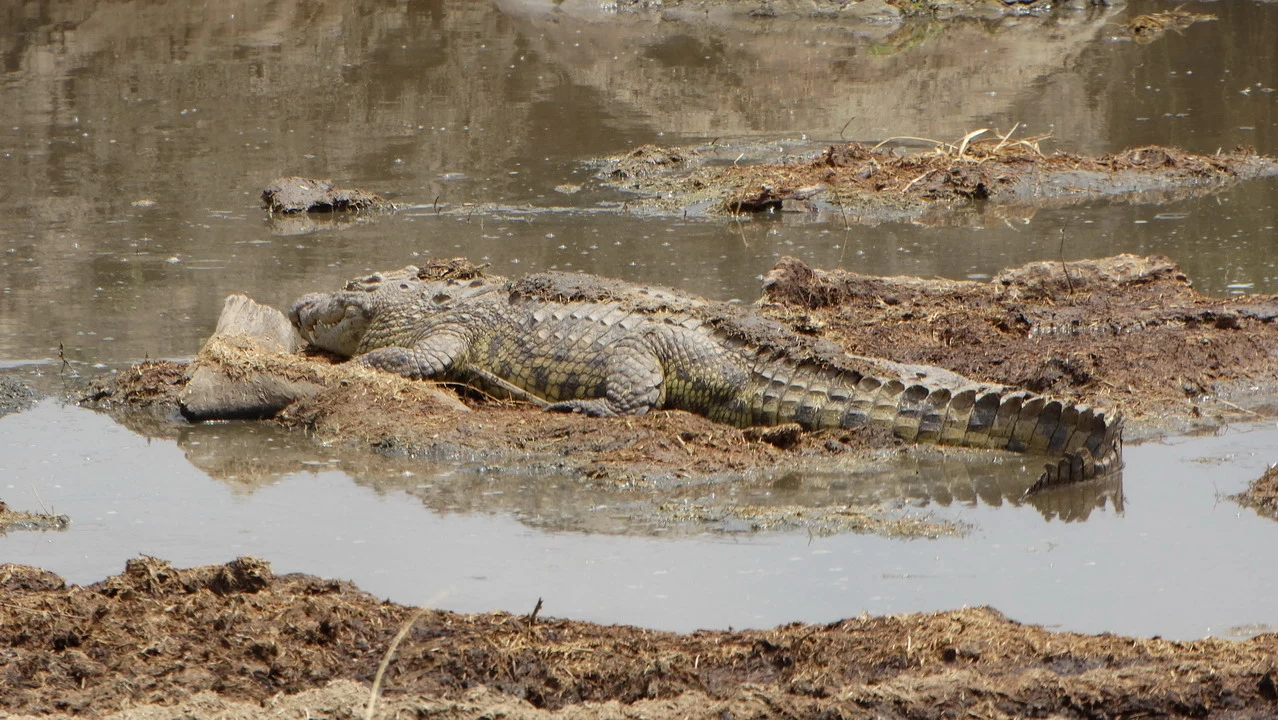
Not less interesting in their simplicity are the hippos swimming in the murky waters of the Seronera River, which has become an open-air drain due to the dozens of large aquatic animals that spend their days there. Some crocodiles I lie in wait on the shore, motionless, hoping for prey to approach. It goes without saying that the day passes quickly and my eyes don't tire of looking in every direction, searching for new sights.
The Serengeti is famous for its abundant wildlife, but the concentration of animals in such a large area is not very high, making it less interesting from a safari perspective. Having been accustomed to the density of Tarangire and Ngorongoro, they seem few, but in reality, there is a continuous succession of zebras, Thomson's gazelles, Grant's gazelles, some giraffes, and very few wildebeest, which will increase near the Mara River.
We continue along a river of fog created by the sand kicked up along the road; the noise inside the vehicle, hoping that the off-road vehicle can withstand the strain, makes the experience even more real.
The landscape changes as we head north: it is much greener and the waterholes are also more frequent, a clear sign that it has rained. We slowly approach the Lobo area, where there is a greater presence of gnu, the last ones moving towards the Mara, and buffalo. Right at the height of our campsite, there is a migration corridor, where endless lines of animals move in search of greener pastures to feed on. From the campsite, which is located on a gentle slope, we have a beautiful view of the plain below, and we can see the continuous movement of gnu heading towards other areas. The campsite is in a sheltered location thanks to enormous rocks, which we can comfortably call stone hills, the famous kopjes, where baboons, monkeys, rock rats, or ibex live, who are able to climb on the steepest rocks, and, as we will discover tomorrow evening, lions. The shadows lengthen, the grass becomes even more yellow, almost orange, and the grazing animals seem like subjects of a painting that no museum can boast of having.
Located far from the main communication routes that mainly run along the Ngorongoro – Central Serengeti axis, the north is less frequented by tourists who need to spend a full two days on their trip between arrival, visit, and return. As a result, the environment is more wild, and the lack of human activity allows animals to get closer, sometimes too close.
Spartan night at Lobo Camp
Al Lobo The electricity is out, someone says that the wires were cut by monkeys, others claim that a tourist exceeded with hair dryers or other appliances; but it was known from the beginning that this was a very basic campsite, and that's exactly what makes it special. The water is delivered in containers of 5000 liters, and unless the day was particularly hot, taking a shower is a particularly invigorating experience, best to skip for your hair. Perhaps even too wild when we are limited to accessing the toilets due to the presence of a buffalo that looks unfriendly, especially when its yellow eyes shine in the darkness of night and without needing words, it makes us understand that it's better to use the facilities outdoors somewhere else.