Day 2
Kilimanjaro 1: From Machame Gate to Machame Camp
The adventure begins, we stock up and start walking towards Field 1.
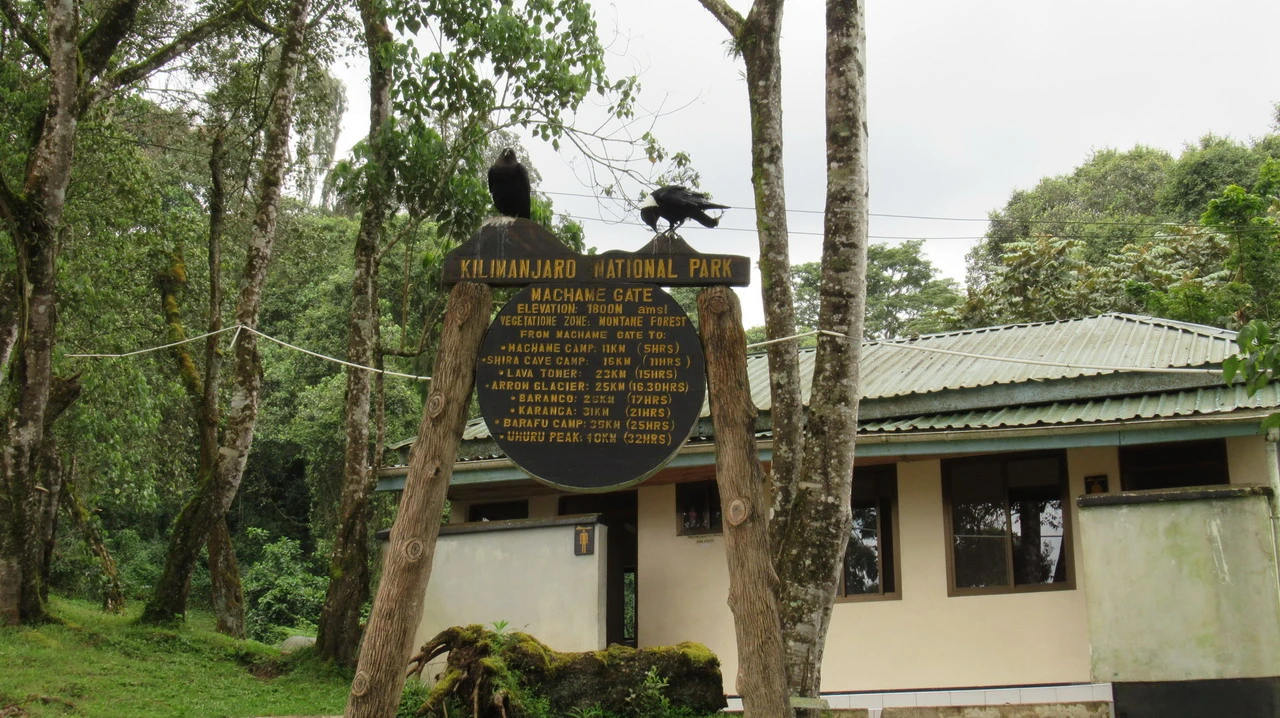
Towards Machame Gate
Wake up at 7 so that we can pack everything we need into our backpacks while the rest goes in the suitcase and stays here. After an unexpected event, we head to Kessy's office. We close our bags and backpacks and are ready to go.
From Moshi to Machame Gate
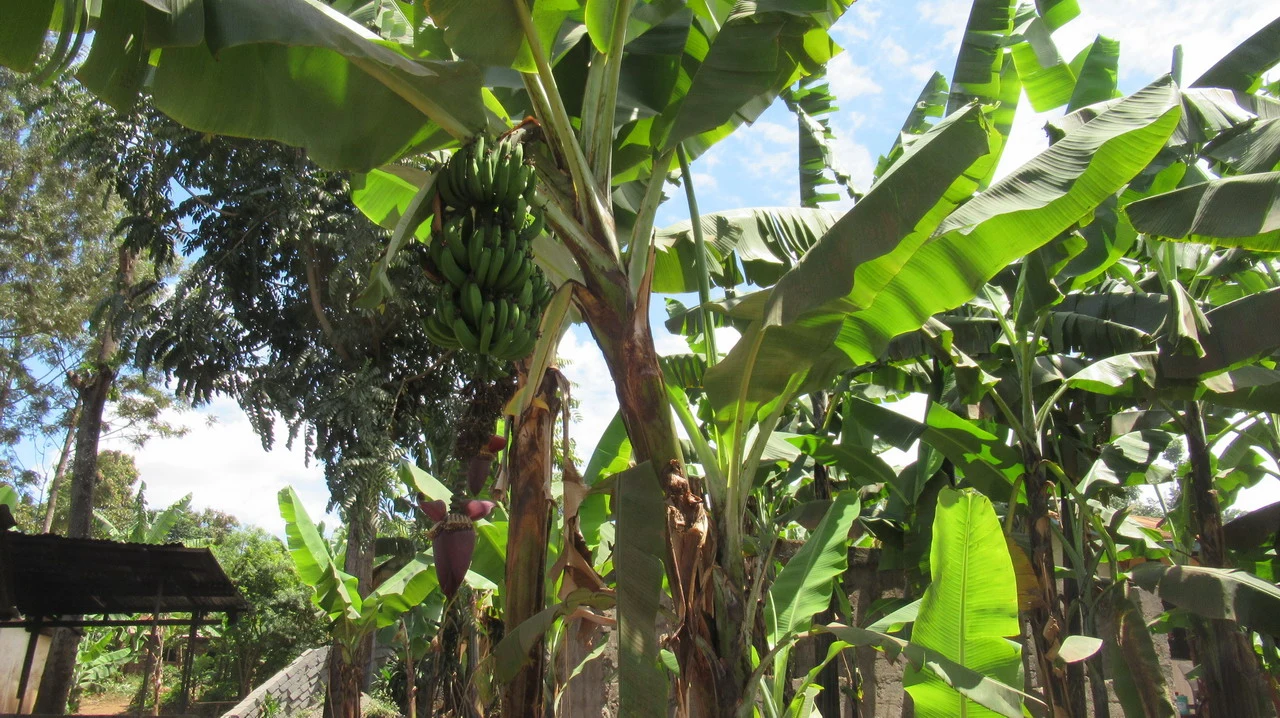
The necessary equipment is all loaded and we depart at 11 am from the Machame Gate, which marks the beginning of our attempt to climb Mount Kilimanjaro. From Moshi, we drive for a few kilometers along the road towards Arusha, turning right in the direction of our mountain; the vegetation becomes denser as we are about to enter the rainforest area, the land is cultivated and several scattered houses form villages with an urban layout that is unclear to us. On either side, banana plantations under which grow plants of the famous local coffee. At some point, we stop to buy some meat, so we take our first photos of this beautiful setting. The road climbs steeply and without curves, with the bus struggling under the weight of people and materials.
The problems seem to be overcome; now it's our turn, in the challenge against an entity that we know is superior to us, and which we approach prepared both physically and mentally. The obsession and dream are finally taking shape; we must think about reaching the top following the instructions of the guides, while remaining calm and focused: there are no particular technical difficulties, although this is the most difficult route because it is long and has many ups and downs that, on one hand, help with acclimatization, but on the other require more energy; hence it is called the "Whisky Route". An error that could cause stomach upset or another problem would ultimately undermine our chances of success, and here we cannot say that we will try again next week. Therefore, the serious risk of making a mistake looms: now or never. Of course, if we fail, the world won't collapse, but after all the events, the wait, the training, and the energy invested, there is only one word for it: failure. An option that we must not even consider, and therefore we will take care of every detail of the ascent, trying not to succumb to easy optimism during the first few days, following the advice of the guides but also trying not to deviate from our habits: for example, they advise us to eat a lot even in the hours immediately before the attempt, but this does not fit into our standards, and we will consume only what is necessary, as well as having the opportunity to enjoy good food prepared by the cook. Before continuing with the narration of the ascent, it is necessary to make some presentations and premises, remembering the general aspects of trekking.
Guides, porters and life in the field
We are a group of 15 people: in addition to us, there is the guide responsible for the team, Joseph, a solid 55-year-old, talkative but able to be respected by everyone when necessary. He has good psychology and is very attentive to details; his gaze is always active so that everything works well, and his attitude inspires confidence. Jackson is the assistant or deputy guide; at 63 years old, he has incredible charm, he is a veteran and everyone knows him and likes to exchange a few words with him during the ascent. He has the mountain in his blood, which makes him lovable in all the environment of guides and porters. There is also Musa, the cook, who is in his early twenties, always hiding in his tent kitchen from which delicious dishes often appear at impossible hours due to the conditions he must work in. He manages to skillfully mix traditional ingredients such as potatoes, rice, sweet potatoes with chicken, fish and eggs, all accompanied by pleasant and tasty vegetable soups, seasonal vegetables and delicate but flavorful fruit, of course using gluten-free or gluten-containing ingredients for each person. Every meal is well calibrated according to the physical effort required and the altitude and climatic conditions. Water is boiled in the evening and left to cool overnight so that it can be used to fill water bottles for the day: the standard recommendation is to drink at least 3 liters of liquid every 24 hours to avoid headaches, nausea and other symptoms of mountain sickness. The waiter is actually one of the porters with the task of serving us meals in the large tent-style dining room, which is at least 3x2 meters, and everything for us. Finally there are another nine porters, the real workers of the trek, mule boys who climb and descend along the slopes of the mountain with unbelievable loads. Not so much or not only for the weight, officially their load is weighed at the starting gate and cannot exceed 15 kg, but rather for the shapes that the luggage have, to the point that they must be carried on the head or with annoying appendages of buckets and other things hanging everywhere. Just having a backpack would be enough. It should be emphasized that they are also required to be fast, as they set up the camp after our departure and usually have it ready when we arrive at the next camp. So the paths are columns of porters with some pale faces who pant while climbing. One really admires these young men, and sometimes women, who patiently undertake the heavy task of transporting materials with a smile and the desire to chat, often accompanied by music coming from their smartphones that they keep in their pockets. There is a great sense of camaraderie among them, almost never competing and able to create a contagious atmosphere of cheerful chaos. The arguments that inevitably arise are of various natures; these young people are living a hard life due to some crazy people, us, who have decided to dedicate significant economic and physical energy to conquering a mountain thousands of kilometers from home. A quirk, in short. On the other hand, without these crazy dreamers who love hardship during vacation when others rest, the porters should do much more precarious jobs earning less. However, there is a nice atmosphere among them, they never miss an opportunity to talk, joke, laugh and sing. A serenity that can only be achieved by lacking superfluous means. I wonder what their real thoughts are about us. They are all of Chagga ethnicity, so of Bantu origin, and they speak Swahili among themselves, which is a common language in East Africa, borrowing terms from other languages. سلام from Arabic to say hello or wish someone well, school from German to indicate school, etc.
On the advice of someone, we also rented a private toilet for $150, which turned out to be extremely useful, especially in the higher areas where the cold and the distance from public toilets would have meant further hardship.
During the Covid period, the mountain machinery remained idle due to lack of customers: everyone tried to do some work at home, focusing on agriculture, but those with savings quickly ran out. Last year, we started seeing a few people again, and this season has seen a real boom. Everyone is very busy but happy to earn money. Now, however, the flow is starting to slow down as the summer holiday period is coming to an end, and people are finally able to get some relief.
In the morning, we are usually woken up by the waiter who brings us a cup of coffee in our tent: this becomes the first difficult task of the day, when we are still sleepy and wrapped in our sleeping bags, trying not to spill the drink. In the meantime, Godlisten places two basins of hot water in front of our bed, which are useful for washing, then we get dressed and go to the dining area for breakfast. This area consists of a tent with two chairs and a small table where you can find jam, powdered coffee, and other useful condiments. Basically, our camp consists of our tent, the dining room, the kitchen tent (which is also used for sleeping), and one or two other tents for the porters. It should be noted that the cook, Musa, is very generous in preparing meals, especially breakfast. He often starts cooking at 4 am when he needs to serve the meal around 6; besides using gluten-free ingredients compatible with the climbing diet, he tries to combine substance, taste, and limitations due to the fact that the kitchen is located in a high-altitude tent with understandable restrictions due to transport and thin air.
Location: Rainforest
From Machame Gate to Machame Camp
The Machame route is perhaps the most popular climbing route. It's a choice for many people because it offers impressive views and a variety of habitats. The Machame route is also known as the "Whiskey Route," due to its reputation as a challenging climb, in contrast with the easier Marangu route, known as the "Coca-Cola Route." Unlike the gradual slopes and hut accommodations of the Marangu Route, climbers on the Machame route traverse steeper paths over longer distances and sleep in tents. The Machame Route is approximately 62 km long between gates. Climbing the Machame Route can be done in a minimum of six days, five nights, on the mountain. The trek begins at the Machame Gate, located at the southern base of the mountain, within its lush and fertile rainforest. The path leads to the Shira plateau, before traversing the southern loop halfway up the mountain, with stunning views from all angles. The approach to the summit is from the east, and the descent follows the Mweka trail. Wildlife such as colobus monkeys along the way.
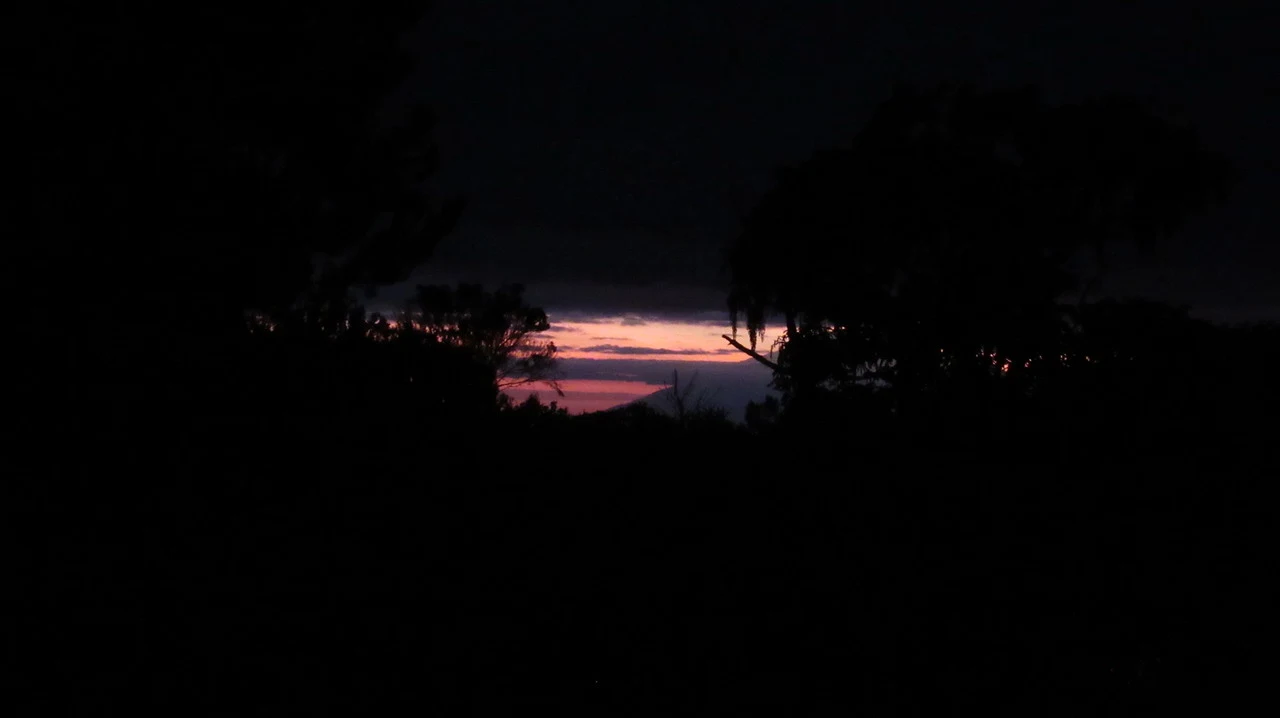
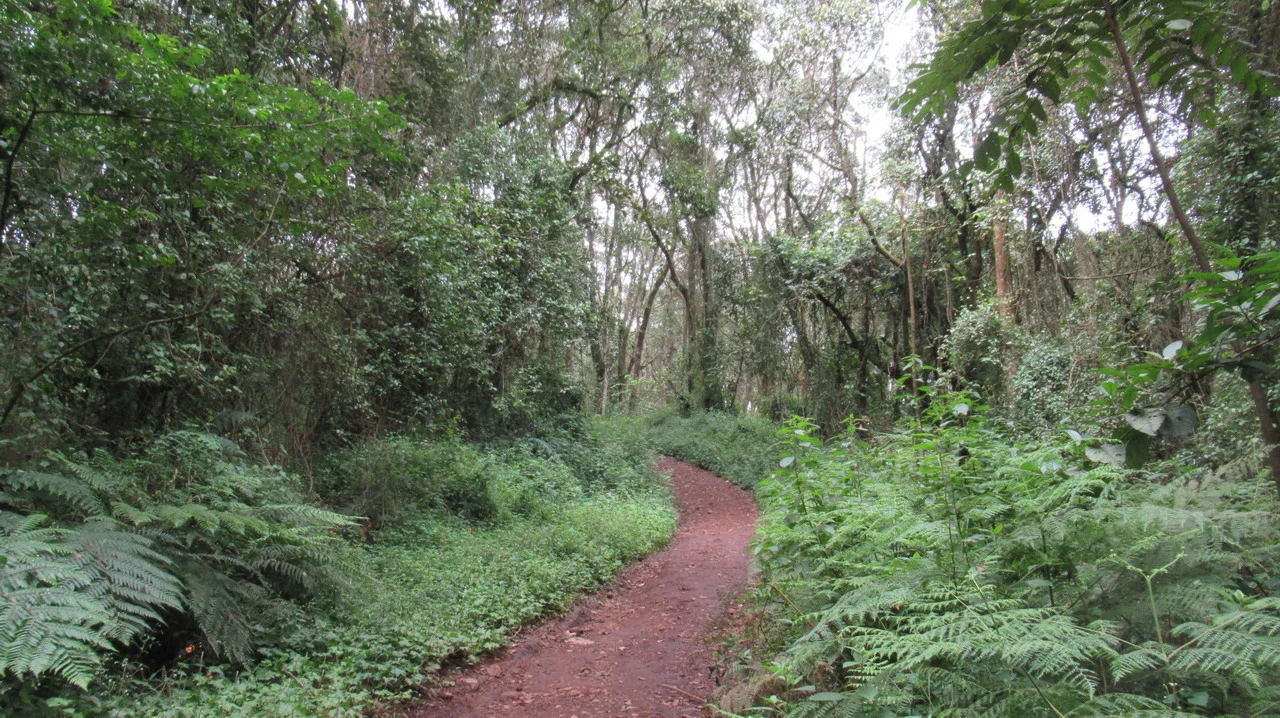
We now return to the events of the first day, which saw us departing at least two and a half hours later than scheduled, mainly because we bought a SIM card with 12 GB of data for $10 at Moshi, paid in Tanzanian Shillings. At... Machame Gate We are dropped off at a stopping point, while Joseph takes care of obtaining all the necessary permits to access the ranger stations. The others unload their luggage from the minibus onto the shoulders of the porters, who are checked to ensure that each person does not exceed a weight of 15 kg. We are repeatedly reminded of the importance of drinking water; we need to have at least three liters in our bottles. Finally, around 1:00 PM, we depart, and we are also screened using a metal detector. Despite the time, there are still groups departing with us, and we will compete to see who can make the most stops along the way, including one for lunch about a third of the way through. The first part of the route. It's a gentle climb along a beautiful path deep within the rainforest. The vegetation is unusual for this latitude but is thriving thanks to the imposing presence of Mount Kilimanjaro. Everywhere you look, there's lush greenery in various shades, with moss hanging from the trees that can be up to a couple of meters long, which is a testament to the area's high rainfall. We also see dragon tree plants, Everlasting Flowers, and the rare... Impatiens Kilimanjari, it only grows in this area, with yellow and red coloration and easily recognizable by its small, characteristic elephant-like proboscis hanging from the flower. Colorful birds and blackbirds with white collars begin to give us a first taste of the vibrant Tanzanian animal life. The guides want to assess our preparedness, so they walk slowly in front of us, almost blocking any attempts on our part to pass them. They emphasize the need to go slowly, slowly to avoid wasting energy from the start, especially sweating. In fact, this seems almost redundant to us, but we will discover that the caution demonstrated now would have diminished as they realized they were dealing with two well-trained individuals, which absolutely does not mean acclimatized. At some point, we see a young man descending with an oxygen mask and looking cadaverous, and we will find out that he already had difficulty reaching the first camp, a clear case of someone who must have started climbing from university rather than basic schools. The porters don't walk alongside us; some are ahead, while others pass us during our slow progress. Just before arriving, one of them complains of difficulty and struggles, is urged to the point of being scolded, and finally helped by others who descend from the camp where they had left their luggage. In the final stretch, the path becomes slightly steeper, and just before 7 pm we arrive at Machame Camp, right as it gets dark, with the colorful tents becoming increasingly… dark monochrome It's cold, we find our tent, where we set up camp and, as it gets dark, we put down our sleeping bags and blankets; on the sides, there are the backpack, the backpacks, and the bag containing everything that was lent to us: high-altitude jackets, waterproof trousers, and gaiters. From the very beginning, we got the impression that this trek wouldn't be comfortable, especially at night. The toilet, located a couple of meters from the tent, will be useful for avoiding getting too cold, for not stumbling in the dark, and for hygiene reasons. We have tea with popcorn as an appetizer and wait for dinner to be prepared: not because of us, or even because of the team, we started late, and everything is going according to plan. Around 8 pm, dinner is served and we enjoy our chef's first creations. There is no post-dinner walk due to the cold and lack of light on a rather rough terrain; instead, we stay inside, but digesting in the tent will not be easy. Since it's time to go to sleep, we get into bed almost immediately, and our stomachs won't thank us. It seems that it's less cold at night, perhaps we are just getting used to it.