Day 9
Lake Manyara and Lake Eyasi
Salt lakes create special habitats in the African rift valley.
Lake Manyara and the Rift Valley escarpment
This is a small park located at the base of the western wall of the spectacular Great Rift Valley. It is situated 120 km west of Arusha and takes its name from the shallow, saline lake that covers approximately seventy percent of the surface; it floods and dries with the seasons and hosts thousands of flamingos and other 500 species of birds. The most famous and unique animals are the lions that climb trees. Lake Manyara also houses the largest concentration of baboons in the world. As the setting for the first Tarzan films, the park was described by Ernest Hemingway as "the most beautiful place I have ever seen in Africa."
Inside the Lake Manyara National Park
Today's itinerary includes a visit to the Lake Manyara National Park, which offers a completely different environment compared to what is typically seen in this region. It is located within the so-called cliff of the Great Rift Valley, namely the eastern slope of the fault that cuts through Africa from north to south and which created the lakes present in the area. Due to its more sheltered and less exposed location, it was able to develop a native vegetation particularly green, similar in appearance to what one finds in a rainforest, thanks also to the waterways coming from the Ngorongoro Crater, located about fifty kilometers away, but whose underground streams allow for the flourishing of the entire area. The clear streams that descend through the lush vegetation also create a refreshing impression in the morning. We see various animals, including a fleeting leopard, of which we had detected the tracks left shortly before on the sandy ground of the road. We were unable to photograph it, but its figure is clearly visible in the undergrowth, with its long tail translucent. We remain still for a while in the hope of seeing some movement, but there is no longer any way to find it. At the furthest point from the entrance, we stop to admire the landscape, which is interesting even if not particularly scenic, from the lake shore A light layer of clouds prevents the sun from shining on the water, which appears grey; the shallow depth does the rest, and we cannot expect the color that characterizes our mountain lakes on clear days. After a short break at the picnic spot to take some photos of the valley below us, we proceed towards the exit, where we can see... some elephants They are carefully moving along a steep slope. The size of the animals is surprising, as it seems they can maintain their balance on such uneven terrain. Unlike Ernest Hemingway's opinion, who called it "the most beautiful place I have seen in Africa," we believe that this park does not represent a must-see attraction in northern Tanzania; perhaps for experts, due to the uniqueness of the site, but for us it was certainly interesting and worthwhile.
Towards Lake Eyasi and the Datoga village
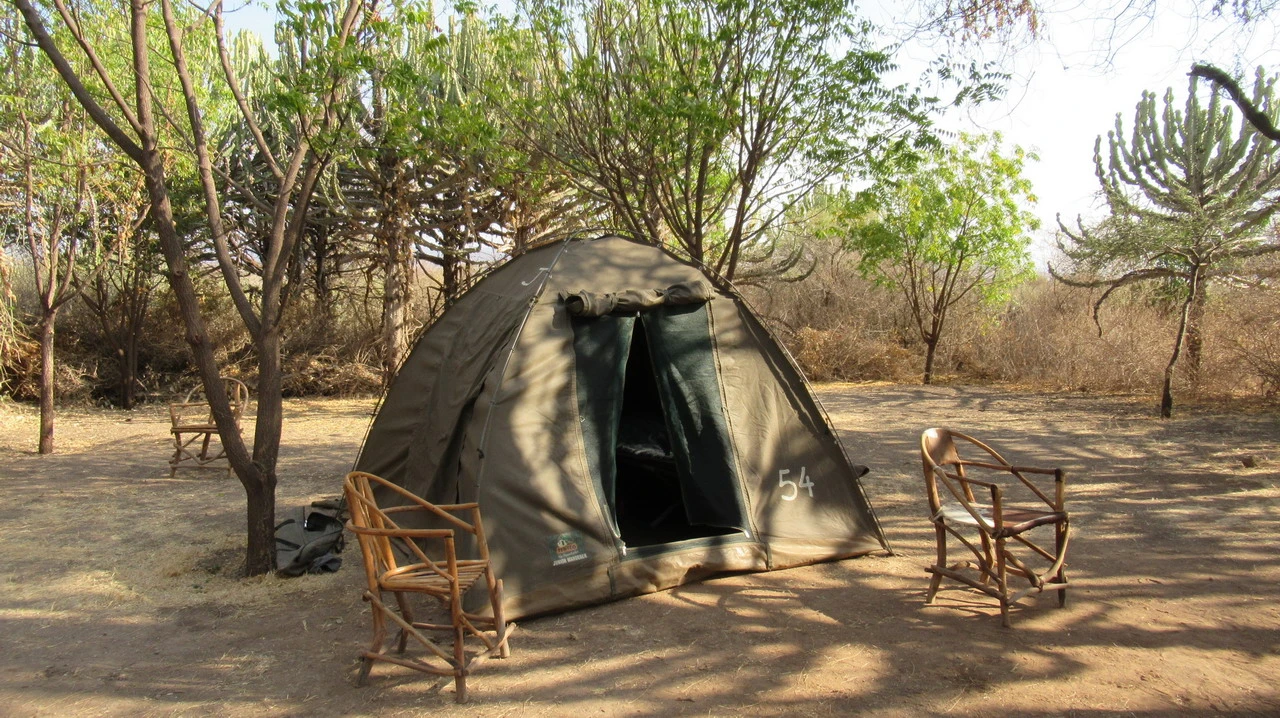
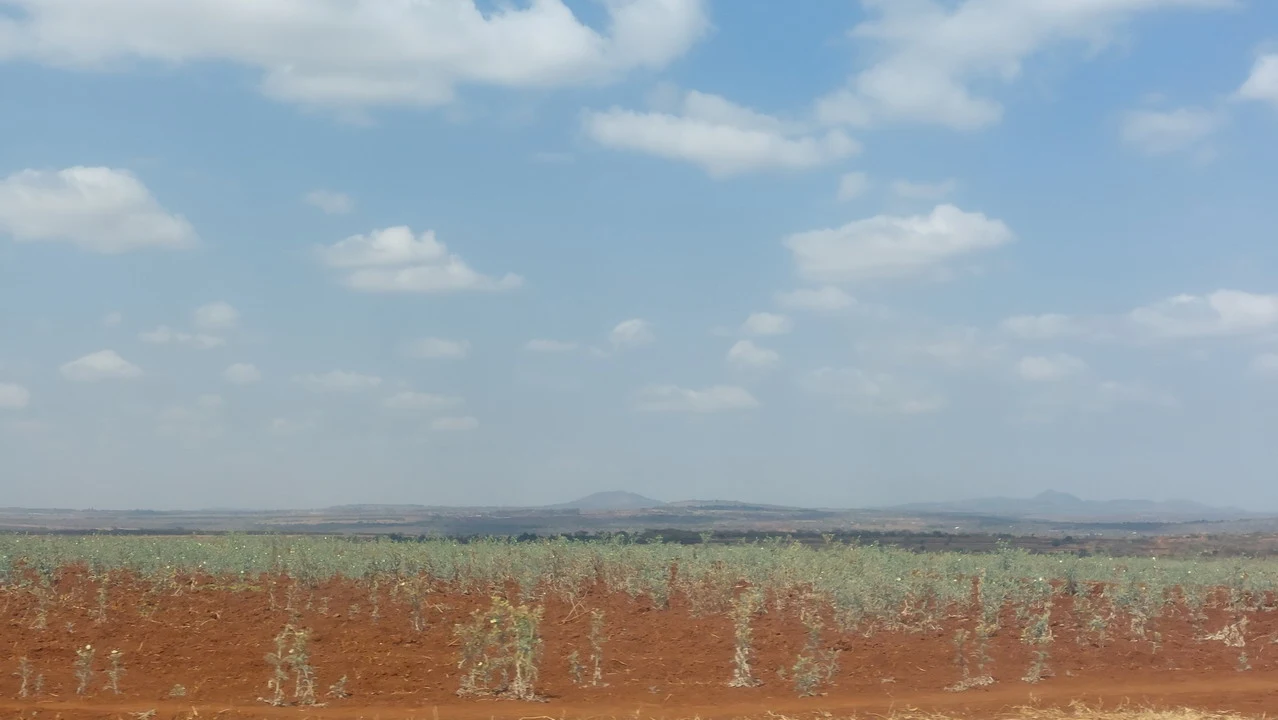
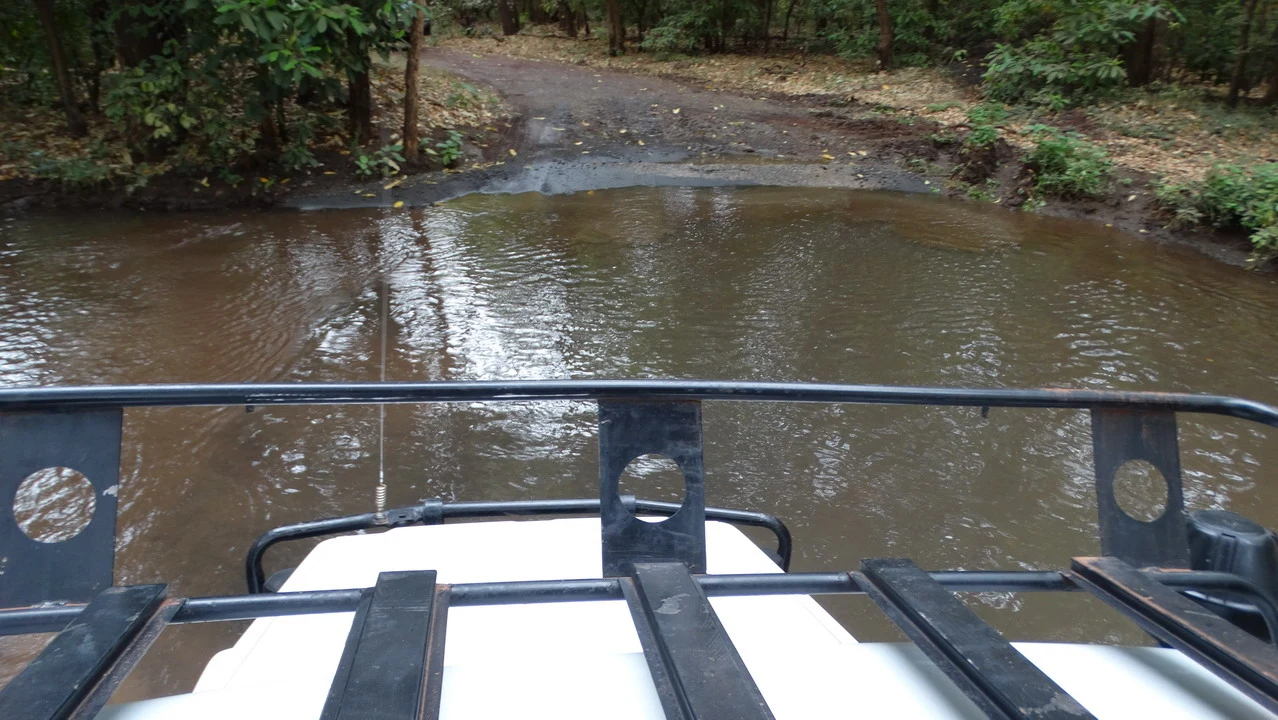
We head towards this point to the exit, as the morning is coming to an end; we have lunch at the lodge, where the cook has prepared some dishes that we particularly enjoy. We then set off for Lake Eyasi, climbing the steep but well-maintained road that exits from the escarpment where Mto wa Mbu is located, and entering a decidedly drier area, dominated by seemingly dry bushes and large, sparse acacia trees. The road to Ngorongoro and Serengeti runs through the green hills of the northern highlands of Tanzania, overshadowed by the towering Ol Doinyo volcano, but shortly after Karatu, we turn left onto a red dirt track that would be ideal for creating tennis courts. It's about several dozen kilometers, mostly unpaved, in a sparsely populated area; it is striking how intense agricultural activities We bought onions and some vegetables, a clear sign that they are managing to bring enough water this far. At the same time, it's surprising how little tourism there is in the area around the lake: we expected infrastructure and tourists wearing swimwear in almost a beach setting. None of that exists. In this windy landscape, you can find the Eyasi Camp Ngoula, where we will be the only guests for the night, which adds further charm to the place and allows us to enjoy true silence. It is located in a very isolated area, difficult to find even due to the poor signage. It was opened in April 2020, and with the pandemic, it's likely that it hasn't seen many visitors yet. The fact that Tanzania isn't the safest place against theft is evident from the sight of a television set enclosed in some kind of chastity belt and anchored to a piece of furniture placed underneath: this says a lot about how there is a real desire to appropriate other people's belongings. There are some beautiful chairs, with the horizontal part made of animal leather and the rest consisting of a series of branches cleverly interwoven among themselves. The time of set up the curtains, while we explore the area, intrigued by the emptiness around us. It is difficult to reach, given the lack of directions, and one wonders why it's right in the middle of nowhere. But for sure, tonight we won't have any problems with our neighbors. It's already mid-afternoon, and we set off to visit a Datoga village, located nearby. The tribe consists of approximately 10,000 people, is settled, and is divided into various subgroups: some are dedicated to animal husbandry while others practice the craftsmanship, working with metals and realizing, for example, that they sell arrowheads to the Hadzabe hunters. We witness a demonstration of how they melt down scrap metal found on the streets, admiring their skill in shaping curved forms from still-hot material. They also produce bracelets and other items for tourists visiting. A true art of casting, combined with precision in detail, which would allow them to make a fortune anywhere; here they live at a subsistence level but can consider themselves free men. The huts are large enough to support a decent life and also serve as corn grinding laboratory... pressed between two stones that have been carefully smoothed; we try our hand at this and achieve reasonable success. The Datoga are polygamous, they also marry people from other tribes, however the more conservative elements prefer to avoid such unions. To acquire a wife, one must bring twenty cows as dowry. This encounter allows us to understand how the local inhabitants live, in a context that is poor by our standards but dignified when it comes to basic needs; we certainly didn't stumble upon people who weren't expecting us, demonstrations are part of their profession, but this doesn't detract from the truthfulness of what we have seen.
Sunset and fishermen on Lake Eyasi
We continue along the northern shore of Lake Eyasi. There is no sign of tourists; on a wide beach dotted with palm trees, we see a campsite, but we quickly realize that these are not the usual tents we have seen so far: much more basic and simple, they belong to the fishermen who can be seen busy... struggling to pull the nets ashore full of small fish. A strong smell permeates us, we see fish catch to dry, essentially already embedded in the sand. We ask for clarification and are told that, once dried, the sand also comes loose; we take this information at face value but don't taste it. It’s a seasonal job: now that the water level is low, the lake becomes fish-rich, while during the wet season the nets are moved to safer locations and the lake returns to its expanded state. The sun at sunset... with fishermen lined up pulling in the nets, offers a glimpse of a bygone era; it would almost be romantic, were it not for the fact that we are taking the photos and they are working hard. As we head towards the lake, it is surprising to see the roads so full of curves, even though there are no private properties or other reasons preventing straight paths; they are probably just widened trails. Without someone from the local area, it would be impossible to navigate. In this instance, we are using a local guide, a young man who speaks very good English and is adept at interacting with everyone he meets.
The Manyara, Eyasi, and Natron lakes, due to their volcanic origin, are alkaline, therefore salty and unsuitable for irrigation or other human use, including fishing. They have numerous inflows but no outflows.
Evening at Eyasi Camp
We return for a nice dinner at the camp, where we enjoy some eeland. antelope, Alghero). In fact, we had asked if it was possible to taste some game meat, and Lamek immediately accommodated us, providing one piece for tonight and another that we will eat at the Lobo camp. The entire area is enclosed by tall hedges, which also serve to define the parking area, kitchen area, etc. Perhaps the neatly arranged bushes also help protect from the wind while simultaneously making the place pleasant and harmonious.