Day 7
Kilimanjaro: from Mweka Camp to Mweka Village
The end of a happy adventure and the beginning of the next one: the safari.
From Mweka Camp to the airport.
Location: Rainforest
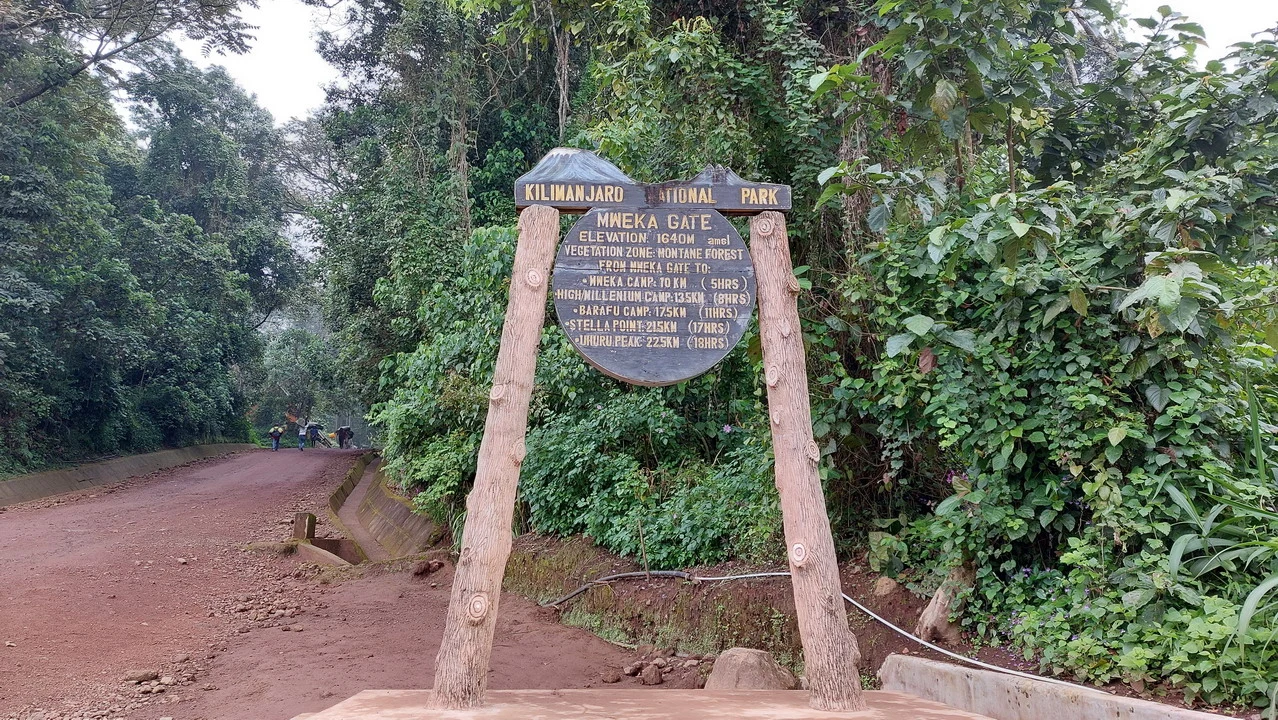
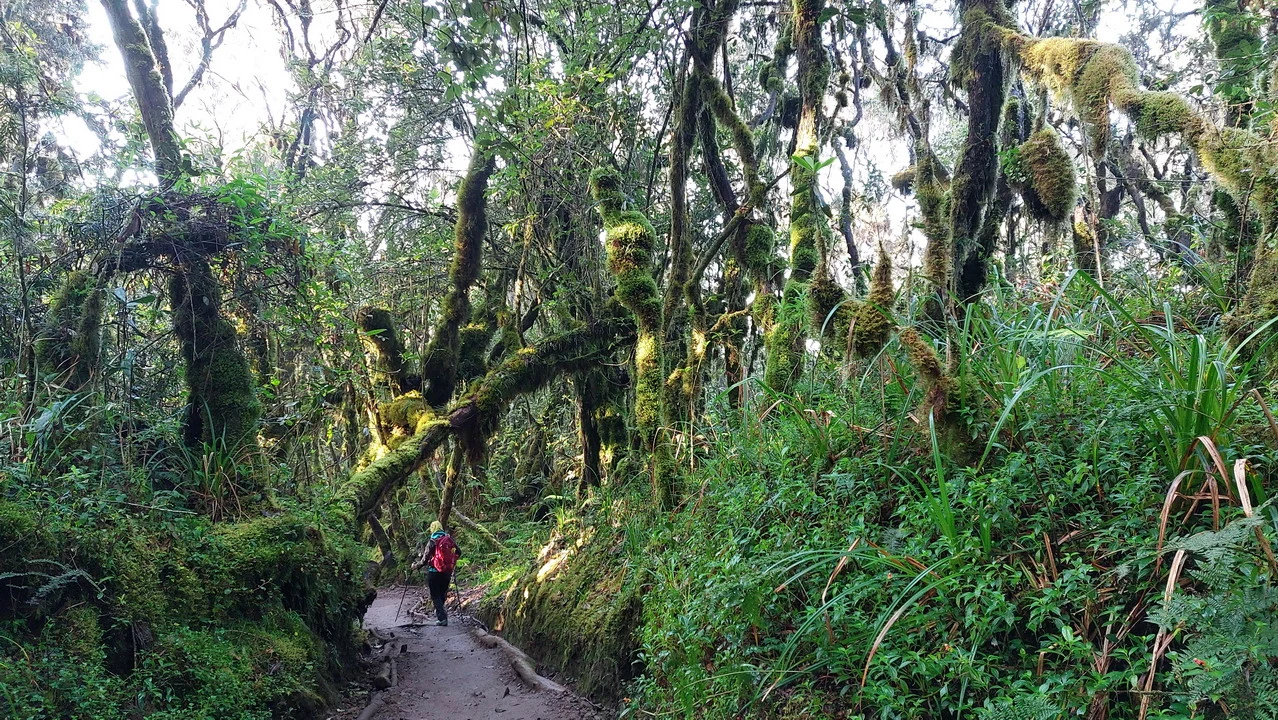
We descend through the rainforest, on often slippery terrain, until we reach the Mweka Gate, where we receive our summit certificates. The walk takes approximately three hours.
We sleep well, but the alarm at 5:45 is far too early, however today will be a full day, although in a very different way than yesterday. Usual abundant breakfast, the last one, before setting off along the path to the Mweka Gate. In the pre-dawn hours of four o'clock, you can hear the sizzle of oil as Musa prepares the delicious pancakes and crepes that we will find warm and delicious at 6:00 am. Before leaving, the group that accompanied us during these days set up a small theater singing a rhythmic song, just like almost all the other groups nearby are doing at the same time. It's a ritualistic gesture, friendly and appreciated as a final farewell; in this occasion, Joseph asks us to communicate to everyone how much we decided to give as a tip, for transparency purposes. Lush vegetation surrounds us. long moss hangs from the trunks, while the undergrowth presents an infinite variety of green and flowers. Patches of sunlight begin to filter through the forest, making the greens even more vibrant. You just need to be careful on the ground, which is extremely slippery due to the almost daily rain in this area. Not today though: the sun rises increasingly strongly and at some point a gap appears in the vegetation where compare the massive figure of Mount Kilimanjaro, almost as if to say hello. We respond with a few photos and a virtual hug to the mountain that had already captivated us before we even conquered it. We continue our descent. Be careful not to slip, risking ruining the wonderful experience we've had so far. The porters quickly descend with unlikely shoes and we wonder how they can be so agile, until we see someone slip. Just before the gate there is a waiting room where we can take a moment to reflect before the triumphant arrival at the destination. In reality, there is no one waiting for us, no applause or congratulations except from our guides. It would also be appropriate, but inside we feel the emotion that has now truly ended and that we have done well. We have reached the highest peak in Africa and achieved it without any problems, experiencing every moment of these six days firsthand, facing and overcoming difficulties: no fanfare, just an intense and immense happiness.
Some photos of the ritual and we are ready to go to the park office where, through Joseph, we receive the certificate that confirms the undertaking. It's nice; there is also a QR code that, once scanned, provides all the key information.
Return to Moshi and transfer to Arusha
The shuttle bus is waiting for us., with all passengers on board and equipment in the roof-mounted luggage compartment. We take the paved road, almost straight, which lands in the middle of banana and coffee plantations The villages are vibrant with the colors of the women's clothing. We stop at a shop to buy some souvenirs and arrive in Moshi. We visit Kessy's office, where the equipment we borrowed is checked; we receive coffee and the complimentary t-shirt for those who undertake the climb. Lunch at a restaurant Offered by Kessy, with Goody, Joseph, Jackson, Musa and a couple of other diners we don't know. The meat is taken directly from the central dish on the table using hands: it’s quite tough but has a good flavor. This custom, already encountered in Sri Lanka, seems to stem from very ancient human instincts, and they assure us that it is more genuine and natural than using forks; probably it wasn't as healthy during Covid times. During lunch, we discuss Tanzanian eating habits. We are told that, thanks to the markets present almost everywhere, people go shopping twice a week and therefore always eat fresh food, cooked on the spot; those who have a freezer use it little, because the local culture dictates that one should eat fresh food. They are also helped by having essentially only one season, being located close to the equator, with ample availability of fruits and vegetables throughout the year. The fish also comes from Lake Victoria, about twelve hours by truck from Moshi, or from the ocean via refrigerated vehicles or with ice around. The same applies to the meat; perhaps the only thing they freeze for a few days is chicken. We notice that the same unspoken rule also applies in hotels, where it takes quite a while to deliver the dishes because they don't have anything pre-prepared and can therefore boast greater freshness, which also translates into better taste. When we finished, the driver waited for us to take us to Arusha, a large but chaotic city that somehow disappoints us: traffic and dust rule here, but there is a lack of the care and monuments that, despite their simplicity, had characterized Moshi. Several women walk on the street wearing burqas; we are confirmed that the Islamic community is very strong in the city. On the other hand, Moshi is definitely more Christian, both Catholic and Protestant, and we see several signs indicating Lutheran schools and institutions. A common feature between Arusha and Moshi is the reason why they were founded here: the first at the foot of Mount Meru and the second under Kilimanjaro. This characteristic has created a microclimate that ensures constant rain and humidity on the slopes of both mountains, which allows for the presence of some small streams useful for water the fields and thus allow life to flourish. The green is abundant, highlighted by gardens and nurseries They are also present in large numbers along the main road. These are particularly interesting as they feature decorative houseplants such as Sansevierias. It is surprising to see this in a country that is certainly not wealthy, where we did not expect to find such decorations. As we approach Arusha, we can even see rice paddies with their shimmering green under the setting sun. Another characteristic feature that immediately catches the eye is the presence of many traffic officers in complete white uniforms: it is unclear what their actual function is, perhaps to control traffic, but they can do little else to reduce congestion. Overcrowded buses from a poor but dignified world rumble along with large stickers on their bodies, which, at least for our taste, are kitsch, but this also contributes to marking the typicality and creativity of the local people. The speed limits are 50 and 80 km/h, and everyone respects them: perhaps because of the presence of the traffic officers or simply because a fine would significantly reduce their already meager salaries.
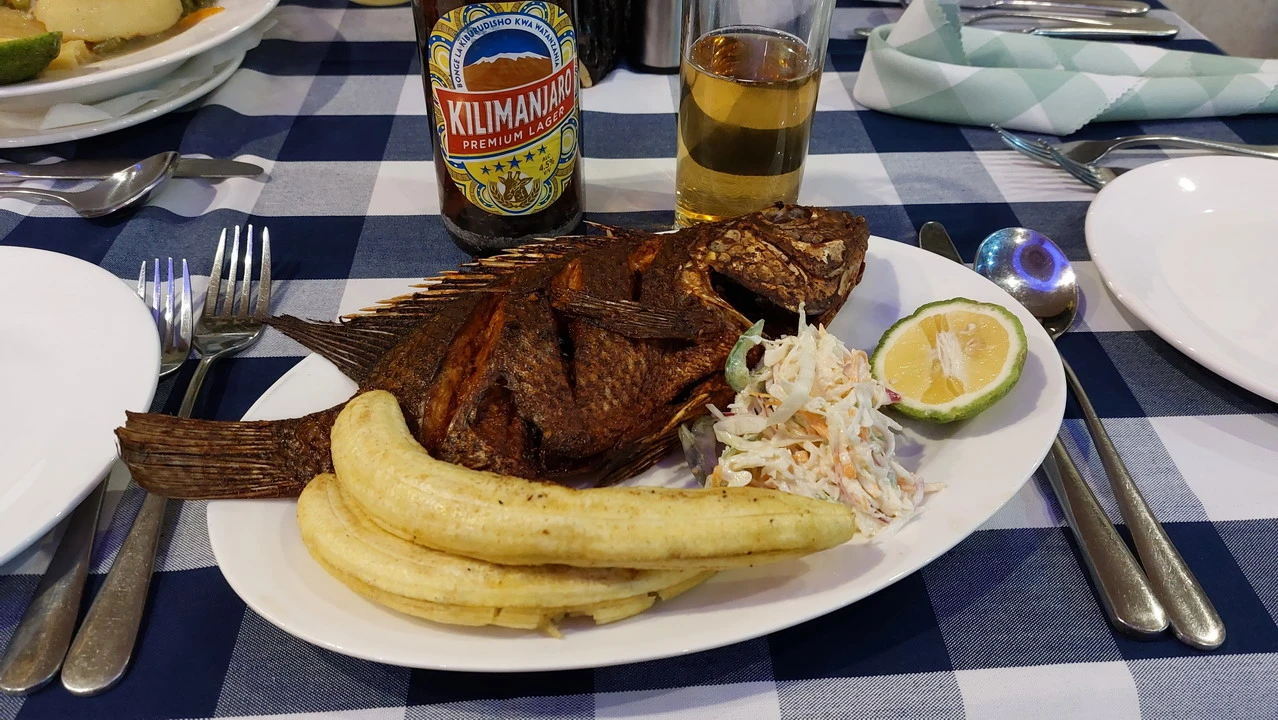
We arrive at the hotel and appreciate having a bed, and the experience of taking a shower feels almost divine. There are some renovation works underway, and the place is a bit noisy but the garden is well-maintained, and several women are enjoying the pool. The restaurant is practically empty, with very few tourists and some business travelers. It's open 24 hours a day, and the number of chefs (who can be seen working behind a large glass wall in a well-equipped and spotless kitchen) seems excessive compared to the number of customers. One of the waiters will serve us part of our dinner but we will also see him at breakfast: who knows how long each shift lasts… We spend the rest of the afternoon unpacking, replacing our hiking equipment with safari gear in our bag. It was a delightful dinner with tilapia (fish usually coming from Lake Victoria) and a night we had been dreaming about for a week: in bed, without worries, with a week of safaris ahead of us, and finally realizing that we had actually managed to climb Mount Kilimanjaro.