

Day 12
Serengeti – Mara River
Along the routes of the Great Migration, the drama of the instinct for survival.
Towards the Mara River
Another day in the Serengeti, where we reach the Mara River to look for the crossing of the migration until evening, before returning to the Lobo camp.
The Seronera Valley is the "capital" of the park's large felines, where all four major predators are present (lion, hyena, leopard, and cheetah).
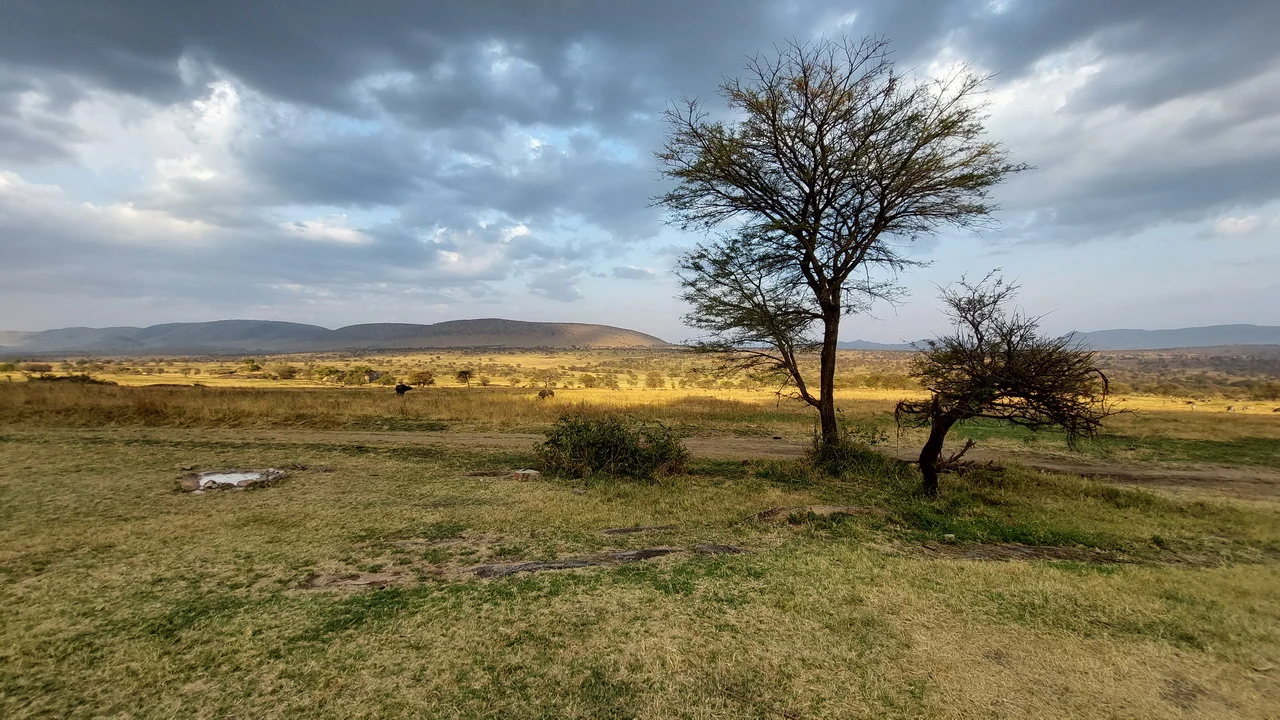
We explore the northern region of the Serengeti National Park, which is the largest in Tanzania and covers an impressive 15,000 square kilometers. The landscape features diverse environments such as grassy plains, swamps, lakes, savannahs, and mountains.
The Serengeti is home to abundant wildlife, but it is best known for the large herds of zebras and wildebeest that migrate across it. The animals' route is determined by rainfall and varies from year to year. Hundreds of thousands of desperate wildebeest gather on the riverbanks, gazing sadly at the green grass on the other side, but no animal moves. As soon as one brave wildebeest takes a plunge, everyone follows! Those animals that manage to avoid the crocodiles and cross the river are rewarded with the lush grasslands of the Maasai Mara.
The Lobo offers a wide variety of permanent wildlife, thanks to permanent springs and a landscape characterized by open, grassy plains and kopjes.
The gnus near the Mara
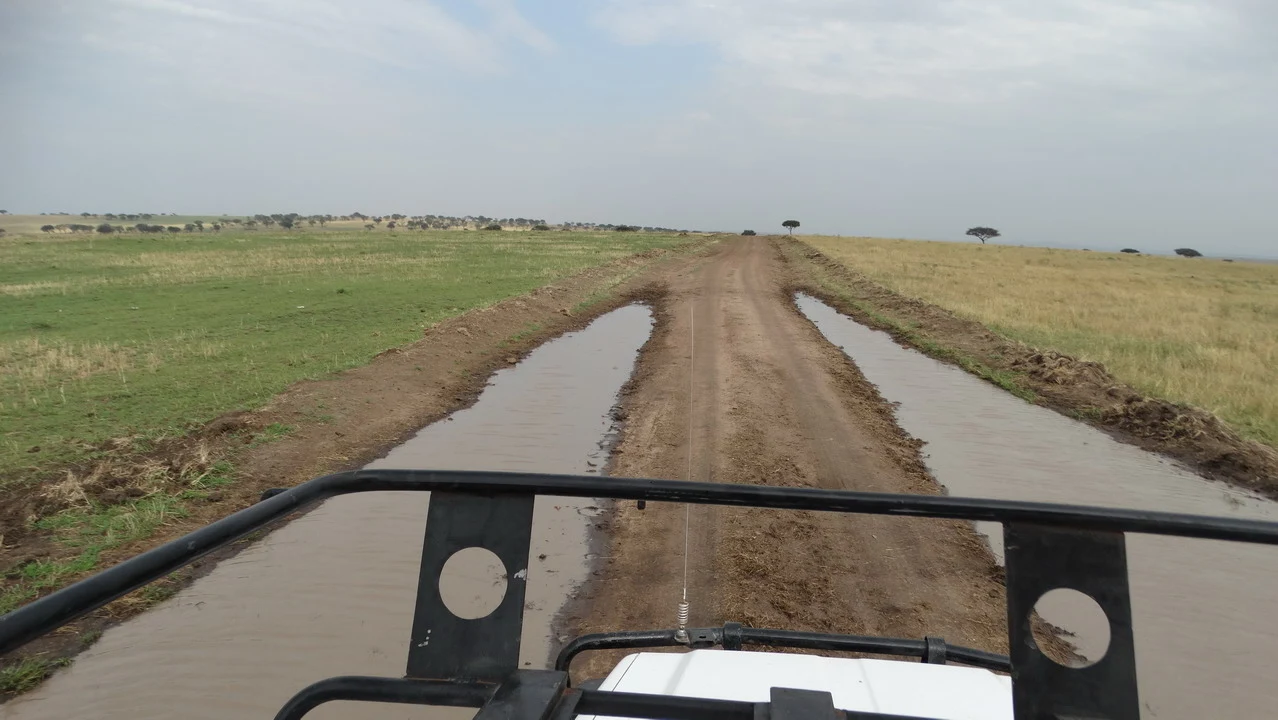
A full day dedicated to visiting the northern Serengeti area, bordering Kenya and watered by the Mara River, as well as the Grumeti River further east, along with other smaller streams that ensure water even when conditions become critical. It is likely that rainfall is higher in this area, so that the grasslands become greener and we notice... of puddles, a clear sign that the rainy season is timidly beginning and nature already offers a more lush and vibrant appearance compared to the center of the Serengeti. During the return journey, some raindrops force us to close the roof of the off-road vehicle, but it's just a passing cloud. The landscape remains undulating and we encounter some hills to break the monotony of the savanna. We travel through numerous kopjes, smooth rocks scattered on the ground that sometimes reach the size of real hills. side of the road It is largely acceptable, although the long distances to cover can be a bit jarring. Along a straight stretch, we find a box in the middle of the road; upon closer inspection, we discover it's the cooler bag that was lost by an off-road vehicle that had passed us earlier. We stop to collect the scattered items within a radius of about ten meters and discover that inside the box there are all sorts of alcoholic beverages, from whisky to vodka. We wonder how one can come this far while prioritizing a luxurious lifestyle over the magic of observing nature, which is expressed here at an extraordinary level; but it's fine as it is, it leaves more money for local organizations.
Always along the road we see the remains of an animal Hanging from a tree, it represents what we could call a leopard's refrigerator. It is in a safe location, but the feline should not be too close, and if someone approaches, the risk of it becoming part of its food supply is very real.
We also encountered many animal carcasses, sometimes on the side of the road; we are clearly in a hunting area where carnivorous animals are particularly active. We also saw hyenas and vultures, ready to finish the meals of the cats.
The migrations involve a wide range of animals, but the most spectacular one is undoubtedly that of the gnus. huge herds They gather and when the bravest one sets off (the Mara River is infested with crocodiles), the others follow in a charge worthy of a movie. We position ourselves at strategic points and watch several figures intent on grazing in almost complete silence, only the sound of occasional off-road vehicles breaks this spell. At some point we see them moving, converging towards the shore, stopping almost as if to think: they are many but they seem like one. Nothing happens, in fact after a few tens of minutes they retreat, postponing the crossing.
Following this, we observe other concentrations of gnu, approaching a point that could serve as a base for crossing, but even here they return to grazing. It is impossible to understand the reasons why they gather and then give up, apparently without any logical motivation, such as seeing a crocodile or other dangers. Although we don't know which ancestral instinct guides them, the mystery has a certain appeal. In their movements, we notice the uncertainty of those who are about to face a risk, but ultimately decide to wait for a better moment. Most have already migrated in July and August; now we can say that only the latecomers remain, although as far as we can see, there aren't many.
In the area of migrations, there is an airstrip that takes wealthy individuals from lodges to safari flights, without having to deal with the rather long off-road journey. Clearly, this is for people who don't have time to spend admiring nature and simply need to justify their presence somehow. Another reason for the airstrip is the possibility of conducting air safaris, which are fascinating but not very contemplative. We noticed that immediately after the excitement of spotting an animal, especially a rare one, attention shifts to observing every movement, scrutinizing its physique and behavior: in short, getting to know it.
For lunch, we returned to the area near the airstrip, seeking shelter from unwanted attention while we were in a secure location. There are people around, but we only stay for the necessary time to eat.
In the afternoon, we will see the same scene after having crossed the Mara River on a bridge built with concrete pipes.
The day passes quickly, although observing the gnu doesn't allow us to see their crossing of the Mara River. It’s wonderful to be here, admiring all that surrounds us, and it's easy to spot zebras, antelopes, giraffes, and a whole range of other animals, even a marabou.
Return to Lobo Camp
The return requires about two hours, and when only a few minutes are left until arrival at the camp and attention to looking for animals is waning, we see... four lionesses lying down resting on a rock. The area around the Mara is not ideal for lion spotting; perhaps they were the ones who wanted to see us. In the camp four buffalo graze right in the field next to the restrooms, so we need to be careful when visiting them.
It's now 9 PM, everything is dark, we read a few pages and then, once the reading light is switched off, we listen to the grunts of the gnus and something that sounds like buffaloes, as well as the howling of the hyenas. A truly remarkable concert.
We were told that in the late afternoon, they heard the roar of a lion, apparently one was on the rocks above us. We hope it's there to have a better vantage point over the plain below, where a multitude of animals pass through.
It turns out that human meat is not only appreciated by crocodiles, as I had already learned in Australia, but also by lions. After the trekking experience, the nights cannot be considered cold, but the term "fresh" could be appropriate: The Lobo is at 2200 meters, while the Mara is at 1800 meters.


