Day 10
Ngorongoro Crater National Park
Encounter with a tribe of hunters, so the earthly paradise gathered in a caldera.
At dawn with the Hadza people.
The Boscimani Hadzabe, one of the last remaining hunter-gatherer tribes in Africa, use locally produced poisons and ingenious camouflage techniques for hunting. The Hadzabe language uses characteristic clicks.
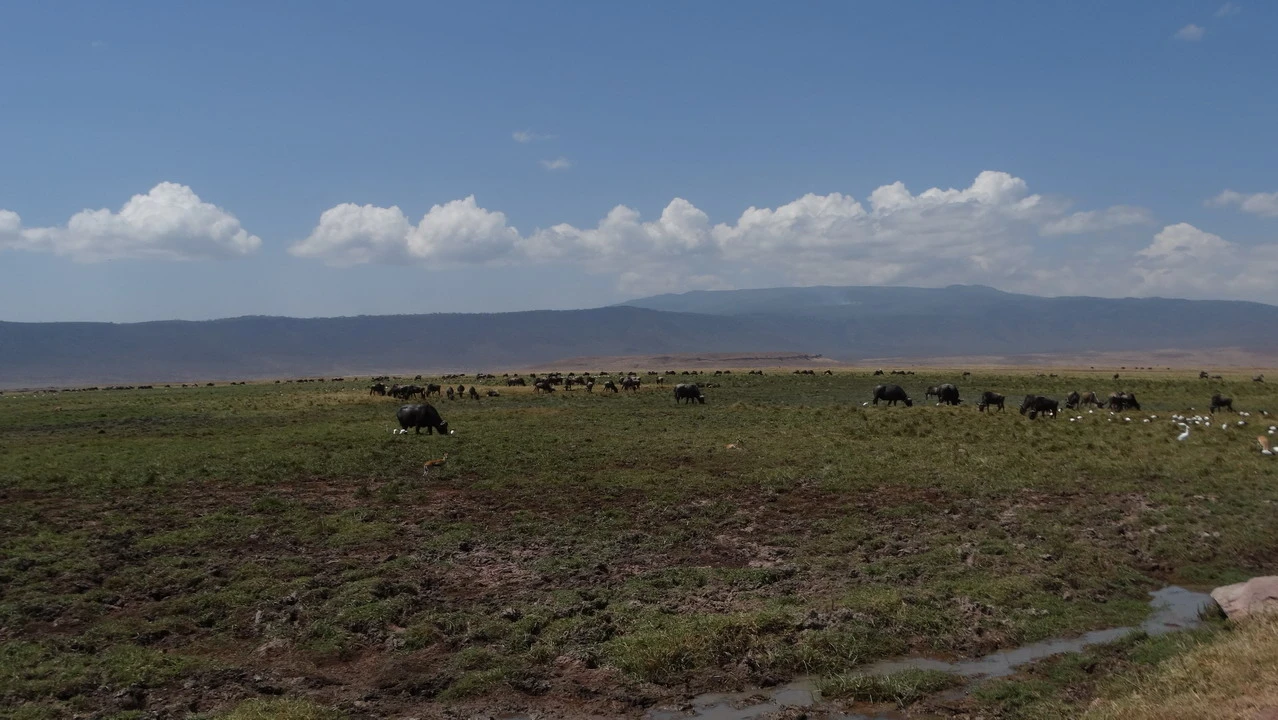
The largest caldera in the world, also known as the eighth natural wonder of the world, formed approximately three million years ago, has a depth of 610 meters and covers an area of about 260 square kilometers. The crater is a true Noah's Ark crater, with the highest density of animals in Africa. With around 25,000 ungulates, it offers the best wildlife viewing in all of Tanzania's parks. Common animals: Elephant, hippopotamus, buffalo, zebra, gnu, lion, hyena, jackal, vulture, baboon, impala, flamingo, ostrich, waterbuck (water antelope) and some of the over 500 bird species that inhabit this area. Rarer are the black rhinoceros, cheetah, dik-dik, leopard, caracal, serval. The park also features some impressive male elephants with enormous tusks.
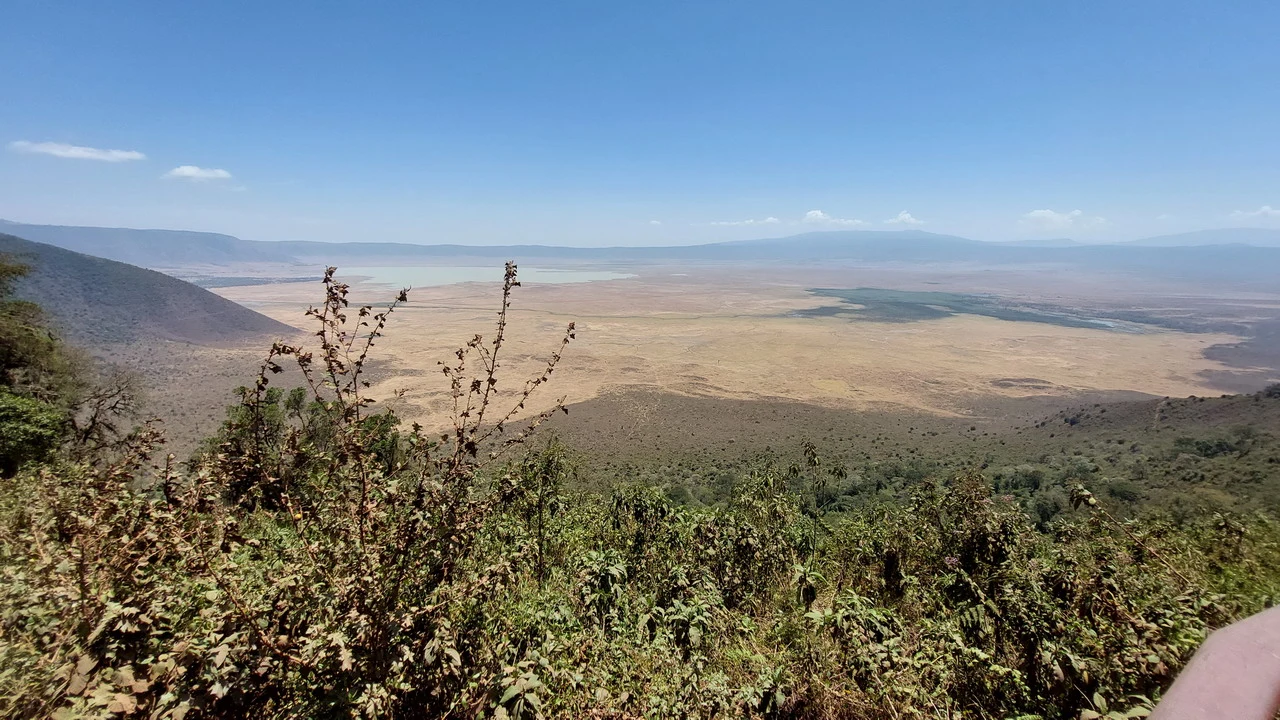
The first glimpse of the impressive Ngorongoro is likely from the viewpoint in the forest, which offers a view down into it, with its sun-drenched clouds. Surrounded on all sides by tropical forest that covers the walls of the large caldera, Ngorongoro seems to have emerged from a fairy tale. The park's vegetation makes life easier for animals here throughout the year, although many participate in the Great Migration of wildebeest as they move north towards the distant Masai Mara in Kenya. In the large alkaline lake of Magadi, it is possible to see a large flock of colorful flamingos, while the Ngorongoro picnic area is highlighted by a pool of hippopotamuses where these deceptively gentle creatures can be observed. On the shores of the crater, where the forest embraces the steep walls, leopards and black rhinos can occasionally be seen moving through the vegetation.
Woke up early, had a coffee with some cookies and then drove to the meeting. Hadzabe It is a tribe consisting of only 1800 people, divided into several groups, and they are famous for being among the last to belong to... category of hunters/gatherers.
They live by hunting and gathering, enjoying all that nature provides. They exchange arrows and meat with the Datoga, sharing territory with them along with the Iraqw, another tribe not belonging to the dominant Bantu ethnic group. The Hadzabe often move around in search of prey depending on the season; during the rainy season they live in caves in the mountainous part of the region, otherwise in very simple huts with multiple rooms where one or two people can stay. They don't cultivate anything and have no religion, except for the worship of natural elements such as the sun through propitiatory rituals. According to what we are told, there are good relationships between the tribes: when territorial overlaps occur, one tribe moves to another location. During the dry season, the Hadzabe receive funding from the state through animals obtained from parks and already slaughtered; due to their small and fragile population, they have free healthcare, but they don't send their children to school because of displacement and nomadism. Children learn from their parents, who live separate lives: men on one side with their activities and women on the other, who are more inclined to domestic work. They only stay together at night, sharing the hut with their children. They are monogamous, and when they marry, the man is required to give his wife a baboon as dowry. Another notable feature is their belonging to the Bosiman clan, so they speak using the classic click sound already heard in the center of Namibia.
This is a purely spoken language, as it's not possible to transcribe the sound of the "click" onto paper.
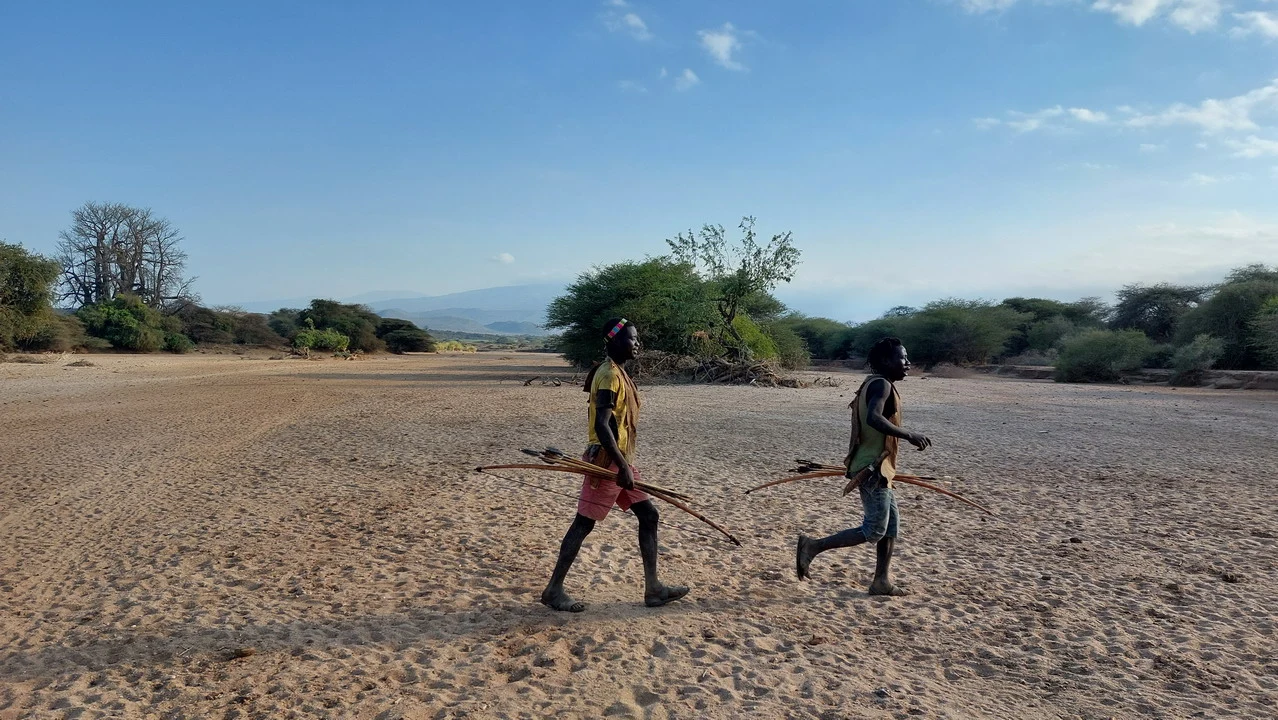
It's interesting to learn about the reasons that lead to having a variety of arrows to be used depending on the target:
- The kudu are killed using poisoned arrows that lure the animal; hunting takes place in nearby mountain areas during the rainy season. The poison is extracted from plants found in nature.
- by adding a piece of stalk (similar to a cork stopper) so as to hit and stun the bird, and then finish it off. This offers greater chances of hitting the target.
- Others instead have a kind of counter-arrow, for the more intelligent animals like baboons who try to remove it once they are hit; this causes further lacerations. Baboon meat is very highly valued.
There is a green plant that they lightly peel, from which a milky substance is extracted and applied to their skin. In case of injury during hunting, this "medicinal plant" is used.
They smoke cigarettes while making fun of the foliage in the bush, from which they also take potatoes and berries to eat.
Towards Ngorongoro with a changed itinerary
After this interesting visit and successfully hitting the target with the bow, receiving warm compliments from the locals, we return to the camp for breakfast and immediately depart with a modified itinerary proposed by Modi, which we gladly accepted. The original route would have left little time for the Mara River, as it is quite far away and the roads are not very good (it should be noted that we leave the asphalt behind). Karatu to find it, on the last day about thirty kilometers before Arusha). We therefore decided to move Ngorongoro forward to today after visiting the Hadzabe people, as this should take place in the early morning for hunting reasons. The following day will be dedicated entirely to the Serengeti, arriving directly at the Lobo camp. From there we will depart the next day to dedicate it entirely to observing the Great Migration. Finally, we will move to Lake Natron and use it on Monday as a transfer to Arusha for some shopping and especially to arrive peacefully on the day of our return flight.
Arrival at the Ngorongoro crater
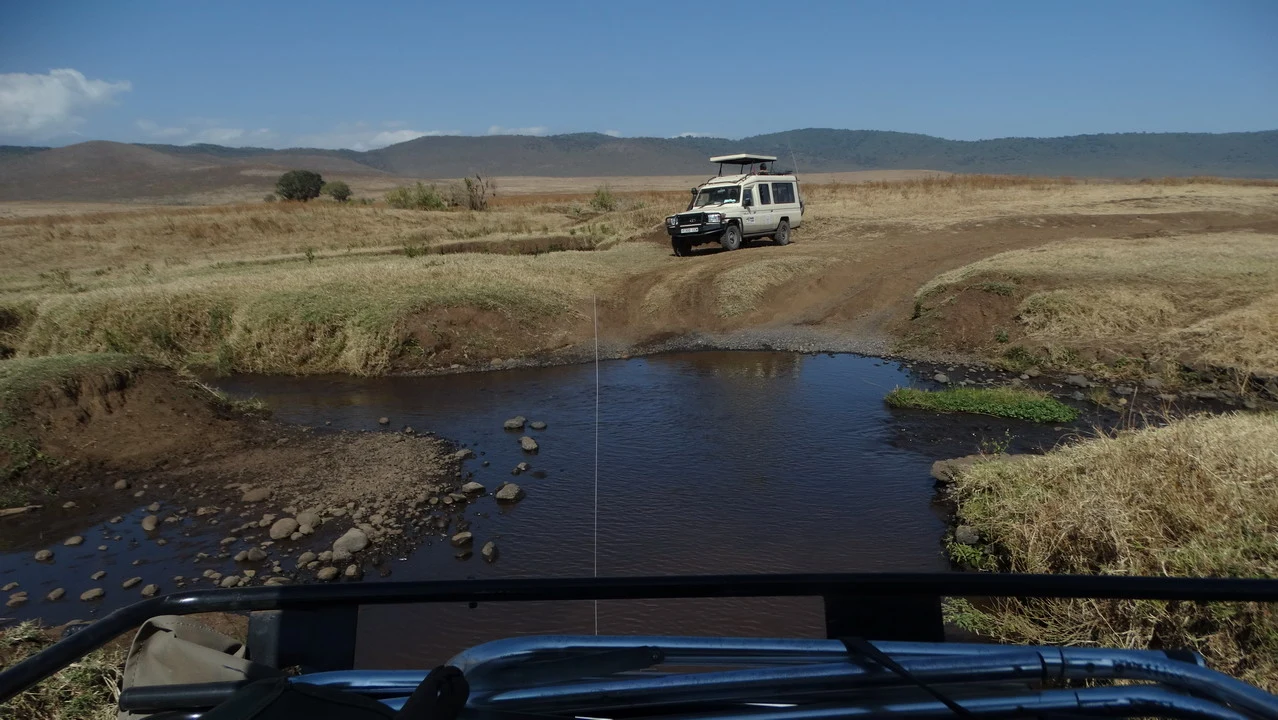
With this new itinerary, we'll arrive at what can only be described as a true earthly paradise in just over an hour and a half: the Ngorongoro Conservation Area and Crater. Once obtained the necessary permits We climb along the outer slope of the crater to reach the rim, from where the view opens out. view of the huge pool The view extends to the other side, several dozen kilometers away, with its vast array of animals. The landscape has turned green, thanks to the frequent rains favored by the terrain's morphology. This scene requires many photos; the wonder is immense. We continue along the ridge road until we reach a turn that leads to the Simba Camp, where we have lunch, leaving the cook and immediately entering the park to experience one of the most exciting days. We head towards the coastal road beyond the camp for descend towards the bottom of the crater: Ngorongoro is indeed an extinct volcano with its central part collapsed, leaving a perimeter elevation. Specifically, the Simba Camp, located on the edge, is at 2,500 meters, while the bottom is at 2,000. Besides being an area particularly rich in vegetation and animals, it is also the source of several streams that flow into even distant and otherwise arid lands. For example, we will talk about the areas around the southern shore of Lake Natron or the surroundings of Lake Manyara, which we have already visited. We pass through the small office for permit checks, raise the roof of the Land Cruiser, and are ready to enjoy the spectacle from the front row, on a day when the sun further enhances the wonders that stand before us.
At the bottom of the caldera, among lions and flamingos
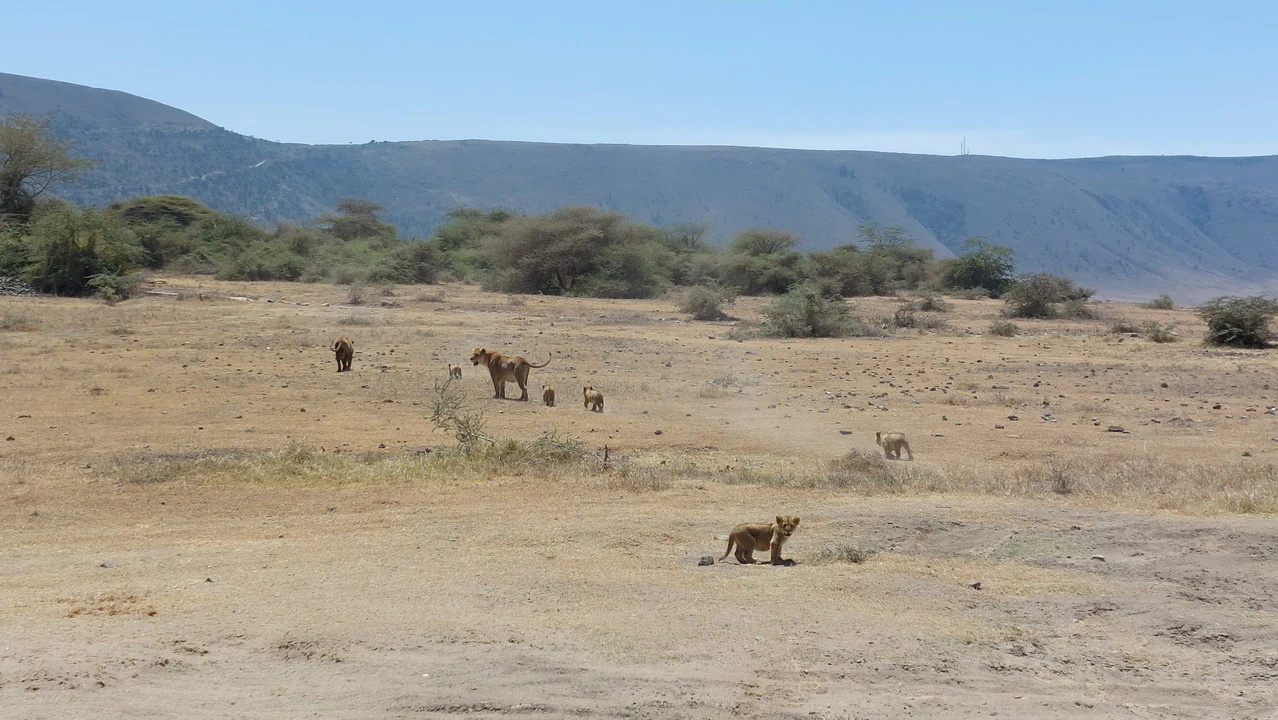
Spectacular sight that doesn't disappoint: after just a few minutes, we spot a lioness enjoying a meal. A closer inspection with binoculars will reveal that it is actually There are two lionesses., accompanied by five small The view is limited due to the distance, but they compensate for this, without even noticing that we are quietly observing them. They approach while walking along the road with the confidence of those who have nothing to fear, the little ones follow along, stopping occasionally to look around and play amongst themselves while full. Amazed and yet enchanted by the sight, we prepare to see the rest, a continuous sequence of animals: gazelles of all kinds, gnu, zebras, giraffes, elephants, buffaloes, I flew, hyenas, hippos, and various birds. Near Lake Magadi, we encountered numerous flamingos on one leg, trying to catch shellfish in the shallow waters of the lake. Moving towards the southern edge, in the small pond adjacent to the picnic area, some hippos are resting. As always, we have the opportunity to understand how the terrain influences rainfall, which makes it possible for vegetation to grow, providing natural food for herbivores, who in turn provide nourishment for carnivores, thus completing the food chain. Outside the crater, there are animals, but their numbers are not comparable to what is visible on this green island. Just before we started the street (both uphill and downhill are one-way) exit, the disappointment that everything is about to end is lessened by the sight of a family of elephants during dinner. Observing them closely, it's incredible to see how easily they break off branches even of a certain diameter and then swallow them without any problems. We just need to make sure we don't miss our appointment with the rhinoceros, which will ultimately prevent us from completing the collection of the Big 5.
We exit the caldera, aware that we have experienced an unforgettable day, a lesson on the cycle of life and the laws that govern it, which can sometimes be harsh but never incomprehensible. We have dinner in the large refectory, reading a few pages before leaving only when it is time to go to sleep: at 2500 meters above sea level, the temperatures do not seem particularly conducive to outdoor walks.