Day 5
Lhasa II
Jokhang, Norbulingka and Sera: mysticism, secularism, and Buddhist culture.
The Jokhang and the religious heart of Lhasa
The night is going to be complicated, but it will only get worse from here on out. The meeting is at 9 am to visit the Jokhang, already crowded with pilgrims along the kora. We slip through towards the entrance, passing a multitude of people prostrating themselves. The pungent smell of yak butter that emanates from the chapels isn't exactly good for our stomachs. We skip the queue, avoiding visiting all the cells where deities and protective spirits are housed, while worshippers move around with thermos flasks filled with melted yak butter to pour into containers where incense sticks are burned. From flowered terrace We have a wonderful view, both of the inner courtyard and the exterior. I have left the Potala Palace The fog created by... bonfires burning pine branches It limits the view of the surroundings and further obstructs the already difficult breathing. This difficulty becomes even worse when inside the temple, a crowd of worshippers forms both entering and exiting, creating a real human bottleneck between the narrow walls of the Jokhang.
Norbulingka and Sera Monastery
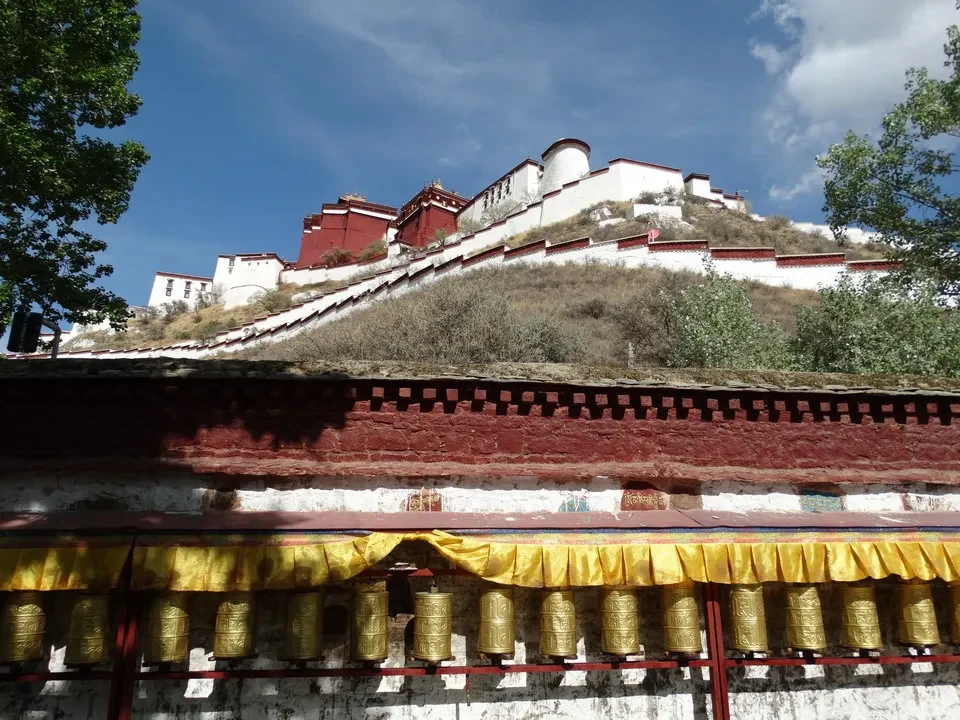
The visit to Norbulingka offers a good opportunity to stretch your legs and give your body some energy back. The Summer Palace, from which the current Dalai Lama's exile began, stands before us in its splendor. light spring jacket Inside the temples, you often see cups filled with water at the base of the deities, as an offering. We learn how they are filled with water and not milk, because the latter would then have to be thrown away, something that people wouldn't readily do. The fundamental contradiction of this gesture creates remorse, which diminishes the genuineness and spontaneity of the offering. Therefore, it is better to fill them with a liquid that doesn't cost anything and can be regularly replaced without guilt: a philosophical and practical sensitivity that is far from negligible. The ruined gardens and buildings are a reminder of the past, but now attentive gardeners are placing vases to decorate the paths and entrances. These are merely cosmetic operations because the soul of the palace, the reason for its creation, has been removed, leaving only a museum. In our country too, old royal residences serve as destinations for Sunday outings, although here the revolutionary wave has also affected the people, in addition to the rulers. The interiors are still beautiful, confirming what we have read. We can see the recorders and other technological objects of that era, which were of great interest to the then-teenage Dalai Lama. A bathroom stands out, one that could be found in an Italian house in the 1950s. All this is located in the part built by the last XIV Dalai Lama between 1954 and 1956. The explanations provided by the guide, which are not strictly historical, are based on a protocol aimed at protecting his career; he must recite his mantra, and we interpret it according to our own understanding. The tree-lined paths extend shadows over nearby canals The places of prayer and meditation, in an environment decidedly more suitable for a royal court than for the leadership of a religion based on detachment from earthly things. But it's not surprising, as no one who holds power, whether civil or religious, ever stops enjoying earthly pleasures while preparing to enjoy heavenly ones. Quickly lunch at a restaurant frequented by pilgrims, where we once again arouse the friendly curiosity of the Tibetans. They look at us as if they have never seen anything like it, but without suspicion or hesitation. The owner is interested in learning about us and asks us some personal questions through a Chinese translator. It should be noted that both Google and Facebook, as well as the ANSA website, are blocked. Despite meeting so many people, it doesn't seem to be peak season for pilgrimages; given that most of the pilgrims come from rural areas, pilgrimages are more frequent in winter, even though the temperatures are colder, -5/6 °C. In summer, they reach 25/26 °C. We continue our journey to... Sera Monastery, which was not originally planned but was quickly added since we stayed an extra day in Lhasa. Similarly to that of Drepung, it belongs to the Gelugpa sect (the "yellow hat" monks), is located at the foot of a mountain near Lhasa, and houses a large community of monks, previously up to 5,000. The black hats distinguish the Sakya monks, the red hats belong to the Kagyu, while the maroon-colored ones are worn by the Kadampa.
Old Lhasa and the Potala Palace at night
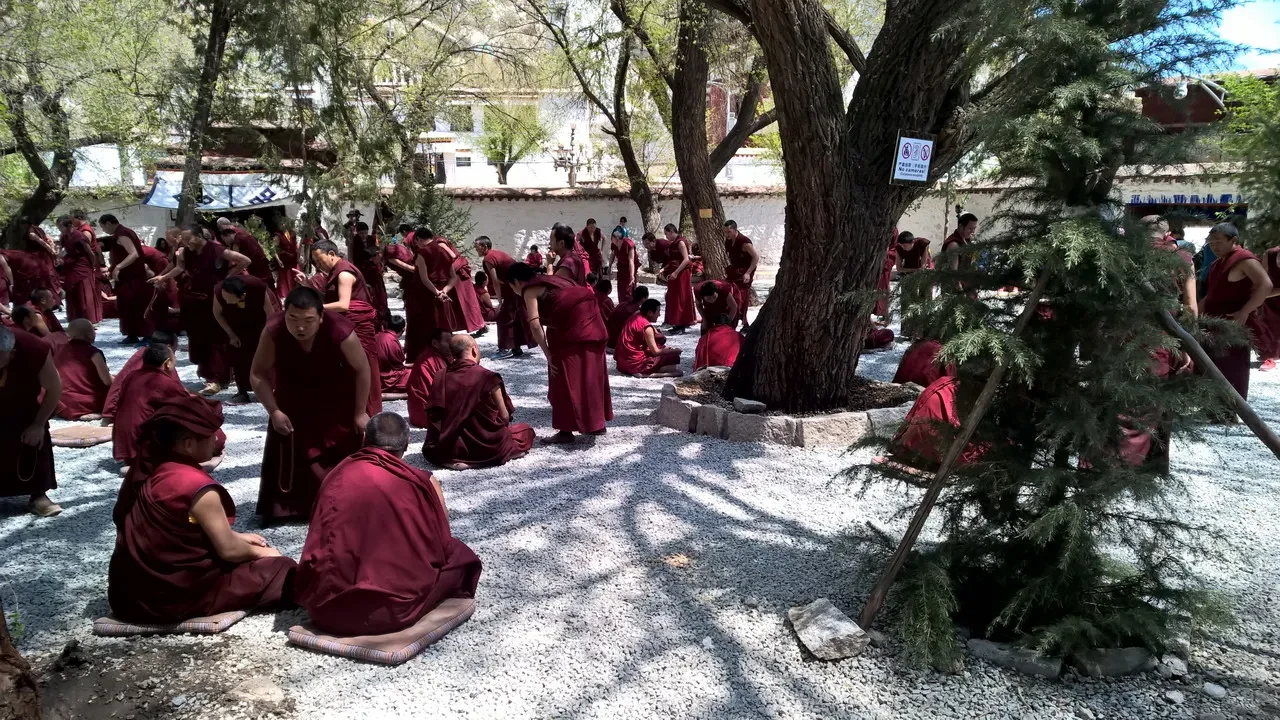
Beyond the usual places of worship, which always attract attention but don't really stand out from each other unless viewed through a religious lens, what truly impresses about Sera is the lively discussion that takes place every afternoon in the… courtyard known as "the debate area" To find it, simply follow the loud chanting of the monks who are passionately discussing complex topics among themselves, so knowledgeable that even our guide believes he cannot understand them, despite speaking perfect Tibetan. One might wonder whether they are at such a high level or rather the other way around. However, what emerges is a fascinating scene, enhanced by the courtyard trees and perfectly colored by the purple robes that constantly move within the perimeter on the cobbled surface. One or two monks passionately present their theories, while another calmly responds from his seat, usually receiving approval from the first with a resounding clap of his hand against his other hand. It seems incredible how religious figures have so many topics to discuss with such emphasis for two hours straight, but we know that public speaking is an innate art for those who practice it. We also visit a couple more temples, nestled among the narrow streets and alleys of the monastery. It seems as though time has stopped in this place of prayer and culture.
It's now 5 p.m., and we return to the hotel for a stroll through the old town and dinner at a restaurant in the restored historic streets. The usual debate about renovations and costs arises: just a few years ago, the streets were dilapidated, without paving, and open sewers ran through them, while the houses were in very poor condition. Now it feels almost as if we are walking through a modern city with improved hygiene, which primarily benefits the residents. In exchange for funding the investments, those who financed them gained control over the people's freedom: scanners and metal detectors are everywhere, there is constant police presence, and all the streets are monitored by cameras that record every movement. This creates a latent state of tension for a population that has never had any problems with public order. However, it is evidently all attributed to measures taken to prevent potential Buddhist terrorism. The Chinese Leviathan advances without considering the opinions of the locals, making decisions for them, both good and bad, administering authoritatively while depriving them of their freedom and bringing modernity and development at the same time. Sometimes the situation is positive, other times negative, like a constant cycle of yin and yang.
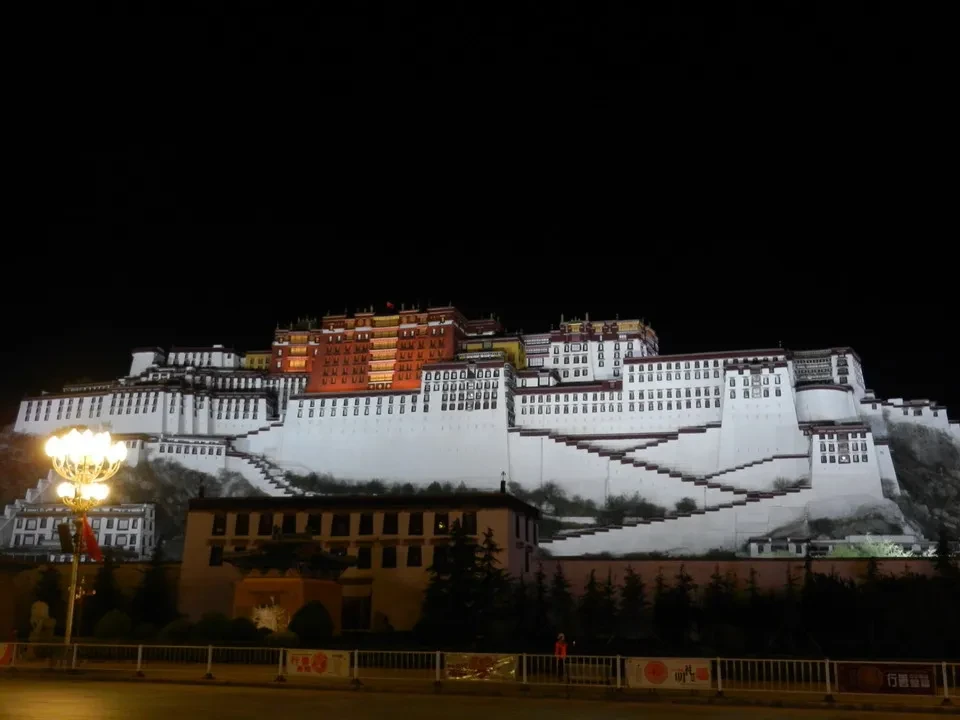
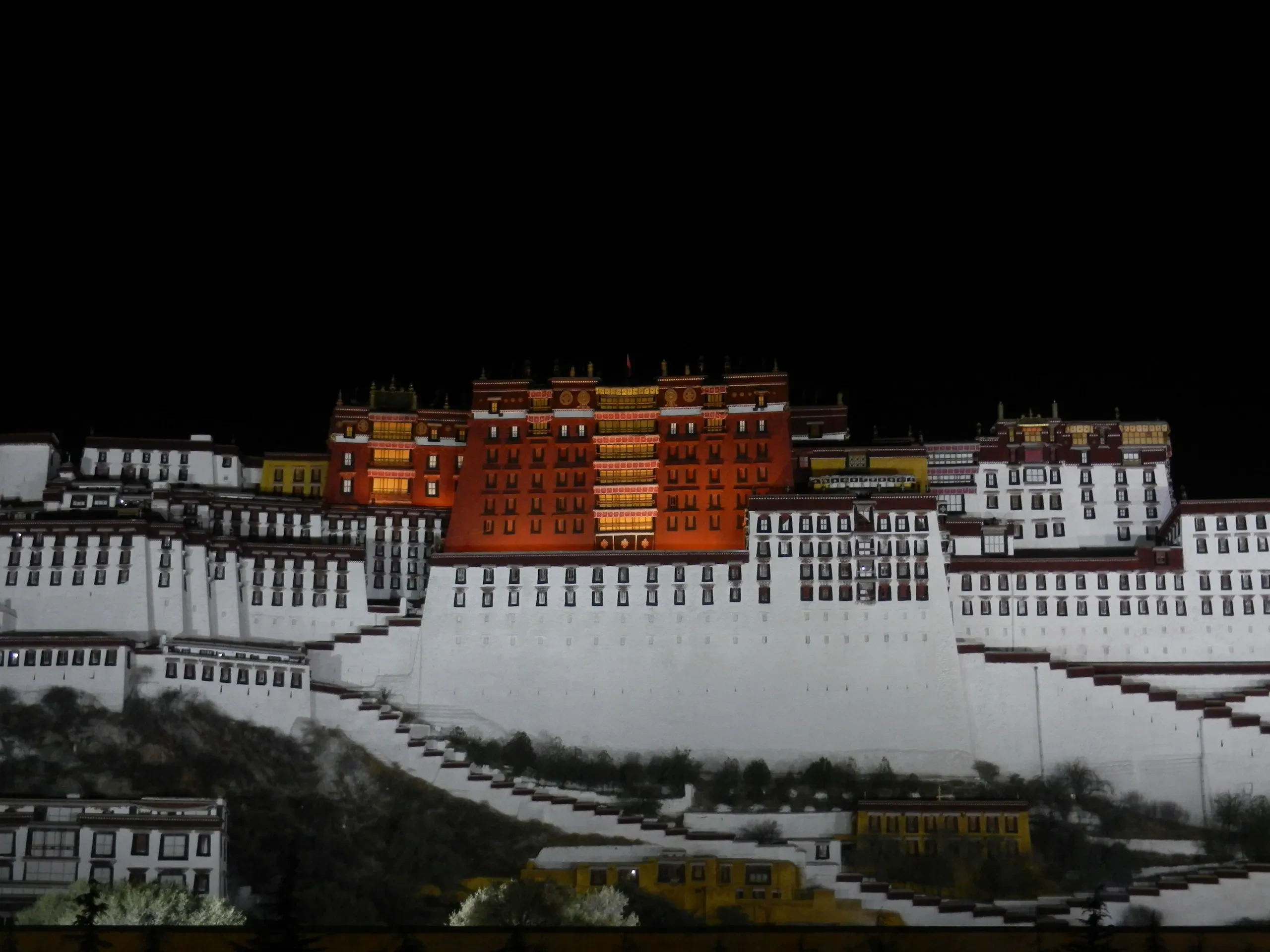
One of the highlights of Lhasa is definitely the view of... Potala at night. The palace is lit up as if it were the castle from a fairy tale The awnings sway in the wind, suggesting a fanciful animation. It feels like living an unreal moment, and we feel infinitely small in front of the giant statue on the hill. And it's not even necessary to give it historical or religious meanings; its mere presence is enough. With our eyes still full of wonder, we get into a rickshaw that takes us back to the hotel and end a busy day.