Day 7
Shigatse
The Panchen Lama monastery, and then begins the wild journey.
Tashilhunpo and departure from Shigatse
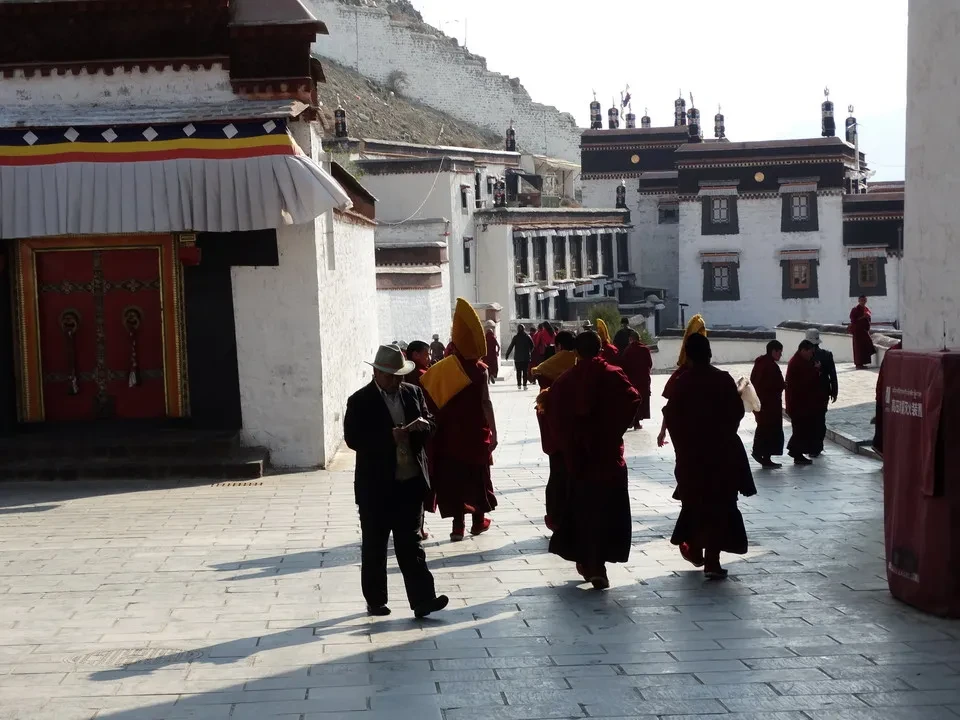
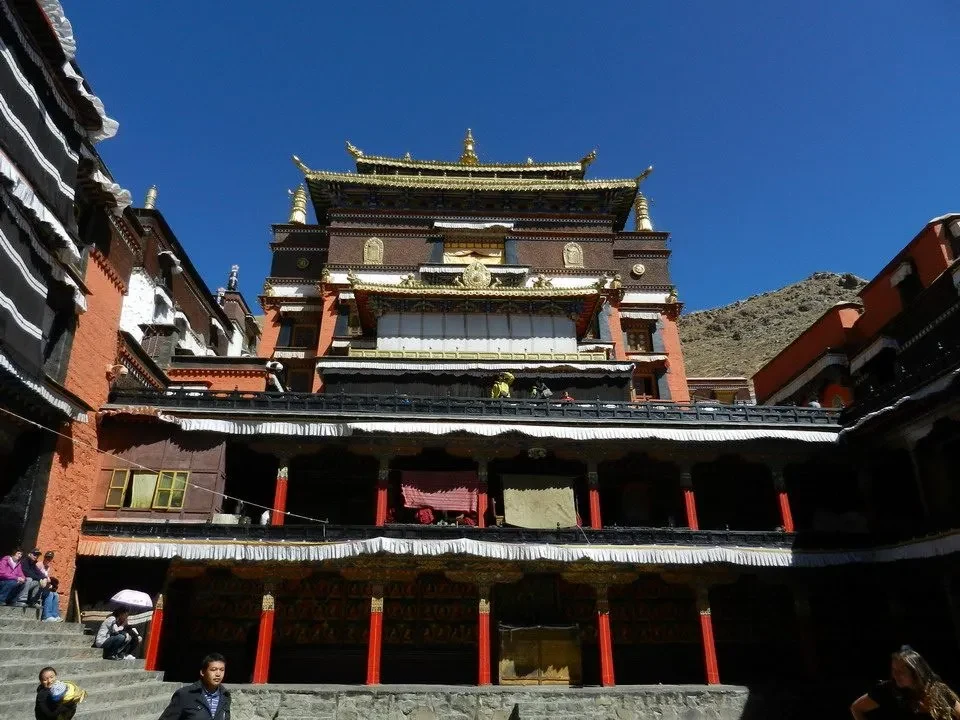
Visit to the monastery of Tashilhunpo, officially the residence of the Panchen Lama, the second highest religious figure in Tibetan Buddhism (Gelugpa). In reality, this high-ranking official is a Chinese person who has little to do with Tibetan culture; he now lives permanently in Beijing and visits Shigatse once a year to represent his position. Although this role has lost its significance for believers, the monastery remains prosperous thanks to renovations and government funding. It was here that three years ago we learned how monks can be considered similar to state employees, with the resulting limited ability to express dissent towards their employer. In fact, the monastery is well-maintained, and visits are always pleasant, especially those to the temple that houses Maitreya, Jampa, the Buddha of the future, which stands 26 meters high. The damage caused by the Cultural Revolution has been repaired as much as possible, given the impossibility of bringing back to life people and artistic artifacts that have been lost forever. The atmosphere is relaxed, with the monks that They move from one temple to another. With their purple clothing, modern smartphones and leather suitcases, and the Chinese tourists busy taking photos of each other. We Westerners are few in number.
Towards Saga across the plateau
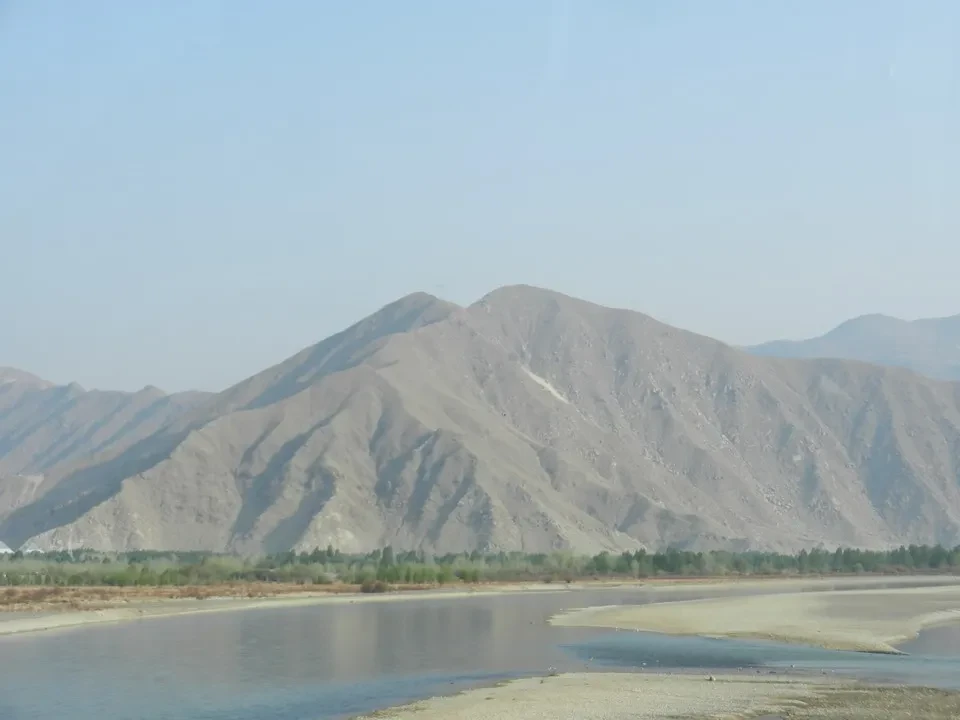
As midday approached, we set off decisively towards the west, heading for Saga. After Shigatse, it was a continuously arid; flocks of sheep The area is dry and we don't really know what it's like. Small streams of water create the only wet lines, facilitated by the low evaporation rate. Rare trees with deep roots provide a meager amount of green. Fields are tilled in a monotonous ochre color. Farmers push a plow pulled by a horse under a non-scorching but dry sun. Greenhouses for growing vegetables have a wall about 2.5 meters high on the north side, where nylon covers are hung. Along the roads, piles of manure are being dried. stuck to the walls... and then neatly stacked on top of each other, arranged in slightly inclined rows. They will become the only useful fuel source for both cooking and heating. There is no wood available. The only possible crop is barley. The trees are watered daily through canals and trucks, in an attempt to break the monotony of the desert landscape and as windbreaks. A farmer returns home with the plough on his back., followed by a few steps from a pair of yaks, their inseparable work colleagues. A long journey in the emptiness, where dust, stones and ochre color reign supreme. From the window, you can see meager herds, interspersed with groups of antelopes, horses, yaks, even donkeys, grazing on the barren landscape. But nature wants them to live and ensures that this little nourishment is enough until the rare summer rains, which should restore a minimum of green to these valleys. At these latitudes, they also complain about irregular droughts during winter, in a situation where the already scarce resources continue to diminish. The cold was not very harsh, but there was no water: the streams are completely dry, except for those that draw their source from the glaciers. White lines run through the vast, empty desert.... leaping over stones and creating even bubbly water games amidst so much depressing aridity. They will all converge into the Yarlung Tsangpo, which originated from the eastern slopes of Kailash, failed to find a passage through the Himalayas, and was forced to skirt along the entire northern margin before plunging with full force towards the south as soon as the chain allowed it, in a tropical roar, and finally relaxing along the Bengal plain before ending its life in the sacred Ganges. We see it south of Lhasa and in several other occasions, wide and crystal-clear, along white stone banks, creating almost tropical images if we were not at 4,000 m. Probably the water does not filter through the ground, which allows the rivers to not disperse the precious liquid along the way. This would explain the stretch of slender streams that continue for dozens of kilometers always with the same flow. We were talking about the landscape, but we must not forget the human settlements. If the animals that graze on the sand are surprising, it makes one wonder what hidden and ancestral pride the Tibetans hold in these places. The people have dark skin, they almost seem African if it weren't for their smooth hair. The wrinkles carved by the sun and dry climate are real grooves that cut through the face, making even those who are not old appear so. They had houses made of clay blocks covered with earth, from which a chimney emerged: now there is nothing left. The earthquake last year has removed the poor dwellings and now we only see more ruins or piles of stones. The government has offered some military tents to shelter from the biting winter winds. They had installed them near the former houses, waiting for everything to be restored. It's surprising, a year after the earthquake, that these simple dwellings have not yet been rebuilt. We see some builders at work, but most of them are still collapsed. The guide tells us that in this area, the damage has mostly been material, and the deaths have mainly occurred along the Nepalese border. But it's difficult to believe that, seeing the rubble, someone could have survived if they had been trapped. Despite the hardships, the local residents do not flee, nor are they seeking better fortune elsewhere. They remain clinging to the few blades of grass that the wind constantly sweeps away, working and passively waiting for a better future. Perhaps through a more favorable incarnation in their next life. a painting in the room of the hotel in Shigatse paints an emblematic picture of this people: a woman, kneeling with her hands and a prayer wreath on her forehead, seems to be crying; actually, I want to see her invoking the Supreme Being so that it grants her courage and strength to face all the hardships she is forced to endure. It's the image of weakness transforming into strength.
Border control, bureaucracy and night in Saga
We have lunch at a place where we can taste a good variety of Tibetan cuisine, seasoned with an absolute faith in the inspiring ideals. The images of the communist essence, from the inspiring European fathers to the more recent Chinese followers, and also the butchers who were inspired by them in the last century, are still visible from above. We start to see typical houses and monasteries of the area and of the Sakya sect, where the upper part of the outer walls forms a long horizontal black stripe. Along the route, one frequently encounters what could be described as... local bakeries: clay mixed with straw, where available, and cement to build grey bricks.
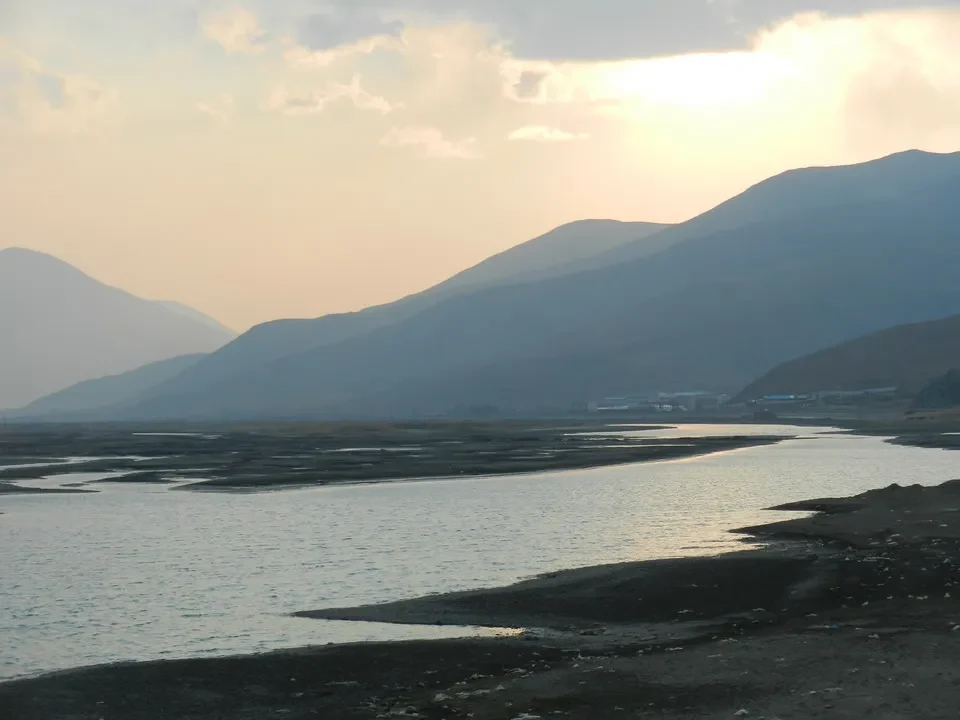
After Lhatse, we leave the Friendship Highway that heads towards the Nepalese border and venture into a wide valley leading to the far west. The calculation of distances at this point no longer refers to Shanghai but starts from Kashgar in Xinjiang. The temptation to complete the circle opened four years ago is intriguing but not feasible. The condition of the roads is not bad, considering that ten years ago one would still have had to cross dangerous rivers and wait for hours while landslides and debris were cleared. One only needs to pay attention to the rare crossings of herds. The problem is once again created by the helpful bureaucrats, who have built a series of checkpoints where distances and time are checked. A form must be presented at the next stop before a certain time. We find ourselves in a situation where we have 100 km of smooth road with no traffic to cover in two hours, not less. The drivers go faster but then have to stop: sometimes there is something to see, other times one has to stop in the middle of nowhere and wait for the time to pass. We have observed an intensification of these systems and we are inclined to believe that it is another way to discourage the presence of curious people in the area. We reach the peak shortly before Saga when it is 20:30. We stop a couple of kilometers before the checkpoint located at the beginning of the country and wait for a good hour before being able to proceed and show the documents that attest to "observing" the speed limit. It is useless for the driver to constantly stop vehicles coming from the opposite direction in order to understand if the zealous officials have decided to close shop early and go home. We arrive at Saga at 21:45, but during the wait we were able to witness a beautiful sunset. We are at an altitude of 4,600 meters and find it easy to understand when we prepare to climb the stairs. At this time, it would be difficult to find a restaurant, but from today we have the catering service prepared by the Nepalese agency and expertly managed by the cook Ai Singh, who is also Nepalese, who combines skill and friendliness, managing with few means in a room opposite the hotel to produce dishes that suit our diet and make us feel closer to home. A five-star dinner consumed in the catacombs, to be concise. Tomato soup, rice with momo (dumplings) and french fries. apple pie Cooked with the aroma of cinnamon in a pot that prepares the cake directly on the gas. Unfortunately, the altitude affects our health and we feel very tired, even though being able to sleep will remain a dream. The heart beats quickly in an attempt to transport as much oxygen as possible; the mucous membranes dried by the thin air stick to the inside of the nasal cavities, preventing breathing. The gastrointestinal system struggles to adapt to a very different cuisine. All this creates a feeling of exhaustion that is not ideal for the days ahead. But let's proceed slowly and try not to give up: the illness is not too serious, and we still have some time. The room is cold, and the thermal blanket under the sheet is a real blessing, even though sleeping will still be something else. The night silence is broken by the barking of dogs, true packs of wild animals that roam at night. They don't have a function and are probably kept because they may contain the reincarnation of some ancestor according to Buddhist principles.